

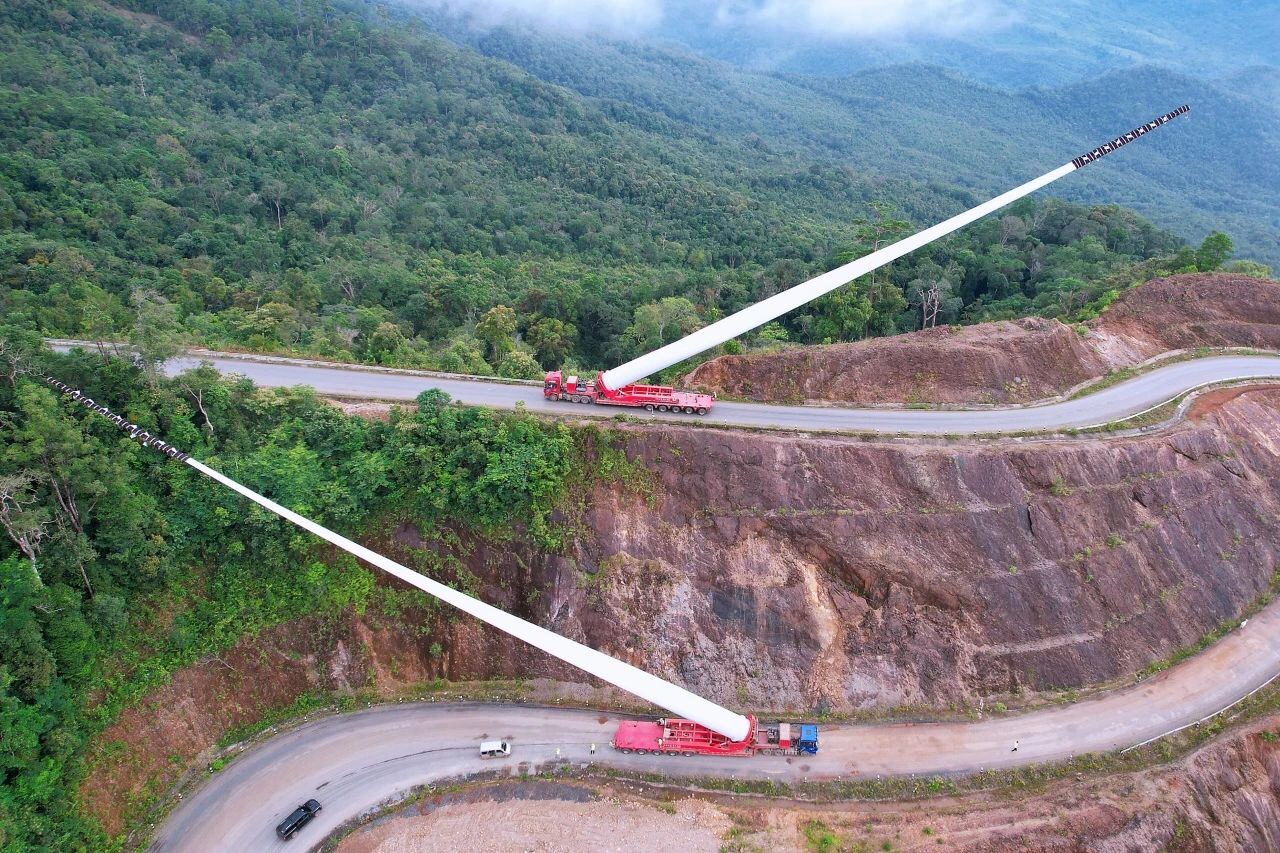
Last-Mile Wind Turbine Transport
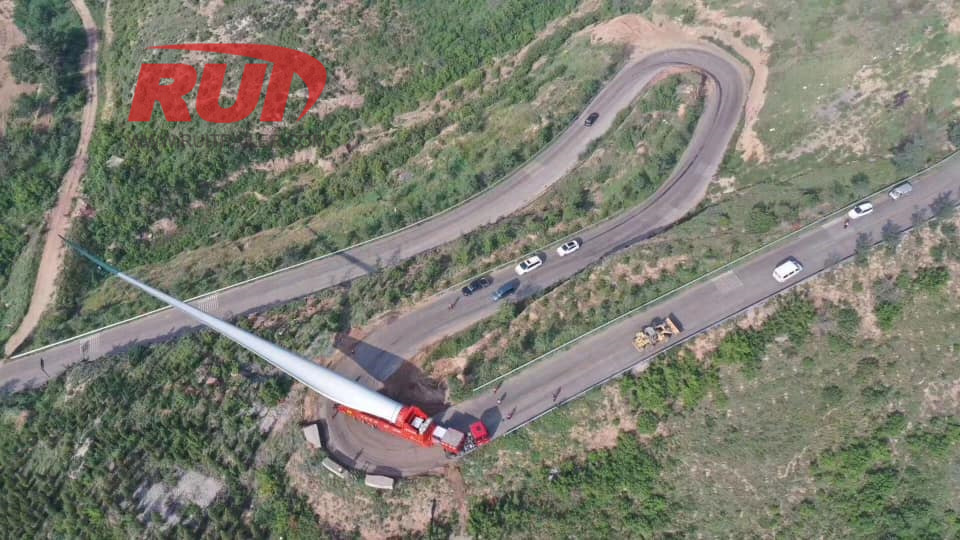
Scaling Blade Dimensions vs. Infrastructure Limits
Onshore wind efficiency relies on larger rotor diameters. Modern turbine blades now range from 80 meters to over 120 meters in length. While these dimensions boost power generation, transporting them to remote installation sites presents critical logistical bottlenecks.
Traditional extendable low-bed trailers transport blades horizontally. On mountain routes, forested areas, and urban corridors, these long transport combinations face severe spatial limitations:
- Excessive Swept Path: Flatbed trailers carrying 100m+ blades require massive clearance zones on turns, exceeding standard road widths.
- Civil Infrastructure Damage: Transporting horizontal over-dimensional cargo often requires tearing down street signs, removing light poles, or destroying road guardrails.

Blade Lifter System with modular trailer High Land Acquisition Costs: Expanding existing roads or carving out temporary access paths through forests and private property causes high project delay costs and environmental permit hurdles.
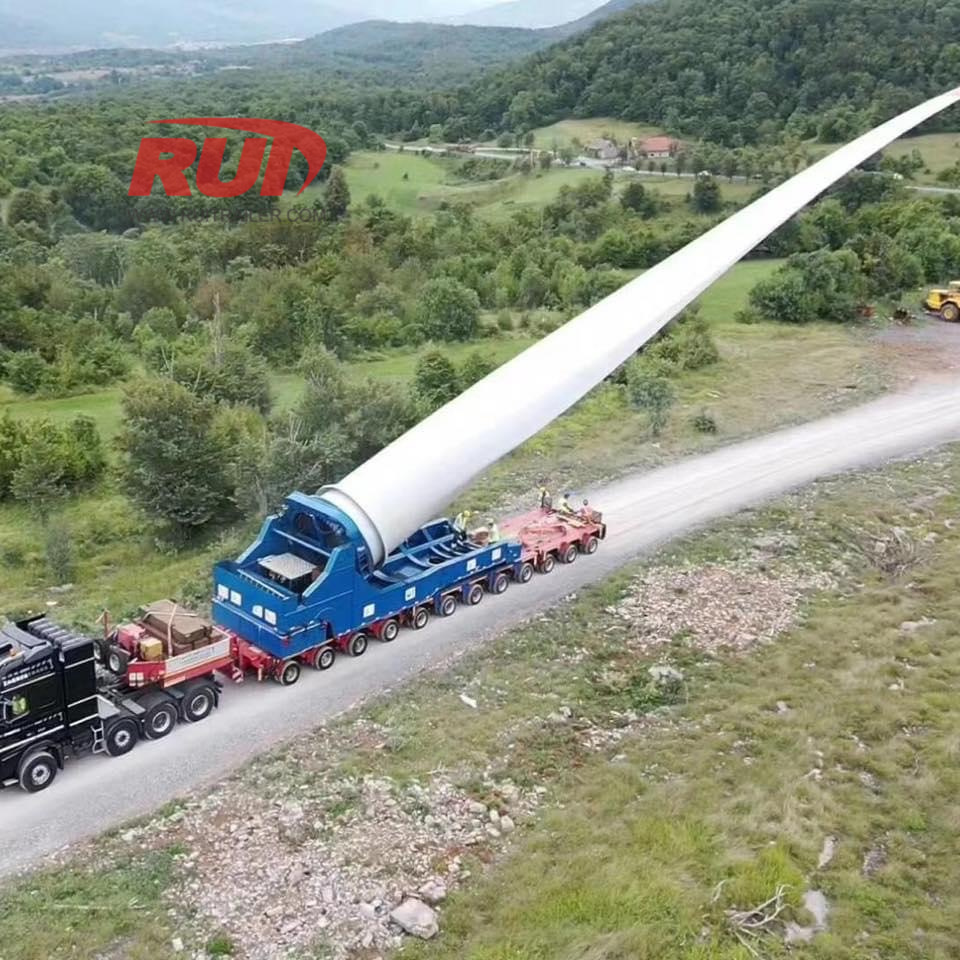
Severe Last-Mile Logistics Obstacles
As an experienced heavy-transport equipment manufacturer, we engineer hardware designed for the harshest last-mile delivery environments. Heavy haulage operators face three major road constraints during wind power logistics:
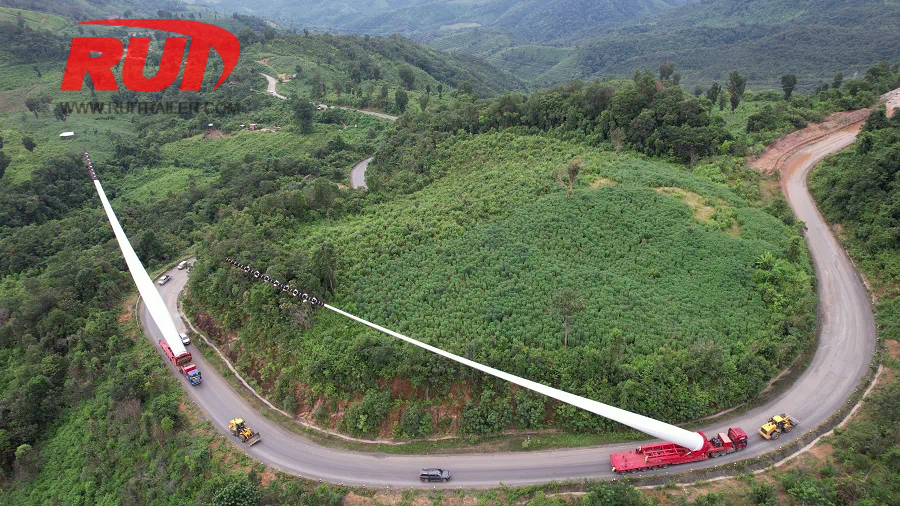
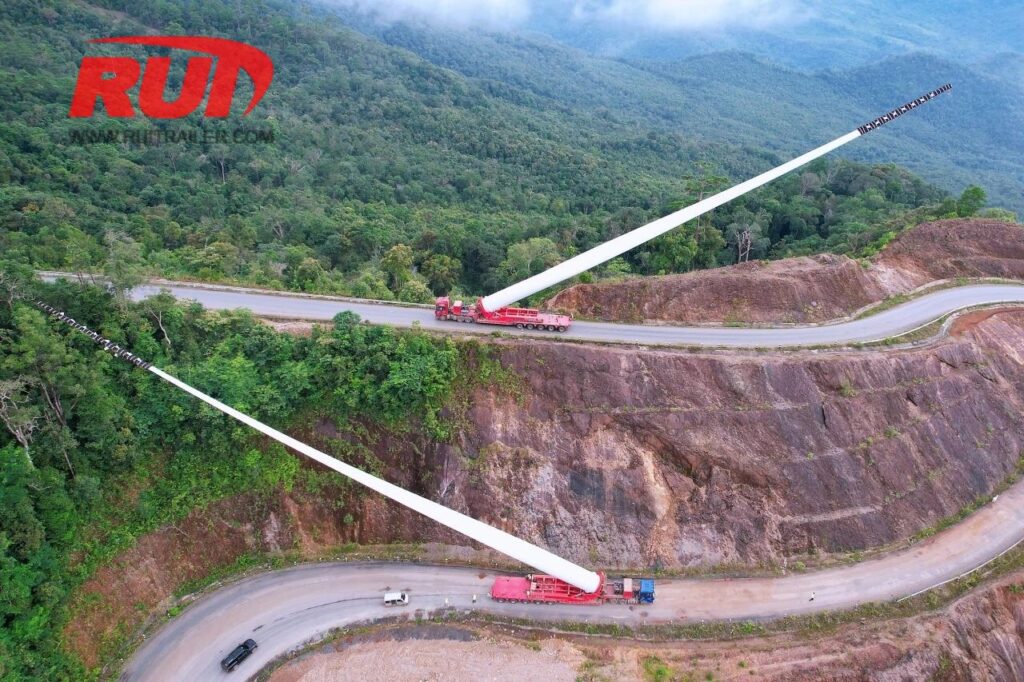
- Sharp Hairpin Turns: Mountainous terrain features narrow turning radiuses where rigid, horizontal trailer setups cannot physically navigate around cliff sides or rock walls.
- Overhead Obstructions: High-voltage power cables, low-clearance bridges, overhead signage, and tree canopies create vertical height barriers along the transport route.
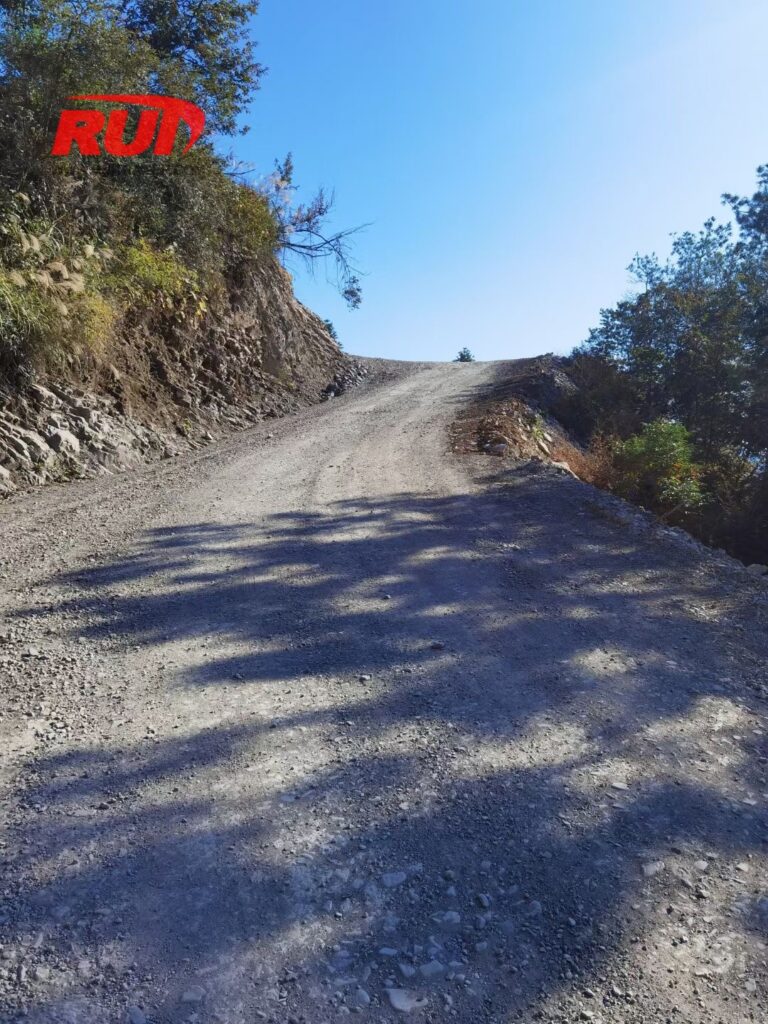
- Steep Inclines and Declines: Rugged terrain requires precise axle load distribution to maintain tractor traction and prevent trailer tipping or structural chassis overload on gradients exceeding 10% to 15%.
Overcoming these physical constraints without multi-million-dollar road civil works requires dynamically adjusting the blade's position in real time using a specialized rotor blade adapter.
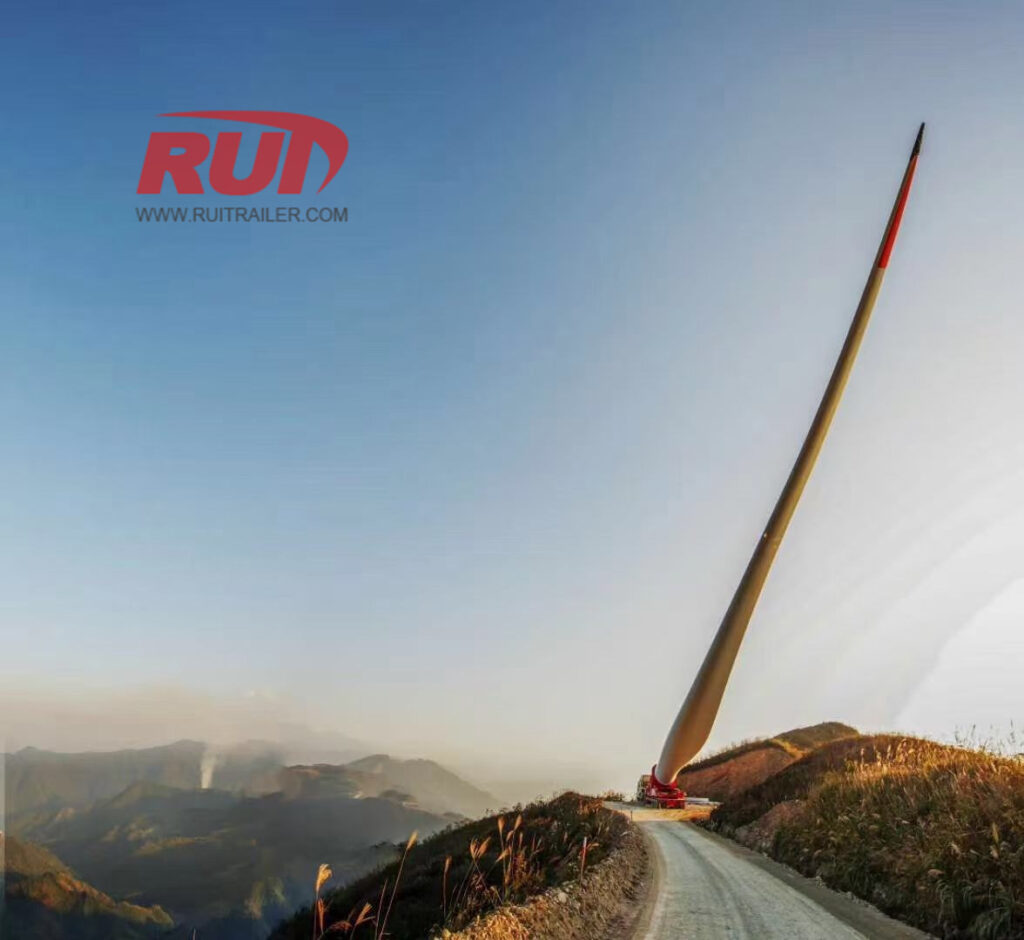
What is a Rotor Blade Adapter and How Does It Work?
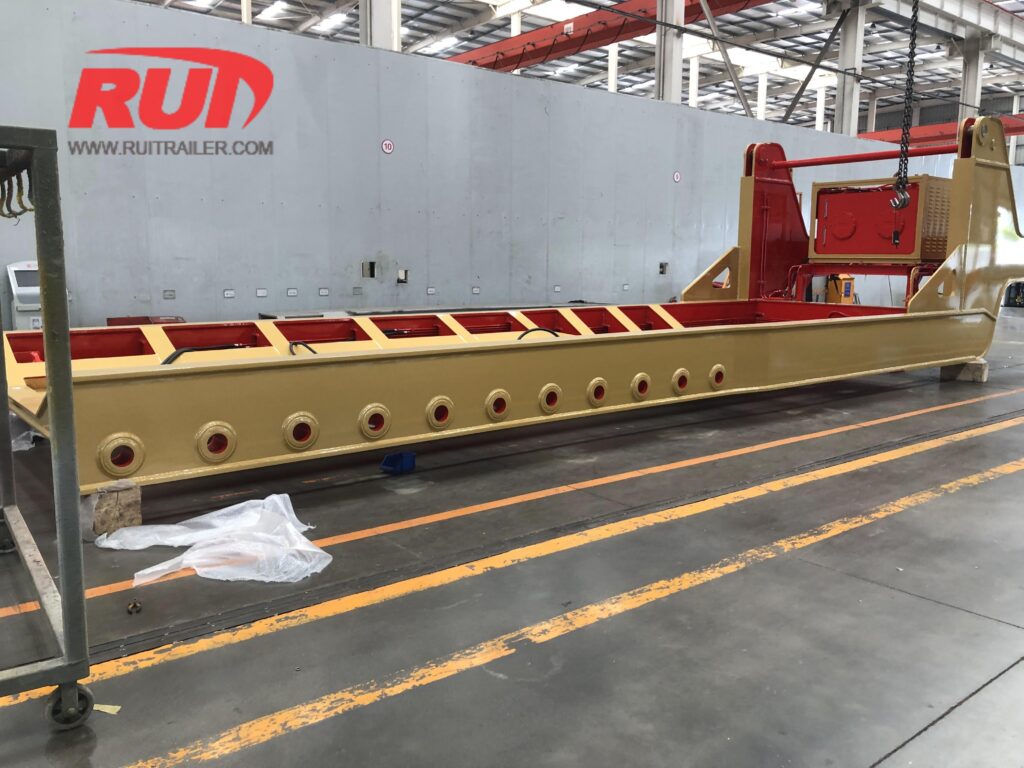
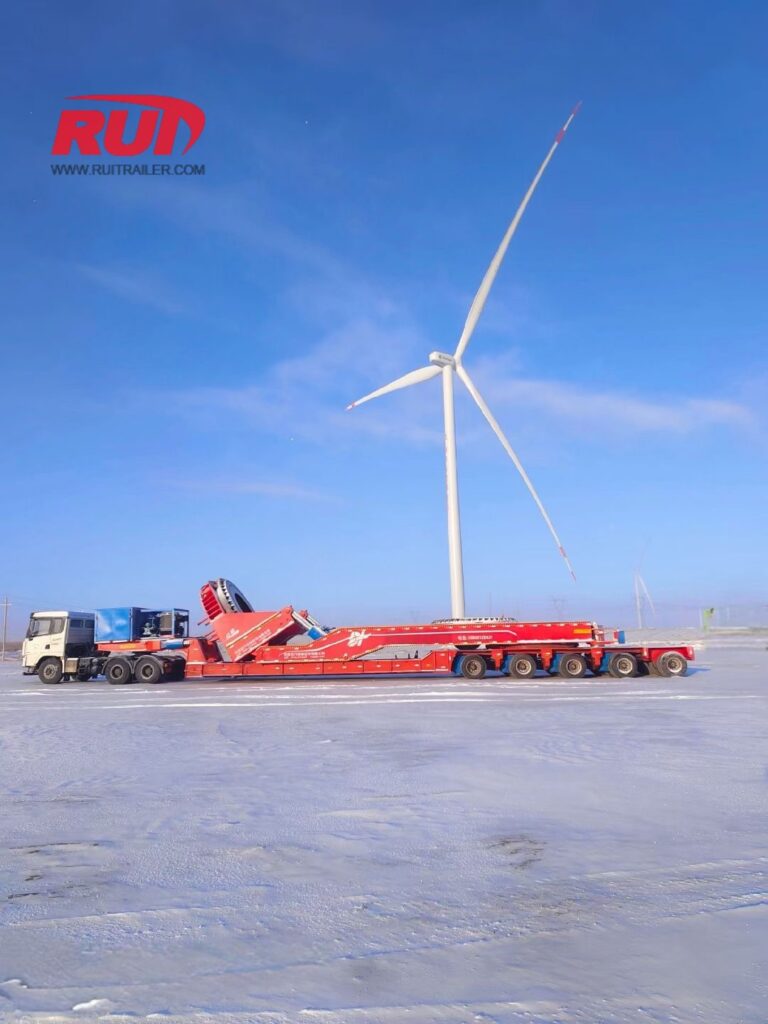
A rotor blade adapter is a high-capacity hydraulic mechanism mounted directly to specialized transport trailers. Instead of hauling long turbine blades horizontally, this attachment dynamically lifts, pitches, and swivels the blade during transit to navigate severe route obstacles.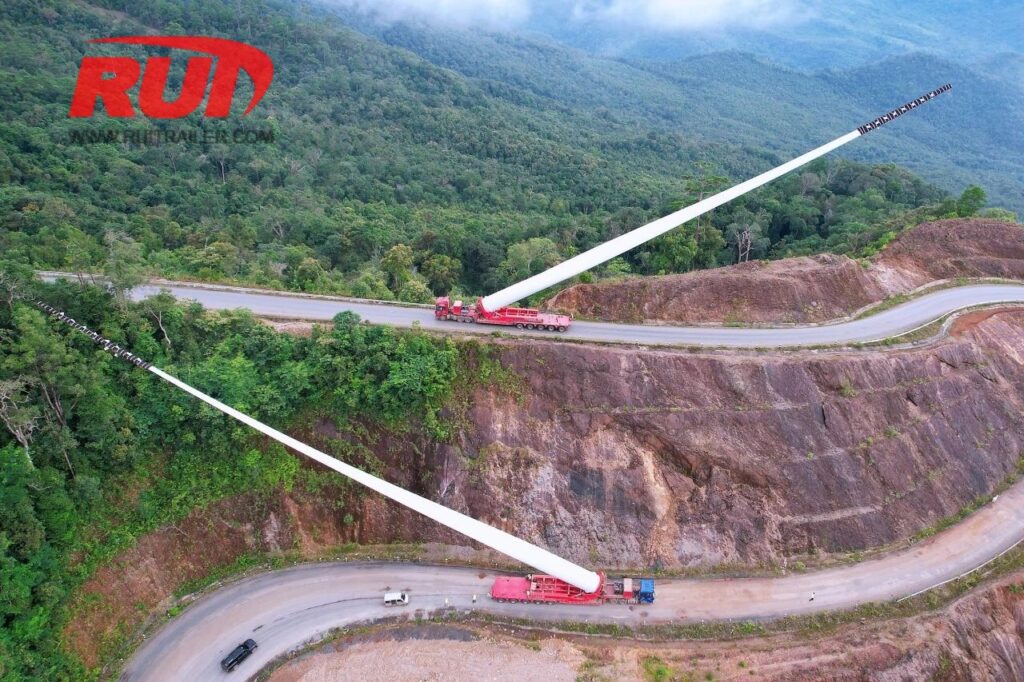
Core Architectural Principles
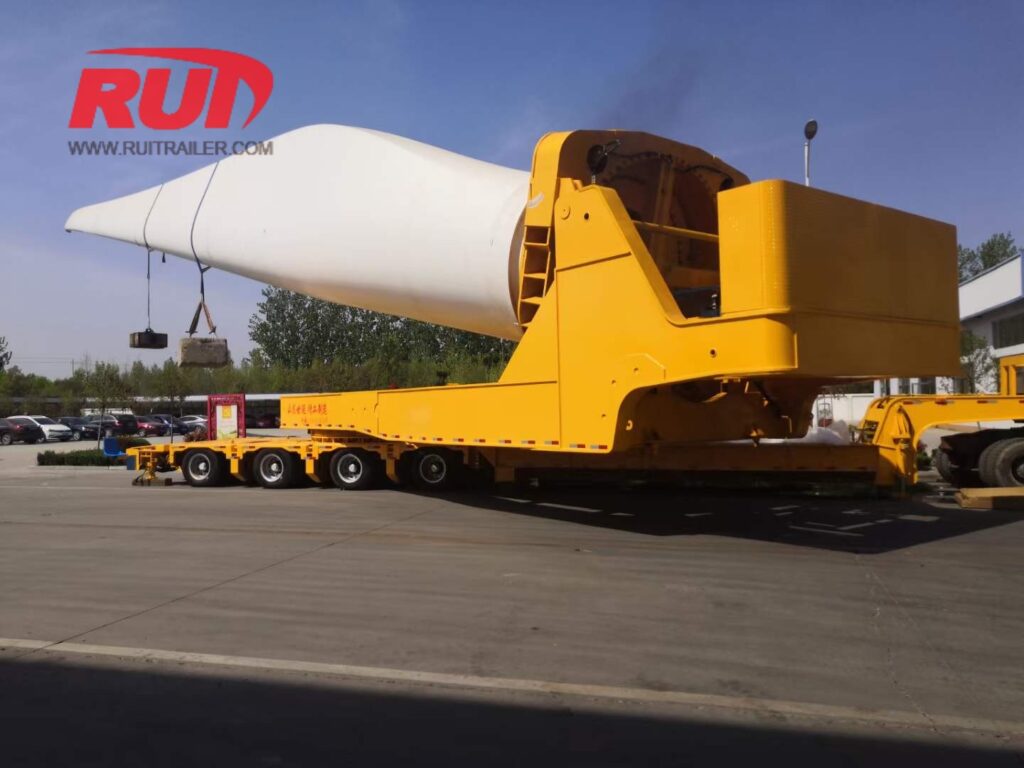
Standard extendable trailers need wide turning radiuses and clear overhead paths. Integrating a specialized wind turbine blade lifter transforms rigid horizontal haulage into dynamic, multi-axis maneuverability.
- Vertical Pitching: Heavy-duty tilt cylinders raise the blade tip up to 40°–50°, lifting the body over tree canopies, power lines, and embankments.
- Horizontal Rotation: A central hydraulic slewing ring swivels the blade up to 360° continuously (or ±110° in specific configurations), swinging the tip over cliff faces or tight mountain corners.
- Multi-Axis Alignment: By adjusting pitch and rotation simultaneously, operators maneuver 80m–120m+ blades through narrow access roads without widening the roadway footprint.
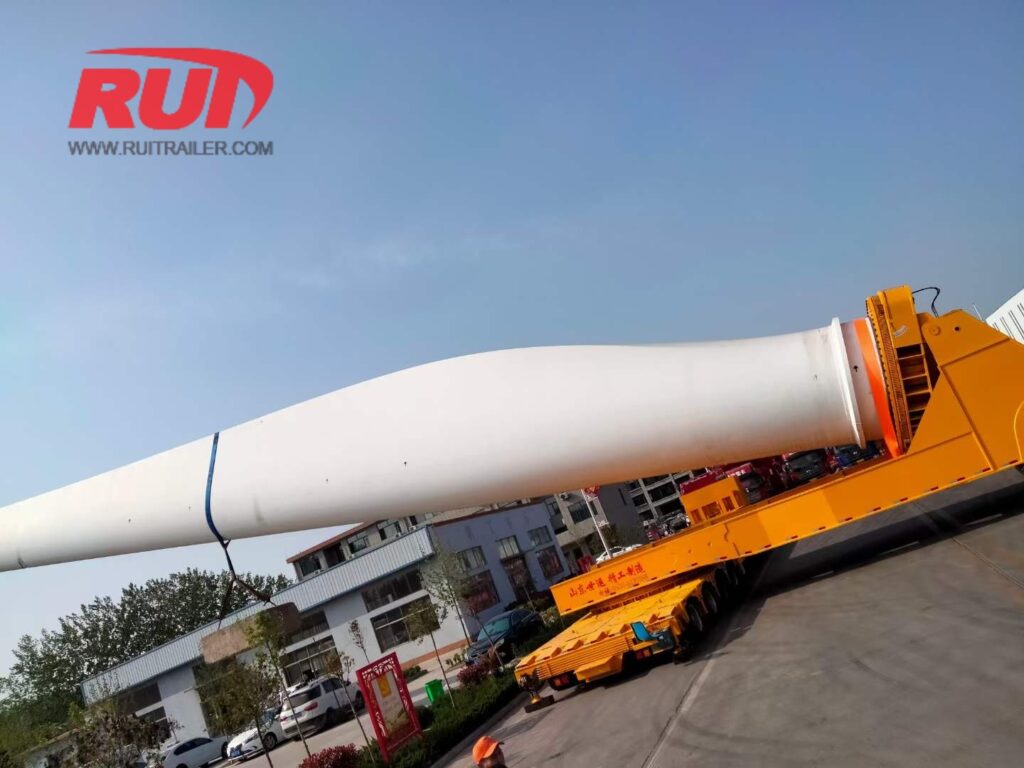
Major Mechanical Components
We manufacture our adapters using high-strength structural steel to handle severe bending moments and external wind shear during operation.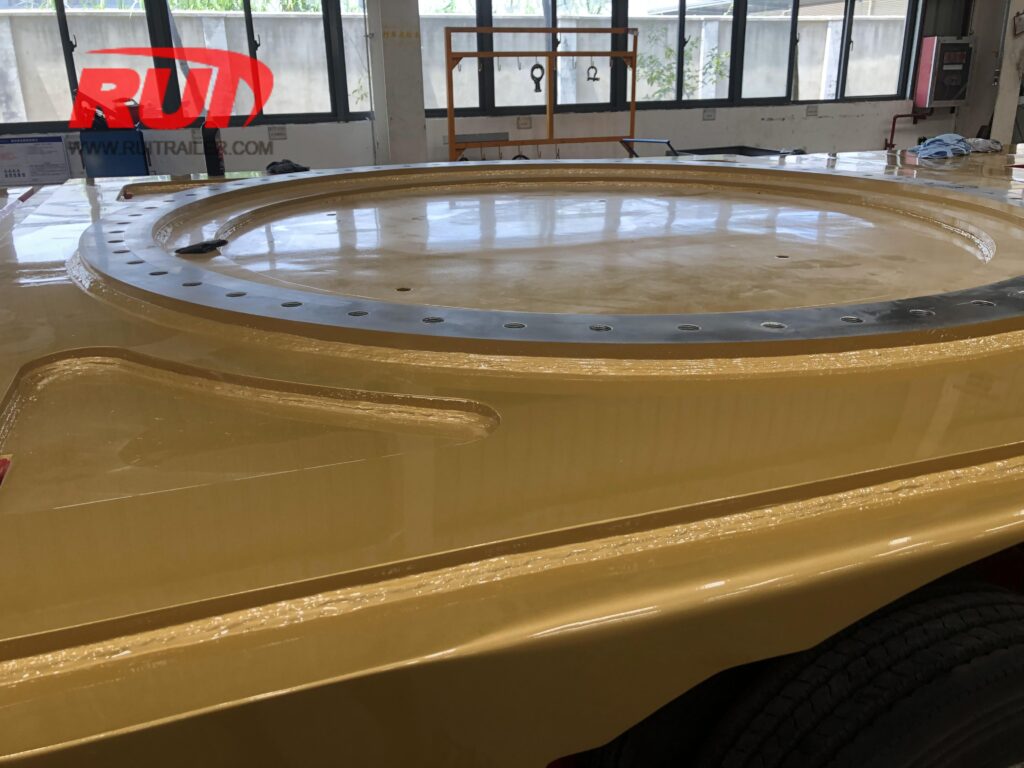
| Component | Function & Key Features |
|---|---|
| Heavy-Duty Hydraulic Slewing Bearing | Provides smooth rotational movement and absorbs extreme torque loads generated by elevated blade surface areas. |
| Hydraulic Tilt Cylinders | Dual-acting, stroke-synchronized cylinders that lock and adjust vertical angles precisely under heavy load. |
| Universal Root Flange Interface | Custom adapter plates compatible with major OEM bolt patterns (including Vestas, Goldwind, and Siemens Gamesa) for rapid securing. |
| Powerpack Unit (PPU) | Provides independent hydraulic pressure via an onboard diesel engine or a trailer-coupled hydraulic supply line. |
| Wireless Radio Remote Control | Enables operators to walk alongside narrow route bottlenecks and control lifting, rotation, and counterweights in real time. |
- Flexible Flange Adapters: Match various pitch-circle diameters, allowing quick changeouts between different turbine blade models.
- Wireless Remote Precision: Gives the operator direct line-of-sight monitoring, eliminating dead zones on high-risk mountain routes.
Key Technical Specifications & Operational Metrics
Primary Performance Parameters
We build each rotor blade adapter to withstand massive structural torque while keeping the entire transport rig balanced. The core performance metrics below define what our standard and heavy-duty wind turbine blade lifter equipment can handle in real-world transport scenarios.
| Metric | Standard Model Specs | Specialized / Heavy-Duty Model Specs |
|---|---|---|
| Max Payload / Lifting Capacity | Up to 25–30 Metric Tons | Up to 45+ Metric Tons |
| Vertical Pitch Angle (Tilt) | 0° to 40° | Up to 50° |
| Horizontal Rotation Angle | ±110° variable control | Full 360° infinite hydraulic rotation |
| Trailer Chassis Width | 3.4 m standard | hydraulic suspension up to 4.4 m |
| Operating Temperature Range | -20 °C to +40 °C | -40 °C package available |
When paired with a multi-axle hydraulic modular trailer, these core metrics allow operators to move XXL turbine blades across routes once considered impossible.
Dynamic Obstacle Clearance Capabilities
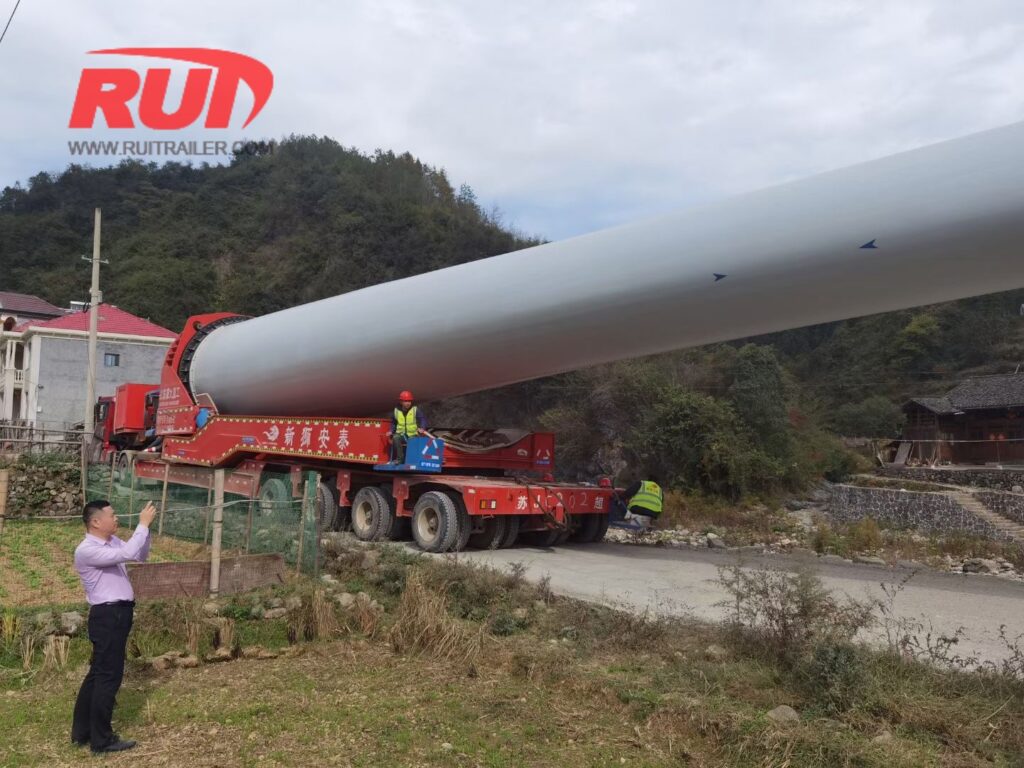
Moving over-dimensional cargo through tight corridors requires real-time control over the blade’s positioning. Our hydraulic pitch and tilt systems actively clear physical barriers without requiring structural road rebuilds:
- Tighter Turning Radiuses: Elevating the blade vertically from 0° up to 50° shortens the horizontal footprint of the trailer frame. This allows the transport team to clear sharp hairpin mountain curves and narrow village intersections without extending into off-road ditches.
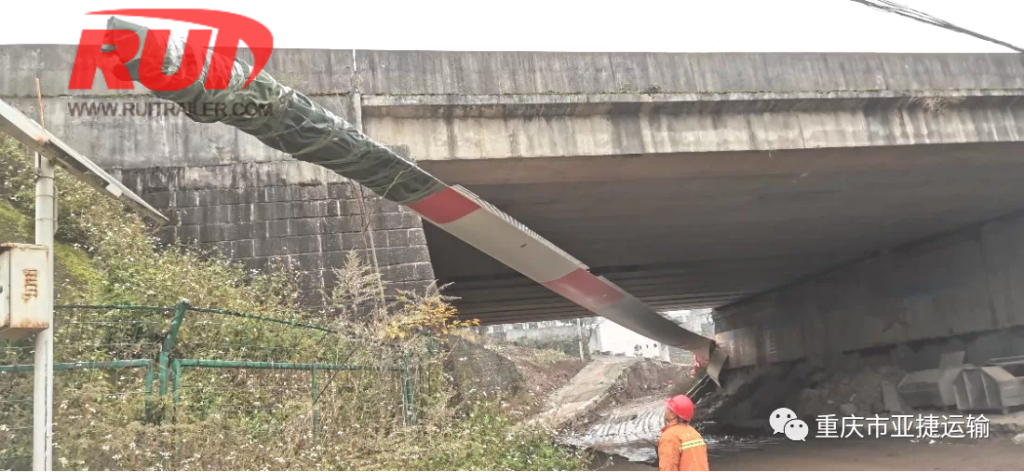
- Overhead Clearance Adjustments: When approaching low overpasses, bridge structures, or high-voltage lines, the operator uses the wireless remote to lower the pitch angle on the fly, sliding safely under vertical obstacles.
- Active Crosswind Steering: During elevated transport through gusty mountain passes, variable 360-degree blade rotation lets operators point the thin trailing edge of the blade directly into the prevailing wind, drastically reducing lateral force on the trailer chassis.

Safety & Stability Systems: Managing Wind Load and COG
Lifting a 100-meter turbine blade into the air turns it into a giant sail. At our manufacturing facility, we design each rotor blade adapter around stability mechanisms that automatically offset extreme wind vectors and shifting centers of gravity (COG) on steep mountain grades.
Frame Widening & Sideways Shifting
Maintaining lateral ground contact area is crucial during high-pitch transport maneuvers on narrow access tracks.
+-----------------------------------------------------------------------------------+
| Chassis Width Extension |
+-----------------------------------------------------------------------------------+
| Transport Mode | Standard Width | Widened Stance | Primary Benefit |
+--------------------+----------------+----------------+----------------------------+
| Highway / Transit | 3,400 mm | -- | Standard lane compliance |
| Mountain Pitching | -- | 4,400 mm | +30% Tipping resistance |
+-----------------------------------------------------------------------------------+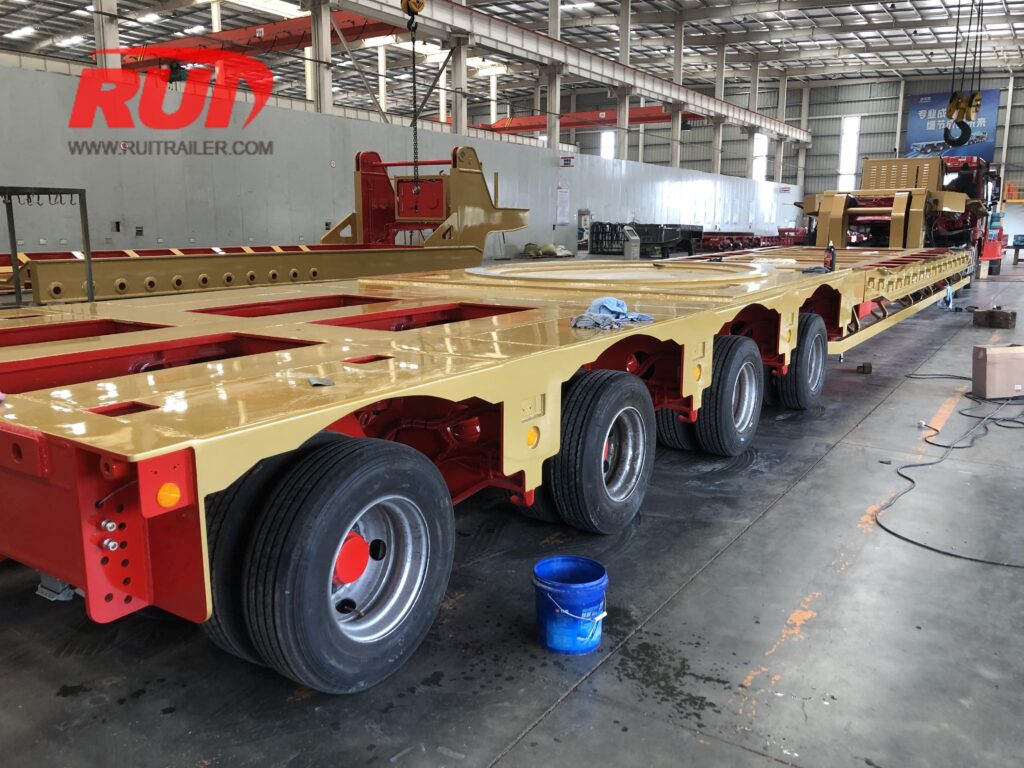
- Hydraulic Frame Widening: Our frame widening extension mechanism expands the base chassis width from 3,400 mm to 4,400 mm with hydraulic power, significantly increasing the tipping stability margin. Integrating these trailer safety features and load capacity options ensures safe performance across difficult mountain passages.
- Precision Sideways Movement: Integrated hydraulic shifting cylinders allow millimeter-exact lateral movement of the adapter structure, helping operators clear rock walls and utility poles without turning the main trailer chassis.
Modular Trailer Integration & Carrier Compatibility
We design our rotor blade adapter systems to interface seamlessly with existing heavy-haul transport fleets, ensuring high mechanical versatility across different trailer setups and site conditions.
Pairing Rotor Blade Adapters with SPMTs
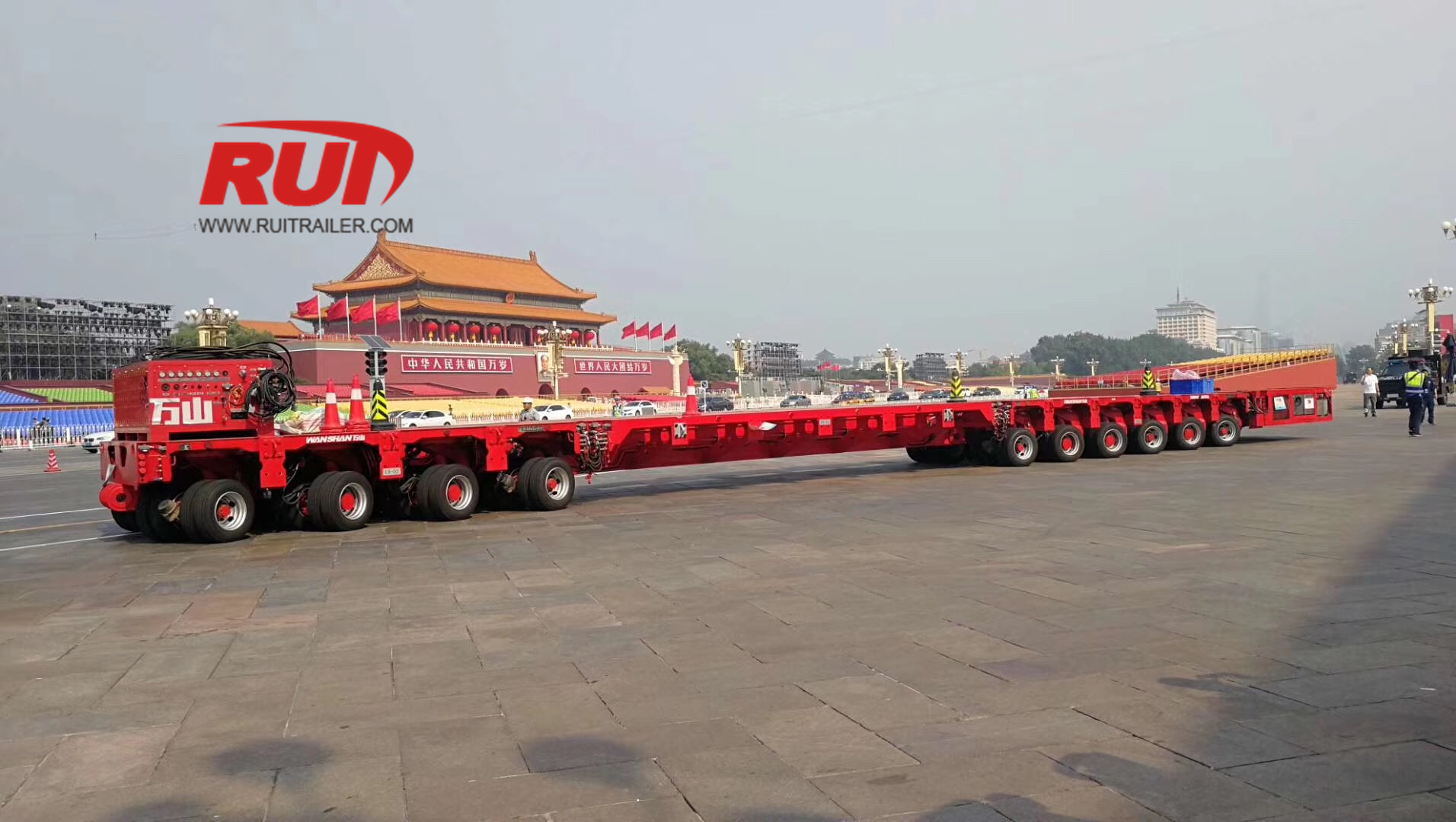
When navigating tight mountain hairpin turns or constricted job sites, mounting our adapter onto a https://heavydutymodule.com/self-propelled-modular-transporterhttps://heavydutymodule.com/self-propelled-modular-transporter-spmt-heavy-load-solution/">self-propelled modular transporter (SPMT) delivers maximum maneuverability.
- Multi-Directional Steering: Full electronic multi-mode steering (including crab, carousel, and diagonal modes) allows precision positioning around tight obstacles.
- Independent Hydraulic Suspension: Keeps the payload level and ensures equal weight distribution over uneven off-road terrain.
- Tractor-Free Operation: Self-propelled drive units eliminate the need for long prime movers on restricted road bends.
Integration with Hydraulic Multi-Axle Trailers
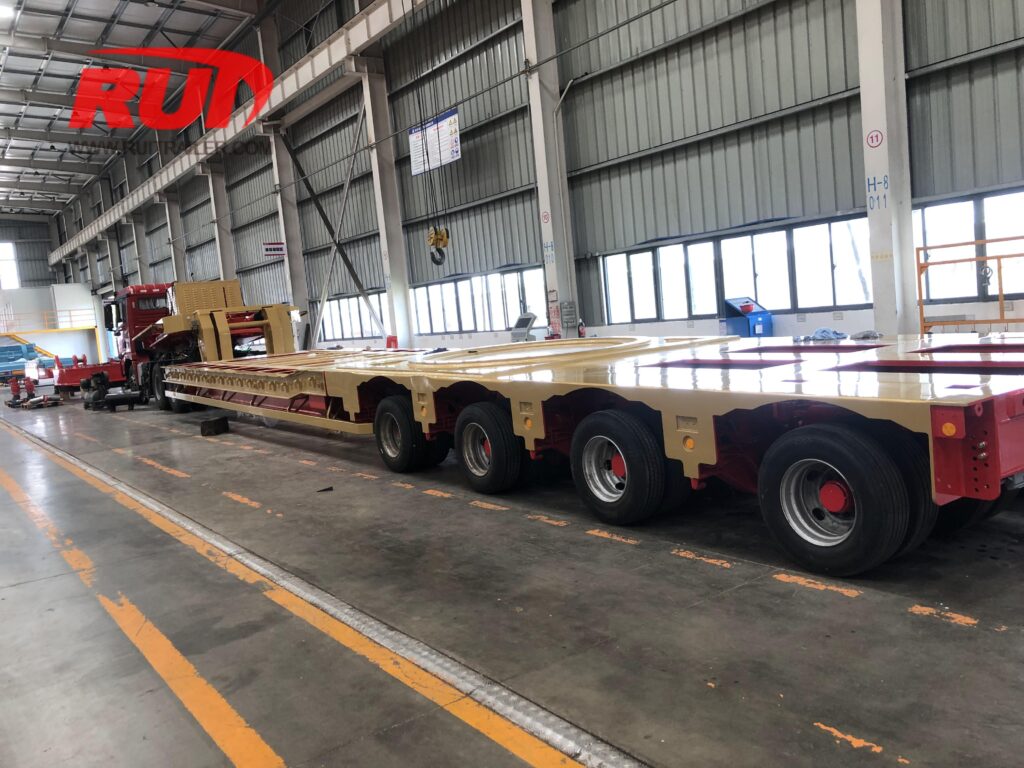
For long-distance highway transport and regional road haulage, our adapter mounts directly onto standard THP/SL style multi-axle hydraulic platform trailers.
- Direct Axle Coupling: Bolted or pinned connections integrate directly into standard modular chassis frames.
- Precise Load Distribution: Engineering calculations match axle counts to regional highway weight regulations, keeping axle loads well within legal limits.
- Integrated Hydraulic Lines: Fast-plug hydraulic couplings draw power directly from trailer hydraulic systems or dedicated powerpacks.
Custom Mounting Interfaces & Alloy Steel Construction
We build our rotor blade adapter units to integrate with your existing fleet without forcing you into single-vendor trailer systems.
- Universal Compatibility: Custom adapter interface plates match major European and Asian modular trailer bolt patterns and spacing.
- High-Strength Steel Chassis: Fabricated from high-tensile alloy steel to withstand continuous dynamic bending moments and extreme torsional stress on rugged haul roads.
- Fatigue-Resistant Welds: Reinforced structural joints prevent metal fatigue during high-angle tipping and 360-degree rotation operations.

Cost-Benefit Analysis: Rotor Blade Adapter vs. Infrastructure Reconstruction
Modifying mountain roads, acquiring land, and clearing forests for mega-scale wind blades destroys project margins and creates massive delays. Using a rotor blade adapter bypasses these civil works by tilting and swiveling the cargo over obstacles rather than tearing down the terrain.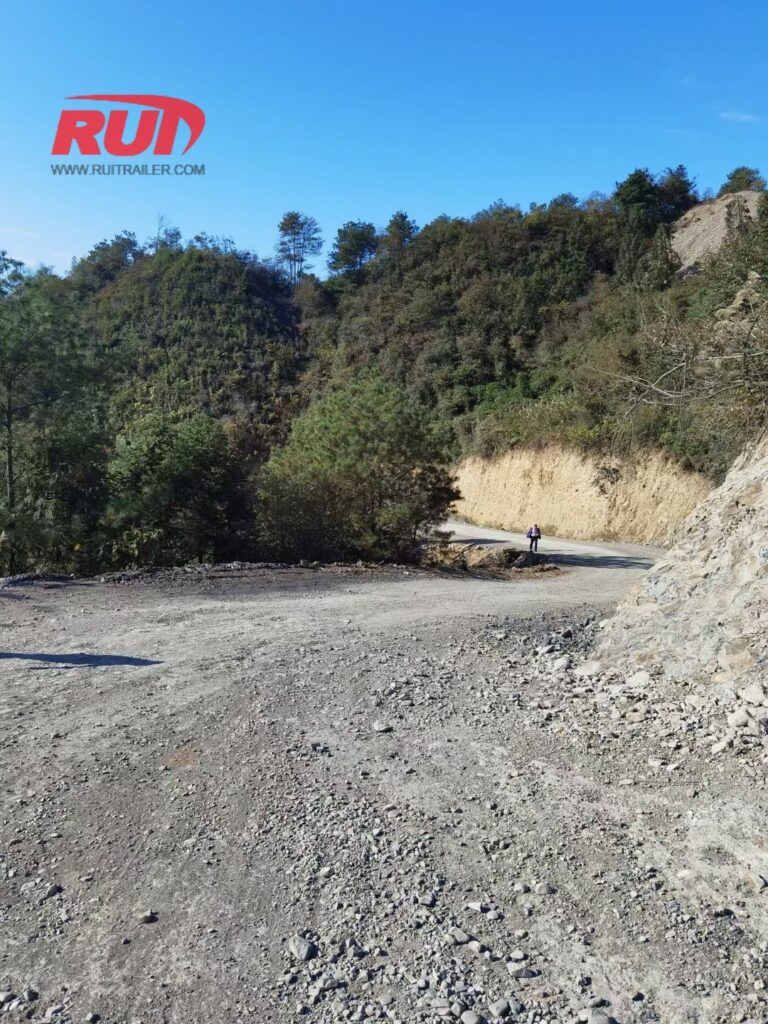
Capex and Opex Comparison
Investments in route modification are permanently sunk costs tied to a single location. In contrast, heavy-duty transport equipment represents a reusable asset that delivers continuous returns across multiple project sites.
| Evaluation Metric | Rotor Blade Adapter Solution | Infrastructure Reconstruction |
|---|---|---|
| Permitting & Environment | Minimal site footprint; preserves existing forests and terrain | Extensive land acquisition, environmental reviews, and logging permits |
| Preparation & Deployment | Immediate equipment setup and rapid mobilization | Months or years of civil engineering, grading, and road construction |
| Direct Expense | Single equipment purchase with long service life | High, non-recoverable per-kilometer costs for widening and paving |
| Asset Versatility | Reusable across dozens of mountain wind farm logistics sites | Single-use modified routes with zero salvage value |
Bypassing Civil Engineering Bottlenecks
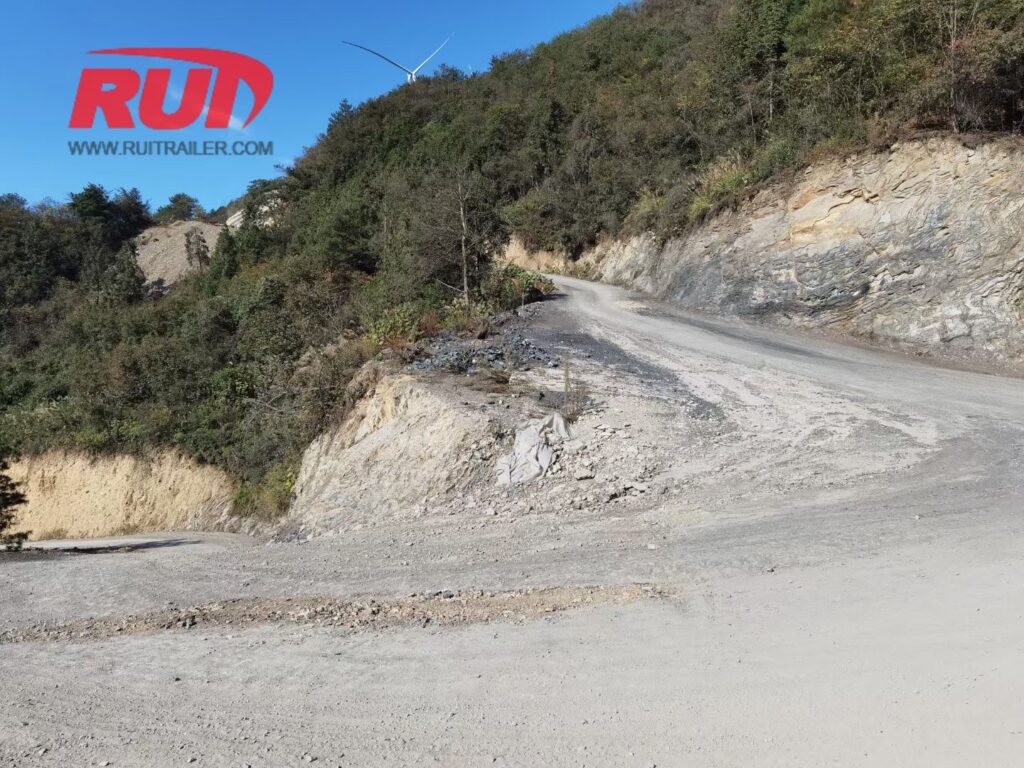
Civil engineering projects on remote wind routes routinely face land disputes, strict environmental regulations, and weather-related delays. Adapting your fleet to handle tricky routes directly eliminates these headaches.
- Immediate Route Clearance: Lifting and pitching blades dynamically lets transport crews navigate hairpin turns and narrow roads without spending capital on widening turn radiuses.
- Streamlined Transport Fleet Integration: Integrating adapters with existing modular platforms or a steerable trailer reduces the overall footprint required for last-mile delivery.
- Accelerated Commercial Operation Date (COD): Eliminating road construction shortens the project timeline by months, allowing power generation to start on schedule and protecting power purchase agreement revenues.
- High Long-Term ROI: A single adapter unit pays for itself within one or two mountain wind farm deployments by cutting massive site preparation costs.
Field Operation Protocol for Rotor Blade Adapters
Executing last-mile transport on steep mountain climbs or tight rural roads requires a disciplined field workflow. We design our rotor blade adapter systems to fit directly into standard heavy-haul routines, maximizing safety without delaying the project schedule.
Pre-Transport Route Surveying & Digital Simulation
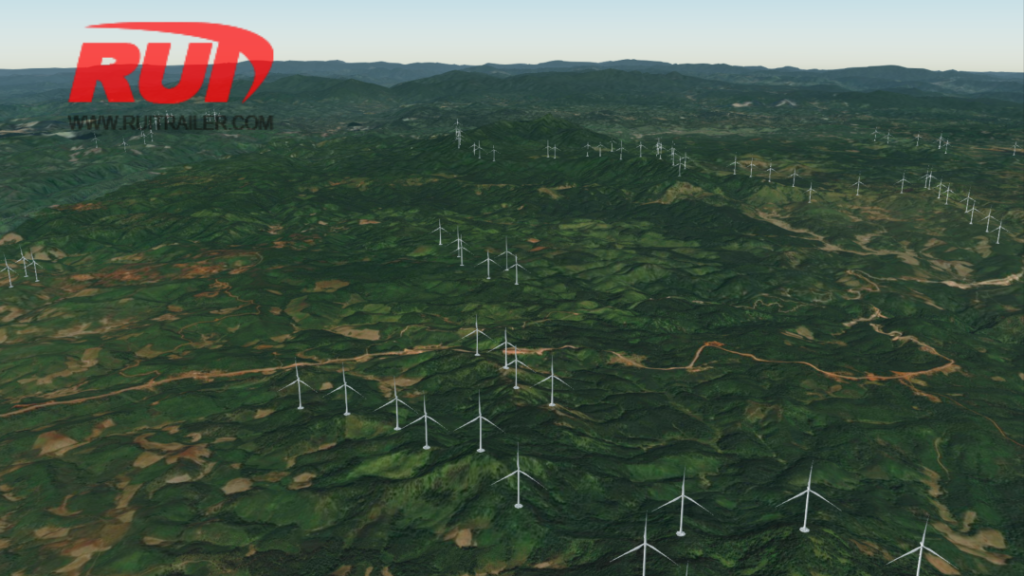
Before equipment ever touches the tarmac, we conduct a full 3D route survey using LiDAR terrain scanning and 3D sweep-path software.
- Virtual Swept-Path Analysis: We model trailer footprints, blade pitch angles, and tail swings against road geometry to pinpoint precise dynamic clearance zones.
- Pinch-Point Identification: High-voltage overhead cables, tree canopies, and rock faces are tagged with minimum distance thresholds.
- Obstacle Avoidance Planning: We pre-determine exact tilt angles (up to 60°) and rotational maneuvers for each tight bend, ensuring drivers know when to lift or swivel the blade in advance.
Loading and Flange Bolting Protocols
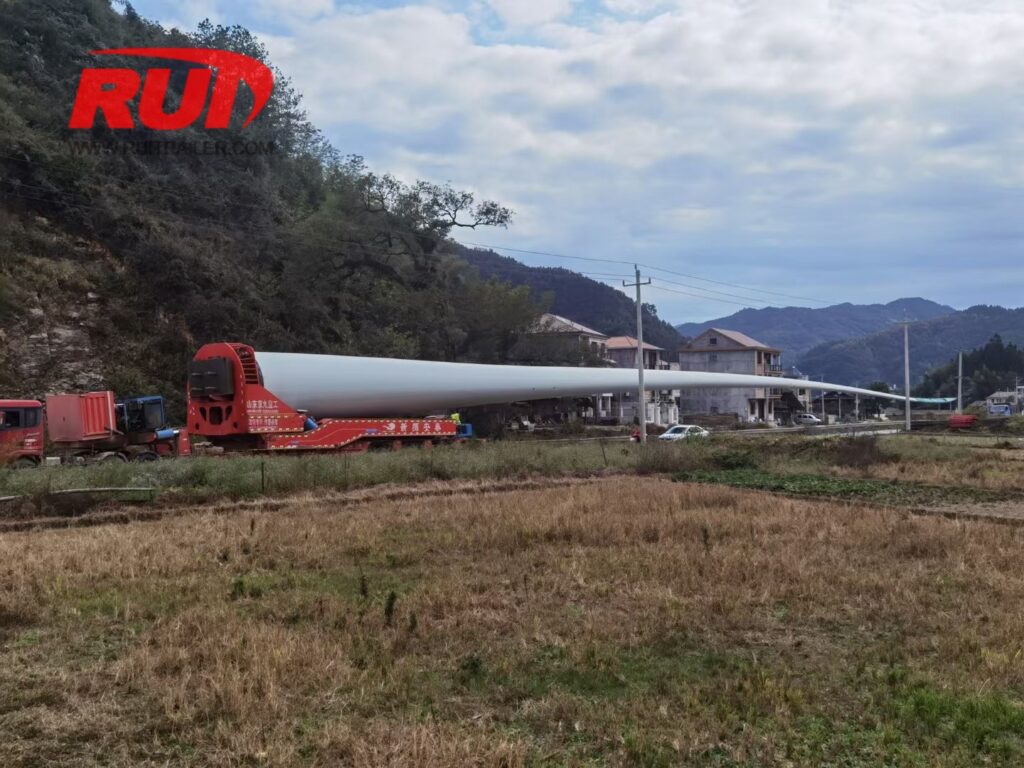
Securing an 80m+ blade demands strict mechanical alignment to maintain structural integrity and correct center of gravity (COG).
- Flange Alignment: The blade root is positioned against our universal root flange adapter plate using an overhead crane.
- Torque Verification: High-tensile studs are torqued down to exact OEM specifications using hydraulic torque wrenches to handle extreme bending moments.
- Safety Check: We cross-check our wind turbine blade transport safety standards and run a full hydraulic pressure check on the tilt cylinders, slewing ring, and counterweight tracks before moving the rig.
Crew Coordination & Specialized Roles
Operating a blade lifter in complex terrain requires direct, real-time communication between a dedicated four-person crew:
| Role | Primary Responsibility | Essential Tools |
|---|---|---|
| Transport Commander | Oversees overall route safety, monitors wind speed, and makes real-time GO/NO-GO calls. | Anemometer, master comms unit |
| Adapter Operator | Controls blade pitch, continuous rotation, and counterweight positions. | Wireless radio remote control |
| Steering Driver | Manages tractor unit or platform trailer steering and speed. | Multi-axle steering console |
| Route Marshals | Escort the rig, spot physical clearances, and clear public traffic at pinch points. | Two-way radios, spotter flags |
Unloading, Return Trips, and Empty Transport
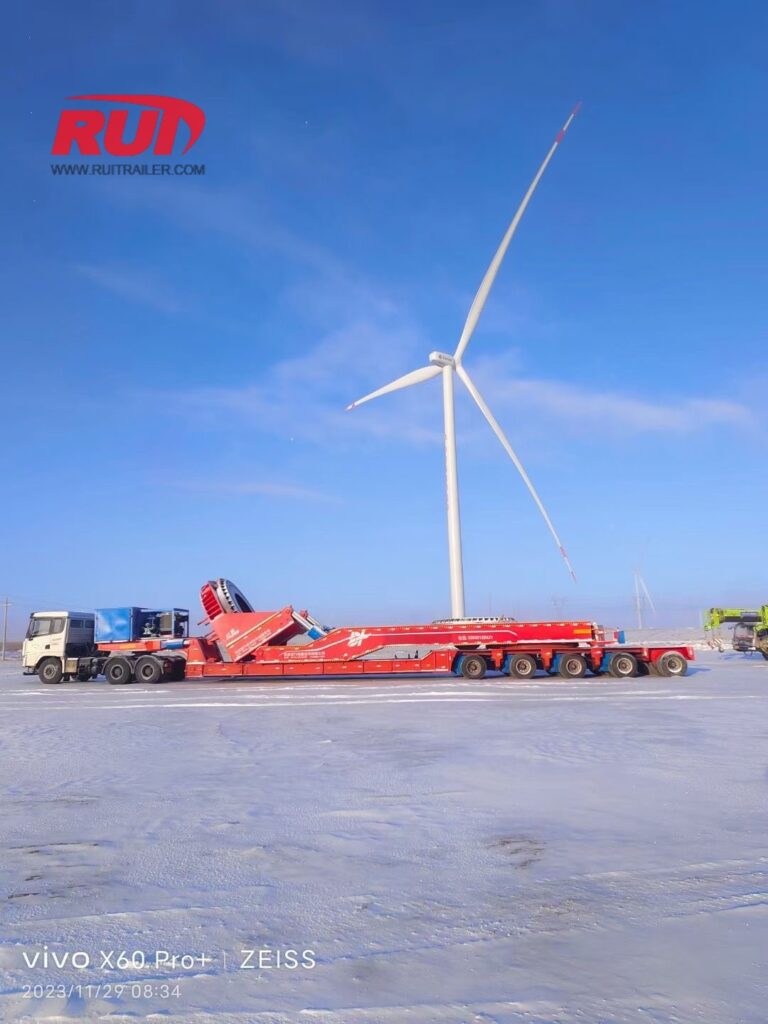
Once the blade is safely offloaded at the turbine pad, the return journey must be optimized for speed and stability.
- Unbolting & Storage: The blade is released onto the pad assembly, and root hardware is inspected for wear.
- Bed Lowering: The rotor blade adapter is returned to a 0° horizontal position and locked mechanically for transit.
- Width Retraction: Hydraulic extension frames pull the chassis back from 4.4m to a standard 3.4m transport width.
- Empty Configuration Transport: When mounted on a multi-axle platform trailer or a self-propelled modular transporter, the lowered profile significantly cuts wind resistance and allows standard escort speeds back to the port or staging area.
Strategic Equipment Selection & Engineering Recommendations
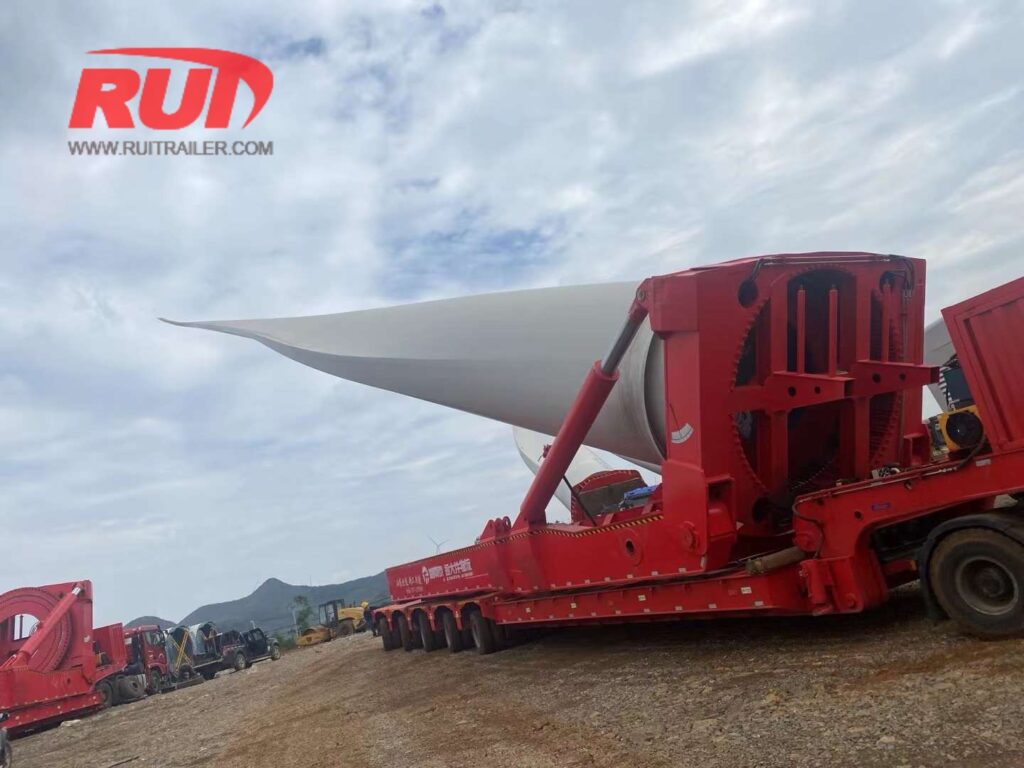
Selecting the right rotor blade adapter requires evaluating real-world job site risks against hardware capability. We build our equipment to withstand the intense dynamic forces generated during last-mile wind turbine transport, where mechanical failure is not an option.
Key Engineering Evaluation Factors
When assessing a wind turbine blade lifter for your transport fleet, focus on four critical engineering criteria:
- Maximum Torque Capacity & Bending Moment: Modern blades exceeding 80–100 meters create massive structural leverage. Ensure the heavy-duty slewing support bearing and hydraulic tilt cylinders are rated to handle severe pitching torque and lateral dynamic loads when elevated up to 40° or 50°.
- Wind Speed Limits & Dynamic Stability: Elevated blades create a massive surface area exposed to crosswinds. Verify the maximum safe operating wind speed limit (typically up to 10–12 m/s) and confirm the unit incorporates a real-time center of gravity tracking system paired with an active counterweight.
- Interface Versatility: Look for universal root flange adapter plates compatible with major OEM bolt patterns. The frame must offer seamless mechanical and hydraulic coupling across both standard hydraulic modular trailer platforms and multi-directional SPMT trailer configurations.
- Service Responsiveness & Component Standardization: Field downtime on remote mountain routes is expensive. Select units built with globally available hydraulic valves, reliable powerpack units (PPU), and rugged wireless radio remote interfaces backed by fast manufacturer technical support.
| Evaluation Metric | Technical Standard & Performance Requirement |
|---|---|
| Max Tilting Angle | 0° to 40° / 50° with redundant hydraulic load-holding check valves |
| Rotation Capability | Continuous 360° or ±110° infinite hydraulic rotation for tight curves |
| Trailer Integration | Universal mounting frames for multi-axle platform trailers and SPMTs |
| Control System | Dual wireless radio remote interface with manual valve overrides |
Frequently Asked Questions About Rotor Blade Adapters
Maximum Blade Length Capacity
Modern heavy-duty units easily handle onshore wind turbine blades ranging from 80 meters to over 120 meters in length. Because a rotor blade adapter can tilt the blade vertically up to 60° and execute continuous 360-degree blade rotation, it significantly shortens the effective ground footprint during transport. Instead of dragging a 100-meter horizontal load through tight turns, our units lift the tip above roadside obstacles, allowing ultra-long blades to navigate mountain routes with tight turning radiuses.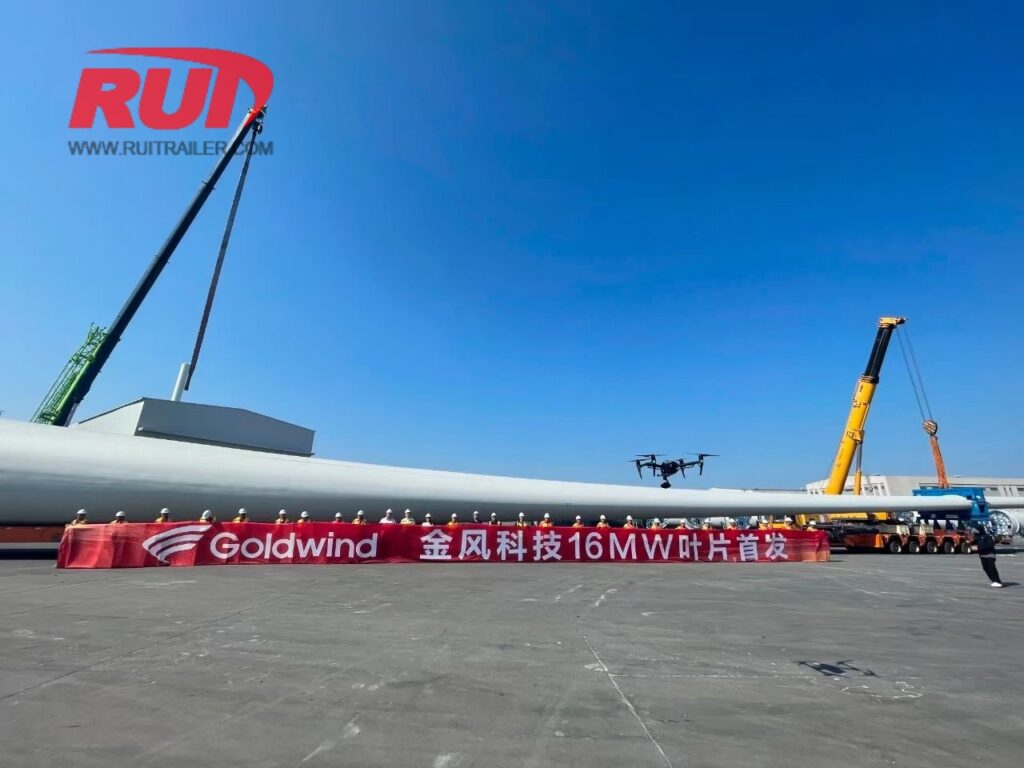
Compatibility with SPMTs and Hydraulic Trailers
Yes, our units are engineered for universal carrier integration. The adapter base connects directly to standard multi-axle platform trailers (such as THP/SL designs) as well as self-propelled modular transporters (SPMTs).
When paired with a specialized multi-axle wind blade trailer or SPMT grid, hydraulic equalization maintains balanced axle load distribution to meet regional highway weight regulations. Additionally, our high-capacity wind blade lifter equipment incorporates universal root flange adapter plates that fit the bolt patterns of major global blade manufacturers without requiring major frame modifications.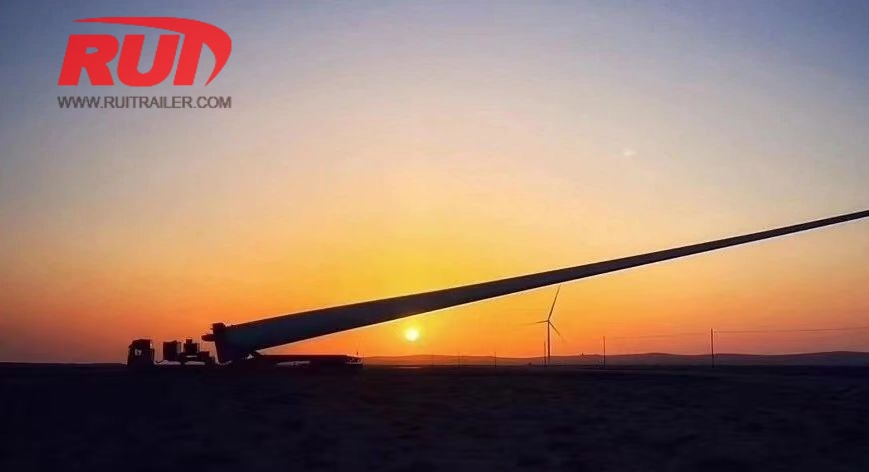
 English
  German
  Turkish
  French
  Portuguese
  Russian
  Arabic
  Hindi
Hindi  Vietnamese
  Chinese
  Spanish
  Indonesian
  Swahili