

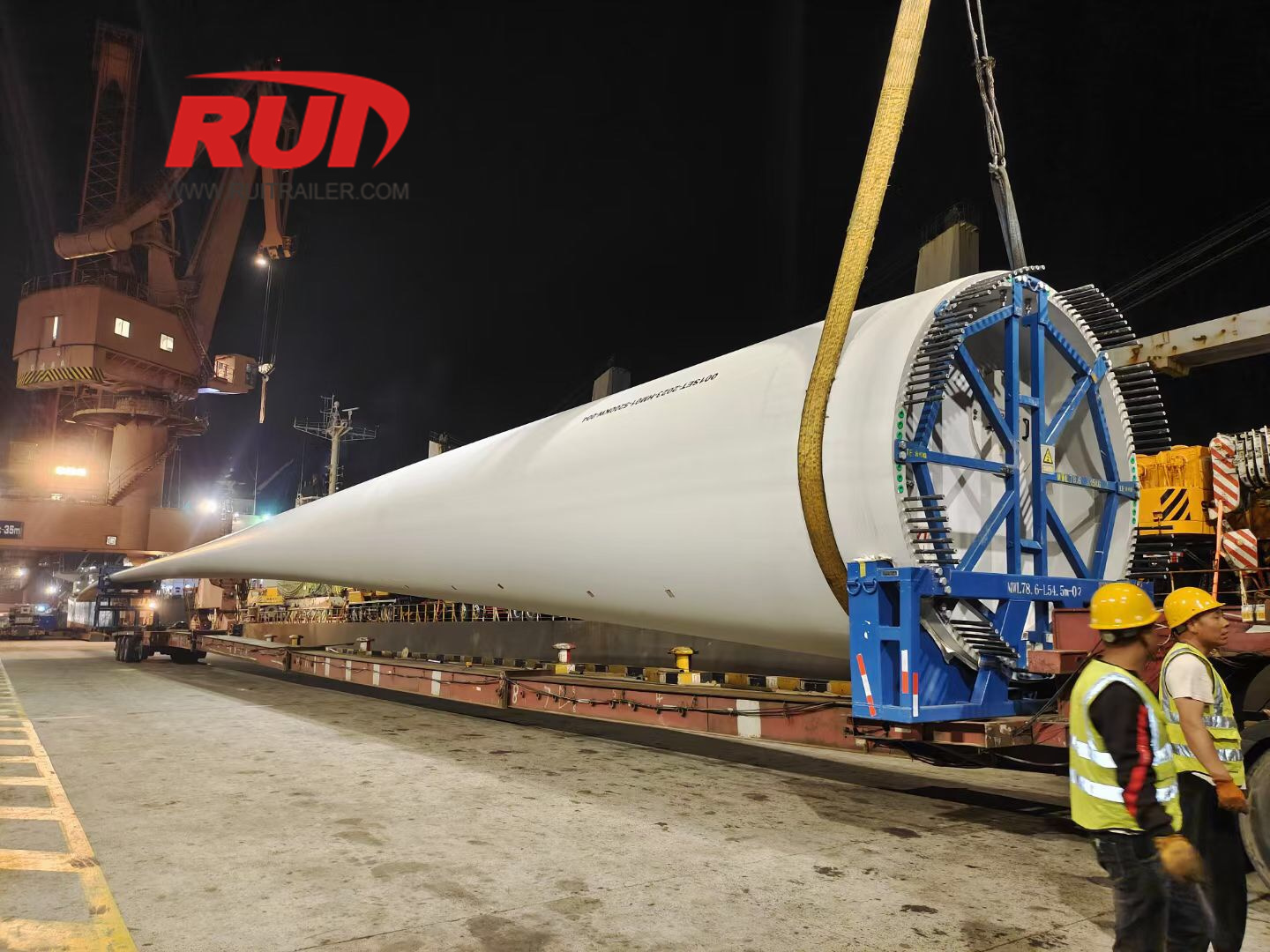
The Truck Carrying Wind Turbine Blade of a Mega-Load: Why Wind Blades Defy Standard Logistics
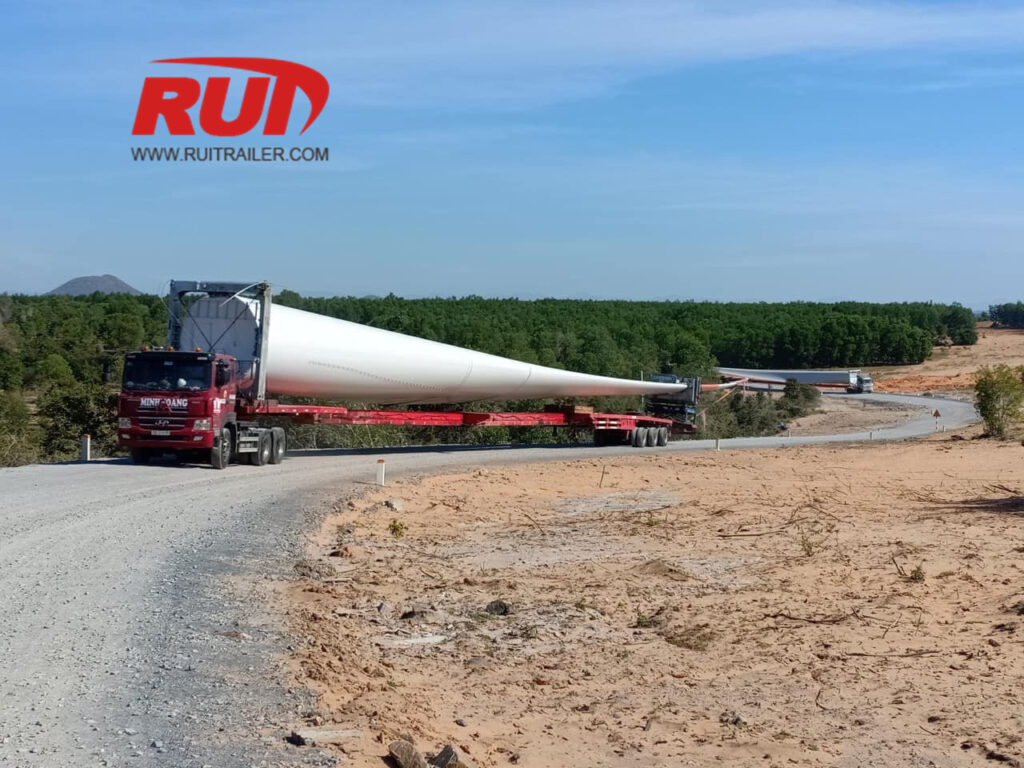
Modern wind turbine blades represent some of the most demanding cargo in logistics. Offshore and onshore blades routinely exceed lengths of 70 to over 100 meters, with weights reaching tens of tons. Their elongated, slender form factors push beyond conventional oversized load standards, requiring specialized handling and transport.
These blades are engineered from advanced fiberglass and carbon fiber composites to achieve aerodynamic efficiency and structural strength. However, this combination of massive scale and delicate materials creates a unique logistical paradox: the blades are incredibly heavy yet surprisingly fragile. Even minor impacts or excessive bending during transit risk crippling damage.
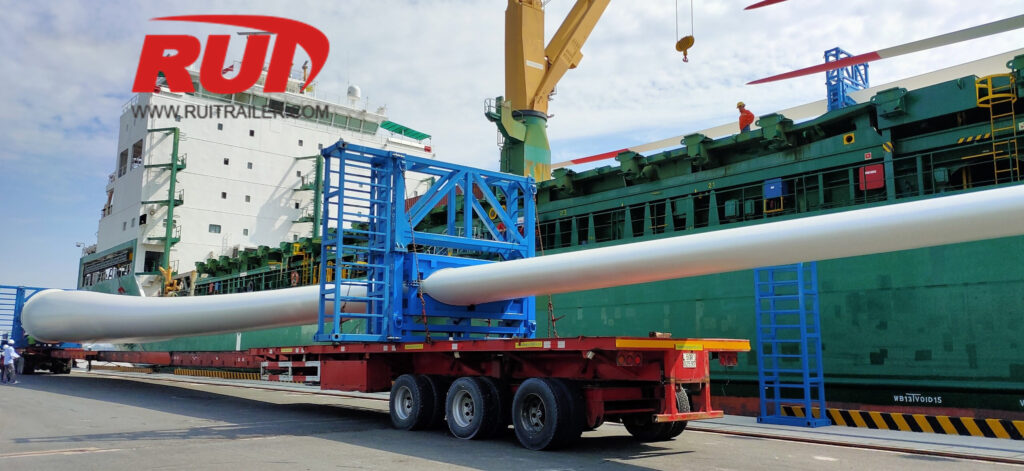
Understanding this duality—extreme length and weight paired with material fragility—is crucial. It explains why transporting wind turbine blades demands wind blade trailers, precise route planning, and expert handling far beyond typical heavy haul trucking operations. The blade’s sheer size and sensitivity set a new benchmark for what qualifies as a “mega-load” in renewable energy logistics.
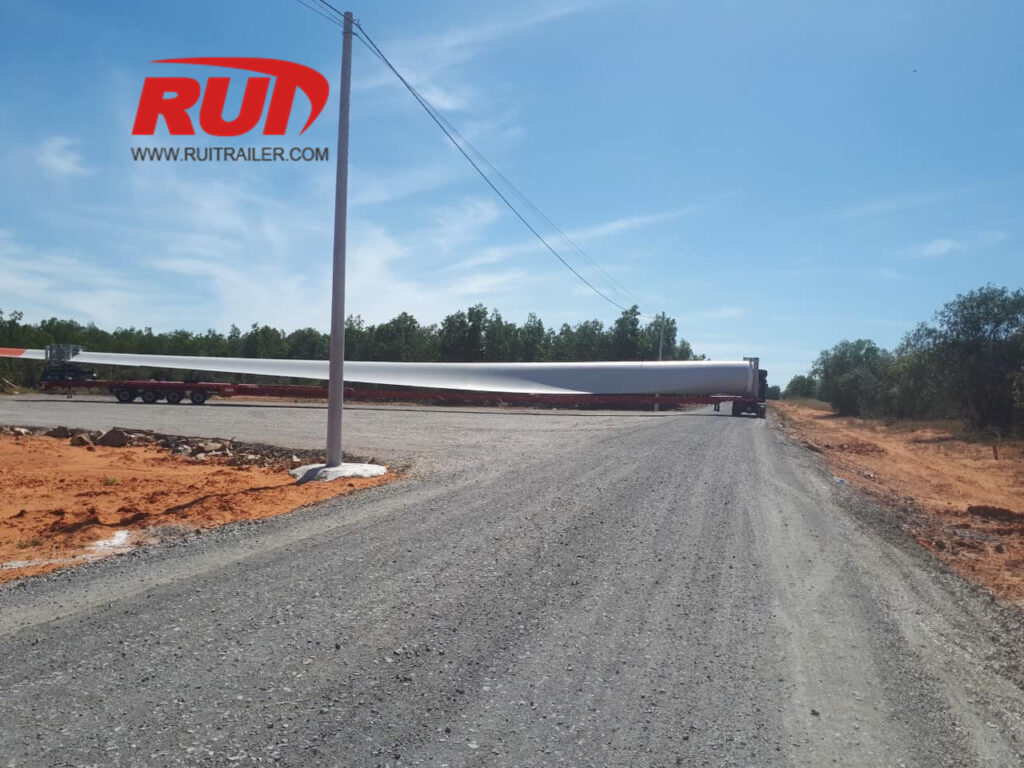
Transporting wind turbine blades from the factory to the wind farm is a logistical challenge unlike any other. The oversized load must navigate a gauntlet of infrastructure obstacles—low bridges that limit height clearance, tight roundabouts designed for smaller vehicles, and narrow rural roads where even standard trucks struggle to maneuver. These factors require precise coordination to avoid costly delays or damage.
On top of this, severe weather plays a major role in transport risk. Crosswinds can easily destabilize the long, aerodynamic blades, while icy roads and steep gradients complicate hauling heavy loads safely. Maintaining stability under these conditions demands specialized equipment and experienced drivers.
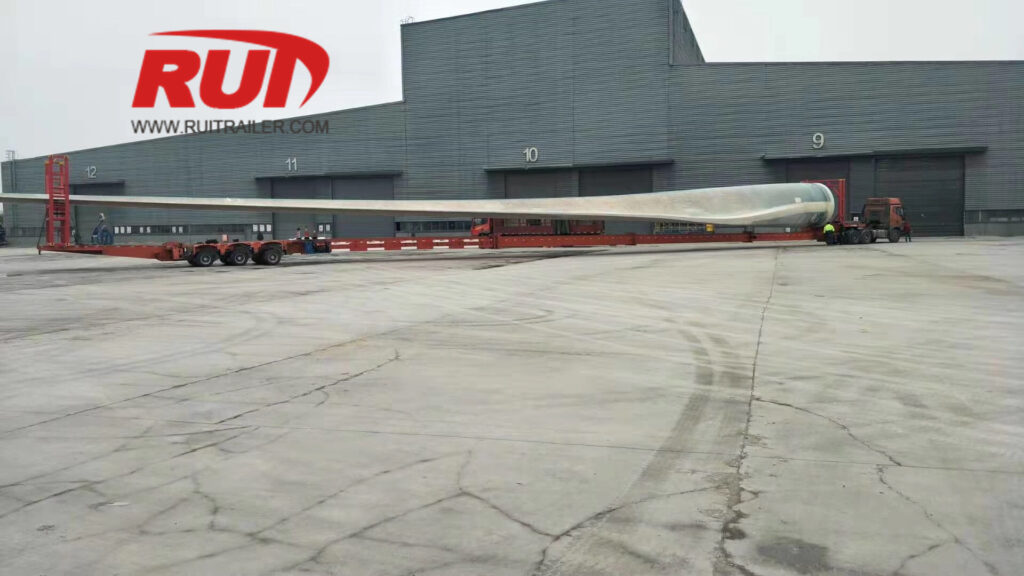
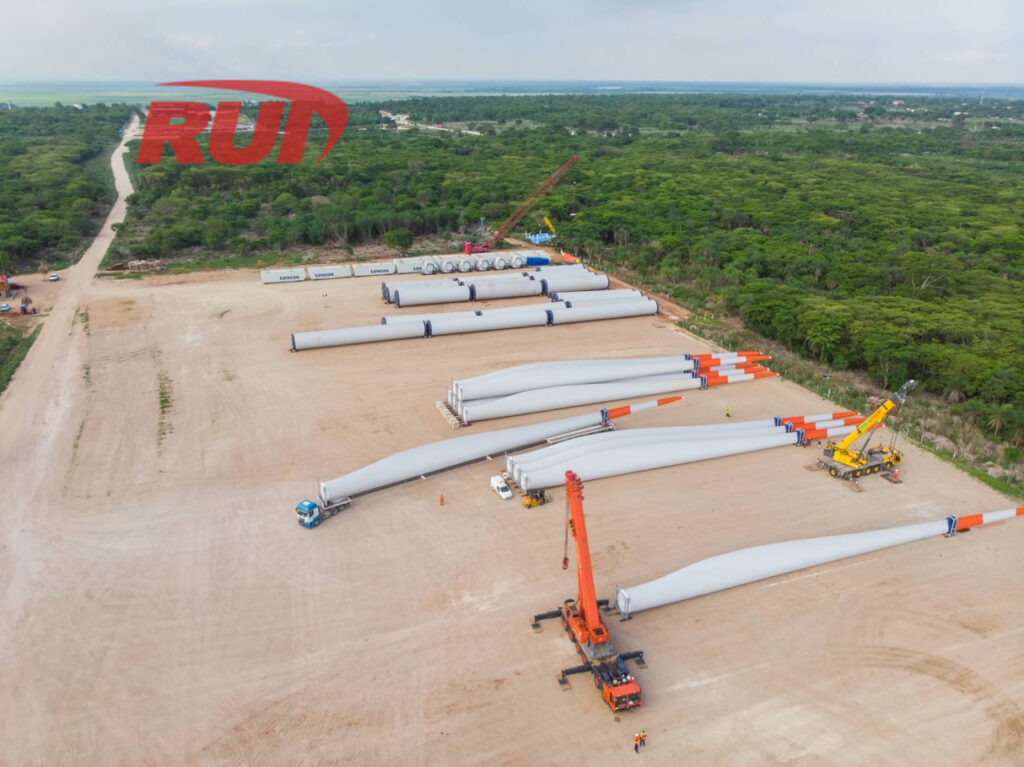
The route planning process is extensive, often taking a year or more. It involves engineers, municipal authorities, and transport crews working closely to survey every mile, identify barriers, and implement solutions like temporary road widening or bridge clearance adjustments. This painstaking preparation aims to clear every obstacle before the oversized trailer even moves, ensuring the blade arrives intact and on schedule.
For these types of operations, industry-leading heavy haul trailers and detailed abnormal load route planning protocols are essential to overcome the complex infrastructure and environmental challenges. More specialized trailers and insightful planning reduce risks significantly along these extreme deliveries. Heavy haul trailers guide for maximum payload and safety covers these critical aspects in detail.
When heavy transport goes wrong, the consequences can be costly and dangerous. Common mishaps include bridge strikes, where oversized wind turbine blades collide with low-clearance structures, and railroad crossing accidents caused by misjudged timing or signal failures. These incidents not only damage critical infrastructure but also bring expensive project delays and hefty repair bills. Beyond equipment and infrastructure, the human element plays a crucial role in heavy haul safety. Pilot cars and pole cars guide the convoy through tight spots, while constant communication protocols between drivers and escorts help anticipate and prevent potential hazards. Without disciplined coordination and well-trained crews, even the best planning can fall apart, turning a complex blade transport into a logistical nightmare. Ensuring strict adherence to safety measures minimizes risks, protects assets, and keeps wind turbine blade delivery on schedule. For more on specialized trailers handling such oversized loads, see our guide to hydraulic modular trailers.
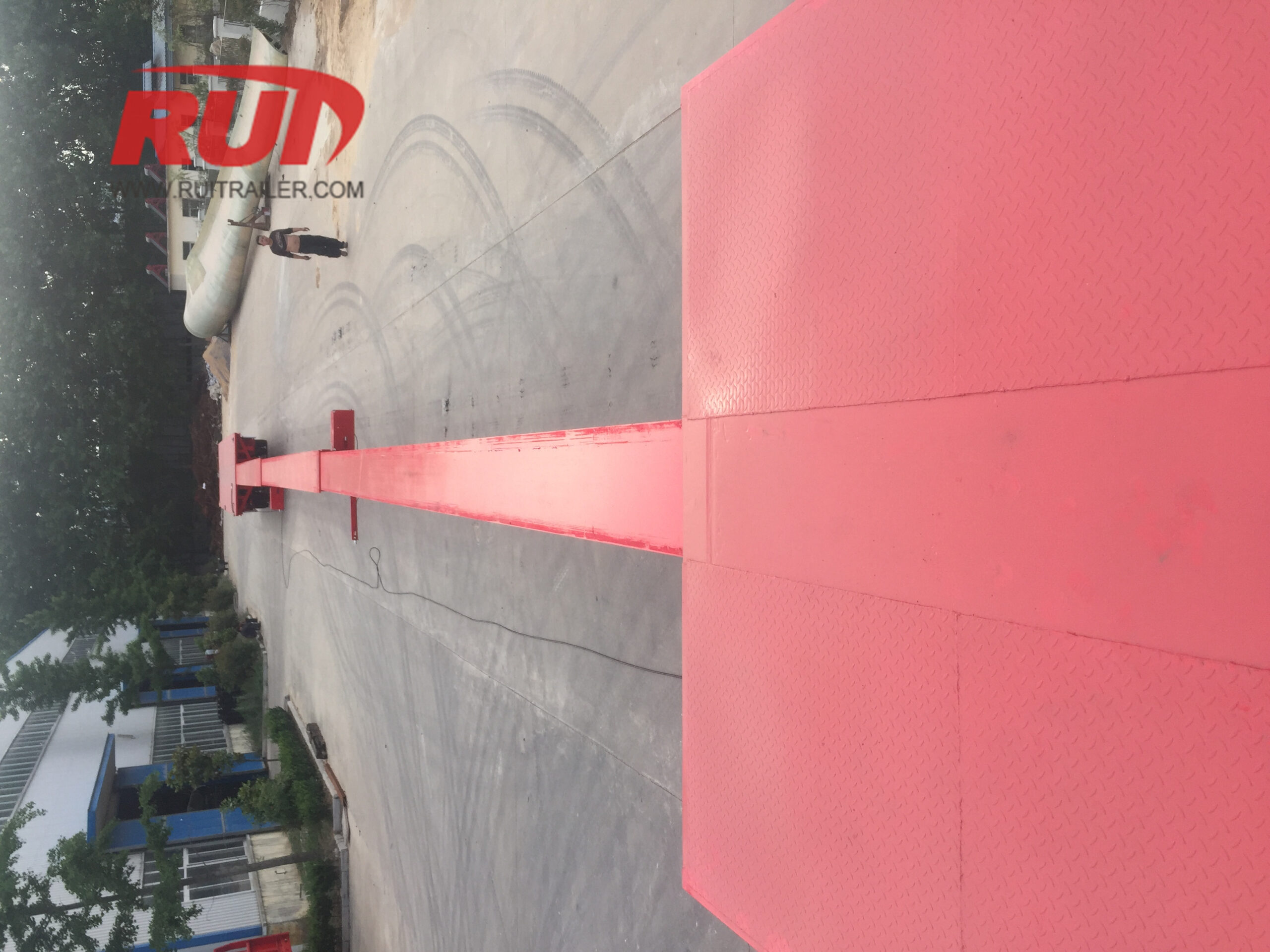
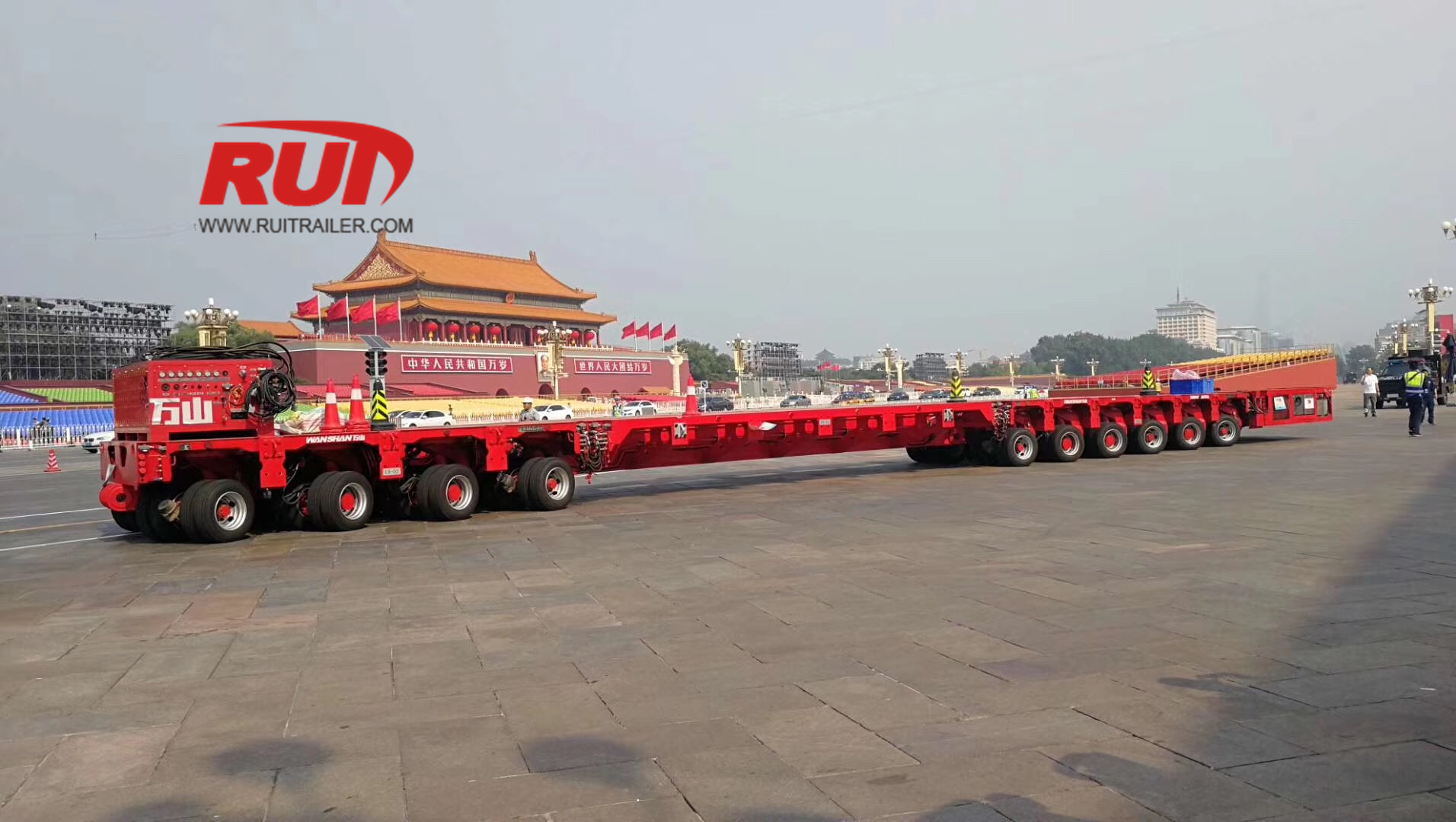
Specialized wind turbine blade trailers are the unsung heroes of blade transportation. Telescopic extendable trailers feature multi-stage flatbeds that expand lengthwise, accommodating ultra-long blades without compromising stability. Rotor blade lifter adapters use hydraulic systems to pitch blades up to 60 degrees, enabling safe clearance of bridges, power lines, and other obstacles during transit. Independent steerable axles on multi-axle modular trailers provide exceptional maneuverability, allowing precise turns on narrow, winding mountain roads and difficult terrain. These engineered solutions are essential for handling the unique challenges of oversized load transport in the wind energy supply chain, ensuring blades arrive intact and on schedule. For more details on these specialized trailers, reviewing multi-axle wind blade trailer options offers valuable insight into their design and capabilities.
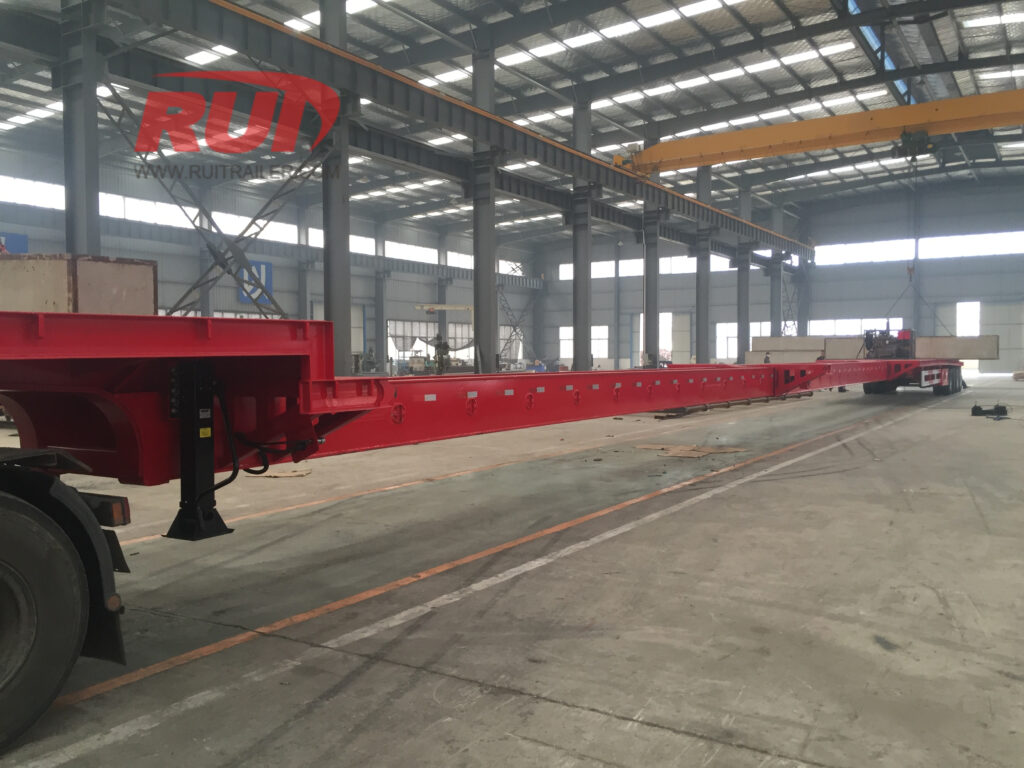
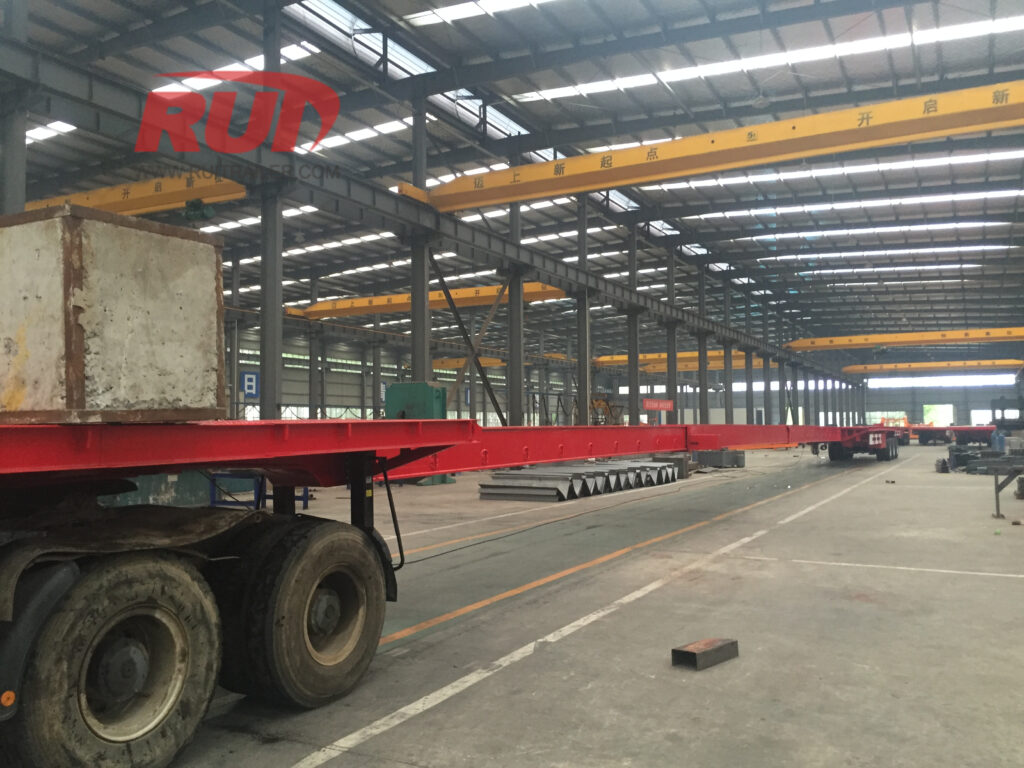
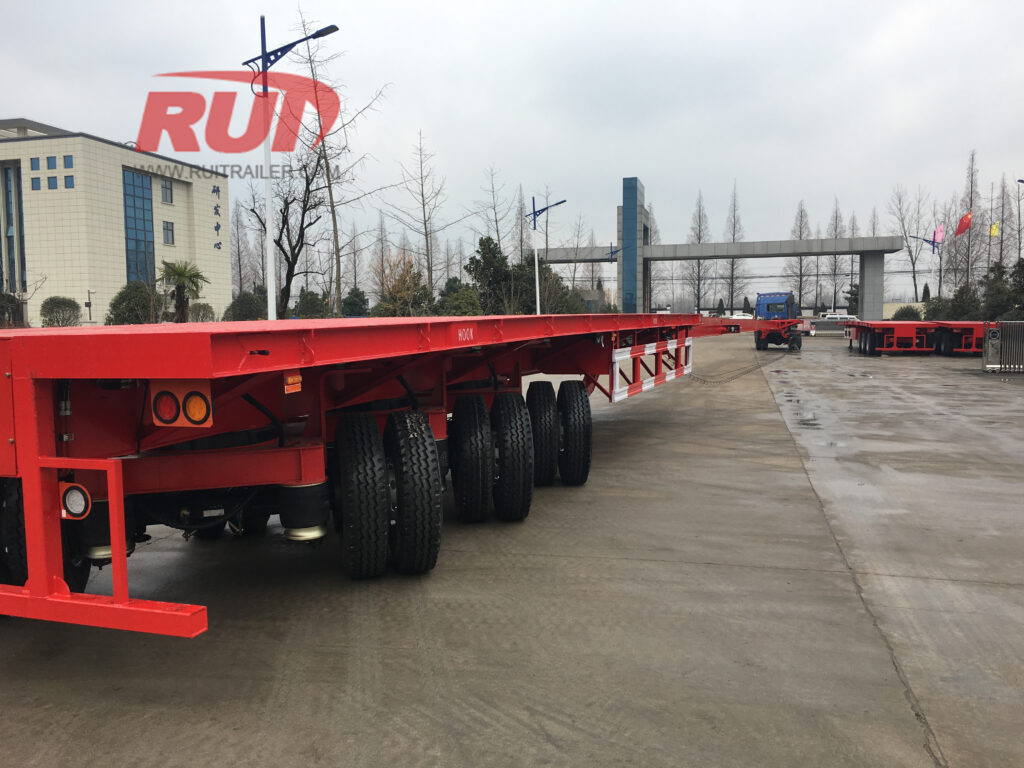
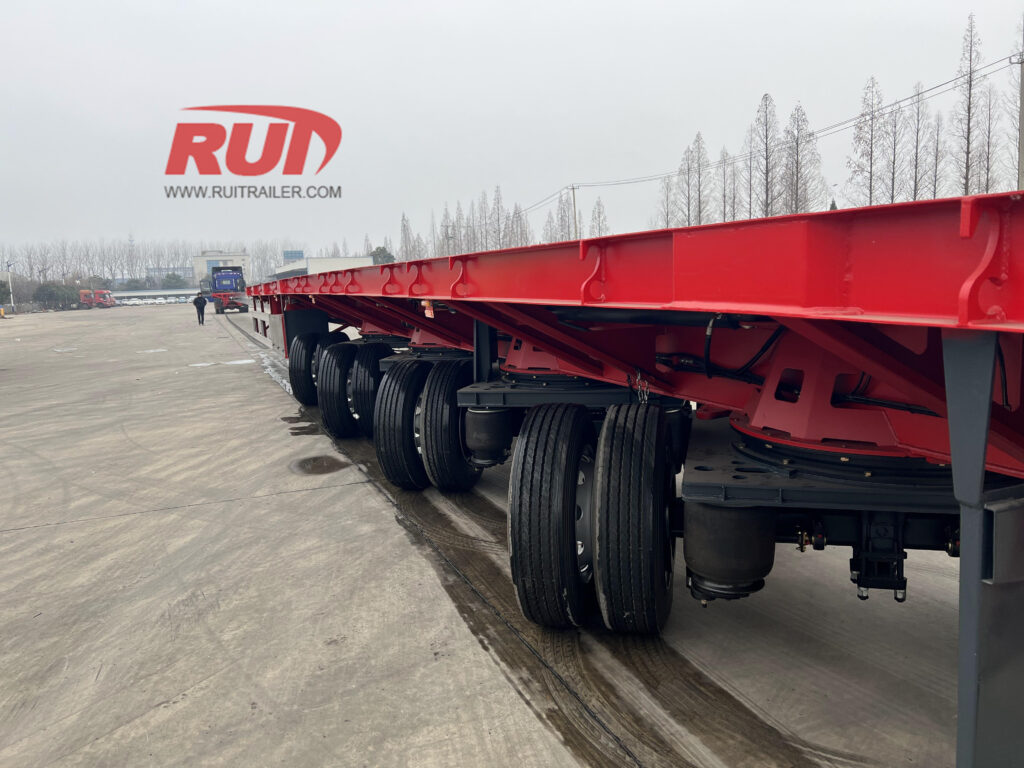
RUITRAILER leads the industry with precision-engineered trailers designed specifically for the challenges of wind blade transport. Using high-strength manufacturing materials combined with advanced hydraulic systems, RUITRAILER’s trailers minimize risks like blade damage and load instability during transit. Their custom steering geometries allow enhanced maneuverability, enabling tight turns and smooth navigation under low bridges and through hazardous zones often encountered on rural or mountainous routes. Ahead of the curve, RUITRAILER continuously adapts trailer designs to handle next-generation hyper-massive wind blades, ensuring safe, efficient transport as turbine components grow ever larger. This unmatched combination of durability, flexibility, and future-ready customization sets RUITRAILER apart in heavy haul wind blade logistics. For deeper insights on specialized hydraulic modular trailer systems and innovative trailers designed for oversized loads, their expertise is well documented in industry resources like the modular trailer guide with hydraulic systems and details on specialized vehicles for wind turbine blade transportation.
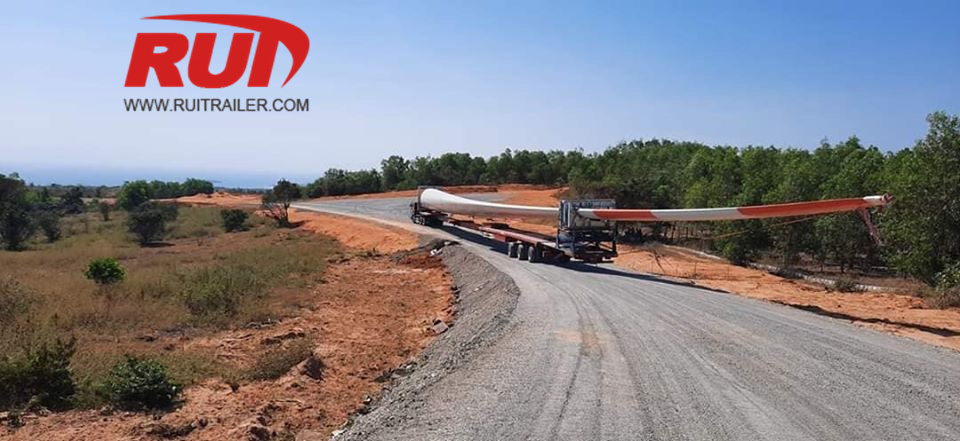
Step-by-Step: The Execution of a Flawless Wind Blade Delivery
Phase 1: Loading and Securing
Proper weight distribution is critical when loading massive wind turbine blades onto specialized trailers to prevent imbalance during transport. Bracket mounting points must align precisely with reinforced sections of the blade to avoid structural stress. Using cushioned supports and secure fasteners minimizes vibration damage during transit.
Phase 2: The Convoy
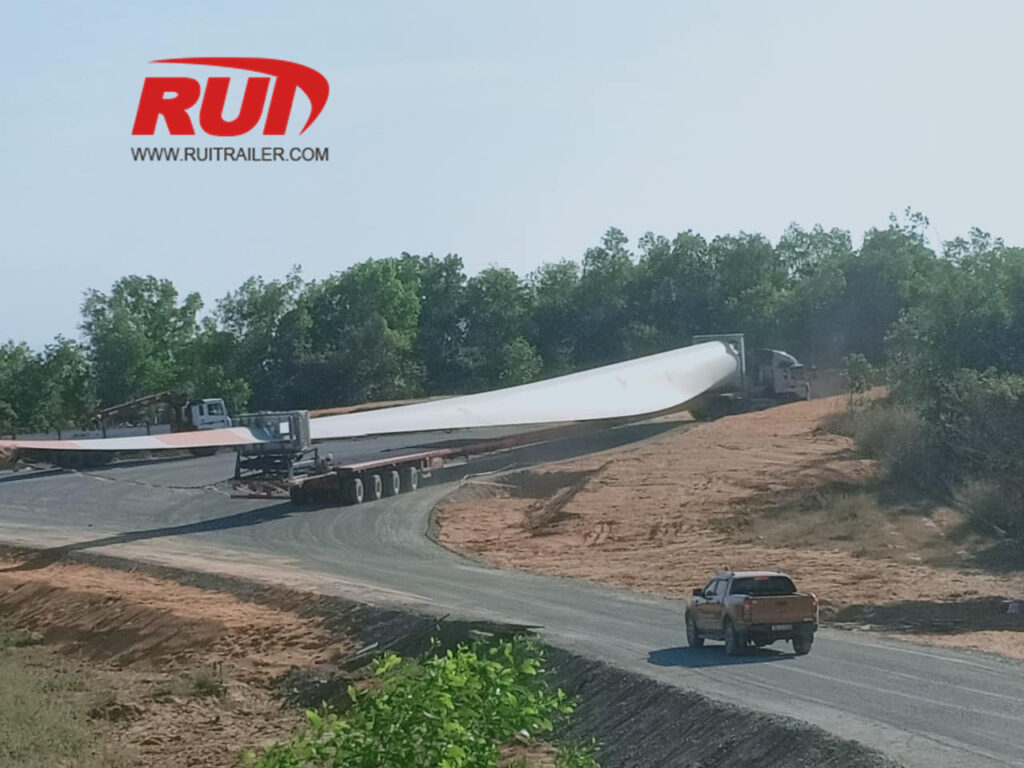
Coordination between the lead truck, the blade hauler, and rear escort vehicles ensures smooth navigation, especially through tight spaces and complex traffic conditions. Escort vehicles manage traffic flow, warn of upcoming hazards, and maintain communication with the driver to keep the oversized load safe.
Phase 3: Navigating the Choke Points
Real-time hydraulic adjustments on extendable trailers allow the team to alter blade angles and trailer length dynamically. This is essential when moving through narrow bridges, sharp turns, or under low bridges requiring precise maneuvering without compromising blade integrity.
Phase 4: Site Arrival and Unloading
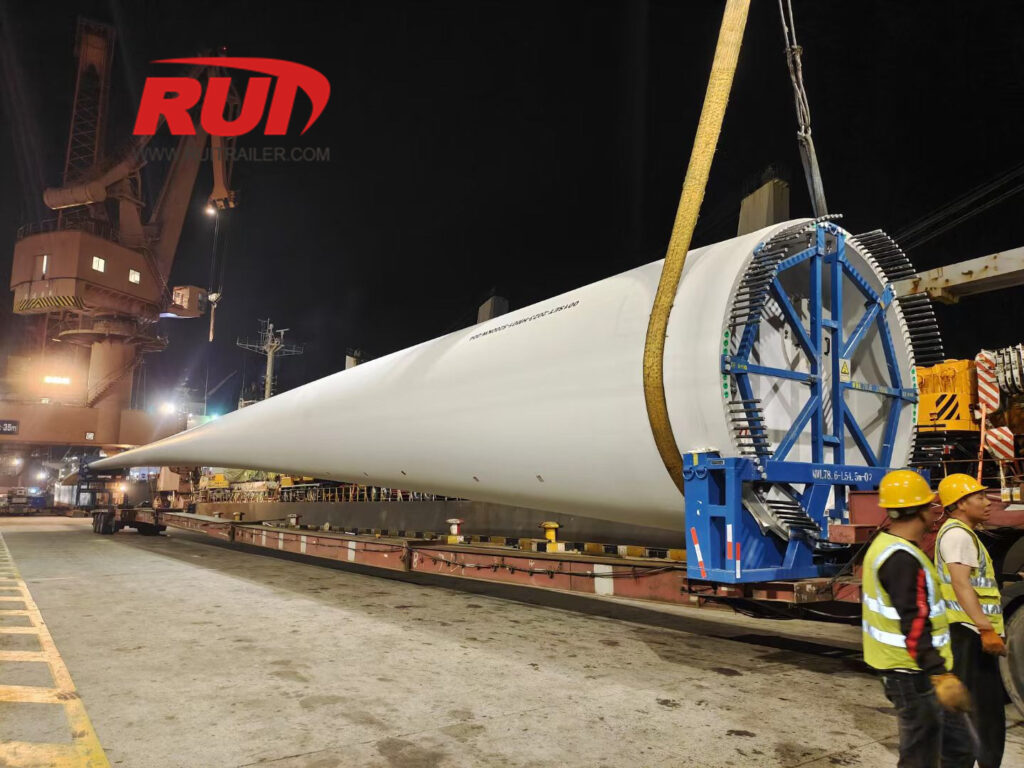
On arrival, safely transferring the blade to crane crews demands careful positioning and slow, controlled movements to prevent damage. Using hydraulic lifter systems and dedicated wind blade carriers ensures blades are offloaded securely and positioned for installation without incident.
The entire delivery process of Truck Carrying Wind Turbine Blade combines technical precision, teamwork, and specialized equipment like hydraulic blade lifters to guarantee safe and efficient transport from factory to wind farm.
The Future of Wind Power Logistics
Transporting wind turbine blades over 100 meters long presents new challenges as blade sizes continue to grow with advancements in wind power. These massive, ultra-long blades demand more precise handling on increasingly complex routes that often include tight turns, narrow clearances, and fragile infrastructure.
To meet these demands, innovations in Truck Carrying Wind Turbine Blade are becoming essential. AI-assisted route planning is revolutionizing how transport teams map out the safest and most efficient paths, analyzing real-time data and infrastructure limitations with high accuracy. Coupled with automated trailer steering systems, these technologies enable better maneuverability and stability for oversized load transport, reducing human error and improving safety margins.
By integrating smart systems with specialized trailers, the Truck Carrying Wind Turbine Blade is evolving to handle these hyper-massive components efficiently, ensuring timely delivery while minimizing damage risks in challenging environments.
Specialized trailers for wind turbine blade transport include telescopic extendable trailers and hydraulic modular trailers designed to handle ultra-long, fragile loads. Hydraulic blade lifters play a crucial role by gently pitching blades up to 60 degrees, reducing stress and preventing damage during tight maneuvers. Common transport incidents often stem from infrastructure challenges—like low bridges and narrow roads—and weather conditions such as crosswinds that destabilize the heavy haul. Detailed route planning significantly lowers risks by coordinating with local authorities to clear obstacles and choosing the safest paths. Escort vehicles such as pilot and pole cars ensure communication, maintain safe distances, and manage traffic, enhancing overall transport safety. RUITRAILER stands apart through precision engineering, offering advanced hydraulic systems and customizable steering geometries that improve load stability and maneuverability. Innovations on the horizon focus on AI-assisted route planning and automated trailer steering, aimed at handling next-generation, larger wind blades with greater efficiency and safety. For more on heavy haul solutions, see the hydraulic modular trailer options and telescopic extendable trailer technology.
 English
  German
  Turkish
  French
  Portuguese
  Russian
  Arabic
  Hindi
Hindi  Vietnamese
  Chinese
  Spanish
  Indonesian
  Swahili