

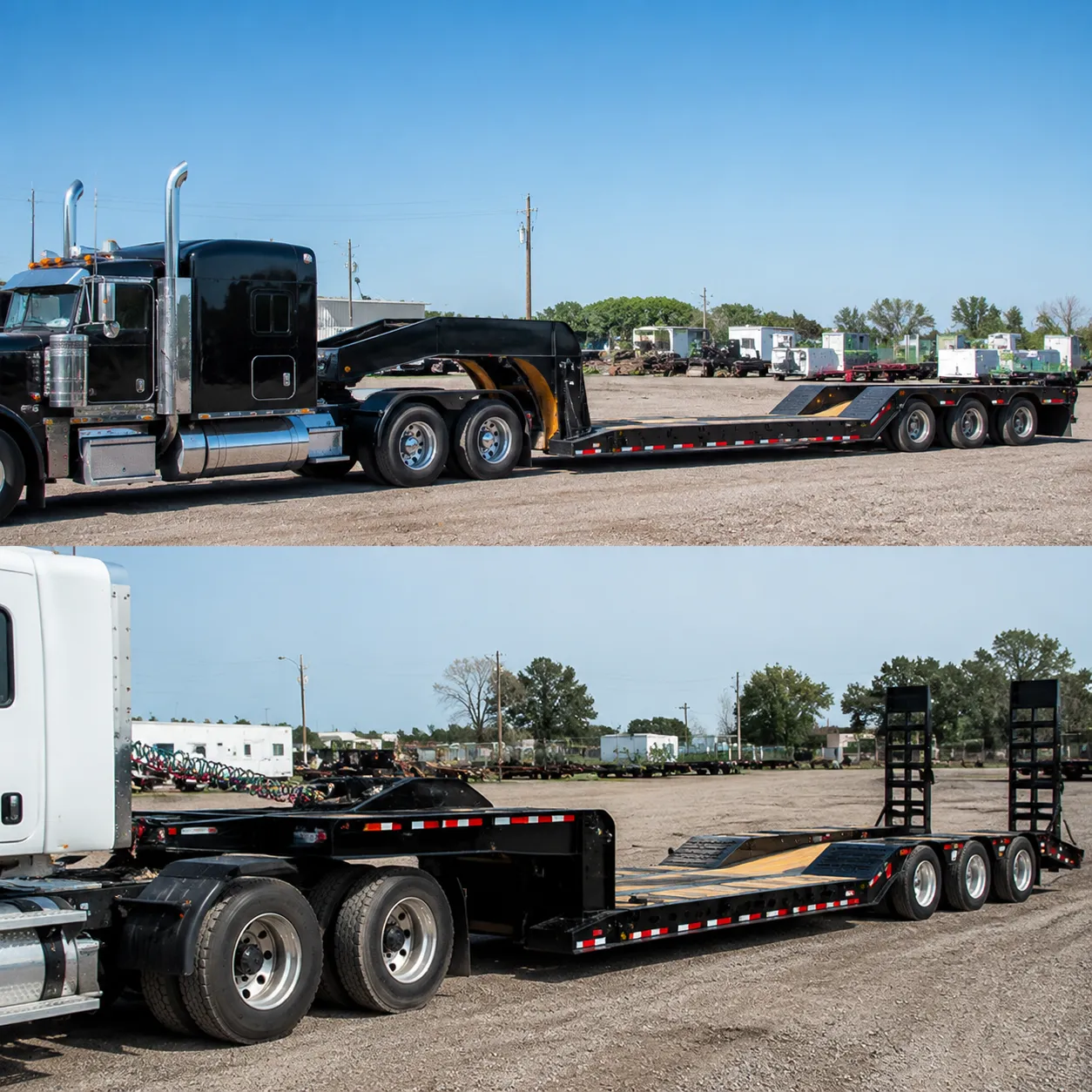
低底盤拖車與(RGN)拖車概覽:可拆卸鵝頸式拖車與低底盤拖車
重型機械運輸需要專門的運輸解決方案,以應對極高的載重能力和高聳的設備輪廓。了解兩者之間的差異 可拆卸鵝頸式拖車與低底盤拖車 拖車至關重要,這能優化全球物流網絡中的運輸安全、淨空高度和營運效率。.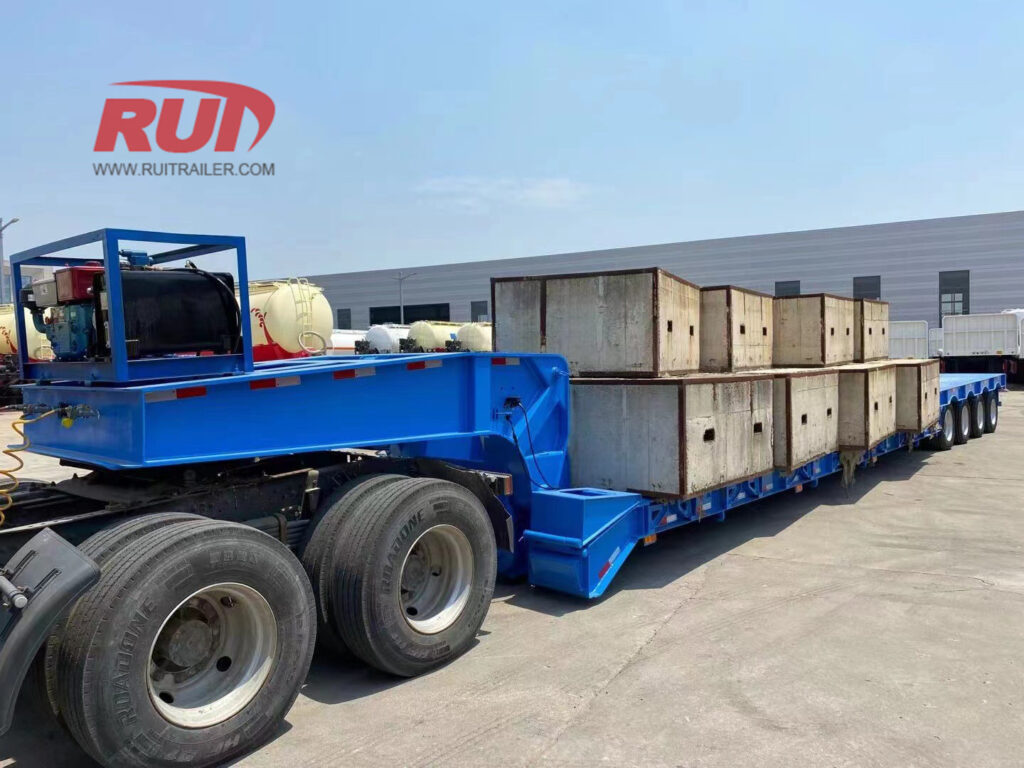
什麼是低底盤拖車?
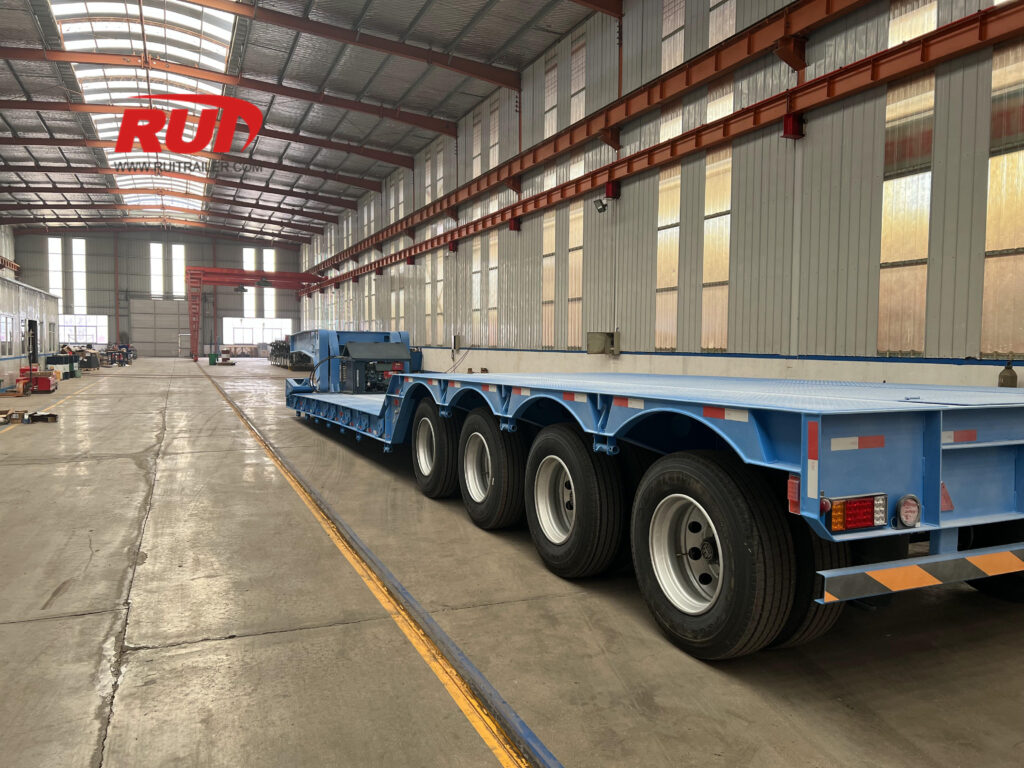
A 低底盤拖車 (通常稱為低底盤拖車)具有兩段式甲板高度下降:一段在鵝頸後方,另一段在後輪軸組件前。這種特殊設計使主載貨甲板比標準平板拖車低得多。.
- 淨空優勢: 最大化垂直空間,安全通過公路高架橋和電線。.
- 結構穩定性: 降低負載重心,提高高噸位 重型設備運輸.
- 中的穩定性。 配置靈活性:.

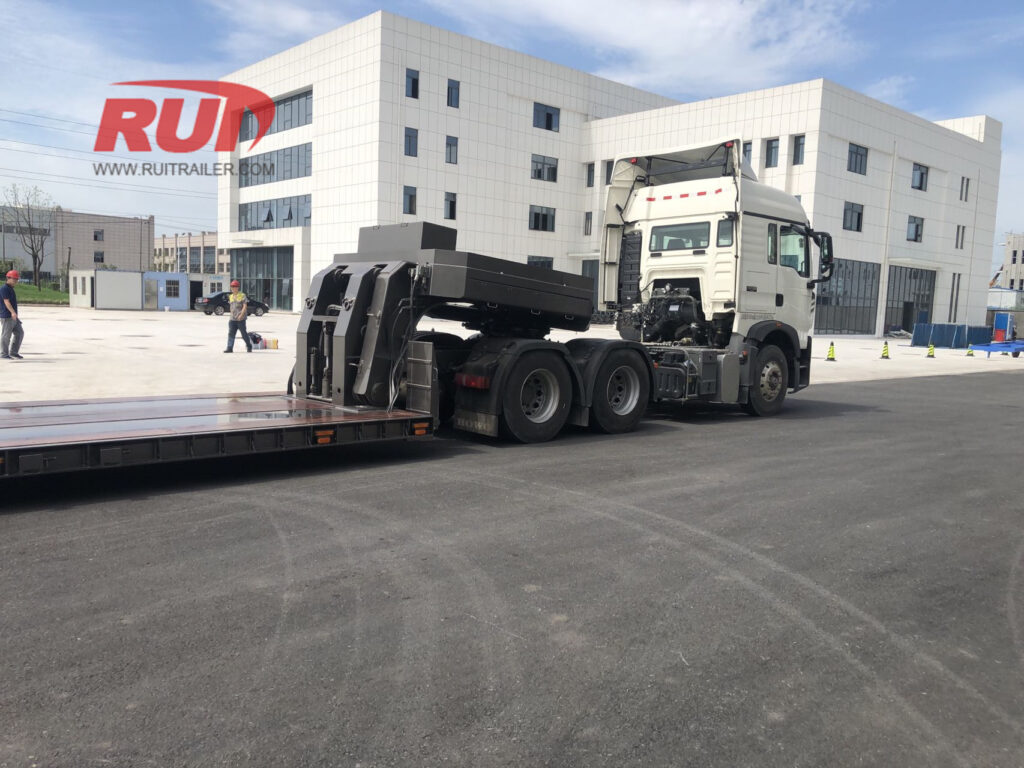
採用固定式、折疊式或可拆卸式鵝頸設計,以適應多樣化的貨物需求。
An 可拆式鵝頸拖車 什麼是可拆卸鵝頸式 (RGN) 拖車? 是一種特殊的低底盤拖車,具有 可完全與主拖車車身分離。拆卸鵝頸後,甲板前端可平放至地面,形成一個安全、低坡度的裝載坡道。.
- 前方裝載能力: 實現從地面直接駛入式裝載,消除了重型機械輾壓後輪的危險。.
- 高承載能力: 支援廣泛的多軸擴展,以應對高難度 超尺寸貨物 運輸。.
- 設備相容性: 非常適合運輸 自行走式機械 ,例如重型挖掘機、推土機和履帶起重機。.
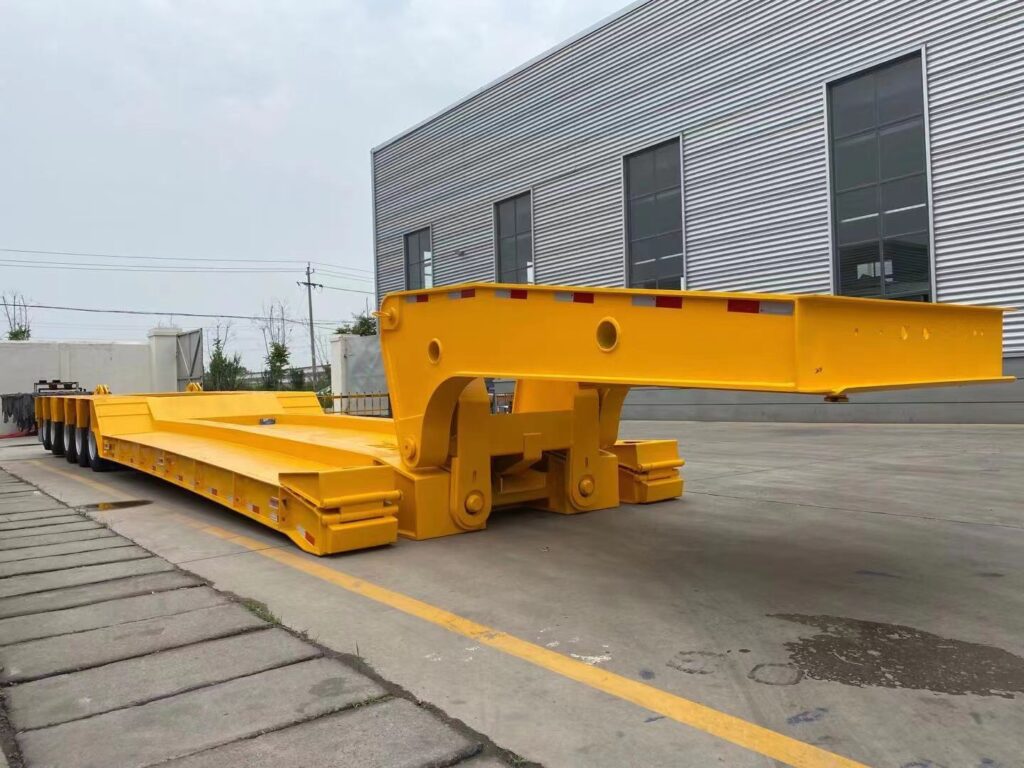
RGN拖車如何運作
RGN拖車的操作機制核心在於斷開前方鵝頸,將拖車甲板轉換為整合式裝載平台。.
- 1. 鵝頸拆卸: 液壓或機械釋放系統將鵝頸與主拖車車架分離。.
- 2. 甲板下降: 載貨甲板的前緣直接下降至路面。.
- 3. 駛入式裝載: 重型設備可利用整合的 駛入式坡道 方法。.
- 4. 再連接與抬升: 動力單元重新連接鵝頸,強大的液壓缸將拖車甲板抬升回標準運輸高度。.
- RGN 和低底盤拖車的主要區別
- RGN 和低底盤拖車的主要區別
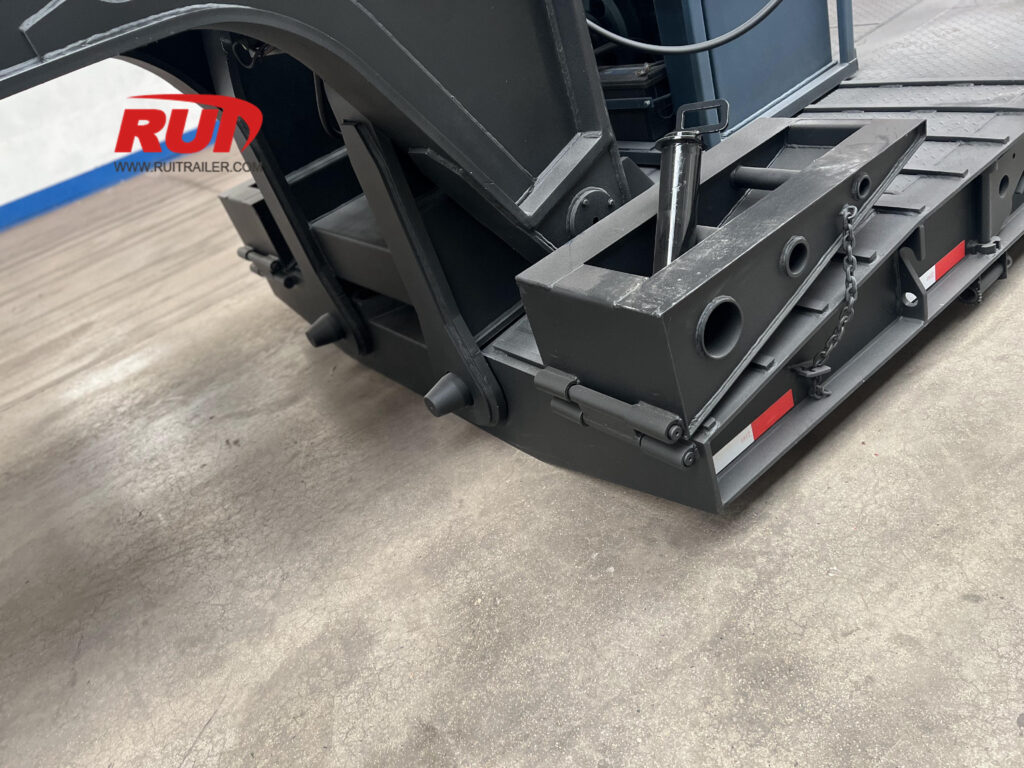
在選擇 可拆卸鵝頸式拖車與低底盤拖車 拖車時,了解其設計特點如何影響日常營運對於您的車隊至關重要。我們製造這兩種配置,以解決重載運輸中的不同物流挑戰。.
| 特色 | 可拆卸鵝頸(RGN)拖車 | 固定鵝頸低底盤拖車 |
|---|---|---|
| 裝載方向 | 前向裝載(可拆卸鵝頸) | 後向裝載(驅動式坡道) |
| 平台高度 | 18 – 24 英吋(超低輪廓) | 30 – 36 英吋 |
| 載重能力 | 40 to 150+ tons (Multi-axle expandable) | 40 to 80 tons (Fixed 2–4 axles) |
| Ideal Load Types | Tall, heavy self-propelled machinery | Standard height equipment & tracked vehicles |
| Upfront & Upkeep Cost | Higher initial cost; hydraulic maintenance | Lower purchase cost; simple upkeep |
removable gooseneck vs lowboy Loading and Unloading Mechanisms
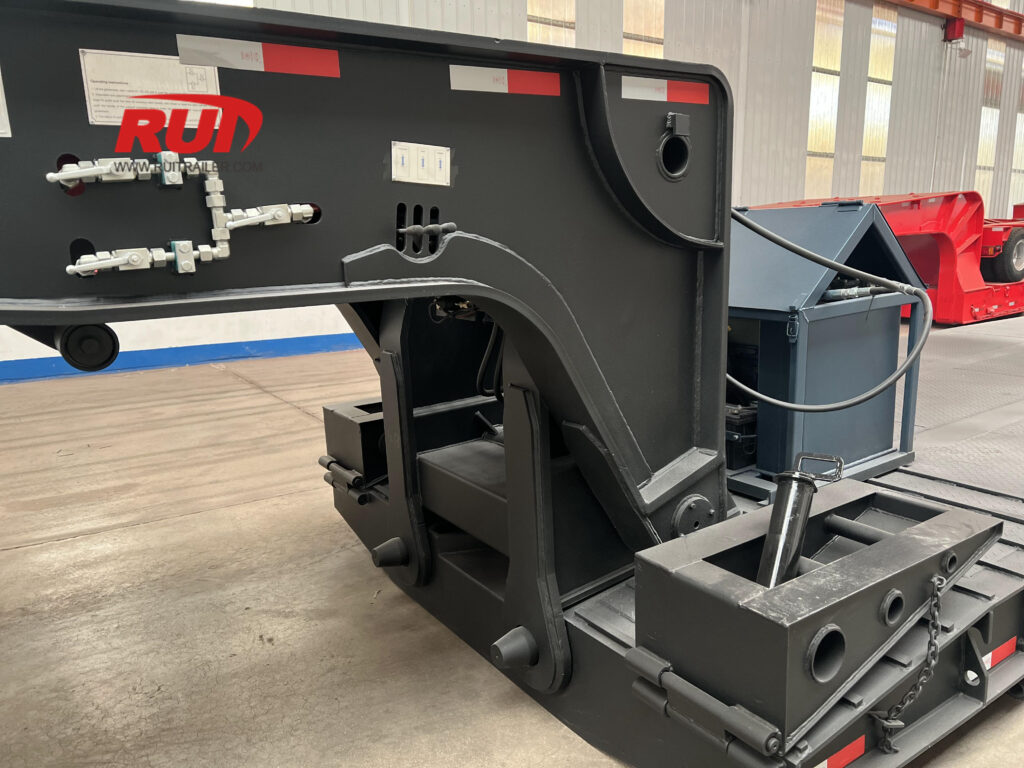
The biggest operational distinction comes down to how equipment gets onto the deck:
- RGN Trailers (Front Loading): An RGN trailer features a detachable neck that disconnects from the main frame. Lowering the deck directly to the ground creates a gentle, low-angle ramp. This allows self-propelled machinery—like wheeled loaders, asphalt pavers, and large excavators—to drive straight on from the front safely. You can review full structural specs in our RGN可拆卸鵝頸拖車指南.
- Fixed Lowboy Trailers (Rear Loading): Standard fixed gooseneck lowbed trailers require equipment to climb over the rear axles using a heavy-duty drive-on ramp. Rear loading works well for crawler machines, but steep incline angles present safety risks for low-clearance or heavy machinery.
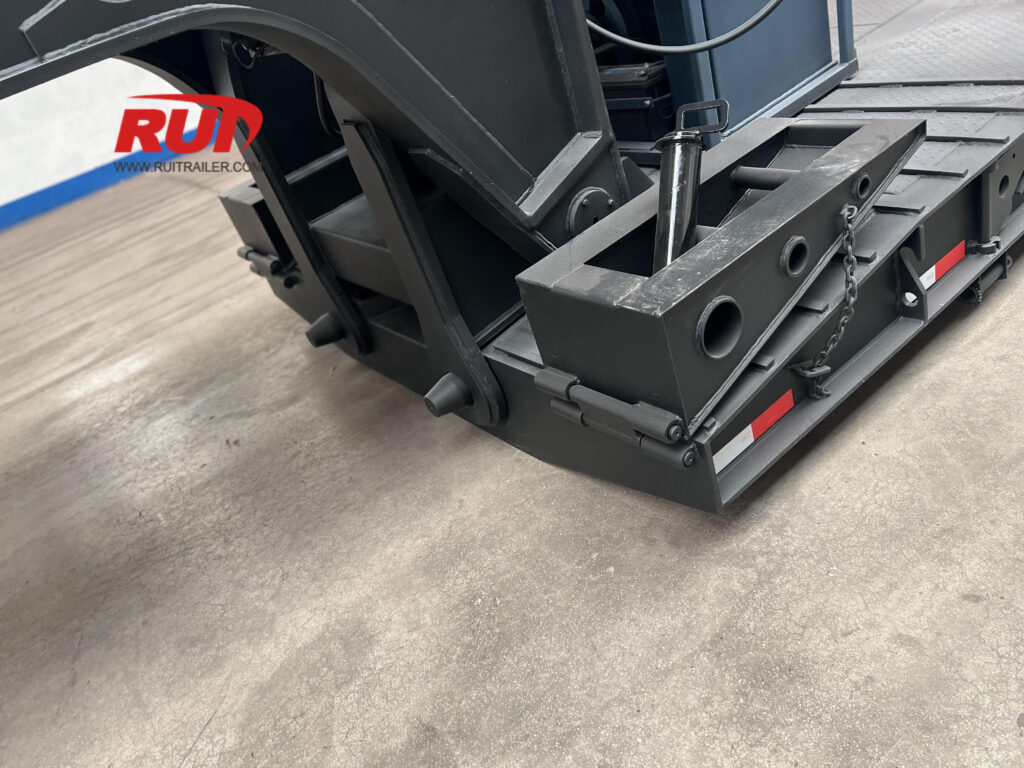
Payload Capacity and Axle Configurations removable gooseneck vs lowboy
Weight capacity and axle flexibility dictate what oversized loads your trailer can legally move:
- RGN Axle Versatility: RGN trailers excel at extreme weight capacities. Their modular frame lets you attach flip axles, spreaders, or additional axle lines to distribute massive weight across multiple points. This flexibility makes them indispensable for extreme heavy equipment transport exceeding 80 to 150+ tons.
- Lowboy Axle Limits: Fixed lowboy trailers generally feature 2 to 4 axles welded into a set deck length. While perfectly suited for everyday heavy machinery transport up to 80 tons, they lack the modular expansion needed for super-heavy freight. Explore various axle options in our low bed trailer specs and axle guide.
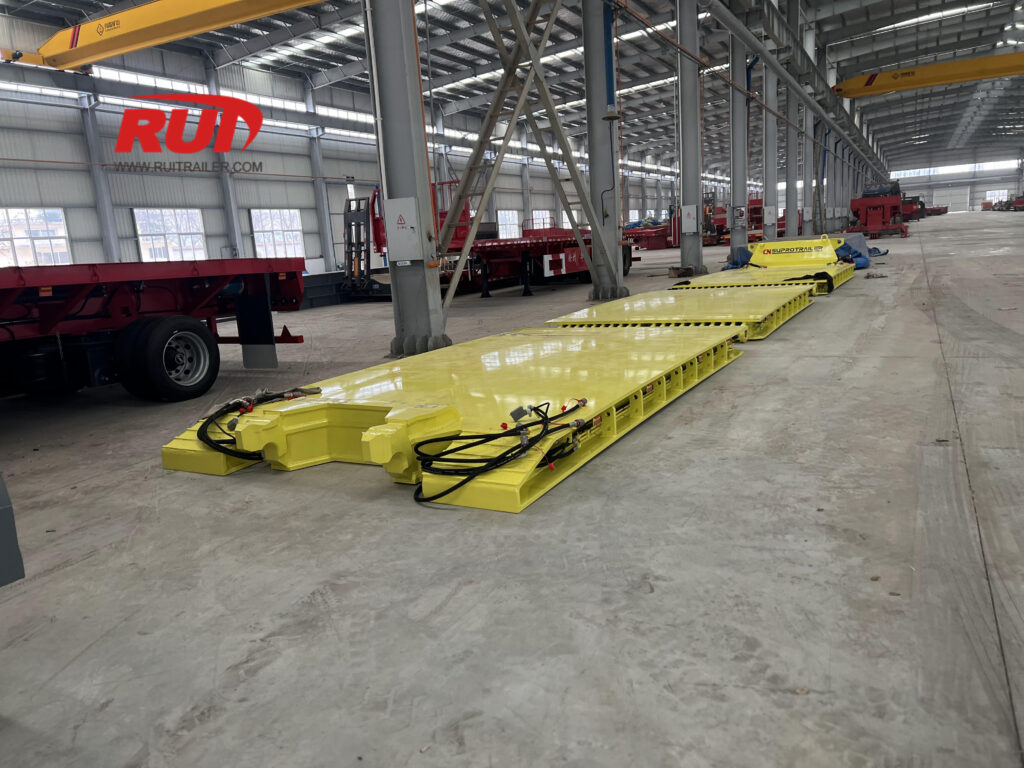
Deck Height and Ground Clearance
Managing overall load height determines your route planning and bridge clearance permissions:
- RGN Trailers: Offer extremely low well deck heights, typically between 18 and 24 inches. Dropping the deck height by even a few inches keeps tall oversized loads within legal height limits, reducing the need for costly escort vehicles or detours.
- Lowboy Trailers: Typically feature deck heights ranging from 30 to 36 inches. While this offers solid ground clearance on rough job sites, it limits the total height of cargo you can legally haul under overhead bridges.
Purchase Cost and Maintenance Requirements
Balancing upfront budget against operational ROI requires looking at maintenance needs:
- RGN Investment: Hydraulic gooseneck and mechanical gooseneck detach mechanisms require higher upfront equipment investment. They demand routine maintenance on hydraulic lines, locking pins, and power units, but deliver higher profitability on specialized heavy haul loads.
- Lowboy Investment: Fixed lowboys have fewer moving parts, making them more affordable to buy and maintain. They deliver reliable performance and lower long-term upkeep for standard heavy equipment transport where front loading isn't strictly required.
Gooseneck Options and RGN Configurations
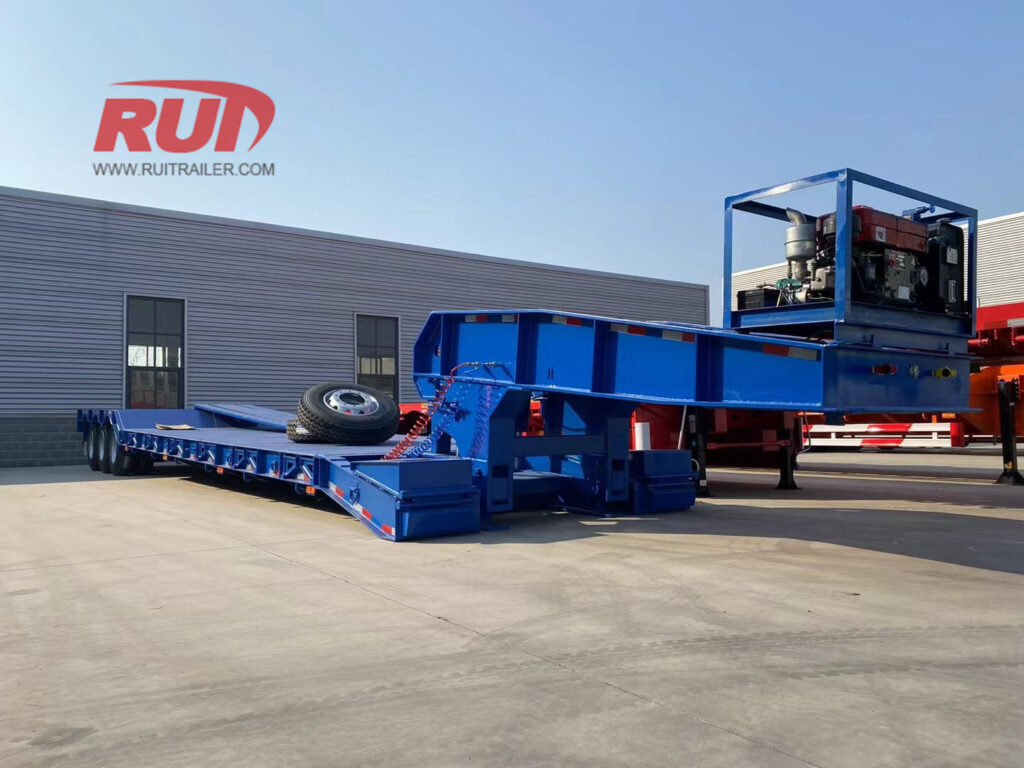
液壓式與機械式可分離鵝頸
When evaluating detachable neck setups, the primary choice comes down to hydraulic versus mechanical operation.
- 液壓鵝頸: Powered by an onboard pony motor or the tractor’s PTO system. Hydraulic cylinders raise, lower, and detach the neck smoothly, allowing a single operator to detach the neck in minutes—even on soft or uneven ground.
- Mechanical Gooseneck: Relies on a truck winch, ramps, and mechanical lock pins. It offers a lighter tare weight and lower maintenance costs, but requires flat terrain and more manual effort to operate.
We engineer both configurations to meet localized hauling demands, ensuring your RGN removable gooseneck trailer for heavy equipment delivers maximum uptime.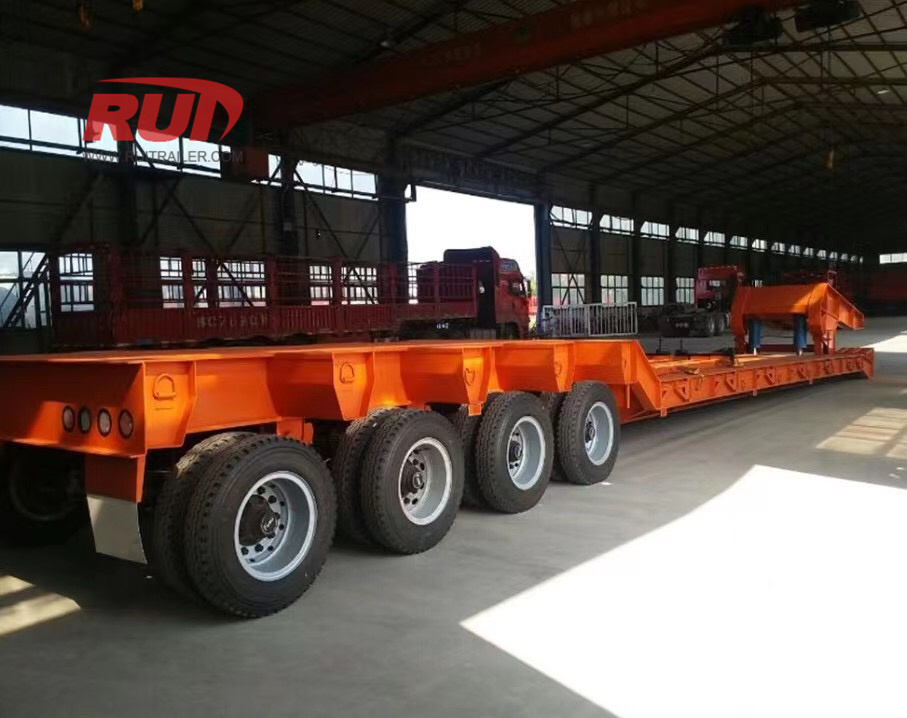
Fixed Gooseneck Lowboys vs. Detachable RGNs
Choosing between a fixed gooseneck lowbed trailer and a detachable RGN trailer directly impacts loading efficiency and operator safety.
| 特色 | Fixed Gooseneck Lowboy | Detachable RGN Trailer |
|---|---|---|
| Loading Style | Rear loading (drives over rear tires/ramps) | Front loading (drives directly onto lowered deck) |
| Ideal Load Type | Static freight, wheeled gear, standard height equipment | Heavy tracked machinery, low-clearance excavators |
| 離地間隙 | Standard lowbed profile | Ultra-low deck clearance |
| Maintenance & Cost | Lower initial cost, fewer moving parts | Higher investment, max operational versatility |
RGN Trailers vs. Double Drop Trailers
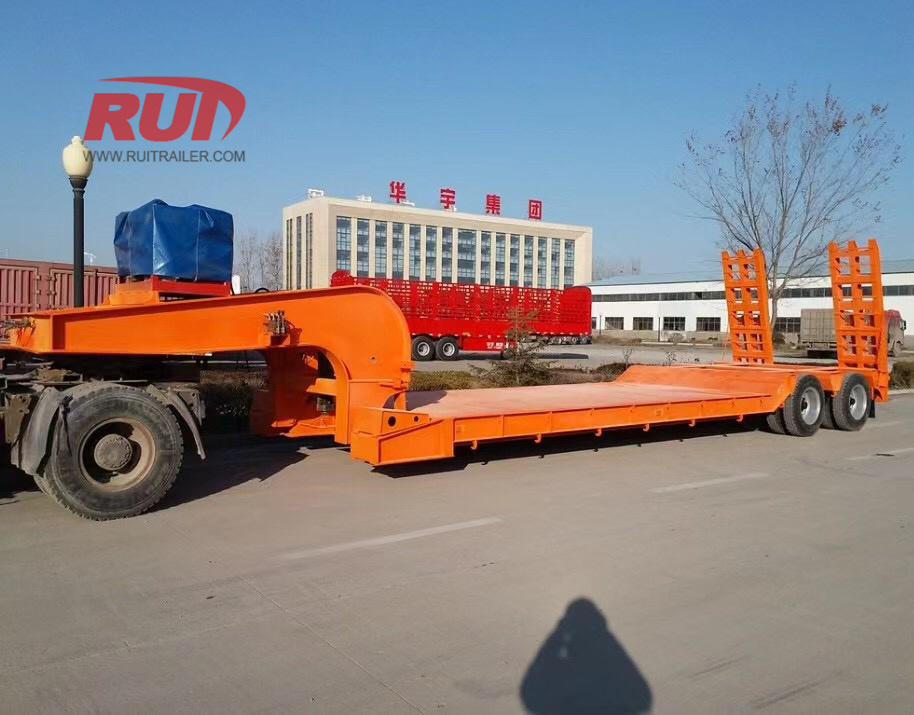
While both trailer designs feature a dropped center well to haul tall cargo, their loading mechanisms and payload applications differ significantly:
- RGN Trailers: Built specifically for self-propelled or tracked machinery. The neck detaches completely so equipment can drive straight onto the deck without navigating steep inclines.
- Double Drop Trailers: Feature a drop deck design to clear strict height limits. Many feature fixed necks where cargo must be loaded via crane or rear ramps.
Selecting the right setup depends on cargo height, weight distribution, and loading site conditions. Reviewing a detailed 可拆卸式Gooseneck重型運輸拖車指南 ensures your fleet matches specific transport regulations.
- Common Industry Applications
Choosing between a removable gooseneck vs lowboy trailer usually comes down to the specific equipment you haul every day. As a specialized manufacturer, we engineer both configurations to serve different heavy haul requirements across major global industries.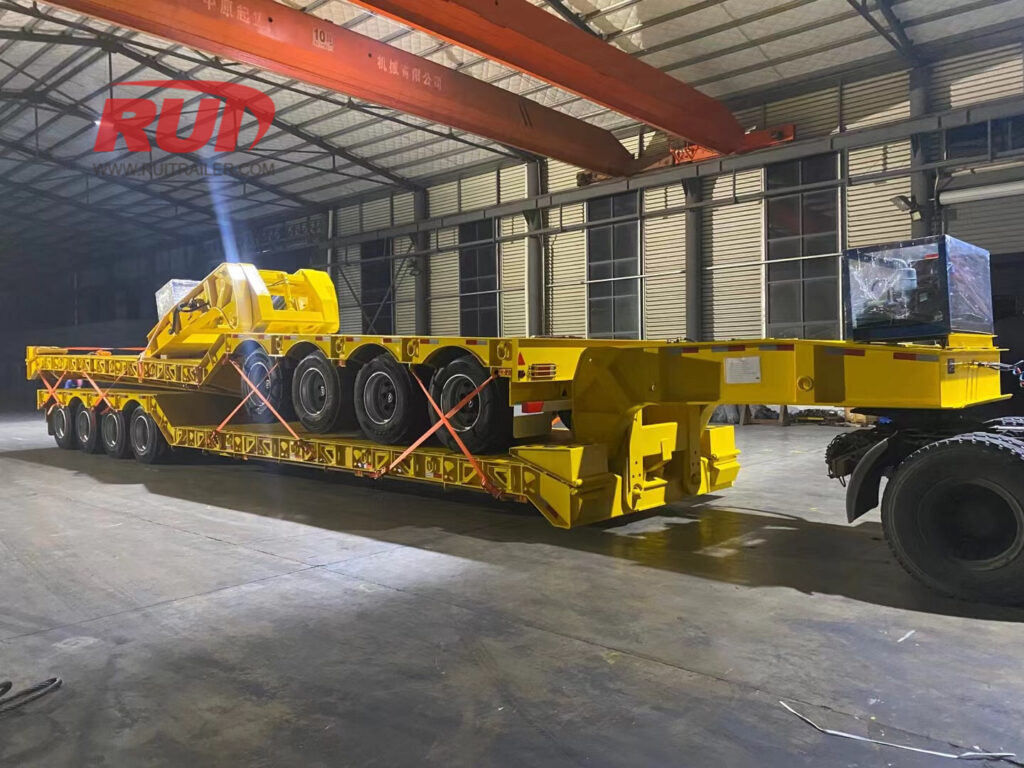
Construction and Heavy Machinery Transport
Heavy equipment transport in construction demands fast, safe loading for machinery like excavators, bulldozers, and wheel loaders.
- RGN Trailer Advantage: Drives self-propelled machinery straight onto the low deck from the front after detaching the neck, eliminating steep, dangerous loading angles.
- Lowbed Trailer Advantage: Ideal for static loads, crushing equipment, or gear loaded via overhead crane, offering dependable weight capacity at a lower fleet investment cost.
- Extreme Loads: For exceptionally heavy construction gear, our low-bed multi-axle trailers deliver balanced axle distribution across demanding transit routes.

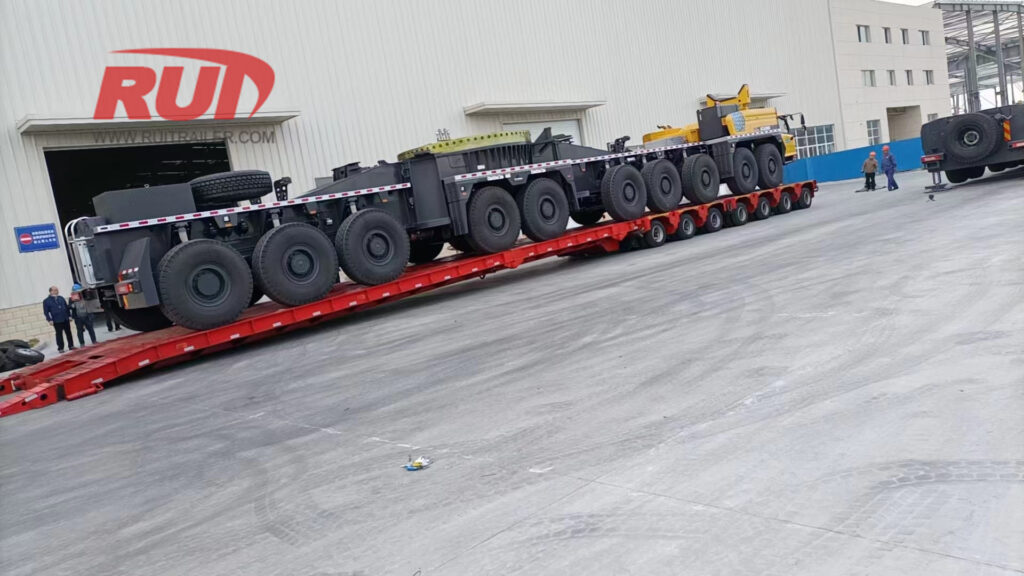
農業設備運輸
Combines, large tractors, and timber harvesters carry wide footprints and tall vertical clearances.
- Overhead Clearance: The deep well of lowbed and RGN decks keeps tall machinery low to the ground, avoiding height violations under bridges and utility lines.
- Low-Clearance Protection: Front-loading RGNs allow low-ground-clearance farm machinery to drive on cleanly without damaging undercarriages on steep rear ramps.

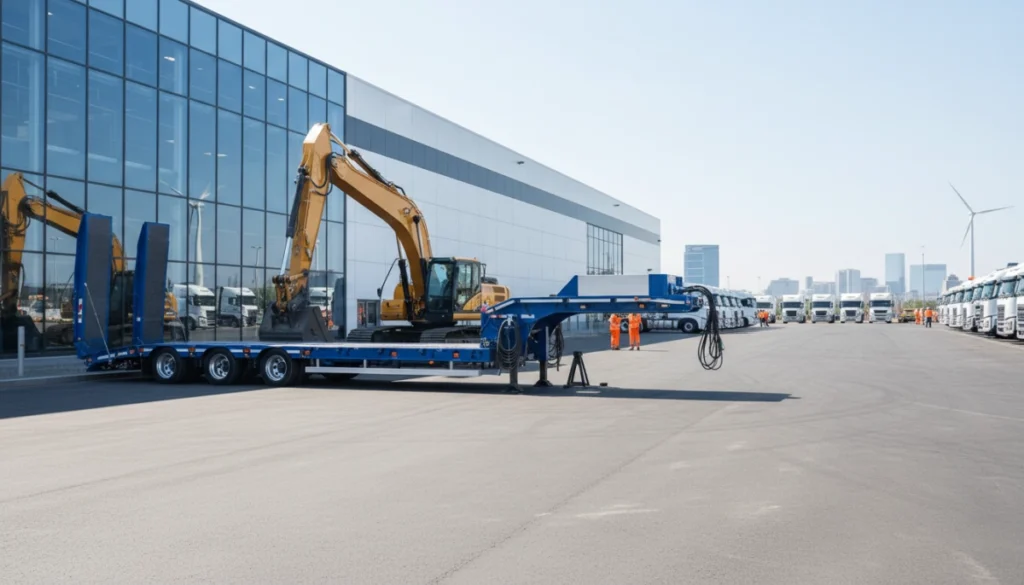
Oil and Gas Infrastructure Moving
Moving oilfield infrastructure—such as frac pumps, drilling rig components, and compressor skids—demands extreme durability and flexible load handling in harsh environments.
- 高承載能力: Multi-axle removable gooseneck setups handle concentrated weight while spreading payload evenly across axles to meet strict highway regulations.
- Rough Terrain Reliability: Reinforced heavy-haul frames prevent deck twisting and chassis flex when navigating unpaved, remote drill sites.
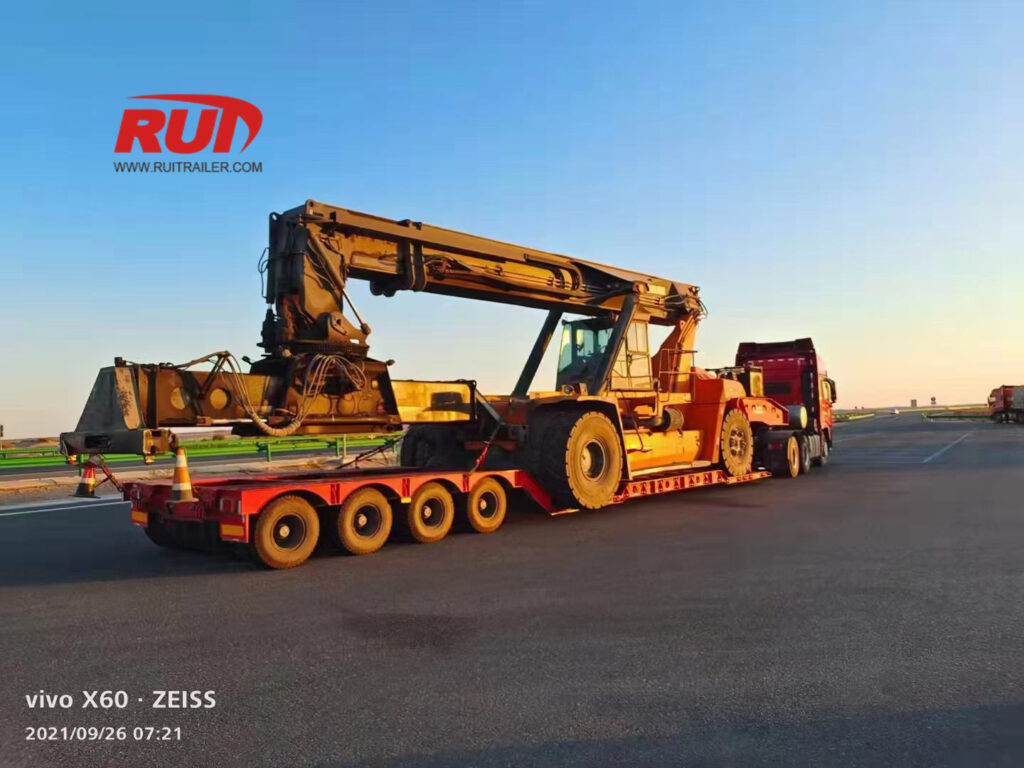
How to Choose Between a Lowboy and an RGN Trailer removable gooseneck vs lowboy
Selecting the ideal haulage rig comes down to matching your primary equipment specs against highway height limits, weight distribution rules, and capital budget.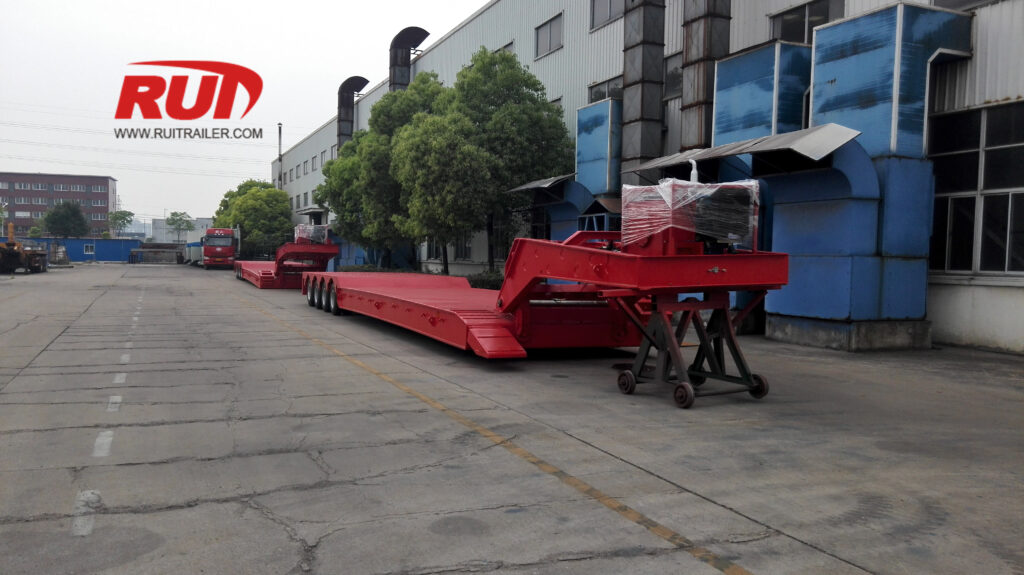
Evaluating Cargo Dimensions and Weight
Cargo height and tonnage directly dictate trailer choice. Standard fixed gooseneck lowbed trailers work well for medium-duty machinery that easily climbs rear ramps. However, extremely tall or heavy self-propelled machinery demands an 可拆式鵝頸拖車 (removable gooseneck) to stay within federal overhead clearance laws and bridge weight formulas.
- Tall Loads: RGN drop decks sit closer to the asphalt, offering maximum vertical clearance for tall excavators, drill rigs, and industrial components.
- Heavy Tonnage: Modular multi-axle configurations on RGNs handle heavy equipment transport exceeding 40 to 150+ tons. Always review safe weight limits and setup criteria before committing to oversized hauls.
Assessing Drive-On Convenience and Safety
Loading efficiency directly impacts driver safety, turnaround times, and job site stability.
- Front-Loading (RGN): Detaching the neck lets heavy tracked equipment drive straight onto the deck at a ultra-low ramp angle. This prevents tipping hazards when moving heavy crawler gear.
- Rear-Loading (Lowboy): Fixed gooseneck units require machinery to climb over the rear tires via drive-on ramps, which can be slick and risky for top-heavy loads.

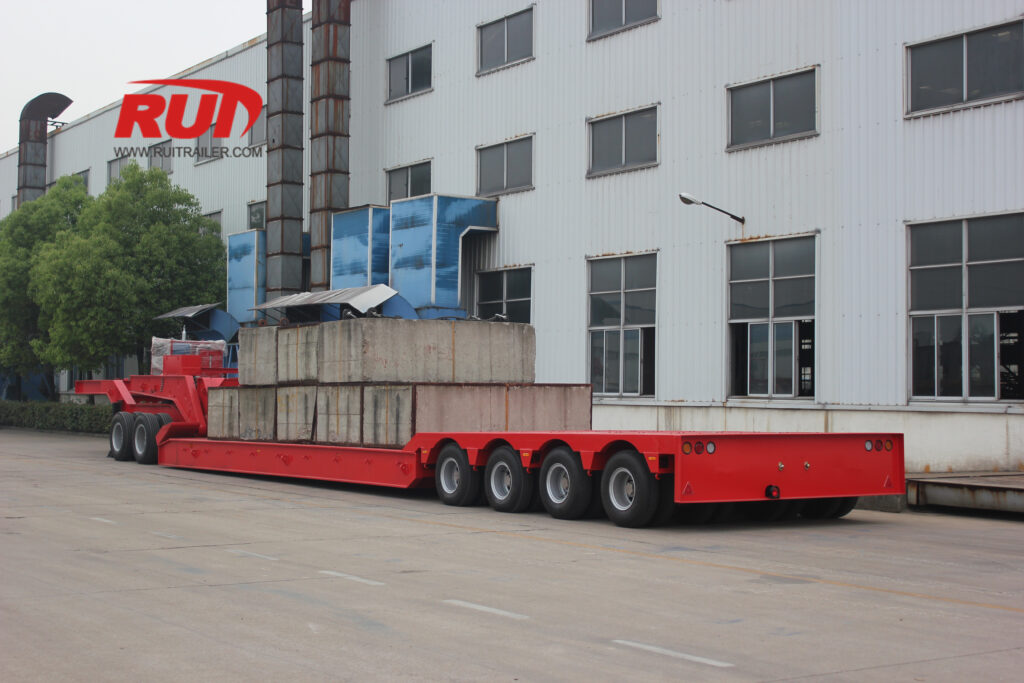
Balancing Budget and Long-Term ROI
Upfront capital expenses should reflect how frequently you transport specialized, oversized freight.
| Operational Factor | Standard Lowboy Trailer | 可拆式鵝頸拖車(RGN) |
|---|---|---|
| Initial Cost | 購買價格較低 | Higher upfront capital investment |
| Maintenance | Simple mechanical setup, low upkeep | Requires hydraulic/detachable neck maintenance |
| 多功能性 | Excellent for standard heavy machinery | Ideal for extreme, extra-tall oversize loads |
| Long-Term ROI | Quick return on daily regional hauls | Unlocks high-rate heavy haul contracts |
Explore our detailed lowbed trailer buying guide to match custom capacities and axle configurations directly to your fleet operations.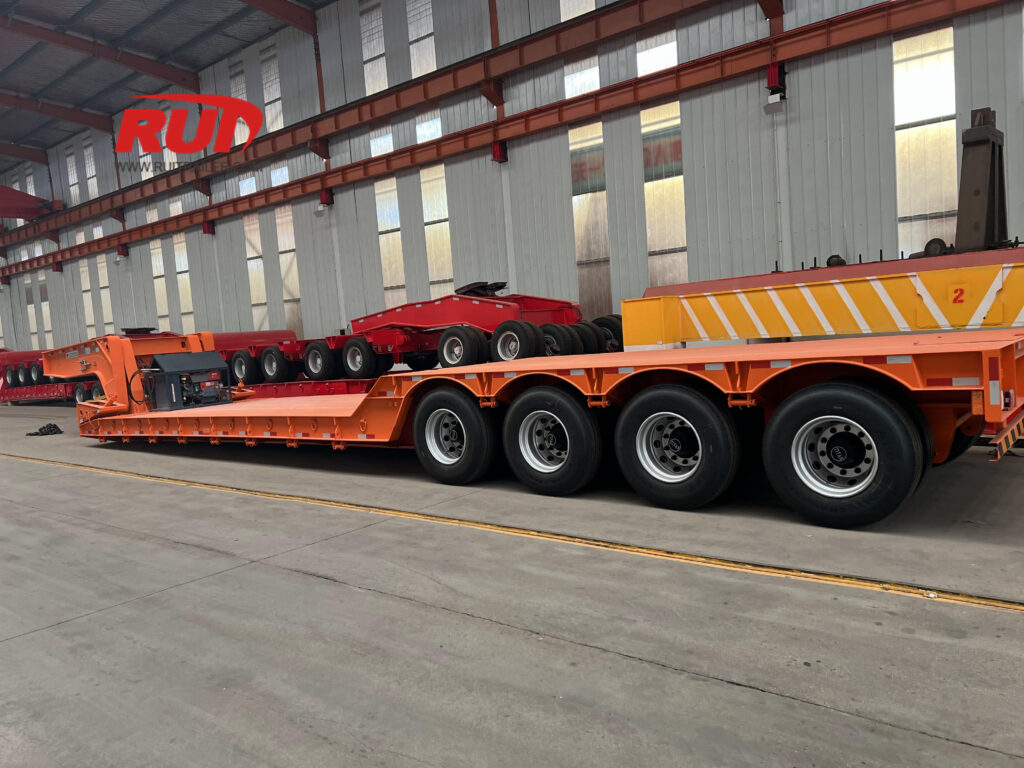
常見問題
Do All RGN Trailers Require Ramps for Loading?
No, standard full-sized ramps are not required for most RGNs. The main advantage of a detachable neck design is front-loading access. Once you detach the neck, the front of the trailer deck lowers flat to the ground so self-propelled machinery can drive straight onto the bed. While operators sometimes use short flip-over approach ramps for extremely low-clearance equipment, full loading ramps are unnecessary. For smooth drive-on capability, our heavy-duty removable gooseneck RGN lowboy eliminates the tipping hazards associated with steep rear ramps.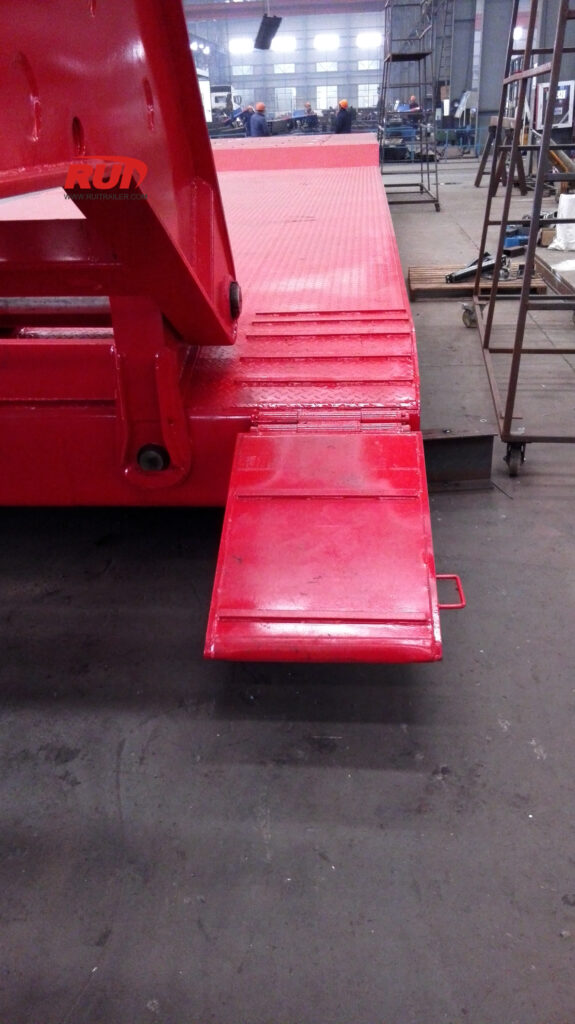
Why Is a Lowbed Called a Lowboy Trailer?
The term "lowboy" comes from heavy haul trucking slang describing a lowbed trailer engineered with an unusually low deck height relative to its wheels. Featuring two distinct deck drops—one immediately behind the front gooseneck and one right before the rear axle cluster—this structure drastically lowers the cargo center of gravity. This design allows haulers to transport tall industrial equipment while remaining under legal overhead clearance thresholds.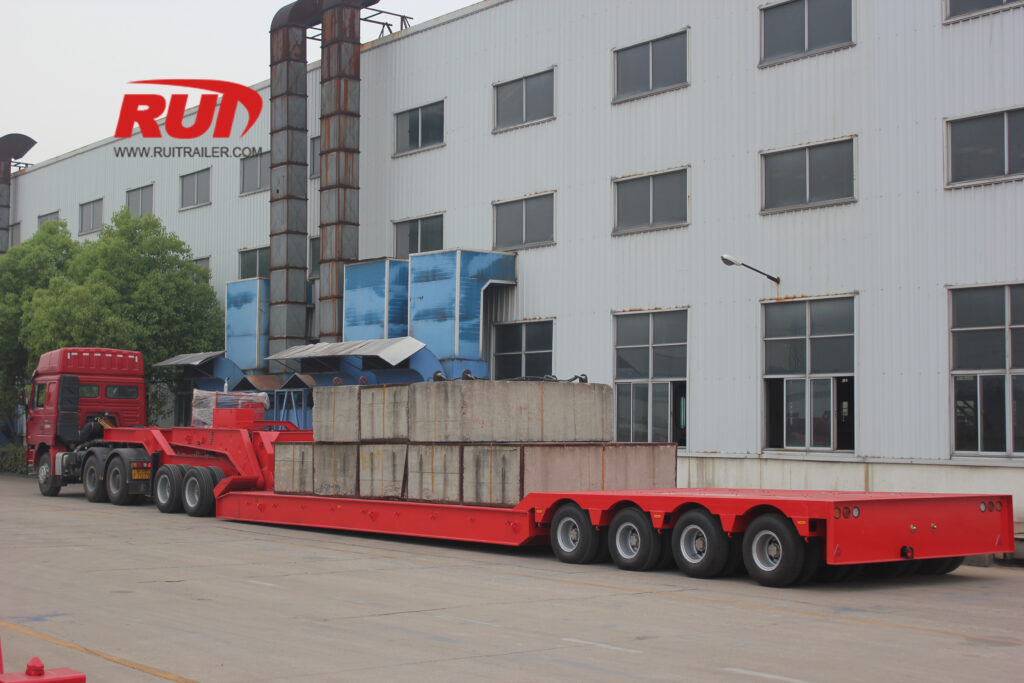
What Oversized Load Regulations Apply to Heavy Hauling?
Oversized load regulations depend on legal dimensions and gross vehicle weight ratings in your operating region, but key compliance rules typically include:
- Oversize and Overweight Permits: Required when loads exceed standard dimensional limits (typically 8.5 feet wide, 13.5 to 14 feet tall, or 80,000 lbs gross weight).
- Pilot and Escort Vehicles: Required for extreme widths or heights to assist with route clearing, traffic control, and overhead wire checks.
- 軸重限制: Demands strict weight distribution across axle lines, often requiring specialized hydraulic lowbed trailers to spread weight across additional axles.
- Travel Restrictions: Oversized hauls are routinely restricted to daytime hours, non-holiday weekdays, and strict pre-surveyed transport corridors to protect public road infrastructure.
 Chinese
  English
  German
  Turkish
  French
  Portuguese
  Russian
  Arabic
  Hindi
Hindi  Vietnamese
  Spanish
  Indonesian