

Advanced Telescopic Transport Solutions: Built for Oversized Logistics
Core Product Overview
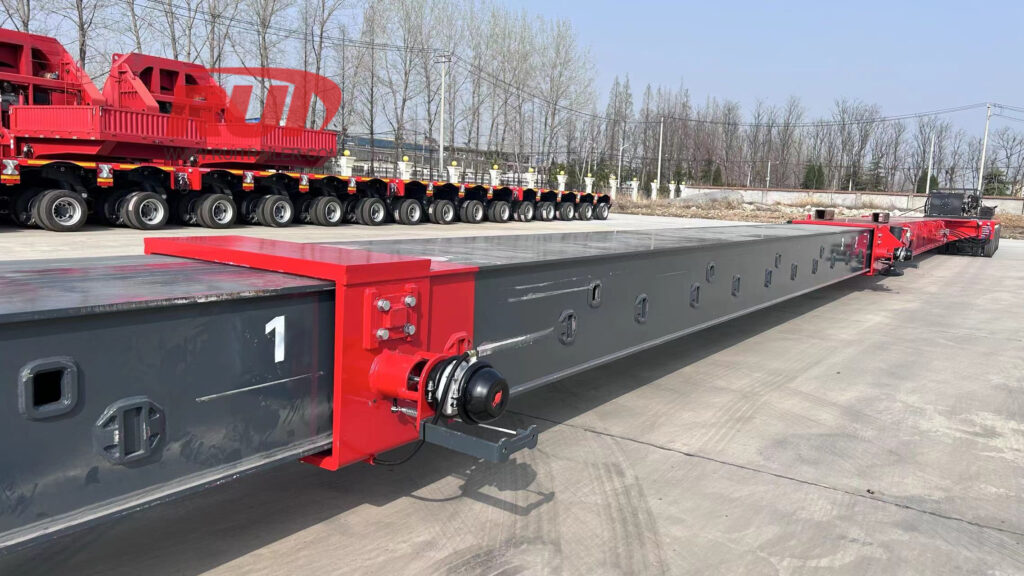
We engineer the heavy-duty extendable trailer to bridge the gap between standard logistics and extreme, oversized transport. In its closed configuration, the platform functions as standard freight equipment. When extended, the telescopic central spine expands to accommodate long, indivisible payloads including structural steel beams, concrete girders, and wind energy infrastructure.
Key Performance Highlights
Our telescopic semi trailer platforms deliver uncompromising stability and load adaptability across demanding transport routes:
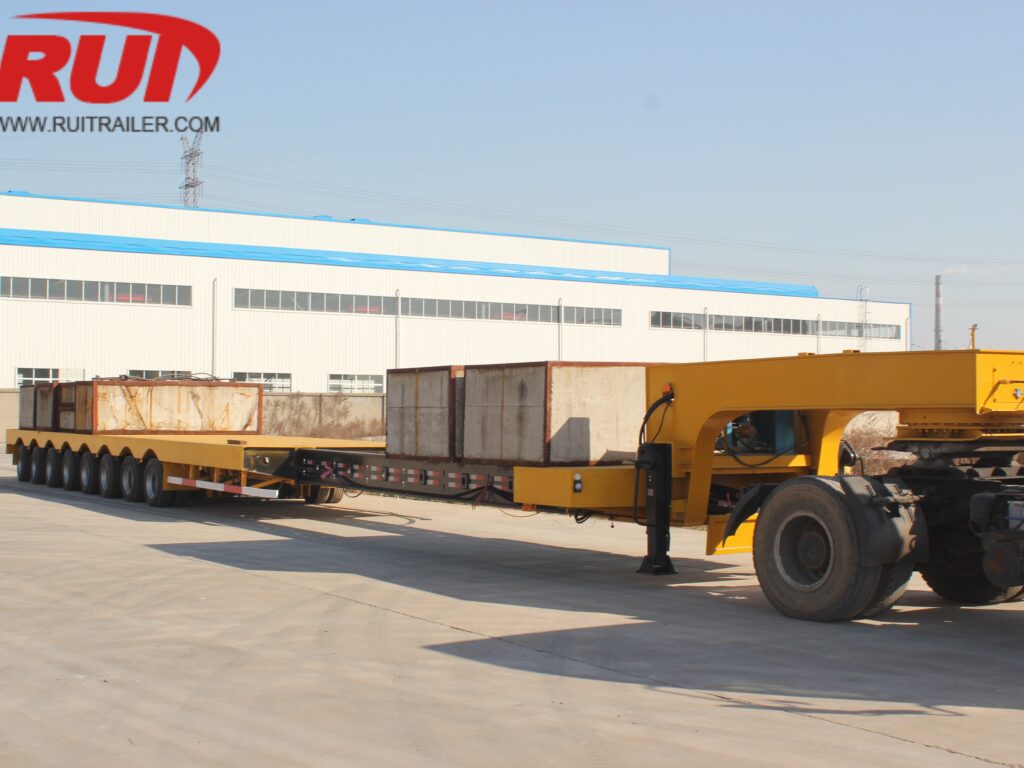
- Multi-Stage Telescopic Chassis: Engineered with single, double, and multi-stage extension beams to match diverse cargo lengths.
- High-Strength Structural Steel: Fabricated from premium high-tensile steel (such as Q690 / HG785 grades) for maximum strength-to-weight efficiency.
- Low-Deflection Engineering: Precision-formed central beams eliminate chassis sag and structural deflection under full-tonnage loads.
- Hydraulic Forced Steering: Advanced steering systems provide responsive articulation and tight turning radiuses during long-distance hauls.
RUITRAILER Engineering Advantage
Transporting extended cargo generates severe bending moments and dynamic torsional stress. Our engineering team designs custom box-beam profiles that distribute structural forces evenly throughout the chassis. Every heavy haul extendable trailer is built to withstand high-tonnage loads, maintaining vehicle tracking stability, driver control, and long-term durability across complex road networks.
Extendable Trailer Configurations & Model Selection
Selecting the right extendable trailer depends on cargo dimensions, overall weight distribution, and road height restrictions. We build a comprehensive range of telescopic configurations designed to handle long, indivisible industrial freight efficiently and safely.
Extendable Flatbed Trailers
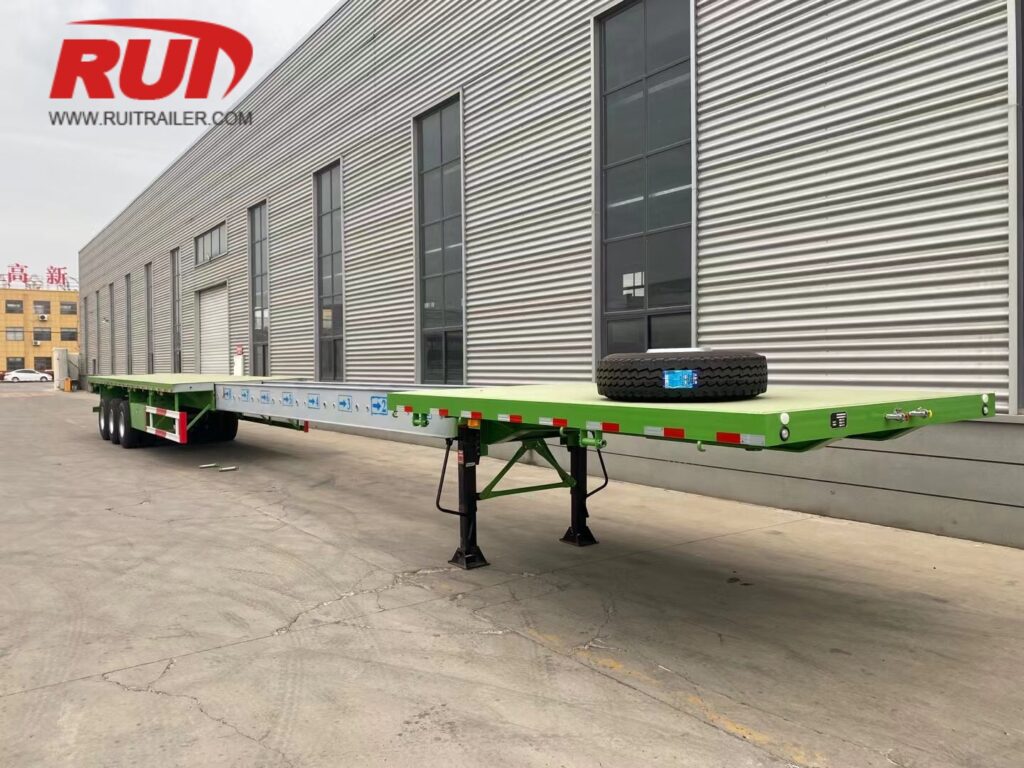
Our extendable flatbed trailer platforms are engineered for structural stability when hauling self-supporting long loads. Available in single, double, and triple stretch configurations, these trailers easily adapt between standard legal lengths and extended operational platforms.
- Primary Cargo: Structural steel I-beams, long industrial pipes, utility poles, and precast concrete bridge segments.
- Key Features: Heavy-duty sliding mechanisms, robust locking positions, and high-tensile main beams designed to minimize center sag during full extension.
Extendable Step Deck / Drop Deck Trailers
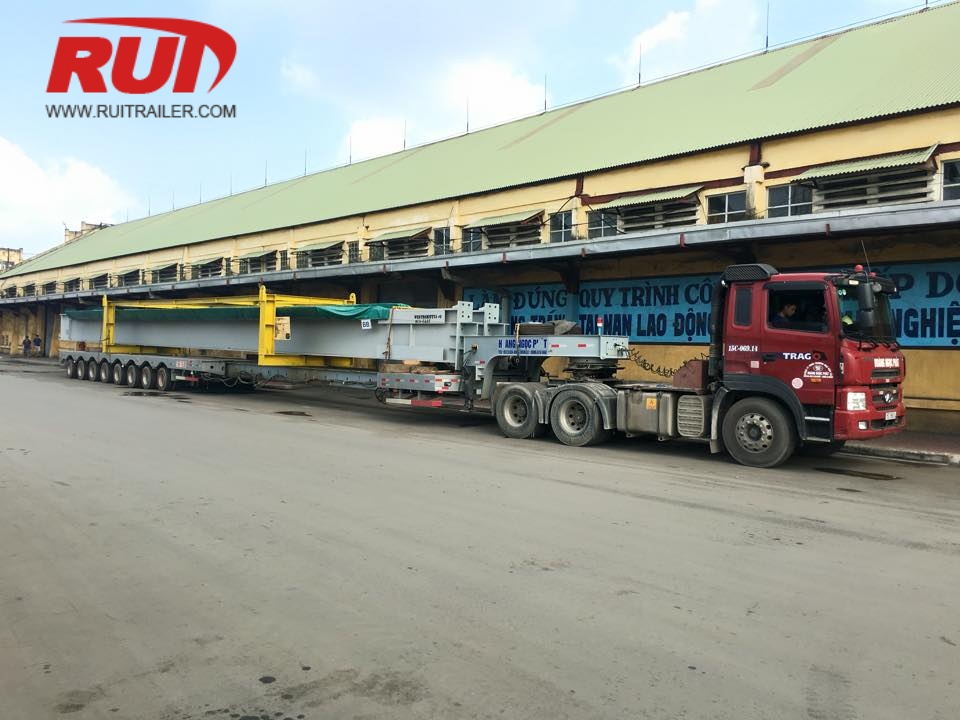
When hauling cargo that is both over-length and over-height, an extendable drop deck trailer provides the required overhead clearance. Lowering the main deck height allows transport operators to navigate under bridge passes and utility lines without exceeding regional height limits.
- Primary Cargo: Industrial machinery, prefabricated modular units, and tall structural frames.
- Key Features: Gooseneck step transition, reinforced low-profile frame rails, and balanced load transfer across axle groups. For complex weight distribution challenges, check our heavy haul trailers guide for maximum payload and safety.
Extendable Lowboy & Lowbed Trailers
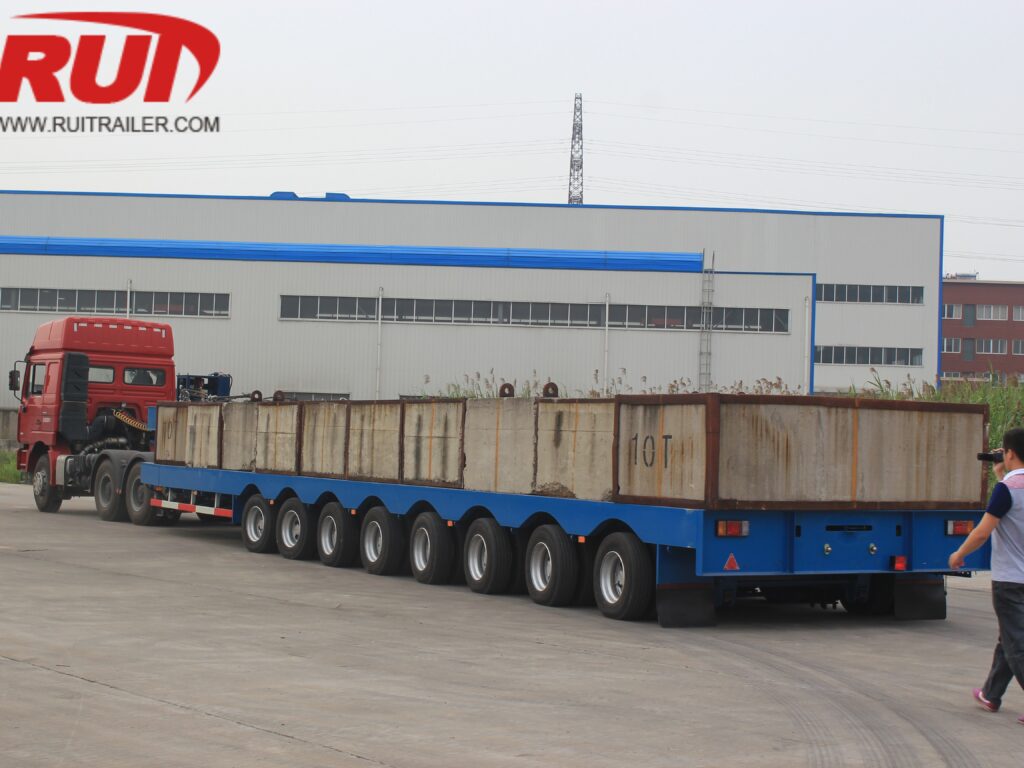
For ultra-heavy machinery and extreme heights, our extendable lowboy trailer line delivers maximum ground clearance management. Offered with both fixed gooseneck and hydraulic detachable gooseneck (RGN) setups, these heavy haul expandable trailers make loading heavy-tracked and wheeled equipment straightforward.
- Primary Cargo: Heavy industrial plant equipment, transformers, mining machinery, and oversized pressure vessels.
- Key Features: Ultra-low loading decks, multi-axle stretch trailer foundations, and high concentrated point-load capacities.
Multi-Stage Extendable Wind Turbine Blade Trailers
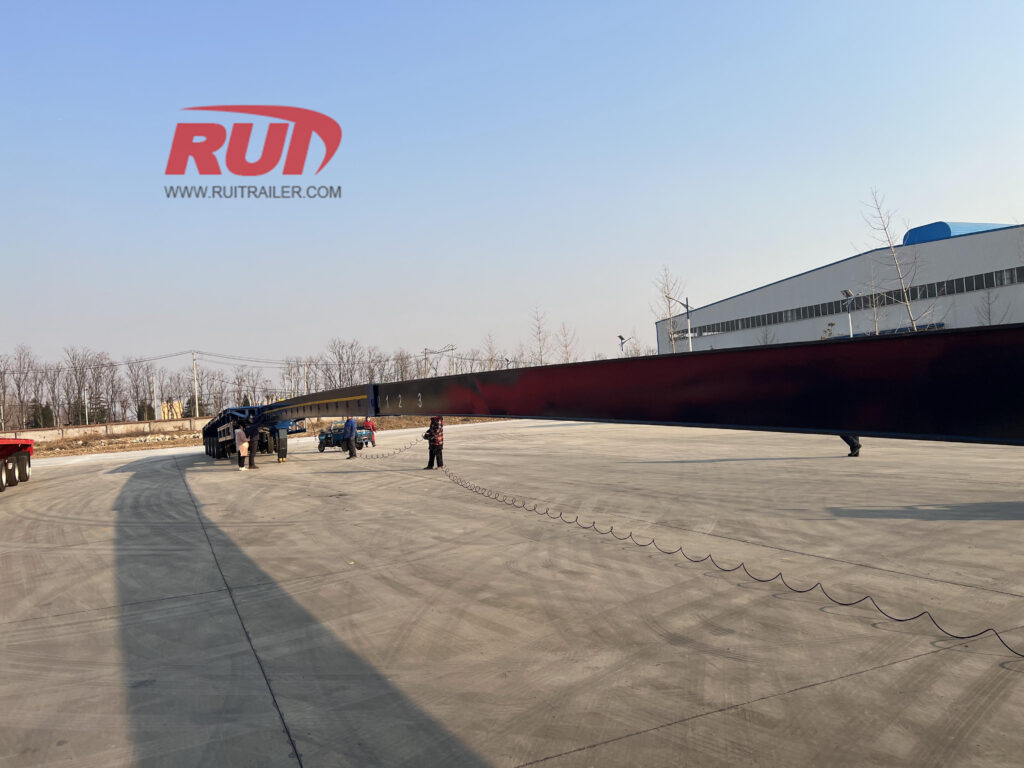
Transporting modern wind energy components demands specialized equipment. Our multi-stage telescopic semi trailers are built specifically to navigate long wind blades through tight turns and rough job site terrain.
- Primary Cargo: Onshore and offshore wind turbine blades ranging from 60 meters to over 100 meters, as well as heavy tower sections.
- Key Features: Multi-stage beam extensions, integrated hydraulic turntables, lift adapters, and forced hydraulic steering axles to maintain tight turning radiuses. Explore our specialized solutions in our detailed wind turbine blade transportation equipment guide.
Heavy-Duty Structural Engineering & Mechanism Highlights
Our engineering team designs every extendable trailer to deliver maximum rigidity, reliable mechanical actuation, and dependable load stability under the most demanding transport conditions.
High-Tensile Steel Box-Beam Chassis & Deflection Control
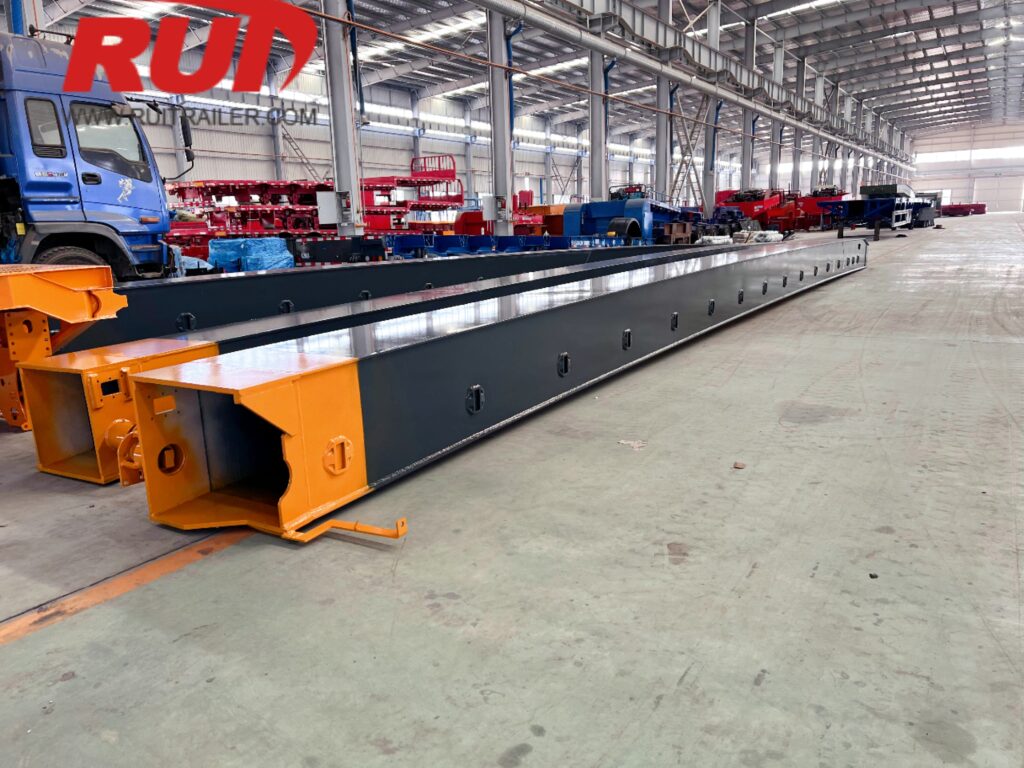
- Premium Steel Construction: We fabricate our main beams and telescopic sections using certified Q690 and HG785 high-strength structural steel to resist severe bending and torsional loads.
- Anti-Sag Engineering: Pre-cambered central box beams and reinforced web plates eliminate chassis deflection and deck sag when the trailer is fully extended under maximum payload.
- Torsional Rigidity: Multi-chamber cross-member bracing prevents chassis twisting during high-speed highway hauls and uneven job site maneuvers.
Telescopic Extension & Pneumatic Locking Systems
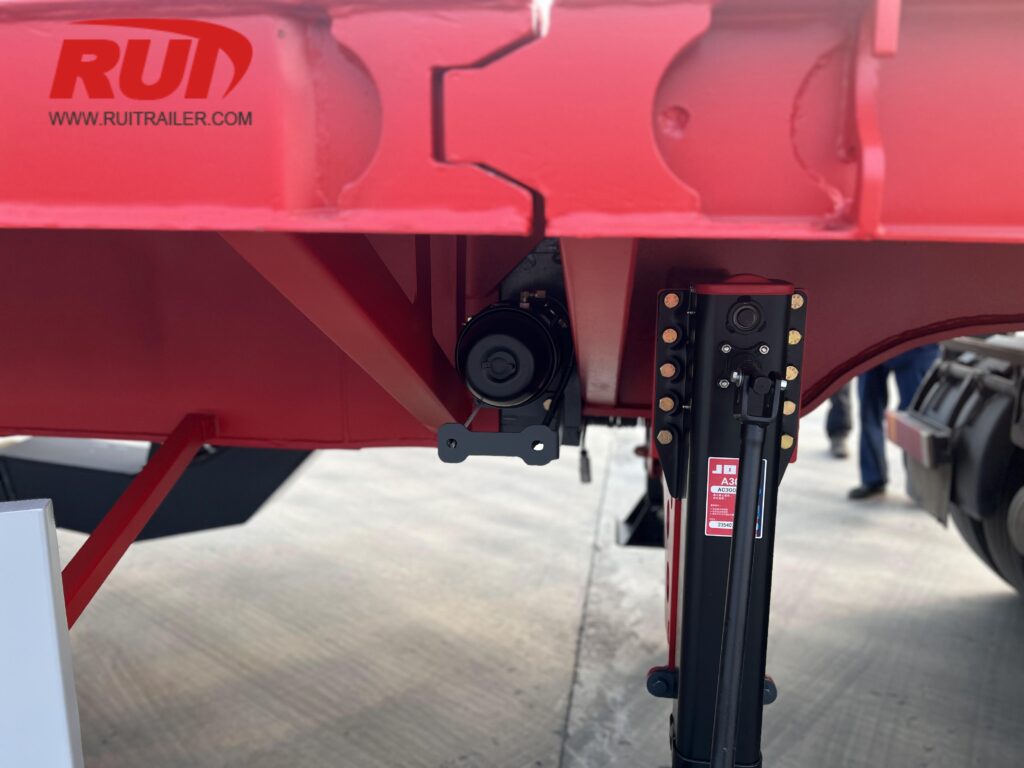
- Beam-in-Beam Sliding Mechanism: Precision-machined nested box beams glide smoothly during expansion and retraction cycles.
- Low-Friction Wear Pads: Replaceable, heavy-duty polymer wear plates reduce friction, eliminate steel-on-steel galling, and simplify maintenance.
- Positive Air & Hydraulic Locking: Pneumatically or hydraulically actuated locking pins engage automatically at pre-set increments, securing the exact stretch trailer dimensions needed for your load.
Steering Technologies: Forced Hydraulic vs. Self-Tracking
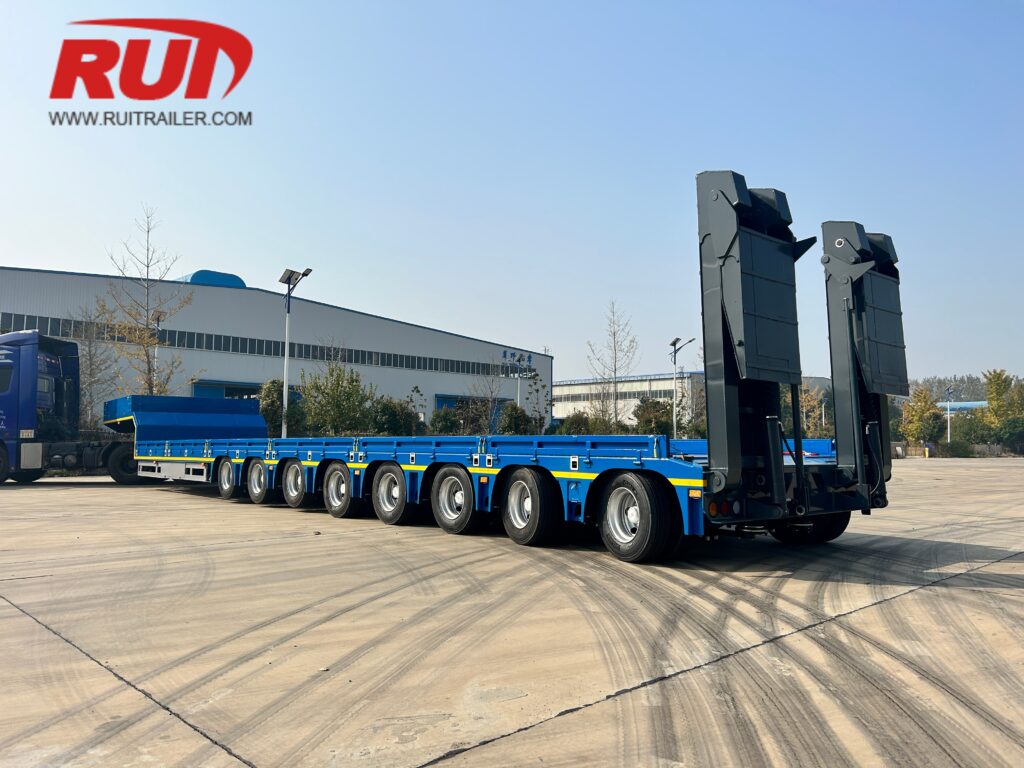
- Hydraulic Forced Steering: Kingpin-actuated steering cylinders synchronize axle angles with the tractor’s turn angle, drastically reducing tire scrubbing and turning radius on long-cargo runs.
- Self-Tracking Friction Axles: Automatic counter-steering axle configurations provide a cost-effective solution for moderate extensions with automated reverse locking.
- Wireless Remote Manual Override: Handheld wireless controllers allow escort drivers or operators to manually steer the rear bogie around tight intersections and confined industrial facilities.
Running Gear, Braking & Suspension Platforms
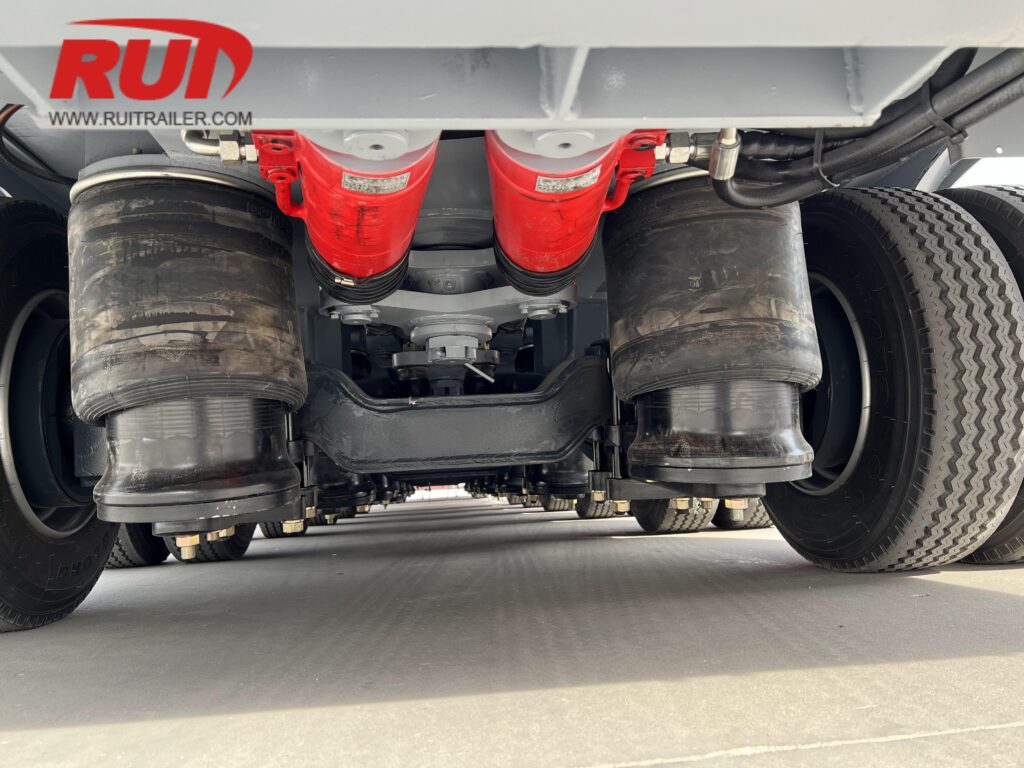
- Heavy-Duty Suspension Choices: We match running gear to your payload profile using heavy mechanical leaf springs, air ride suspension, or hydraulic axles for heavy-duty industrial applications with pendulum stroke compensation.
- Dual-Circuit Braking System: Standard dual-line pneumatic braking with integrated ABS/EBS and spring brake actuators ensures fast response times and dependable roll stability across all axle lines.
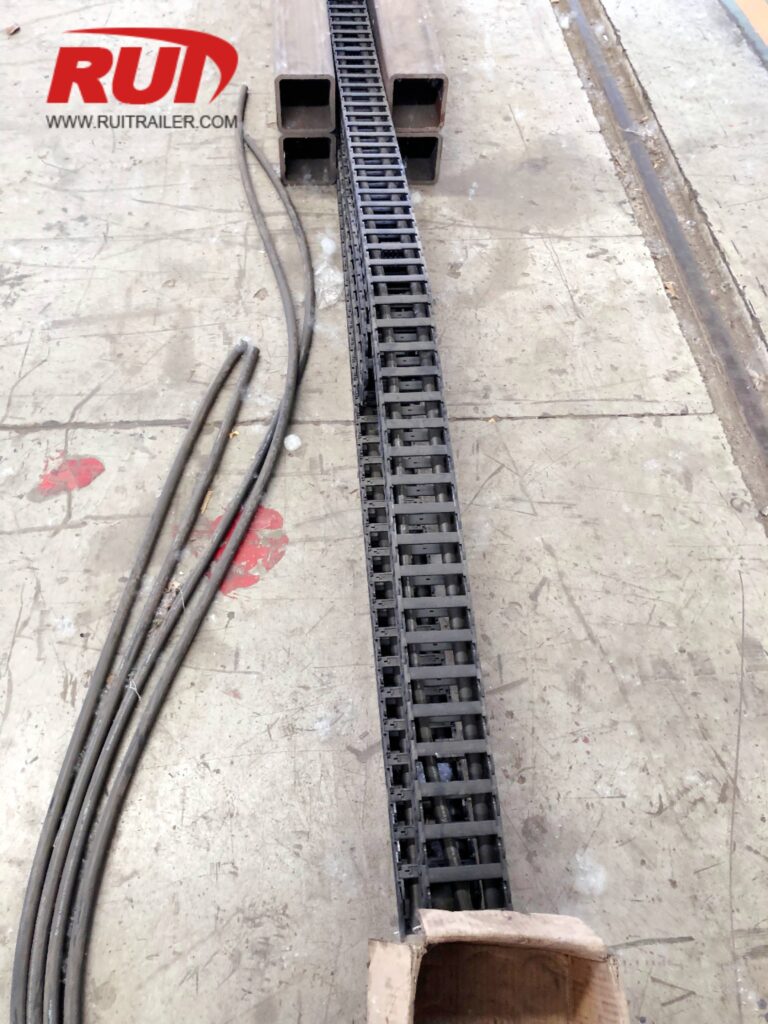
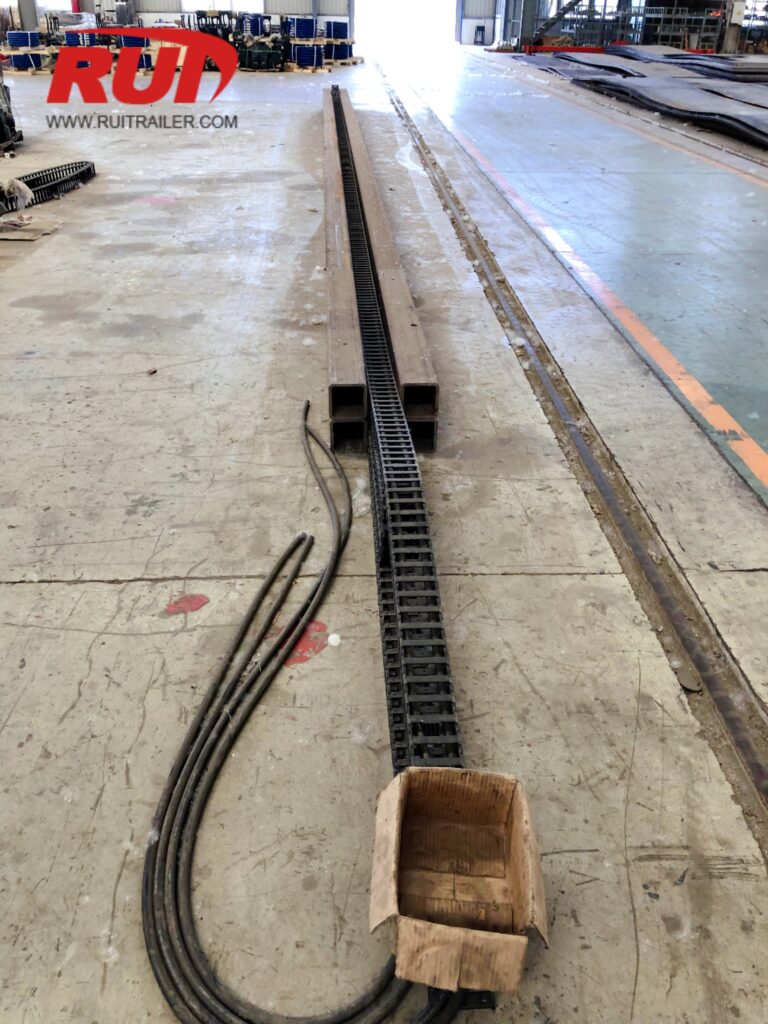
- Protected Utility Routing: Heavy-duty drag chains securely guide air lines and electrical wiring harnesses through the interior of the central telescopic beam, preventing pinch damage during expansion.
Technical Specifications & Performance
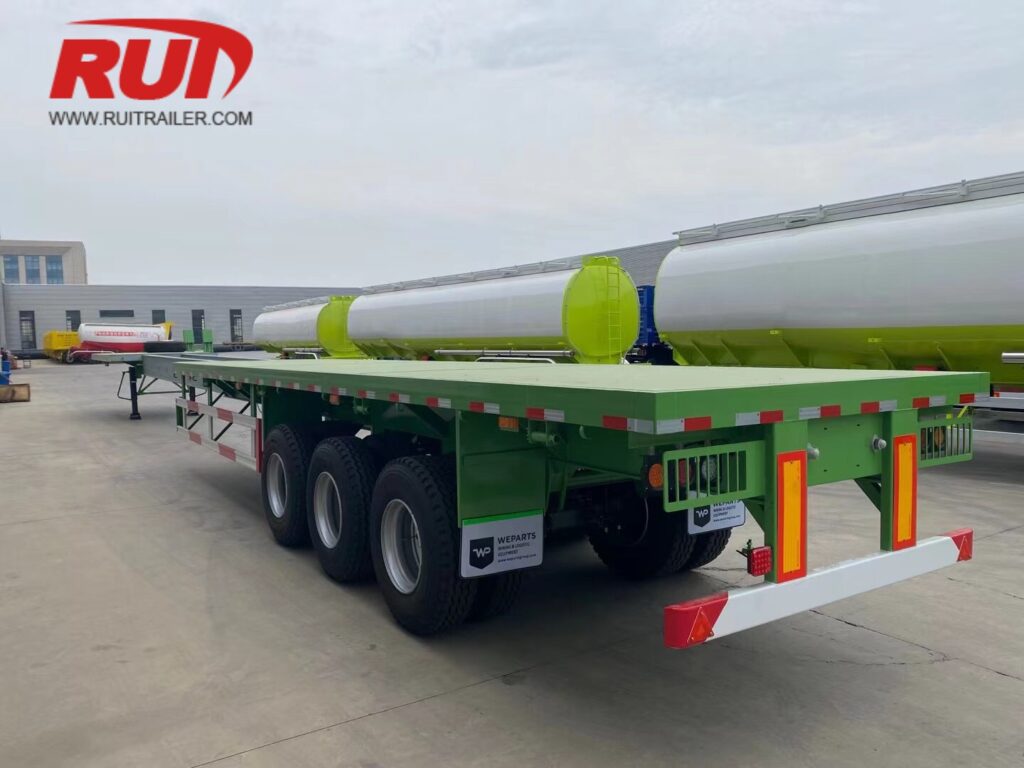
Our engineering team configures every extendable trailer to balance structural strength, maximum legal payload, and exceptional maneuverability. Below are the standard technical parameters and core specifications for our heavy-haul fleet.
Specification ParameterStandard Platform ConfigurationHeavy-Haul Multi-Stage ConfigurationClosed Length13.5 m (45 ft) – 16 m (53 ft)18 m (59 ft) – 24 m (78 ft)Extended LengthUp to 25 m (82 ft) – 36 m (118 ft)45 m (147 ft) to 60 m+ (197 ft+)Payload Capacity30 to 60 tons60 to 120+ tonsAxle Count2 to 4 axles4 to 8+ multi-axle linesSteering SystemRigid or friction self-steeringAll-wheel hydraulic forced steering with remote overrideSuspension SystemsAir ride or mechanical leaf spring Heavy-duty pneumatic or hydraulic pendulum suspensionDeck StructureHeavy-duty hardwood or diamond steel plateReinforced central box beam with drop-deck insertsKingpin & PowerJost 2″ or 3.5″ interchangeableJost 3.5″ heavy-duty with autonomous diesel/electric HPU
Dimensional & Extension Capabilities
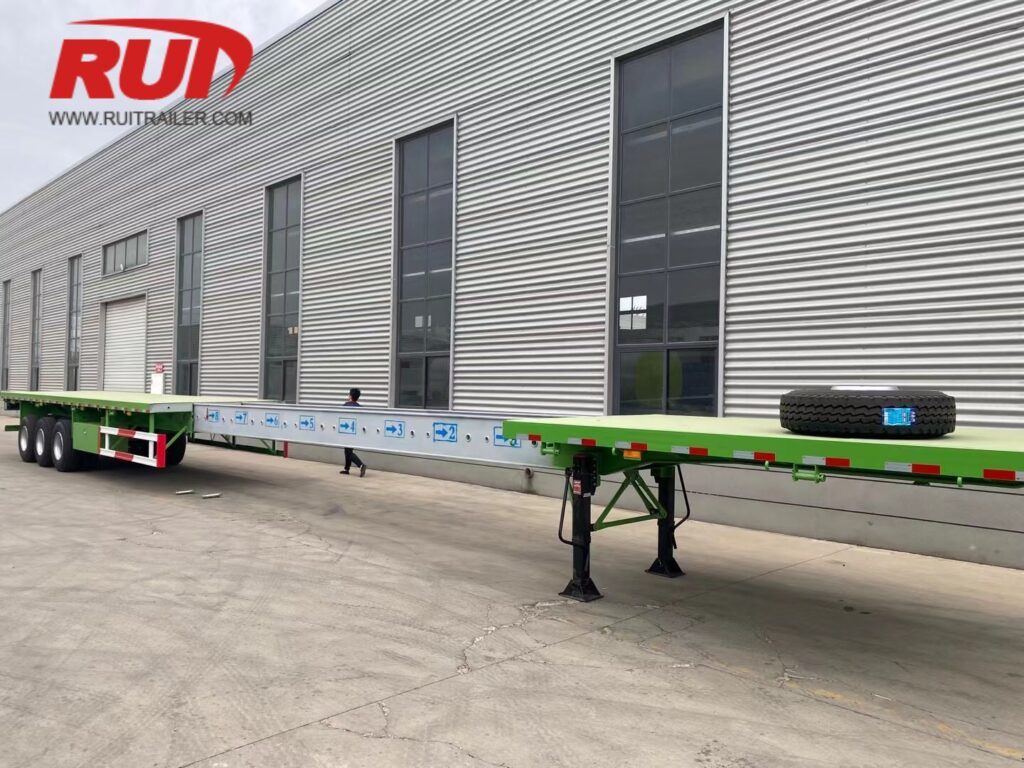
- Retracted Profile: Compact closed lengths from 13.5m (45ft) ensure compliance with standard transport regulations when traveling unladen.
- Telescoping Reach: Single, double, and triple-stage central spine beams expand smoothly up to 60m+ for indivisible, long cargo transport.
- Step and Drop Depths: Optimized deck heights maintain a low center of gravity across every extension stage.
Payload Ratings & Load Capacities
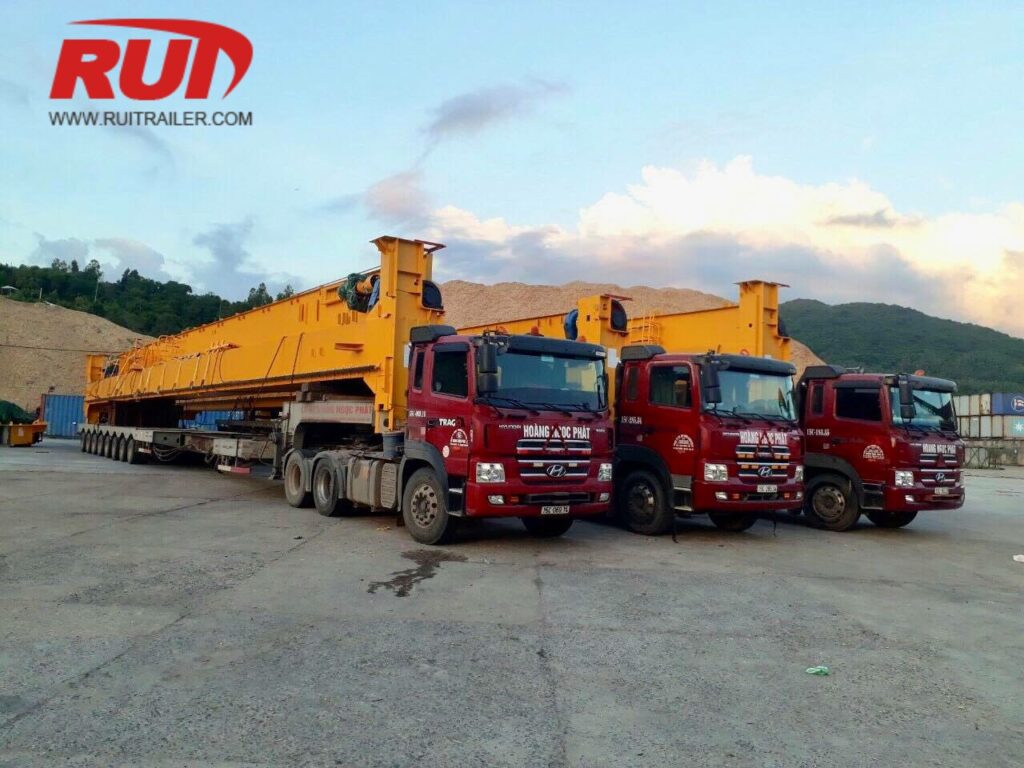
- Standard Utility Transport: Designed for concentrated 30-ton to 60-ton industrial freight in both closed and intermediate extended positions.
- Extreme Heavy-Haul: High-tonnage models manage payloads exceeding 120 tons, matching the structural stability seen in a 120-ton front-loading low-bed trailer for heavy haul.
Axle Configurations & Suspension Types
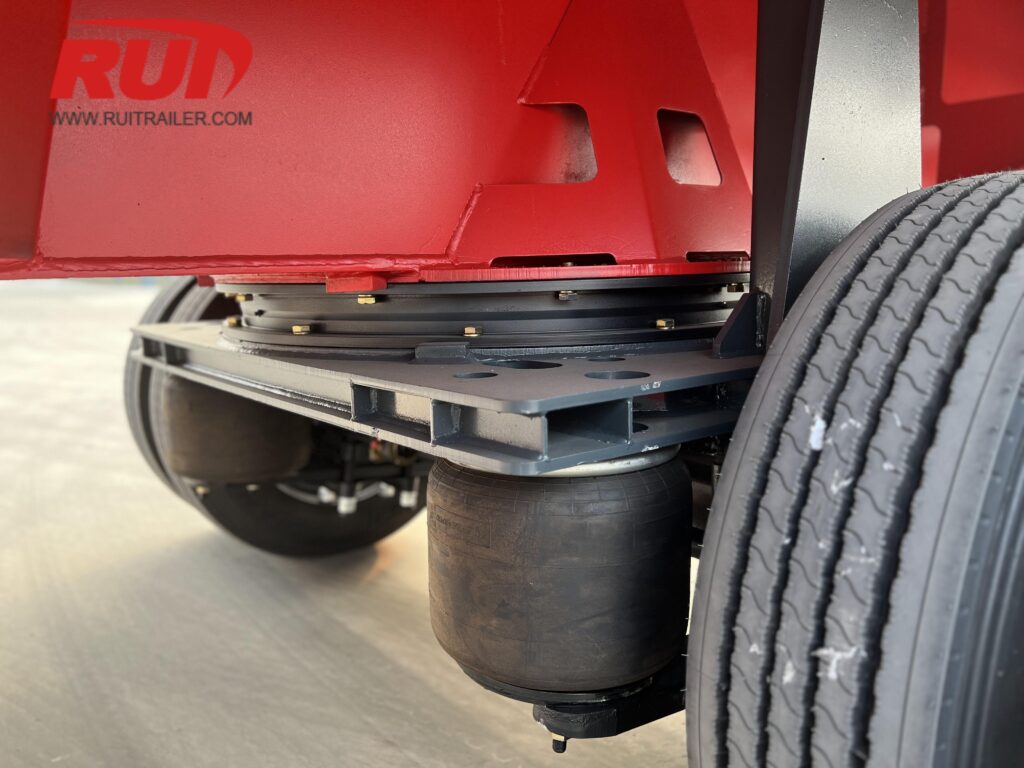
- Axle Lines: Configured from 2-axle setups up to 6+ multi-axle groups to properly distribute high axle loads.
- Suspension Selection: Choose between heavy-duty mechanical leaf springs, road-friendly air suspension, or an integrated hydraulic suspension trailer for low-bed heavy hauling setup for rough terrain and automatic load compensation.
- Forced Steering: Turntable-mounted hydraulic forced steering ensures optimal tracking through tight highway intersections and job sites.
Deck Construction & Running Components
- Deck Flooring: Fitted with high-wear tropical hardwood or heavy-gauge checkered steel diamond plates with integrated lashing rings.
- Coupling Hardware: Certified Jost 2″ or 3.5″ bolt-in kingpins matched to high-capacity goosenecks.
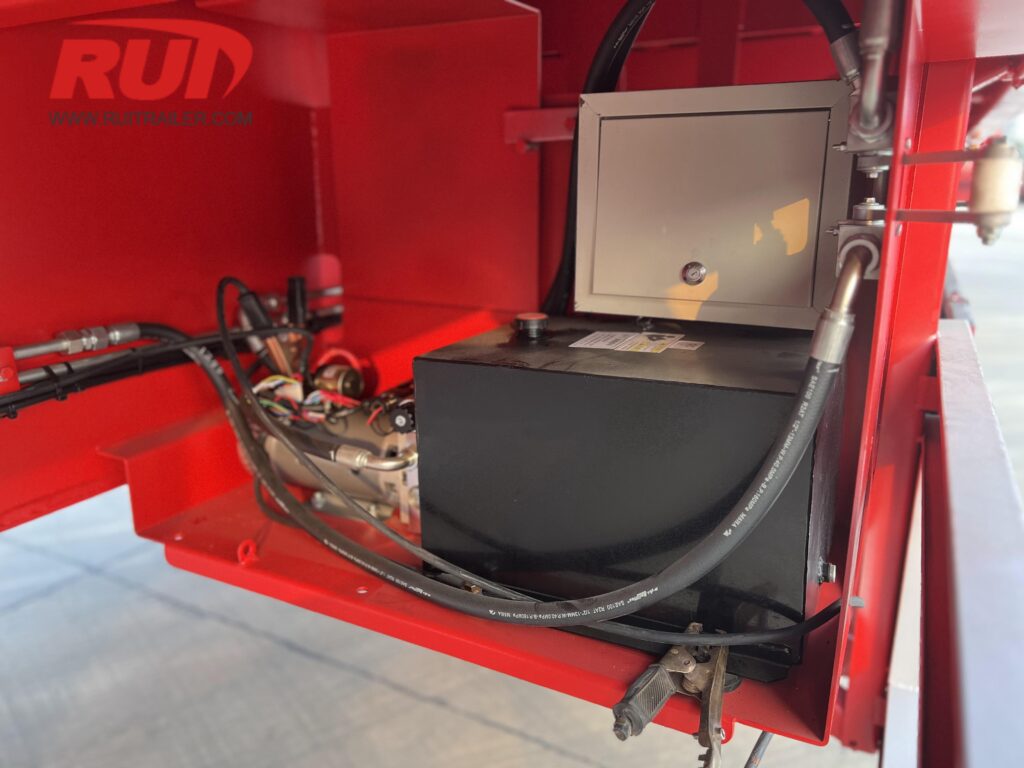
- Autonomous Power: Self-contained diesel or electric-hydraulic power packs (HPU) control telescoping cylinders, landing legs, and forced steering lines independently.
Industrial Applications & Cargo Suitability
Our extendable trailer models provide the structural strength and deck adaptability required to move self-supporting, over-length freight across diverse industrial sectors. We configure each long cargo transport trailer to handle concentrated weight distributions and long overhangs without chassis distortion.
Wind Energy Logistics
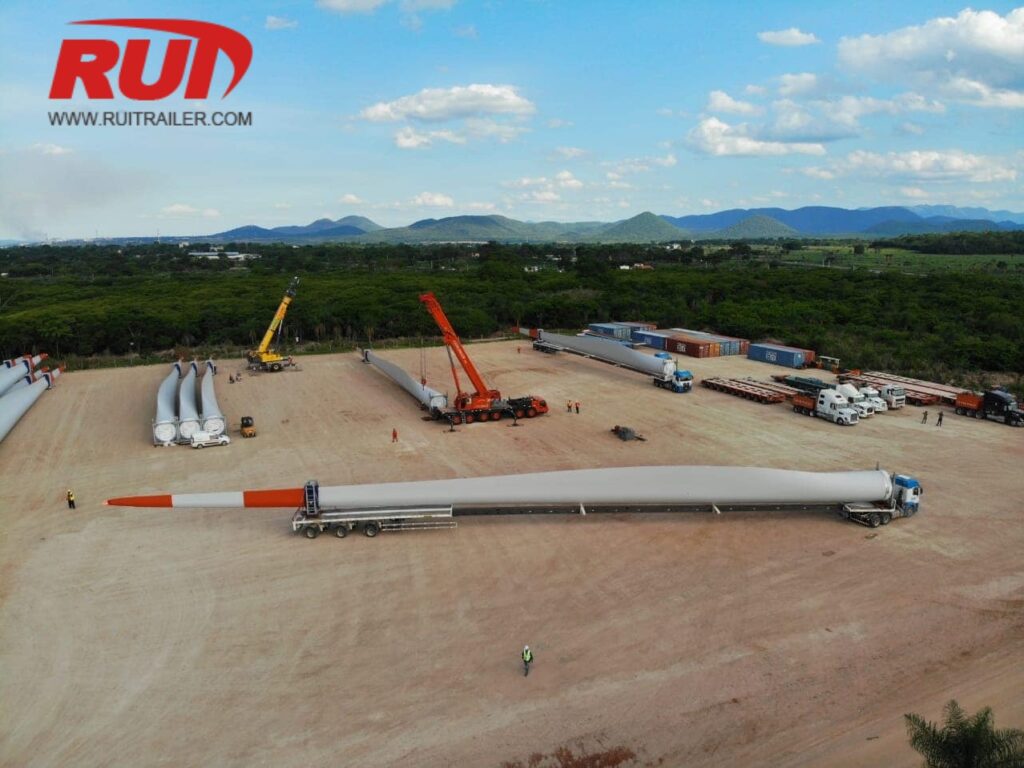
Transporting wind components requires extreme deck extension and precise maneuverability on narrow access roads. Our wind blade extendable trailer platforms are engineered for: Onshore and Offshore Turbine Blades: Secure transport for extra-long blades reaching up to 100 meters and beyond. Tower Sections: Multi-axle configurations that maintain balanced axle loads when hauling heavy, cylindrical tower bases. Nacelles and Hubs: Heavy-duty load decks that handle dense, high-tonnage energy payloads.
Bridge & Highway Infrastructure
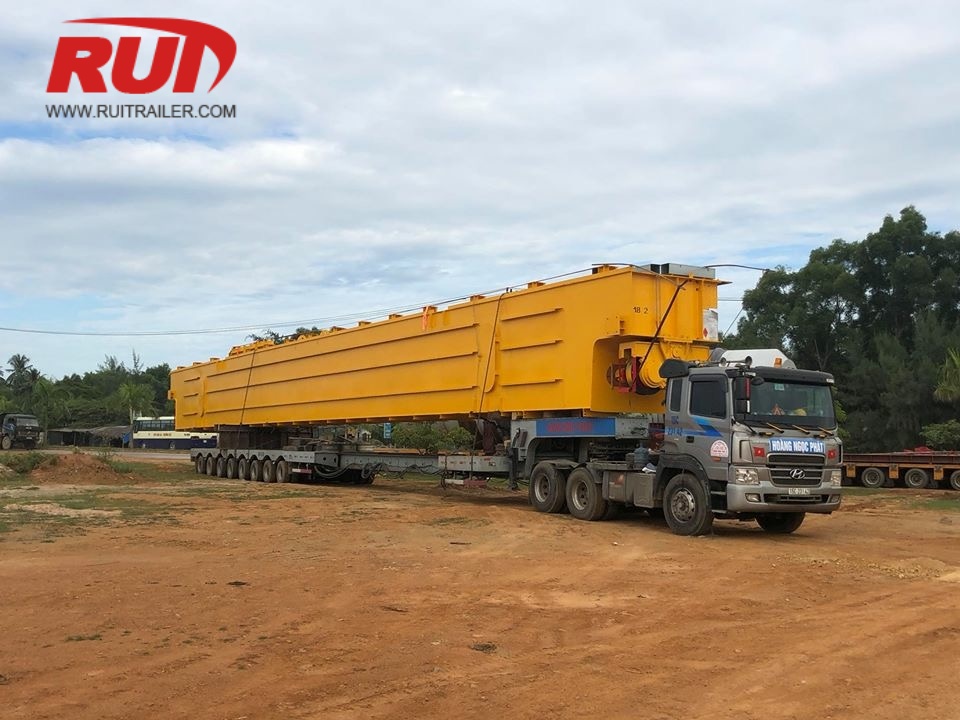
Civil construction projects depend on rigid platforms to haul monolithic concrete and steel spans. While specialized projects may also utilize a girder bridge transport setup, our heavy haul extendable trailer units handle: Precast Concrete Girders: Telescoping box beams deliver high bending resistance to eliminate sagging during transit. Structural Bridge Sections: Telescopic chassis layouts accommodate extended bridge segments directly from fabrication yards to job sites. Heavy Foundation Pilings: Stable flatbed platforms support long steel casing pipes and pre-stressed concrete pilings.
Industrial & Energy Sectors
Industrial plant expansion projects require reliable transport for tall, heavy, and over-length processing vessels. For heavy cargo needing minimum ground clearance alongside stretch capabilities, our team also integrates features from our lowboy trailer engineering into custom builds. Petrochemical Distillation Columns: Robust central box beams prevent torsional flex under concentrated industrial loads. Long-Span Pressure Vessels: Multi-axle stretch configurations distribute weight evenly across state and regional bridge formulas. Power Utility Poles: Efficient single- and double-stretch decks engineered for rapid utility line installation projects.
Commercial Steel & Timber Logistics
High-volume transport of self-supporting building materials requires quick deck adjustments and standard-width operation when empty. Structural Steel I-Beams: Deep-flange beams and trusses ride securely on heavy-duty friction decks. Rebar Bundles & Tube Steel: Telescoping flatbeds expand to match mill-length steel bundles, eliminating hazardous rear overhangs. Engineered Timber Trusses: Broad loading surfaces and multiple lashing points protect oversized glulam and architectural wood components from transit damage.
RUITRAILER Customization & Manufacturing Standards
As a dedicated extendable trailer manufacturer, we build every chassis to meet real-world hauling demands and regional road regulations worldwide. We combine precision engineering with rigorous fabrication standards to deliver dependable performance for oversized logistics.
Bespoke Engineering (OEM/ODM)
Our engineering team configures every telescopic platform to match your specific operational payload and regional compliance needs.
- Custom Dimensions: Adjustable deck widths, outriggers, gooseneck configurations, and multi-stage beam extensions.
- Axle & Suspension Layouts: Optimized axle spacings, lift axles, and forced steering integrations designed in line with our heavy-duty low bed trailer engineering standards.
- Component Integration: Custom tie-down matrices, stake pockets, twist locks for containerized cargo, and autonomous hydraulic power packs (HPU).
Industrial Surface Protection & Finishing
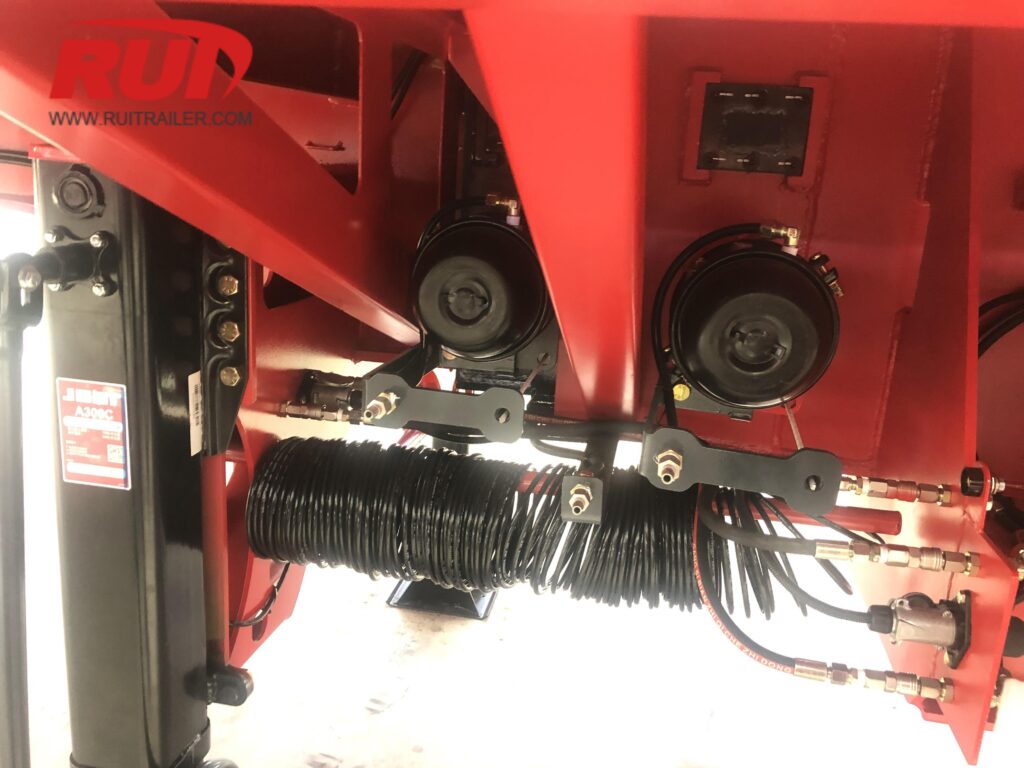
Long-distance heavy hauling exposes trailers to harsh environments. We apply multi-layer protective coatings to ensure long-term durability and corrosion resistance:
- Surface Preparation: Complete chassis SA 2.5 standard shot blasting to remove scale and ensure maximum coating adhesion.
- Corrosion Barrier: Dual-coat zinc-rich epoxy primer applied across all exterior and interior sliding surfaces.
- Topcoat Finish: Heavy marine-grade polyurethane topcoat, providing high UV resistance, chemical protection, and color retention against severe weather.
Quality Assurance Protocols
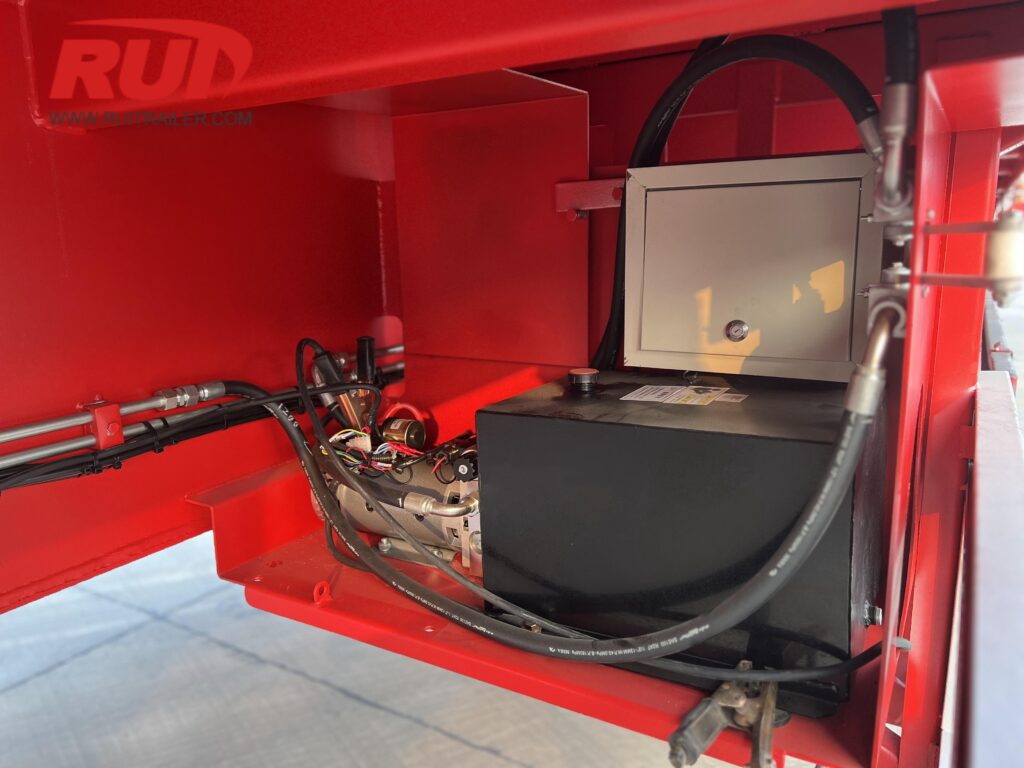
Every heavy haul extendable trailer undergoes comprehensive quality checks before leaving our facility:
- 100% Ultrasonic Weld Testing: Rigorous NDT inspection on all primary load-bearing welds and central spine joints.
- Laser Alignment Verification: Precision optical checks across all axle lines to eliminate tire scrubbing and guarantee true tracking.
- Deflection & Load Validation: Static and dynamic load testing to verify rated payload capacity and confirm zero permanent chassis sag under full extension.
Extendable Trailer Frequently Asked Questions
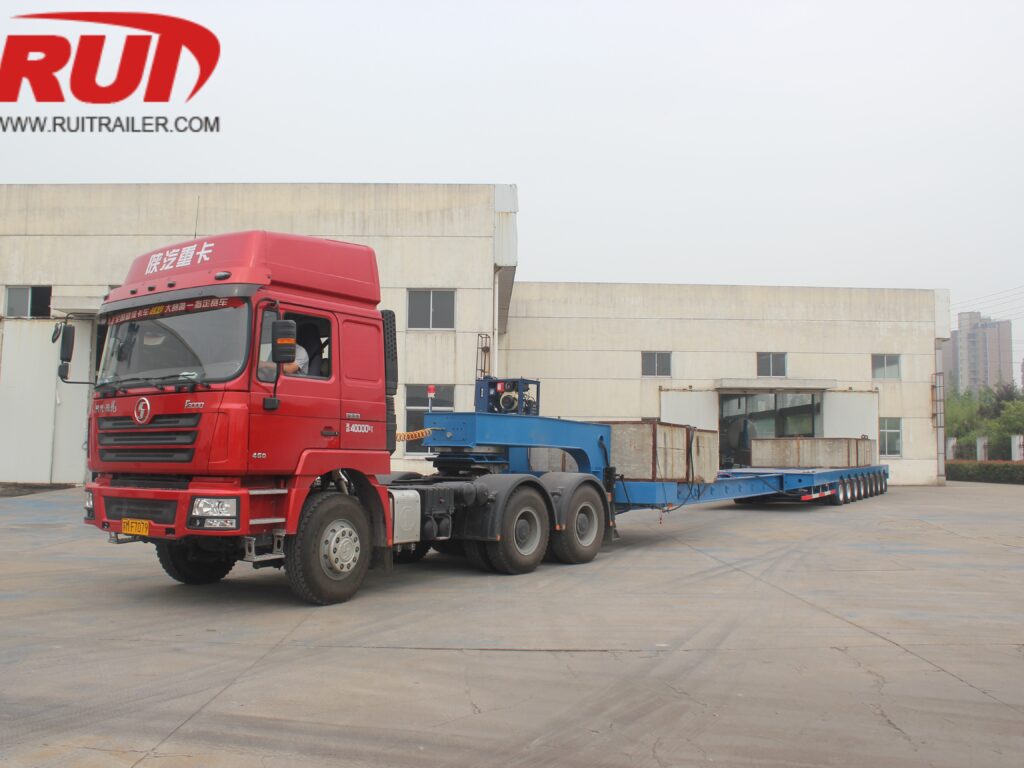
How is beam deflection managed when the trailer is fully extended under heavy load?
We engineer our telescopic central beams with high-tensile structural steel (such as Q690 and HG785 grades) fabricated with an intentional pre-camber arch. When your heavy, long-span freight sits on the extended deck, the chassis settles into a level profile rather than sagging. Review our extendable trailer safety and load capacity guidelines to calculate the right payload distribution for your hauling requirements.
What is the difference between friction self-steering and hydraulic forced steering axles?
Choosing the right steering system depends on your route complexity and total extended length:
FeatureFriction Self-Steering AxlesHydraulic Forced Steering AxlesOperating PrincipleAxles caster passively behind the pivot pointTurntable at kingpin commands hydraulic cylindersReverse ManeuveringRequires pneumatic straight-line lockingFull active steering control in forward and reverseTurning RadiusModerate reduction in tire scrubTightest turning radius with maximum tire lifeBest ApplicationSingle-stretch flatbeds and highway transportMulti-stage trailers, wind energy, and urban routes
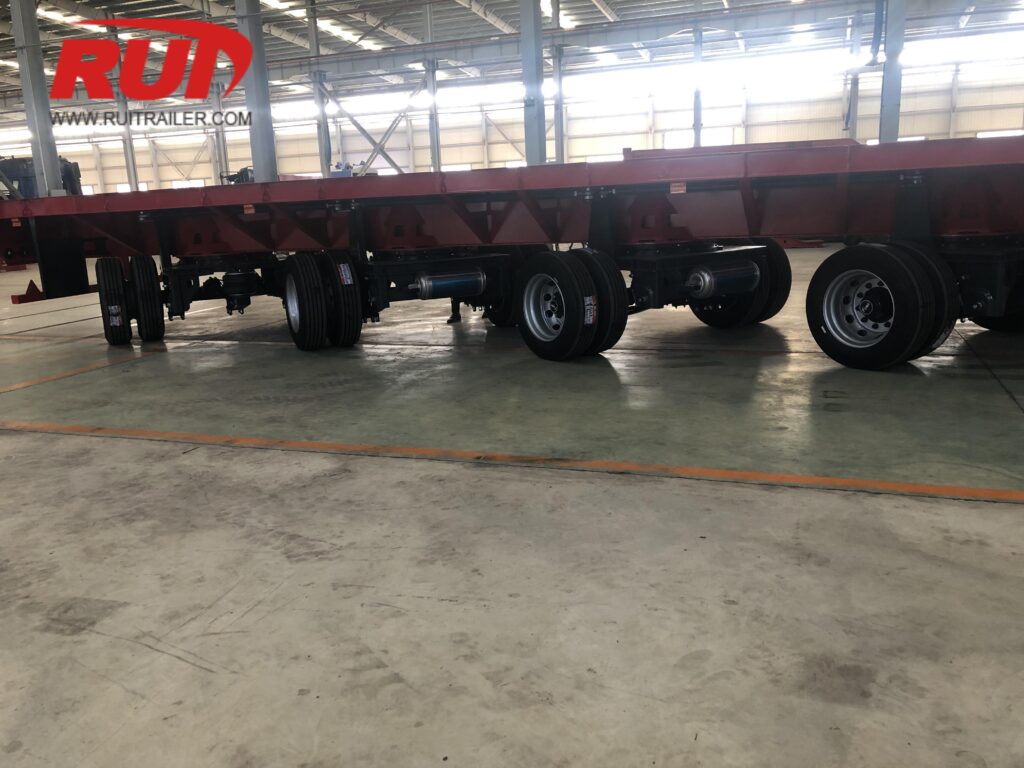
Explore our comprehensive breakdown of trailer steering system configurations to find the ideal match for your fleet.
Can RUITRAILER build custom telescopic lengths to meet regional road regulation limits?
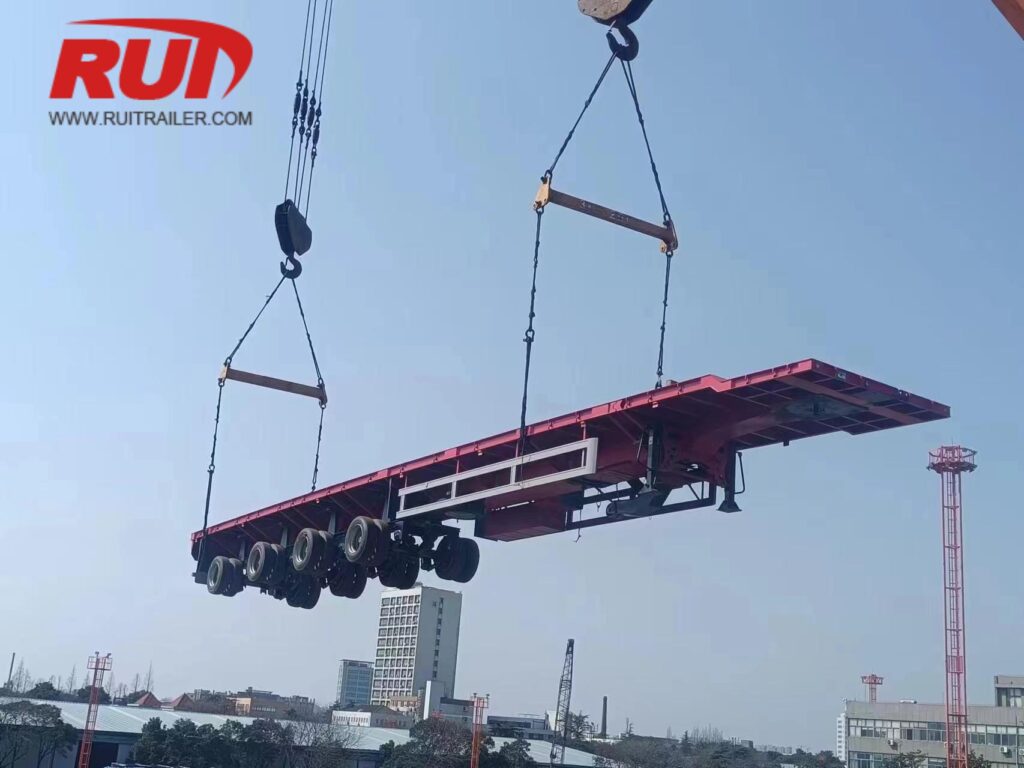
Yes. Our engineering team designs every extendable trailer around your local axle load formulas and gross vehicle weight ratings. We customize closed lengths, extended spans, deck heights, goosenecks, and axle line spacings for your specific operational permits.
How are air lines and electrical wiring protected inside the extending central chassis?
We mount high-durability polymer energy drag chains inside the central box-beam structure. These protective tracks guide and support all hydraulic hoses, dual-line brake air pipes, and ABS/EBS wiring, preventing pinch points, friction wear, and snagging during extension and retraction.
What is the standard production and shipping lead time for custom extendable trailers?
- Design & Engineering Approval: 3 to 7 business days for custom technical drawings.
- Manufacturing Cycle: 25 to 45 business days depending on stage count and steering complexity.
- Factory Testing: 100% weld verification, alignment, and load deflection tests prior to dispatch.
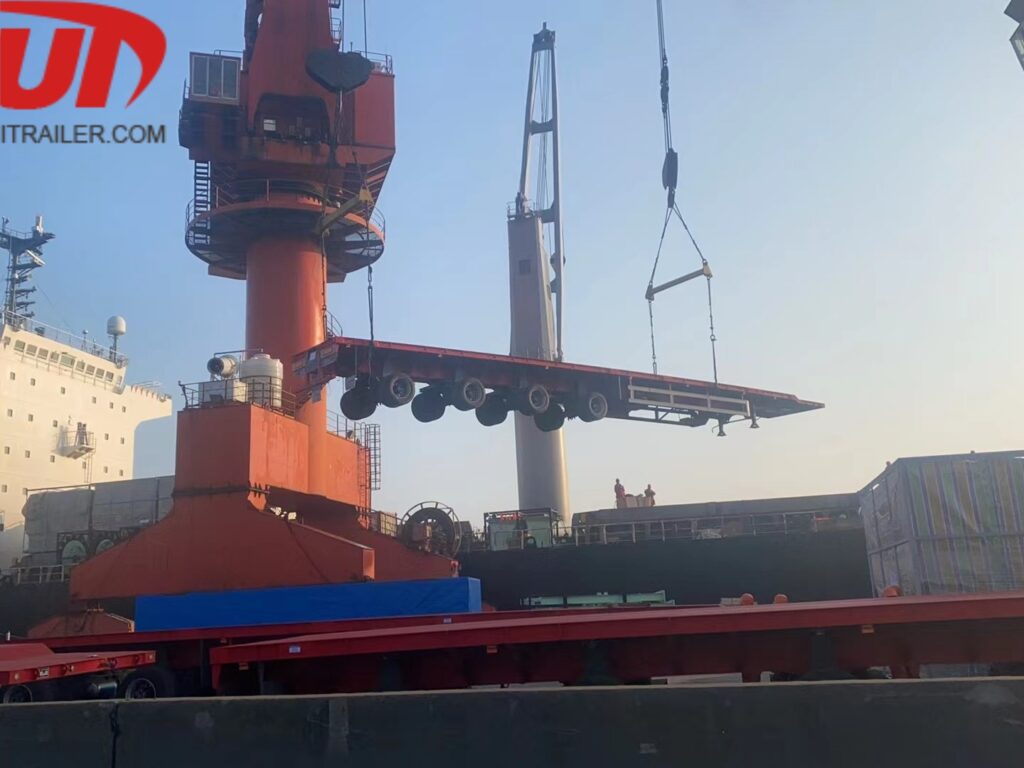
- Global Shipping: Worldwide delivery via RORO, breakbulk, or flat-rack ocean freight.
 English
 German
 Turkish
 French
 Portuguese
 Russian
 Arabic
 Hindi
 Vietnamese
 Chinese
 Spanish
 Indonesian
 Swahili