

What Is an Extendable Flatbed Trailer?
An extendable flatbed trailer (also known as a telescopic or stretch flatbed trailer) is a specialized platform semi-trailer engineered to adjust its deck length to match the cargo. When standard 48-foot or 53-foot platforms fall short, an extendable flatbed expands along a central spine to support self-supporting, extra-long freight while preserving road stability and axle load distribution.
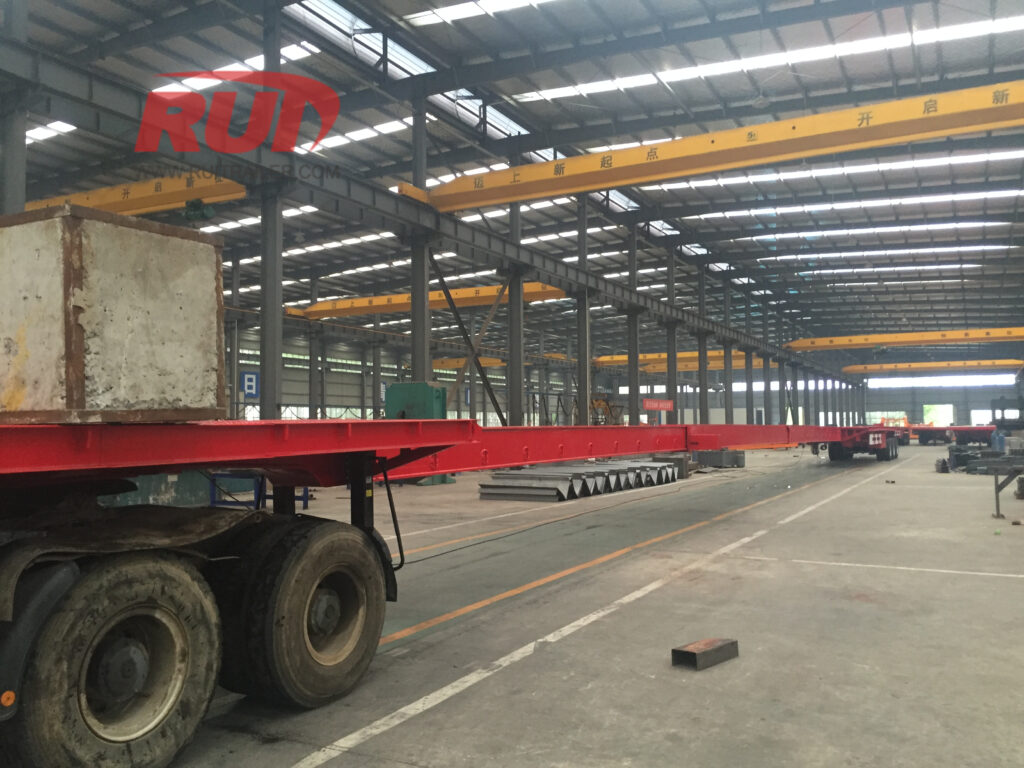
Telescopic Beam Design for Long-Load Adaptability
At the core of our extendable flat deck trailer is a telescopic box-beam chassis.
- Inner and outer steel girders: Fabricated from high-yield structural steel (such as Q690 or equivalent high-tensile grades) to handle severe bending moments when fully stretched.
- Integrated energy chains: Protected cable and air line tracks (drag chains) route within the main beam to protect electrical lines and air brake hoses from pinch points during elongation.
How the Sliding Chassis Platform Operates
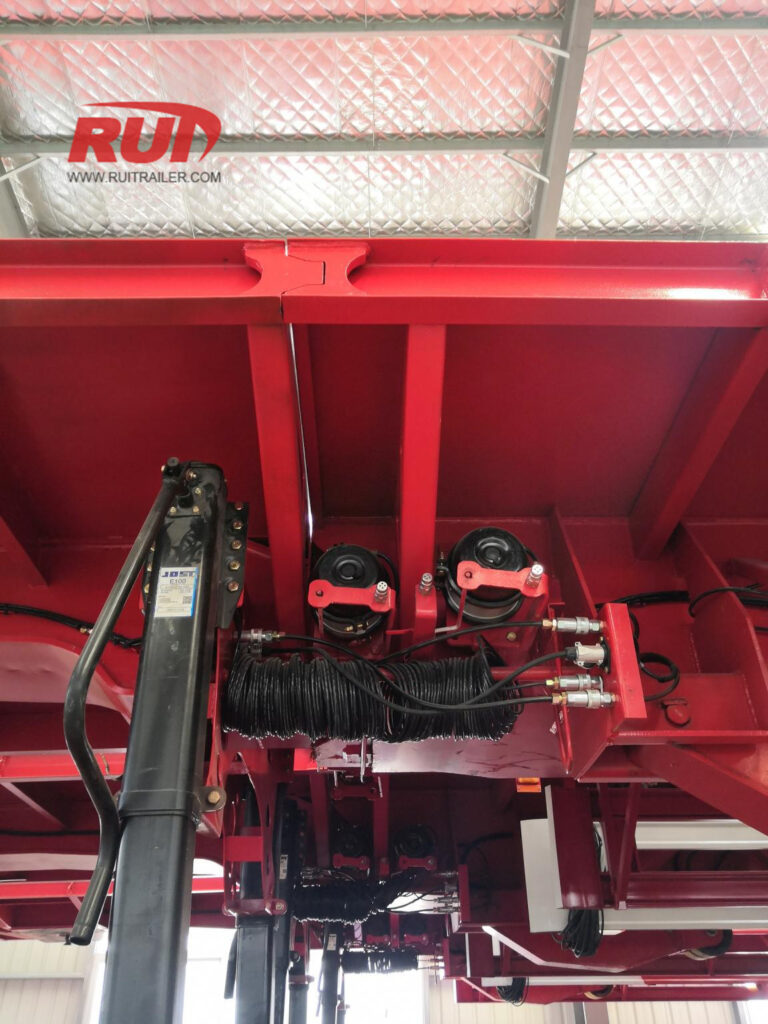
Adjusting the length of an expandable flatbed trailer requires no external cranes or complex rigging. The process is simple and reliable:
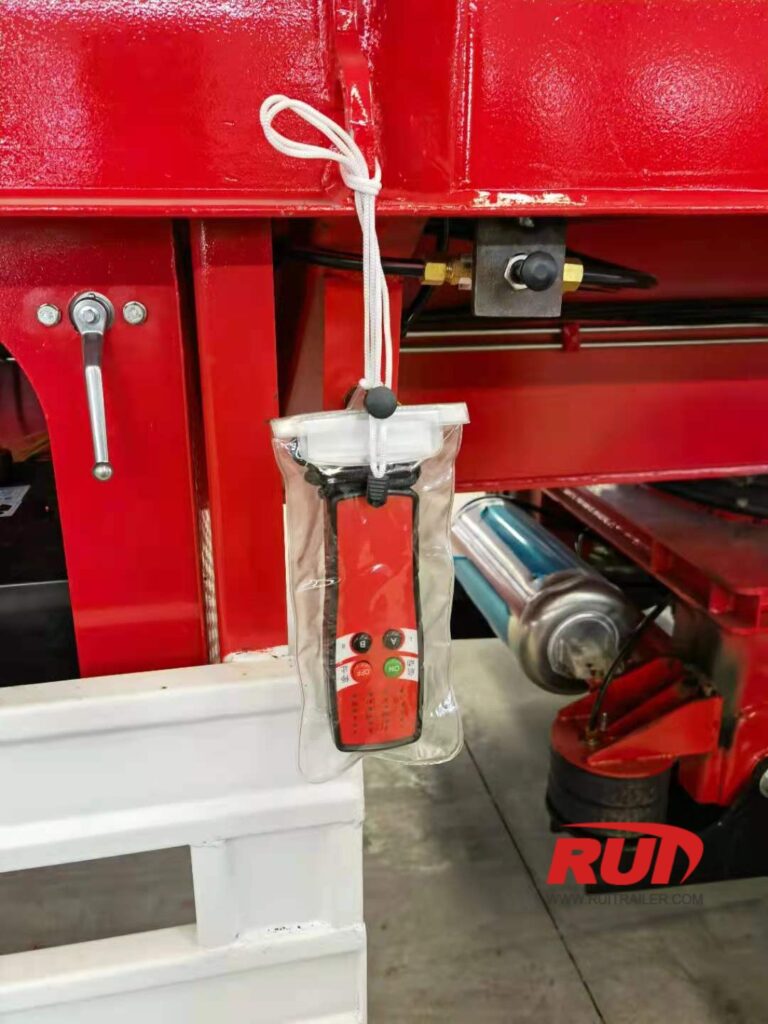
- Unlock the pins: The operator releases the chassis locking mechanism via a pneumatic control valve or a heavy-duty mechanical release lever.
- Lock trailer brakes: The trailer’s parking brakes are set on the rear axle bogie to anchor the rear wheels firmly to the ground.
- Stroke the chassis: The tractor moves forward to pull the front chassis section out, or reverses to close it down, sliding the deck to the required target length.
- Lock and verify: Pneumatic locking pins drop into precision-machined position holes along the central beam, securing the chassis firmly before travel.
Standard Closed vs. Extended Hauling Capabilities
Our extendable semi-trailers deliver a dual-purpose hauling platform that eliminates empty return runs by carrying conventional loads when closed.
| Specification Feature | Retracted Position (Closed) | Extended Position (Open) |
|---|---|---|
| Typical Deck Length | 13.5 m to 16 m (45 ft to 53 ft) | 21 m to 35+ m (70 ft to 115+ ft) |
| Operational Class | Standard legal freight | Over-length permit loads |
| Backhaul Flexibility | Palletized freight, steel coils, machinery | Single-piece oversized structures |
| Turning Radius | Standard highway clearance | Requires wide-swing routing / rear steer |
| Torsional Rigidity | Maximum deck stiffness | Concentrated load requires mid-point support |
Key Differences: Stretch Flatbeds vs. Standard Platforms
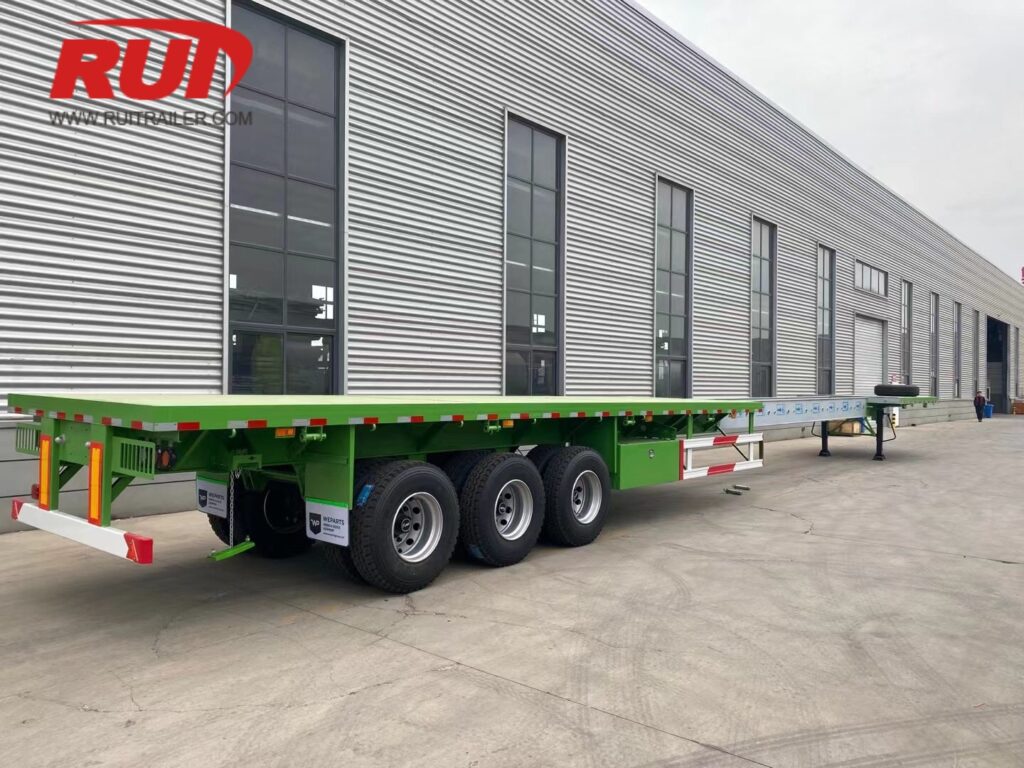
Standard fixed-length flatbeds are designed for distributed, uniform payloads within standard dimensional legal limits. When cargo extends far past the rear overhang threshold, standard decks fail safety and weight distribution regulations.
- Structural Deflection Control: Standard flatbeds flex significantly under concentrated center loads. Stretch flatbeds use reinforced box-section central spines designed specifically to counteract sagging across long, unsupported spans.
- Fleet Utilization: A standard platform can only take legal lengths. A stretch flatbed operates as a standard flatbed in daily service, then expands on demand for long-load transport contracts.
- Axle and Coupling Dynamics: Stretch platforms feature repositioned kingpin settings and multi-axle configurations (often with rear self-steering or forced-steering options) to safely track around tight intersections when hauling long cargo.
Main Applications for Extendable Flatbed Trailers
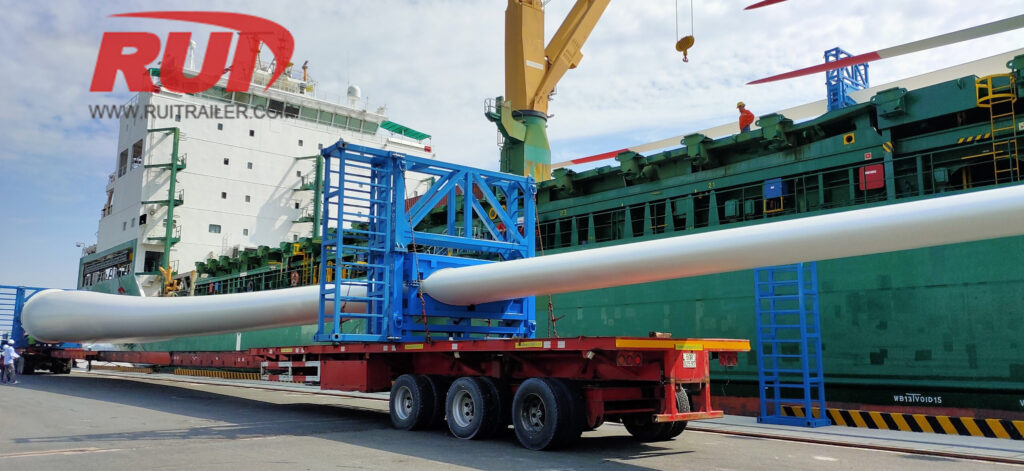
Standard decks fail when freight exceeds typical road transport lengths. We engineer every extendable flatbed trailer to adapt across multiple industries, providing a versatile platform that pulls open for specialized long-haul jobs and retracts for regular freight returns.
Transporting Structural Steel Beams and Bridge Sections
Steel fabricators and infrastructure contractors rely heavily on our stretch flatbed trailer builds. When moving bridge girders, roof trusses, and oversized I-beams, standard flatbeds create dangerous overhangs that violate axle weight balance. Our telescopic platforms extend the wheelbase and support the payload directly along its center of gravity, preventing structural sagging during transit.
Hauling Wind Turbine Components and Energy Equipment
The clean energy sector demands precision when moving extreme lengths. A specialized telescopic flatbed trailer allows transport fleets to carry tower sections, nacelle frames, and mid-sized rotor blades securely. For operations requiring comprehensive setups across complex power generation projects, using the right wind turbine trailer guide for blade and tower transport solutions ensures your equipment matches the specific hub height and blade dimensions of modern wind farms.
Moving Precast Concrete Beams and Modular Structures
Precast concrete bridge supports, architectural wall panels, and commercial modular units present high concentrated weight over extended lengths:
- Zero Deck Bending: High-tensile steel main chassis frames resist deflection under heavy, rigid precast loads.
- Even Load Distribution: Multi-position pneumatic lock stages allow fine-tuned length adjustments to balance axle loading.
- Modular Unit Support: The wide perimeter rails provide a solid foundation for prefabricated housing modules and industrial skids.
Pipes, Industrial Machinery, and Project Cargo Hauling
From cross-country pipeline infrastructure to heavy industrial processing plants, our oversized cargo trailer solutions handle non-standard loads with ease. Long oil and gas pipe bundles, conveyor structures, drilling rigs, and heavy plant frames require secure tie-down configurations and reinforced side rails. Following best practices from our heavy haul trailers guide for maximum payload and safety guarantees that your rig remains balanced and road-compliant, regardless of cargo length or terrain.
Chassis Structure and Extension Mechanics
A reliable extendable flatbed trailer relies on rugged framing and precise sliding mechanics to handle massive, long cargo without structural fatigue. We engineer our chassis to balance deadweight with maximum bending resistance, ensuring smooth expansion and contraction under demanding transport conditions.
+—————————————————————+ | Outer Box-Beam Chassis ==> [ Telescopic Inner Beam ] | | (Reinforced High-Tensile Steel) (Pneumatic Locking Pins) | +—————————————————————+
Heavy-Duty Main Chassis and Telescopic Sliding Beams
The core of our telescopic flatbed trailer is a heavy-duty box-type central beam built from high-tensile steel. The inner extension beam glides inside the outer main beam on durable, low-friction wear pads.
- Box-section engineering: Resists torsional twisting and vertical bending under concentrated long-distance loads.
- Smooth extension stroke: Precision-machined guide tracks allow single-operator expansion and retraction without binding.
- Reinforced transition points: High-stress joint areas are reinforced to absorb dynamic road vibration when fully stretched.
Pneumatic and Mechanical Locking Pin Systems
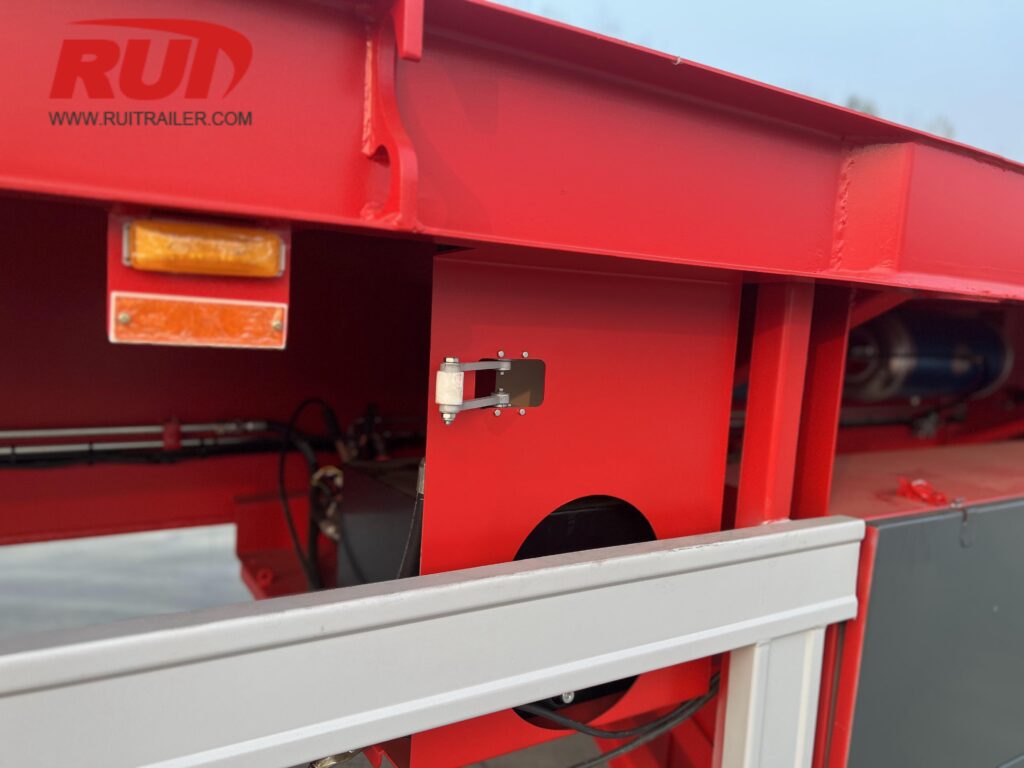
Safety during extension requires foolproof locking. Our sliding flatbed trailer systems utilize dual-action securement:
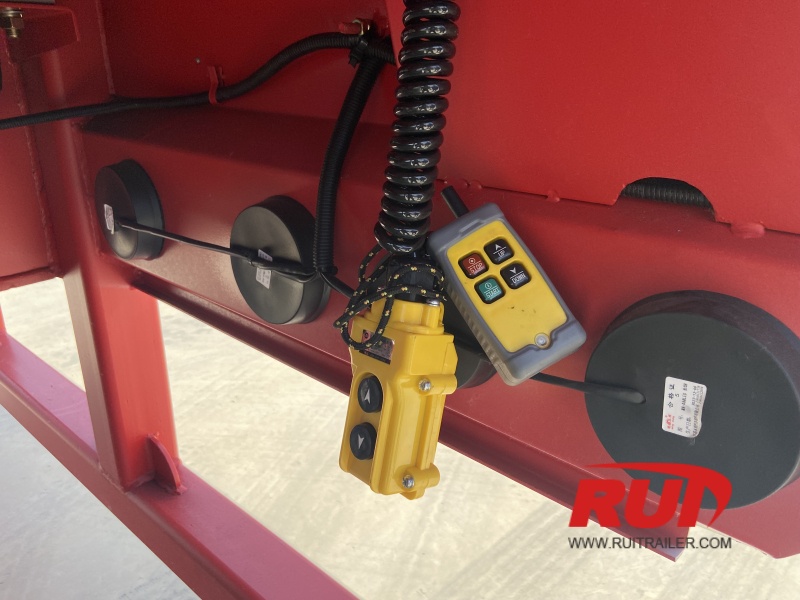
- Pneumatic pin control: The driver controls the heavy-duty locking pins directly via an air valve, allowing quick adjustments at pre-set distance increments.
- Visual indicator alignment: High-visibility alignment marks allow operators to visually verify that every pin is fully seated before hitting the road.
Cross-Member Reinforcement and Deck Integrity
Deck deflection can ruin cargo and damage chassis rails. To maintain a flat, rigid platform across custom lengths, we space heavy-duty cross-members tightly along the frame.
| Structural Component | Build Specification | Primary Function |
|---|---|---|
| Main Longitudinal Beams | Submerged-arc welded high-strength steel | Absorbs vertical bending moments and payload weight |
| Cross-Members | High-tensile steel I-beams on close centers | Distributes point loads across the entire deck surface |
| Side Rails & Outriggers | Heavy-gauge channel steel | Provides robust anchor points and supports wider freight |
Front-to-Rear Load Transfer and Stability
Extending the wheelbase significantly shifts weight dynamics between the tractor fifth wheel and the rear axle bogie. Our frame design ensures optimal load transfer across all extension stages, maintaining low deck deflection and preventing dangerous rear-end sag. Every frame geometry follows rigorous trailer load testing for safe weight limits to maintain tire contact, brake balance, and steady tracking on open highways.
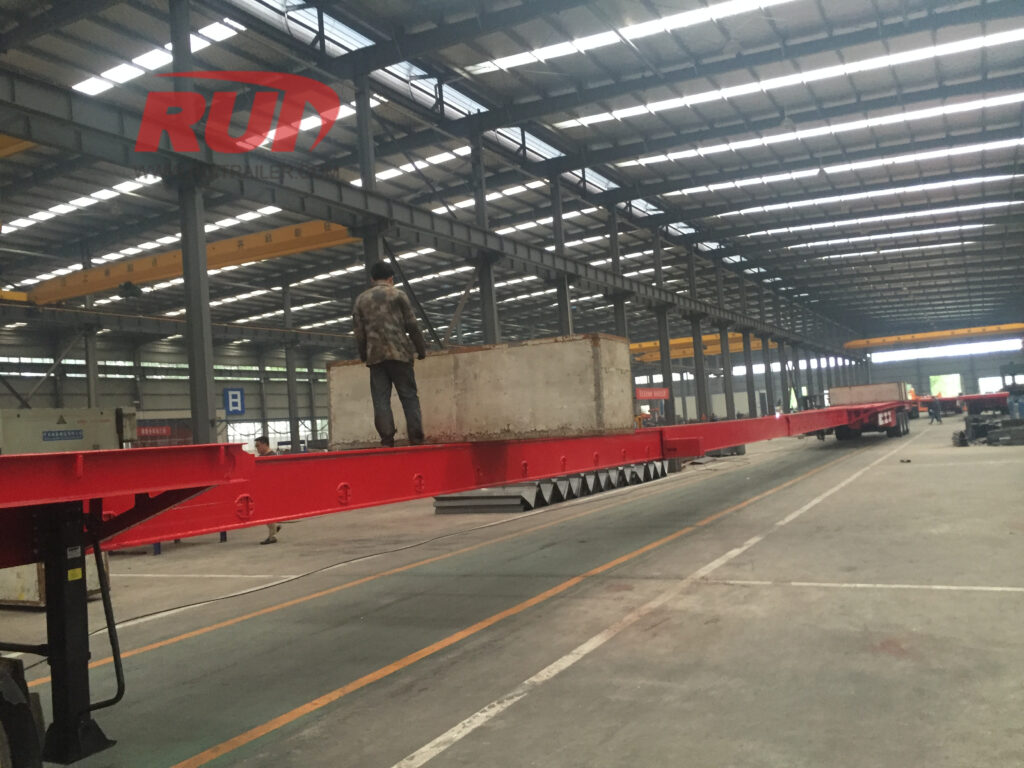
Key Technical Specifications and Dimensional Range
Choosing the right extendable flatbed trailer requires precise sizing to match your route rules and cargo footprint. We engineer our telescopic chassis frames to deliver rigid tracking whether running fully closed for standard freight or stretched out to maximum reach for structural materials.
Standard Telescopic Semi Trailer Specs
| Specification Parameter | Standard Retracted Range | Fully Extended Range | Custom Options Available |
|---|---|---|---|
| Total Deck Length | 13.5 m – 16 m (45 ft – 53 ft) | 21 m – 38 m+ (70 ft – 125 ft+) | Up to triple-stage extensions |
| Working Deck Width | 2,500 mm – 2,550 mm (8.2 ft – 8.5 ft) | 2,500 mm – 3,000 mm with outriggers | Side outrigger swing brackets |
| Loaded Deck Height | 1,450 mm – 1,550 mm | 1,450 mm – 1,550 mm | Low-profile neck configurations |
| Payload Capacity | 40,000 kg – 60,000 kg | 30,000 kg – 50,000 kg (Distributed) | Multi-axle heavy-haul builds |
| Axle Configuration | 2-Axle / 3-Axle fixed | 3-Axle / 4-Axle (Lift / Steering) | Self-tracking or hydraulic steer |
Retracted and Fully Extended Overall Deck Length
Our standard telescopic frames operate around a base length of 13.7 meters (45 feet) to 16.1 meters (53 feet) when closed. When hauling oversized steel or rebar: Single-Stage Stretch: Expands up to 21 to 25 meters (70 to 82 feet). Double-Stage Stretch: Extends beyond 32 meters (105 feet). Multi-Stage Stretch: Expands past 40 meters (130+ feet) for specialized wind energy and bridge girder transport.
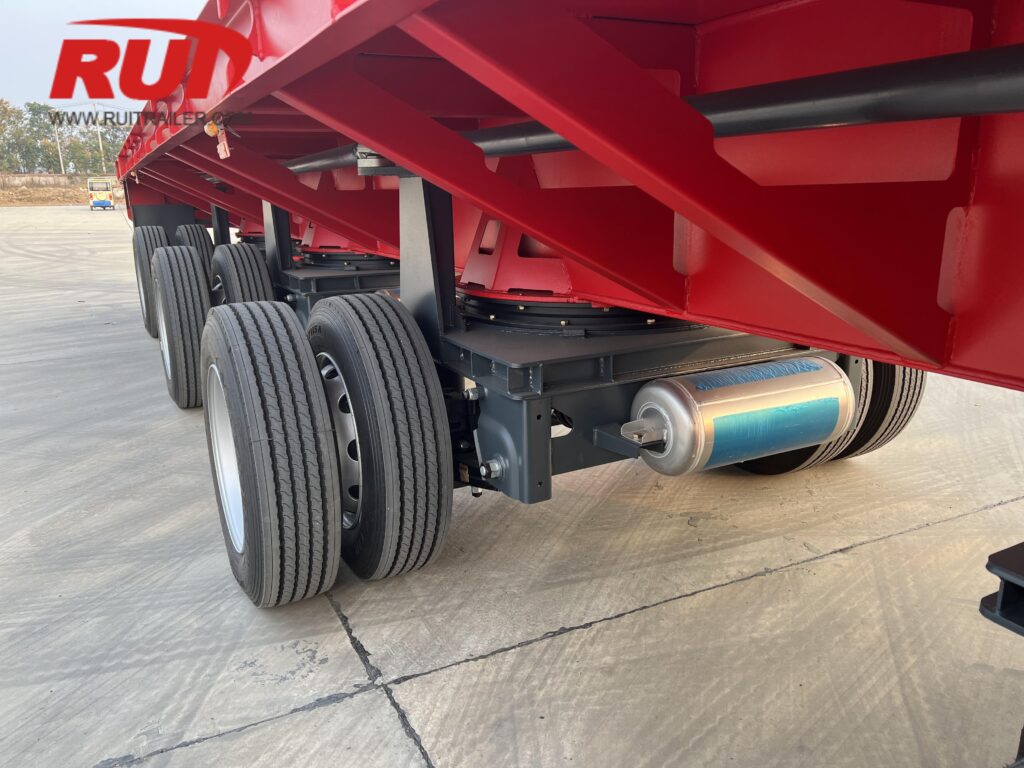
Platform Width, Working Deck Height, and Ground Clearance
- Width: Built to a standard 2.5-meter to 2.55-meter road-legal width, with fold-out side extenders (outriggers) adding up to 250 mm per side when handling wide beams.
- Deck Height: Flat platforms maintain an even working height of roughly 1,500 mm over the suspension. When extra vertical clearance is necessary for taller cargo, comparing specs with a specialized low bed trailer helps determine if a drop-deck profile is required.
- Ground Clearance: Sits at an optimal 300 mm to 400 mm frame clearance under full load, preventing high-centering over rail crossings or rough jobsites.
Kingpin Placement and Tractor Fifth-Wheel Compatibility
- Interchangeable Kingpin: Heavy-duty 2-inch (50#) or 3.5-inch (90#) bolted kingpins made from high-strength forged steel.
- Tractor Swing Clearance: Dual kingpin positions allow operators to adjust the swing radius between 1,900 mm and 2,200 mm to match single-drive, tandem-axle, or tridem-drive tractor units without neck interference.
- Fifth-Wheel Load Balance: Positioned to distribute 15 to 25 tons directly onto the prime mover fifth-wheel coupling under rated load conditions.
Tire, Wheel, and Multi-Axle Layout Specifications
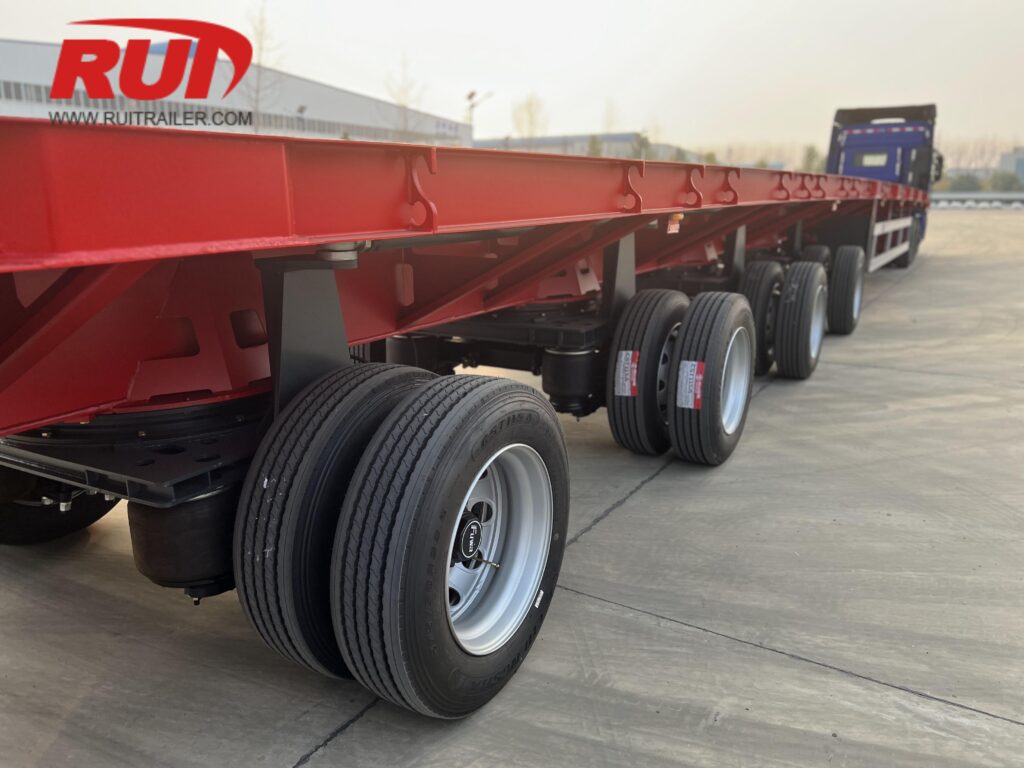
- Axle Setups: Standard 13-ton to 16-ton heavy-duty mechanical or air-ride axles in 3-axle, 4-axle, or multi-line configurations.
- Axle Steering: Optional friction-steer or positive hydraulic-steering axles on the rear bogies to reduce tire scrubbing and maintain tight turning radii on long hauls.
- Tires and Rims: Heavy-load 11.00R20, 12.00R20 tube tires or 315/80R22.5 tubeless radial tires mounted on 8.5-20 or 9.00-22.5 heavy-duty steel disc rims.
- Axle Lift Kits: Front or rear axle-lift systems to cut down on tire wear and save fuel when deadheading retracted trailers back to base.
Extendable Flatbed Payload and Weight Distribution
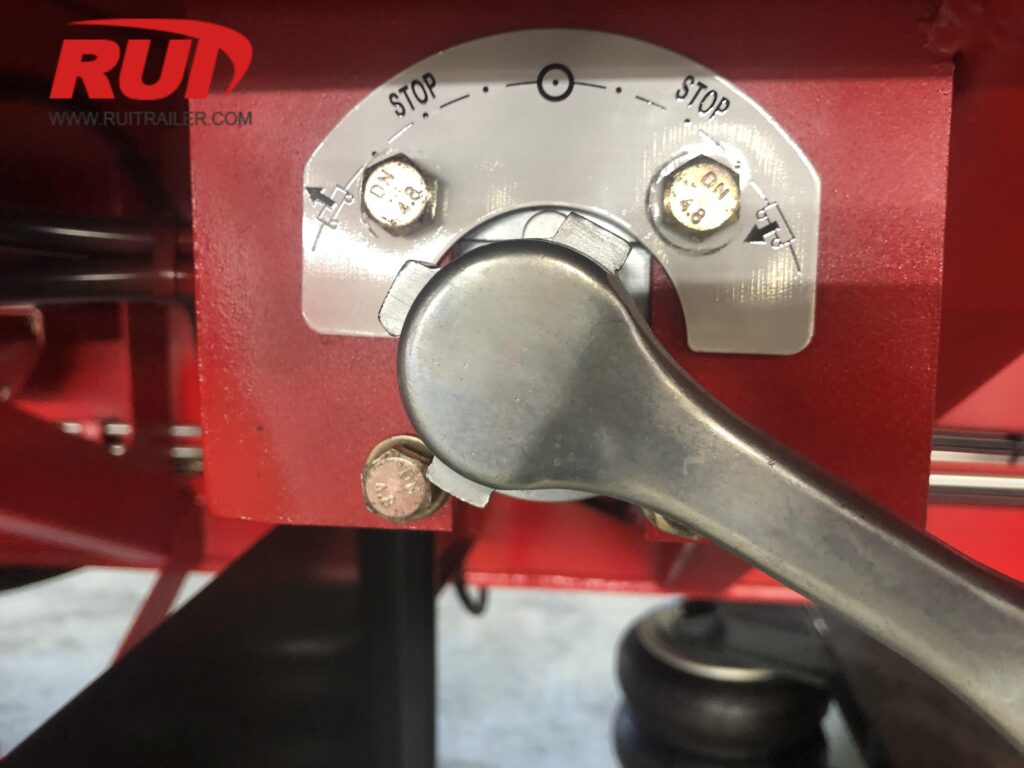
Proper weight distribution is critical when operating an extendable flatbed trailer. As the chassis stretches to accommodate long cargo, the trailer’s structural load dynamics shift significantly between the tractor’s fifth wheel and the rear axle group.
Rated Payload Capacity Across Extension Stages
The extendable flatbed payload capacity changes depending on how far the telescopic beams are pulled out. In the closed position, the chassis supports maximum concentrated weight. As you extend the deck, the rating transitions toward evenly distributed loads to manage bending moments along the center beam.
| Extension Stage | Typical Deck Length | Max Concentrated Load | Max Distributed Payload |
|---|---|---|---|
| Fully Retracted | 13.5 m – 16 m | Up to 60 Tons | Up to 60 Tons |
| Mid Extension (Stage 1) | 20 m – 25 m | Up to 40 Tons | Up to 50 Tons |
| Full Extension (Multi-Stage) | 30 m – 45 m+ | Up to 25 Tons | Up to 40 Tons |
(Note: Exact payload limits vary depending on main beam steel grade, axle count, and custom structural build specifications.)
Managing Cargo Center of Gravity and Axle Load Limits
Long, heavy structural cargo must be positioned carefully to avoid overloading individual axle lines. We engineer our telescopic flatbed trailer chassis to balance the cargo center of gravity (CG) directly across the supporting structure:
- Fifth-Wheel Transfer: Ensures sufficient downforce on the drive axles for traction and steering stability.
- Rear Axle Bogie Load: Distributes remaining weight across mechanical or air-suspension axle groups to comply with regional bridge formulas and axle load limits.
- Balanced CG Positioning: Prevents localized stress on the inner sliding beams during transit over uneven road profiles.
Preventing Chassis Deflection and Excessive Rear Overhang
Hauling self-supporting long loads like bridge girders or concrete beams introduces high bending stresses. To prevent chassis deflection (sagging) and hazardous rear overhang:
- High-Tensile Steel Camber: We build our main beams with a pre-engineered upward camber using high-strength steel (such as Q690 or HG785D), allowing the deck to settle perfectly flat under full payload.
- Overhang Control: Excessive rear overhang unloads the tractor’s steer axle, reducing steering control. Positioning the payload so that overhang remains within legal transport limits keeps road handling secure.
- For more detailed operational parameters on load handling and safety mechanisms, check our comprehensive extendable trailer load capacity and safety guide.
Safe Tie-Down Points, Chains, and Load Securement
Securing oversized, flexible cargo requires reinforced anchoring hardware positioned throughout the entire frame:
- Heavy-Duty D-Rings: High-capacity forged lashing rings rated for heavy-haul tie-down chains are welded along the outer side rails and central telescopic sections.
- Outrigger and Stake Pocket Options: Side pockets allow quick installation of side posts or width extensions for wider project freight.
- Friction and Anti-Slip Interfaces: Hardwood or high-grip steel decking options prevent longitudinal cargo shifting during hard braking or acceleration.
Custom Configuration and Outfitting Options
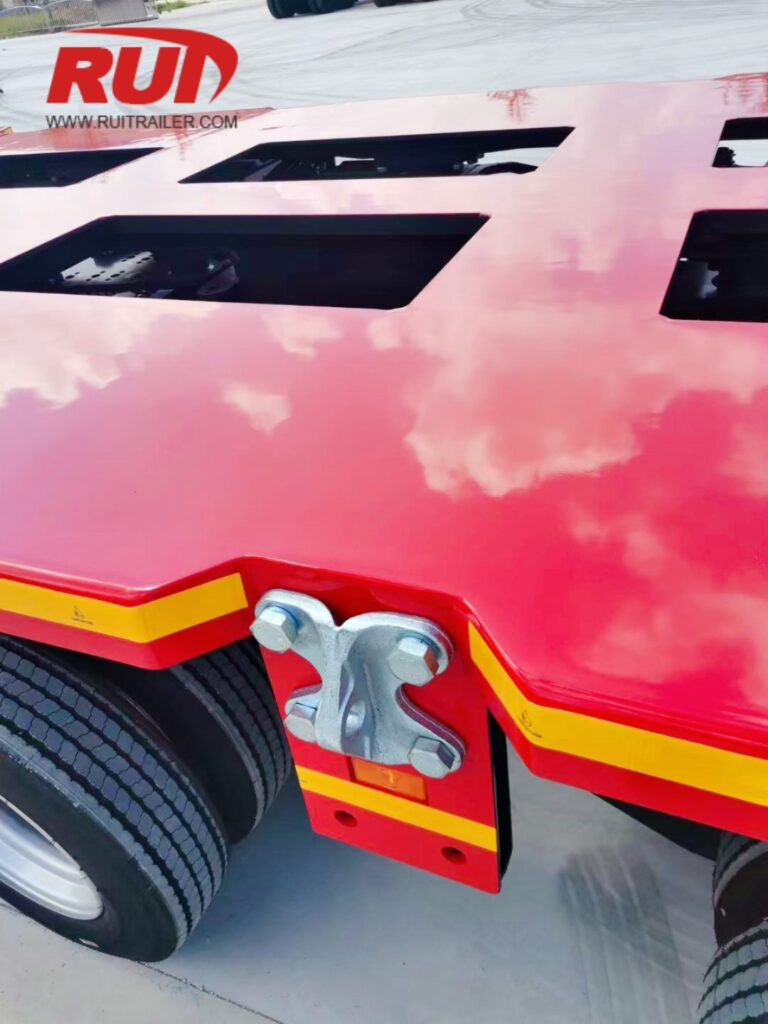
We build every extendable flatbed trailer to match your exact transport demands. From axle setups to decking materials and cargo-locking hardware, our custom outfitting options ensure your chassis handles complex payloads efficiently.
Axle Count Configurations: 2-Axle to Multi-Axle Steering
Depending on your gross vehicle weight and regional bridge laws, we configure chassis layouts ranging from standard rigid tandem setups to advanced multi-axle steering designs:
- 2-Axle & 3-Axle Rigid: Best for moderate payloads and standard highway hauling.
- 4-Axle to 6-Axle Layouts: Engineered for distributed heavy loads, preventing point-overload on road surfaces.
- Self-Tracking & Hydraulic Steering: Integrated forced-steering systems reduce tire scrubbing and tighten the turning radius on extreme-length loads. For specialized routing, explore our trailer steering system guide to choose the right setup.
Mechanical Spring vs. Heavy-Duty Air Suspension
| Suspension Type | Key Advantages | Typical Application |
|---|---|---|
| Heavy-Duty Mechanical Leaf Spring | Robust, low-maintenance, handles rugged terrain and unpaved job sites | Harsh roads, mining, standard long freight |
| Heavy-Duty Air Suspension | Superior shock absorption, automated ride-height leveling, axle-lift capability | Sensitive industrial machinery, wind energy cargo |
Decking Materials: High-Tensile Steel vs. Treated Timber
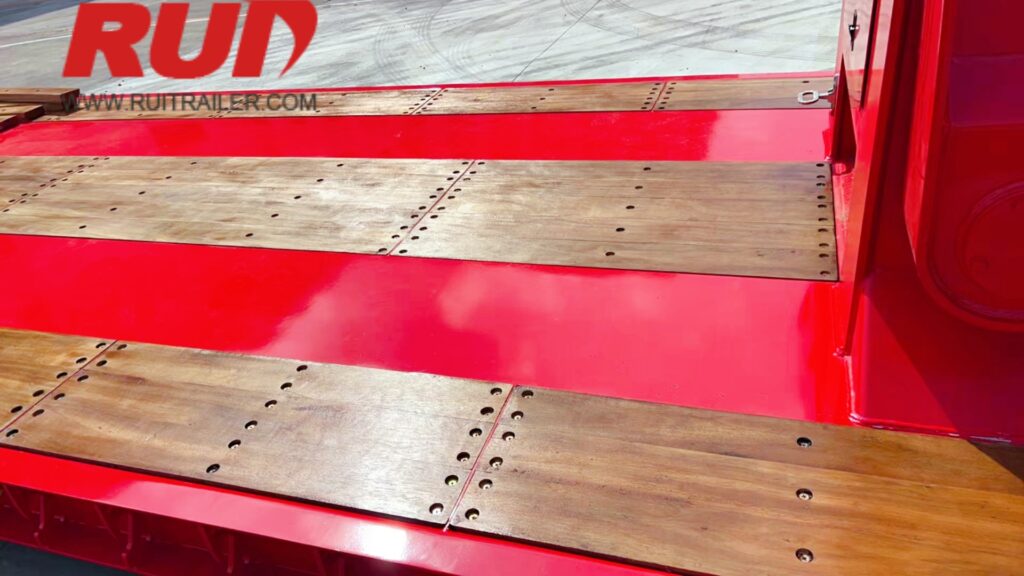
- High-Tensile Steel Checker Plate: Provides maximum puncture resistance, handles heavy tracked equipment, and resists concentrated point loads.
- Hardwood / Treated Timber Decking: Delivers superior surface friction for structural steel and precast concrete, reducing load slippage and simplifying chain-block securing.
- Composite Hybrid Decking: Combines steel load-bearing tracks with timber inserts for maximum versatility.
Removable Side Posts, Container Twist Locks, and Loading Ramps
To maximize fleet utility on backhauls, we offer bolt-on and integrated outfitting accessories:
- Heavy-Duty Twist Locks: Convert your stretch platform into an ISO container hauler for 20ft, 40ft, or 45ft boxes when retracted.
- Removable Side Posts & Pockets: Keep pipes, rebar, and loose structural profiles contained safely during transit.
- Foldable Loading Ramps: Hydraulic or manual spring-assist rear ramps allow self-propelled machines and rolling equipment to drive directly onto the deck.
Safety Features and Heavy-Haul Road Compliance
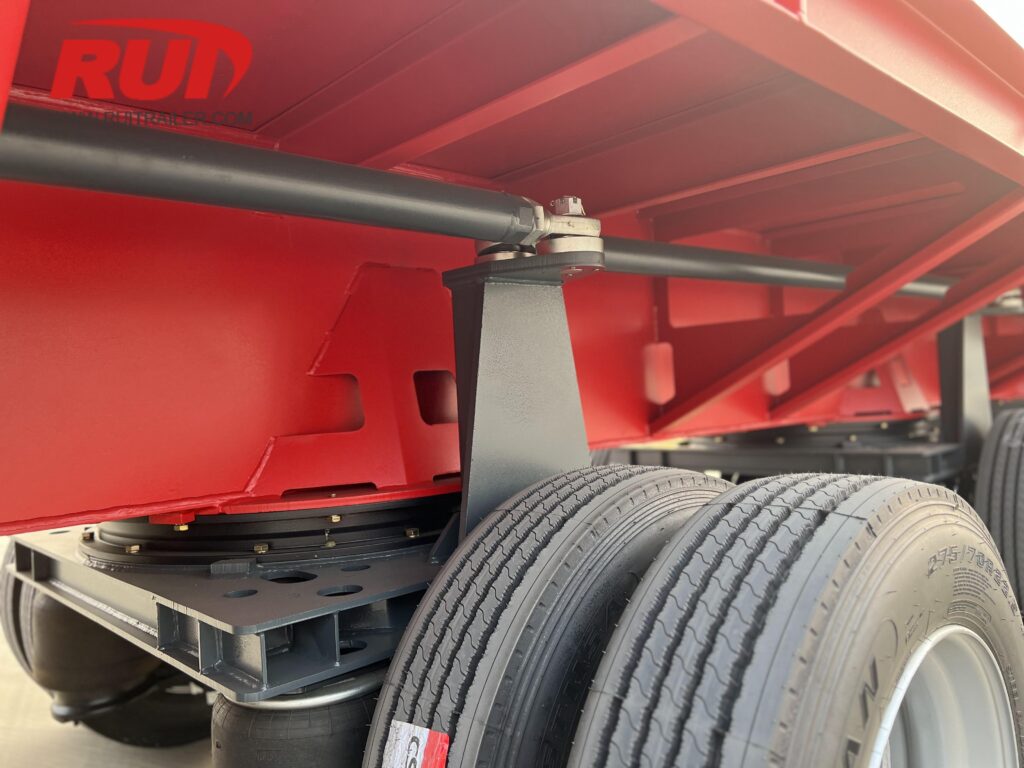
Operating an extendable flatbed trailer requires uncompromising safety engineering to handle oversized cargo legally and securely. When you stretch a trailer chassis to extreme lengths, structural stability, braking responsiveness, and visibility must adapt immediately to road regulations and high dynamic stresses.
Extension Locking Safety Verification and Failsafes
Our telescopic chassis utilizes a dual-stage locking mechanism to eliminate the risk of accidental sliding while underway:
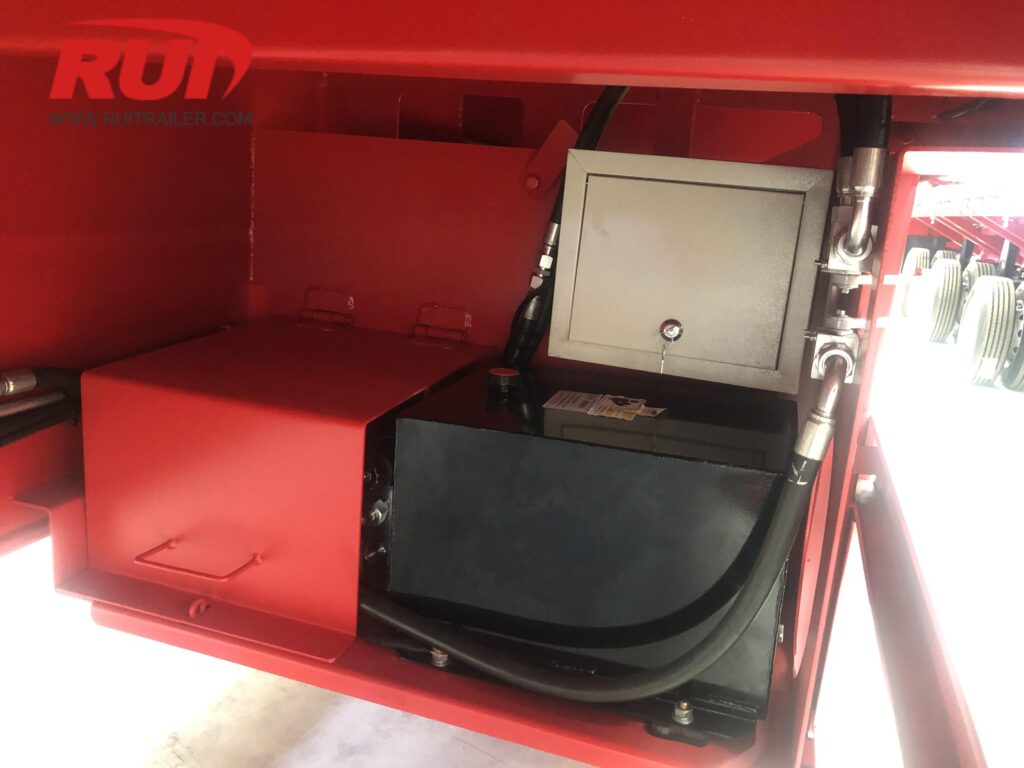
- Pneumatic Lock Pins: Heavy-duty air-actuated steel pins engage directly into precision-bored locking holes along the central telescopic spine.
- Mechanical Failsafe Stops: Secondary manual safety locks prevent complete separation of the sliding sections during extension operations.
- Visual Engagement Indicators: Clear visual alignment markers allow your operator to verify positive pin engagement before pulling onto public roadways.
Air Brake Systems with ABS/EBS Compliance
Long-load transport demands balanced braking power across all axles to prevent jackknifing and tire flat-spotting:
- Dual-Line Air Brake System: Engineered with high-capacity air reservoirs to maintain rapid brake response time across extended chassis lengths.
- Wabco ABS / EBS Modules: Advanced anti-lock and electronic braking systems modulate pressure in real time based on axle load distribution.
- Spring Brake Actuators: Heavy-duty parking and emergency brake chambers fitted on all axles ensure reliable stopping power during unexpected air loss.
High-Visibility Reflective Markings, Beacons, and Lighting
Extended transport poses high visibility risks to surrounding traffic, especially during night hauls and tight turns:
- Full LED Lighting Package: Low-draw, high-output LED tail lamps, turn signals, and side-marker lights routed through heavy-duty armored conduits that telescope with the chassis.
- Side-Marker & Clearance Lamps: Extra intermediate marker lights along the sliding box beams to clearly define the trailer profile when stretched.
- Reflective Conspicuity Tape: Full-perimeter DOT-approved retroreflective tape applied along side rails and the rear bumper.
- Strobe & Outrigger Mounting: Integrated rear sockets for rotating amber warning beacons and pull-out wide-load warning flag brackets.
Navigating Over-Length Permits and Regional Transport Rules
Transporting long structural components and bridge girders means dealing with strict regional axle-weight limits and bridge formula laws.
| Safety Component | Specification Standard | Operational Function |
|---|---|---|
| Locking Mechanism | Pneumatic pins + mechanical safety lock | Secures sliding beam at required extension intervals |
| Brake System | 2S/2M or 4S/2M EBS/ABS dual-circuit | Prevents wheel lockup and balances braking force |
| Lighting System | Multi-voltage waterproof LED array | Full clearance illumination across extended spans |
| Route Adaptability | Turning compliance & axle spacing | Matches regional axle load limits and overhang rules |
For specialized routes with strict turning radius mandates, pairing your stretch flatbed with a dedicated steerable trailer layout or self-tracking rear axles ensures easy permit approval and prevents off-tracking through tight intersections.
Manufacturing Process and Quality Control for Extendable Flatbed Trailers
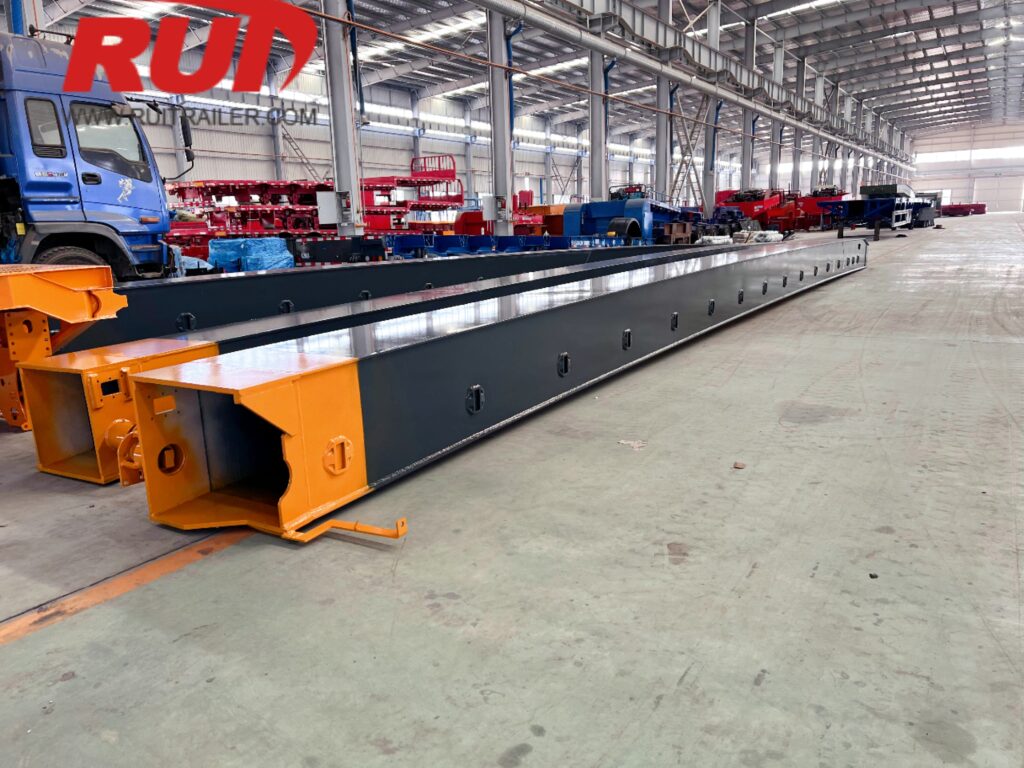
Building a reliable extendable flatbed trailer requires precise engineering, strict tolerances, and high-grade materials. Because sliding platforms endure extreme bending moments during long-load transport, we enforce rigorous manufacturing and quality control standards across every stage of production.
High-Strength Steel Cutting and Automated Beam Welding
Structural integrity starts with the raw steel. We use high-tensile structural steel to balance overall tare weight with high yield strength. CNC Plasma & Laser Cutting: All main web plates, flanges, and reinforcement gussets are cut via high-precision CNC machines to eliminate micro-cracking and dimension variances. Automated Submerged Arc Welding (SAW): Main chassis I-beams are welded using automated continuous submerged arc systems. This ensures deep weld penetration, uniform beads, and zero heat-distortion across the full length of the beam.
Chassis Alignment and Extension Stroke Testing
A telescopic flatbed trailer must extend and retract seamlessly under field conditions without jamming. Jig-Aligned Assembly: The inner box beam and outer main frame are assembled in heavy-duty structural jigs to maintain sub-millimeter axial alignment. Stroke Cycling Tests: Every sliding chassis goes through repeated full-stroke extension and retraction tests to verify roller clearance, slide pad tolerances, and locking pin alignment before leaving the workshop floor.
Non-Destructive Weld Testing and Stress Inspections
Critical load-bearing intersections face intense dynamic stresses during highway transit. We apply standard quality protocols mirroring the heavy-duty builds produced by RuiTrailer. Ultrasonic & Magnetic Particle Testing: 100% non-destructive testing (NDT) is performed on critical stress points, including kingpin connection boxes, gooseneck transitions, and locking pin collars. Deflection Load Verification: Extended beams undergo static stress inspections to ensure that vertical deflection remains strictly within engineered tolerances under simulated maximum payloads.
Shot-Blasting, Anti-Corrosion Primer, and Protective Coating
Long-term rust protection prevents frame fatigue caused by road salts, gravel, and coastal moisture. SA 2.5 Shot-Blasting: Fully assembled chassis frames undergo automatic shot-blasting to strip all mill scale, rust, and oil, creating the ideal surface profile for paint adhesion. Zinc-Rich Epoxy Primer: A dual-coat anti-rust primer penetrates deep into joints, hollow box sections, and cross-members. Polyurethane Topcoat: A durable, high-gloss polyurethane finish provides UV protection, impact resistance, and long-lasting defense against harsh heavy-haul operating environments.
How to Choose the Right Extendable Flatbed Trailer
Selecting the right extendable flatbed trailer requires matching your operational requirements with the right structural and mechanical options. We design our extendable trailer platforms to handle tough, concentrated loads while maintaining stability and highway compliance over long-distance routes.
Evaluating Specific Cargo Length, Weight, and Dimensions
Before specifying chassis dimensions, calculate both your maximum cargo length and your concentrated point loads:
- Closed vs. Extended Length: Ensure the closed length fits standard hauling jobs, while the maximum extension accommodates your longest self-supporting freight, such as steel trusses or precast concrete.
- Center Section Load Rating: Concentrated weights place severe stress on the central telescopic beam. Review the payload capacity ratings at full extension, not just closed deck capacity.
- Deck Profile: Choose between straight decks or drop-deck designs depending on your required cargo center of gravity and overall height restrictions.
Assessing Route Limitations, Turning Radius, and Road Clearances
Long-load hauling presents unique navigational challenges that dictate your suspension and steering needs:
- Turning Radius and Tracking: Long rear overhangs and extended wheelbases require self-tracking or hydraulic forced-steering axles to navigate tight roundabouts and urban intersections.
- Overhead and Ground Clearances: High-cube freight requires low-profile goosenecks and compact suspension geometry to clear low bridges and overhead wires.
- Tail Swing and Rear Overhang: Match the sliding distance with your local transit authority’s allowable rear overhang rules to prevent permit violations.
| Selection Factor | Standard Closed Transport | Full Extension Heavy Transport |
|---|---|---|
| Typical Cargo Length | Up to 48 – 53 ft | 65 ft to over 100 ft |
| Axle Configuration | 2 to 3 fixed axles | 3 to 4+ axles (lift / self-steering options) |
| Suspension Choice | Mechanical leaf spring | Heavy-duty air suspension |
| Kingpin Load Rating | Standard 2-inch kingpin | Heavy-duty 2-inch or 3.5-inch kingpin |
Selecting Tractor Coupling and Landing Gear Specs
Your truck-trailer interface must handle dynamic pulling and braking forces:
- Kingpin Sizing: Select between standard 2-inch and reinforced 3.5-inch kingpins based on overall gross combination weight (GCW).
- Swing Clearance: Ensure proper clearance between your tractor chassis, rear fenders, and the trailer gooseneck corners.
- Landing Gear Capacity: Install two-speed, heavy-duty mechanical landing legs capable of supporting the uncoupled trailer under full or partial load conditions.
Balancing Maintenance Needs with Operational Durability
Keeping a sliding chassis running smoothly depends on component quality and routine maintenance:
- Slide Track Lubrication: Choose low-friction, high-grade polymer slider pads or greaseable steel-on-steel glide surfaces to ensure smooth telescopic stroke operation.
- Pneumatic Line Management: Internal energy chains or heavy-duty spiral lines protect vital air brake tubing and electrical wiring from snagging during chassis extension.
- Corrosion Protection: Premium shot-blasted surfaces with epoxy primer and polyurethane topcoats prevent rust in slide pockets and locking pin housings.
Extendable Flatbed Trailer Pricing and Export Logistics
Getting an accurate extendable flatbed trailer price depends entirely on the design choices, extension length, and structural hardware required for your specific haulage tasks. Because these units are engineered for both standard legal freight and extreme long-cargo transport, pricing scales with the complexity of the chassis and axle configuration.
Cost Factors and Build Options
The final cost of an extendable semi trailer for sale varies based on standard options versus heavy-duty custom builds.
| Cost Factor | Standard Spec Impact | Heavy-Duty Upgrade Impact |
|---|---|---|
| Extension Stages | Single-stage telescopic beam (lower cost) | Double or triple stretch extensions for extreme long loads |
| Axle Configuration | 2 to 3 fixed mechanical axles | Multi-axle setups with automatic or hydraulic steering |
| Suspension Type | Heavy-duty mechanical leaf spring | Air ride or hydraulic suspension systems |
| Steel Grade | High-tensile Q345B steel chassis | Ultra-high-strength HG785 / T700 steel for weight reduction |
| Braking & Safety | Standard dual-line pneumatic brakes | EBS/ABS systems with automated extension locking valves |
Information Required for a Custom Quote
To give you an exact price and structural layout for your custom-length semi-trailer, our engineering team needs a few operating details:
- Maximum payload weight: The total tonnage you plan to carry at both fully closed and fully extended lengths.
- Cargo dimensions: Total length, width, and center-of-gravity profiles of your typical loads.
- Tractor specs: Fifth-wheel height, kingpin size (2″ or 3.5″), and kingpin load rating.
- Axle and steering needs: Standard straight runs or self-steering axles for tight city and mountain routes.
- Destination port: For accurate freight rates and delivery options.
Global Shipping, Packing, and Delivery Terms
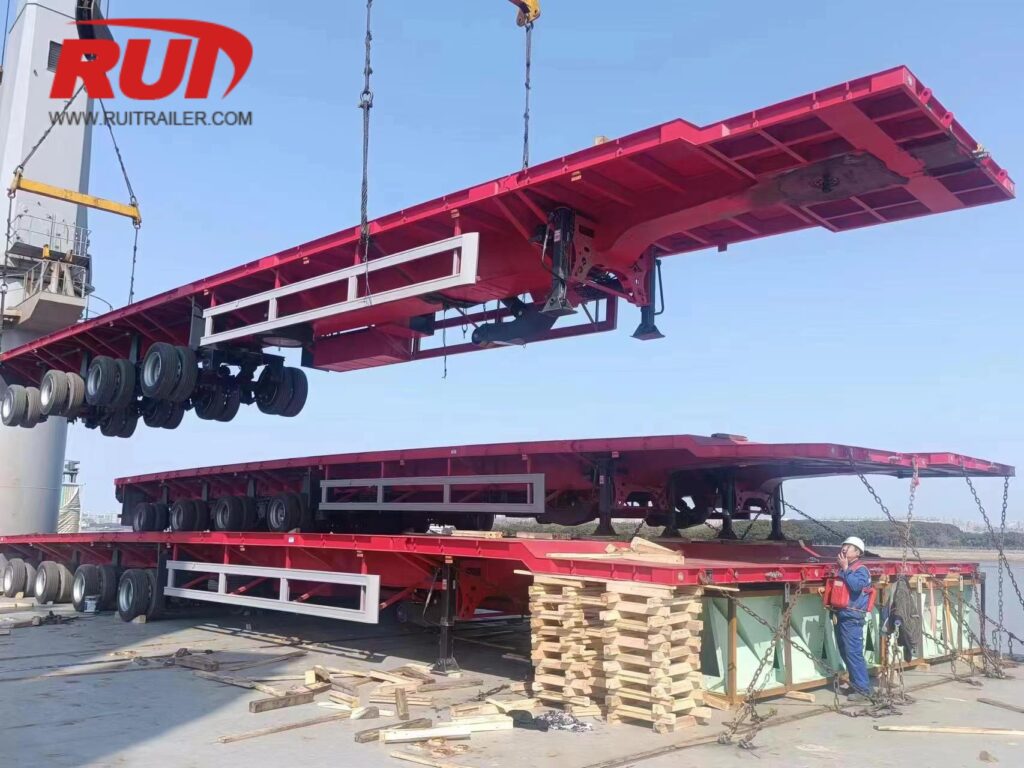
We optimize export logistics to minimize international sea freight costs for every custom extendable trailer. Depending on trailer dimensions and regional port capabilities, we utilize several shipping methods:
- Flat-Rack Containers: Retracted trailers are secured onto flat racks with heavy-duty lashing to protect the telescopic sliding mechanism during ocean transit.
- Ro-Ro (Roll-on/Roll-off): Complete trailers are towed directly onto specialized carriers, eliminating port crane handling risks.
- Breakbulk Cargo: Applied to multi-stage, extremely long units that exceed standard container profiles.
- Incoterms Supported: We handle operations under FOB, CIF, CFR, and DDP terms, managing all export customs clearance documentation.
Warranty, Documentation, and Spare Parts Support
Every heavy haul extendable flatbed leaves our production floor backed by standard structural warranties and operational support:
- Chassis Warranty: Comprehensive coverage on main beams, telescopic sliding channels, and cross-member structures.
- Technical Manuals: Detailed schematics, pneumatic circuit diagrams, load-distribution charts, and maintenance guides delivered with the unit.
- Fast Spare Parts Supply: Immediate dispatch for extension locking pins, pneumatic cylinders, brake valves, lighting kits, and suspension wear items to keep your equipment running without downtime.
Extendable Flatbed Trailer FAQs
How far can an extendable flatbed trailer stretch?
Our standard single-stage extendable trailers typically extend from a base length of 40 or 48 feet out to 65–80 feet (around 12 to 24 meters). For extra-long structural components, we also engineer multi-stage telescopic chassis that reach over 100 to 130+ feet. Check our engineered stretch trailer models to review specific extension configurations and dimensional setups.
| Extension Type | Typical Closed Length | Max Extended Length | Common Applications |
|---|---|---|---|
| Single-Stage Stretch | 45 ft – 53 ft (13.7 – 16.1 m) | Up to 80 ft (24.4 m) | Steel beams, rebar bundles, long pipes |
| Double-Stage Telescopic | 45 ft – 48 ft (13.7 – 14.6 m) | Up to 110 ft (33.5 m) | Bridge girders, transmission poles |
| Multi-Stage Extended | 53 ft (16.1 m) | 130+ ft (40+ m) | Wind turbine blades, massive industrial cargo |
Can an extendable flatbed haul standard-length loads when retracted?
Yes. When fully retracted and locked into its closed position, an extendable flat deck trailer operates identically to a standard heavy-duty flatbed. This allows operators to transport routine general freight or steel coils on backhauls without requiring oversized permits or empty deadhead runs.
What is the difference between a stretch flatbed and a telescopic flatbed?
There is no functional difference. In heavy-haul logistics, the terms are interchangeable: Telescopic Flatbed: Highlights the structural sliding box-beam mechanism inside the main chassis. Stretch Flatbed: Highlights the operational ability to extend the platform deck length for over-length cargo.
Both designs deliver the same payload versatility and variable wheelbase flexibility.
Do I need special permits to haul an extended trailer?
Yes. Once extended beyond standard legal highway limits (typically 53 feet in North America or standard regulatory lengths across global markets), the vehicle is classified as an oversize/over-length transport. Depending on the route and destination, operators must secure: Regional over-length transport permits. Designated route approvals and time-of-day travel clearances. Pilot cars or escort vehicles when exceeding local total length thresholds.
For specialized super-heavy configurations requiring distributed axle weight, pairing operations with modular or heavy haul trailers ensures full regional axle-load compliance.
How do you ensure the sliding deck is securely locked?
We build dual-security systems into every sliding platform to prevent movement during transit: Air-Actuated Locking Pins: Pneumatic cylinders drive heavy steel locking pins directly into hardened alignment holes along the inner beam. Manual Mechanical Backstops: Visual stop-blocks and secondary manual cotter pins physically secure the pin assembly in place. Driver Verification Step: After setting the extension length, drivers engage trailer air brakes and perform a short forward/reverse tug test to confirm positive pin engagement before securing cargo.
 English
 German
 Turkish
 French
 Portuguese
 Russian
 Arabic
 Hindi
 Vietnamese
 Chinese
 Spanish
 Indonesian
 Swahili
 Nigerian Pidgin