

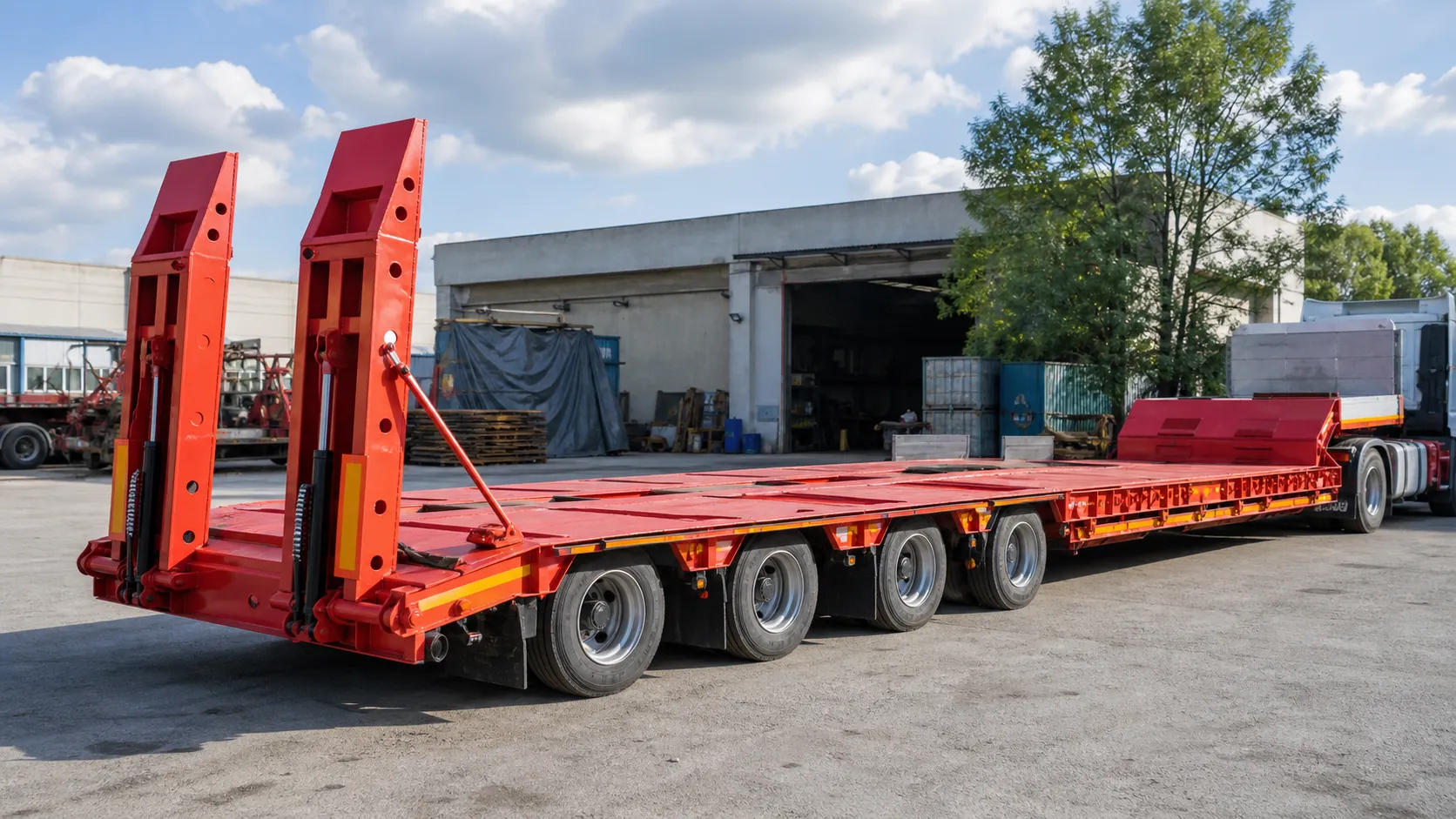
How do you move a 100-ton excavator across uneven terrain or route a massive industrial boiler under tight overpass limits? Standard semi-trailers simply lack the deck clearance, structural yield strength, and precise axle load distribution required for heavy machinery transport. As heavy-transport engineers, we build every hydraulic low bed trailer to overcome these exact logistics bottlenecks while protecting your equipment and structural investment.
Anatomy of a Heavy-Duty Hydraulic Lowbed
A high-performance low loader relies on complete structural synergy between high-tensile steel fabrication and integrated fluid power:
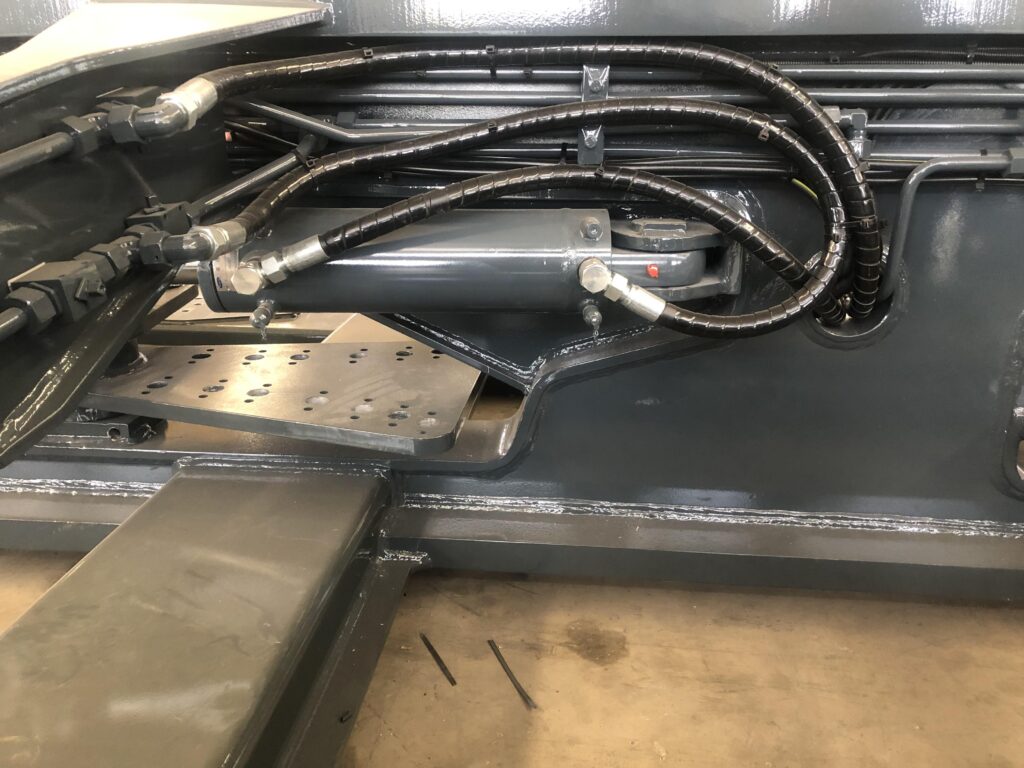
- Hydraulic Gooseneck: Connects to the tractor's fifth wheel. Embedded double-acting hydraulic cylinders handle neck detachment, folding, or height adjustments to allow seamless front-loading for tracked machinery.

- Main Beams & Side Beams: Built from high-tensile steel (such as Q690D or HG60) utilizing automated submerged arc welding. These form the primary load-bearing spine, resisting severe bending moments under extreme concentrated tonnage.
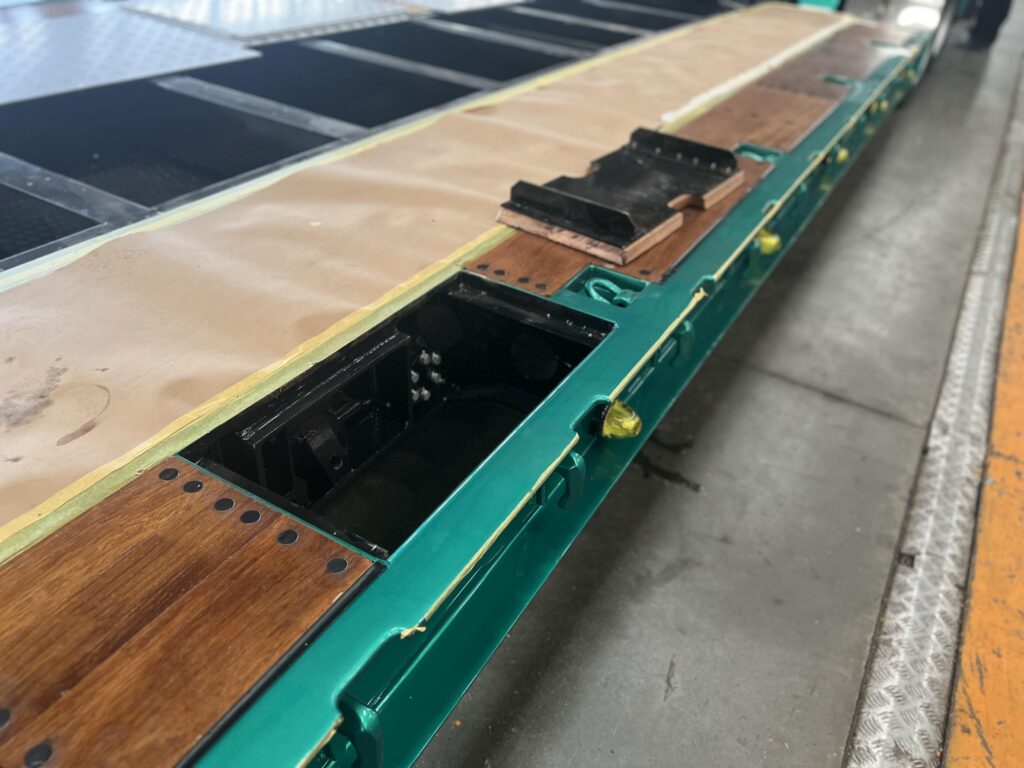
- Deck Floor:
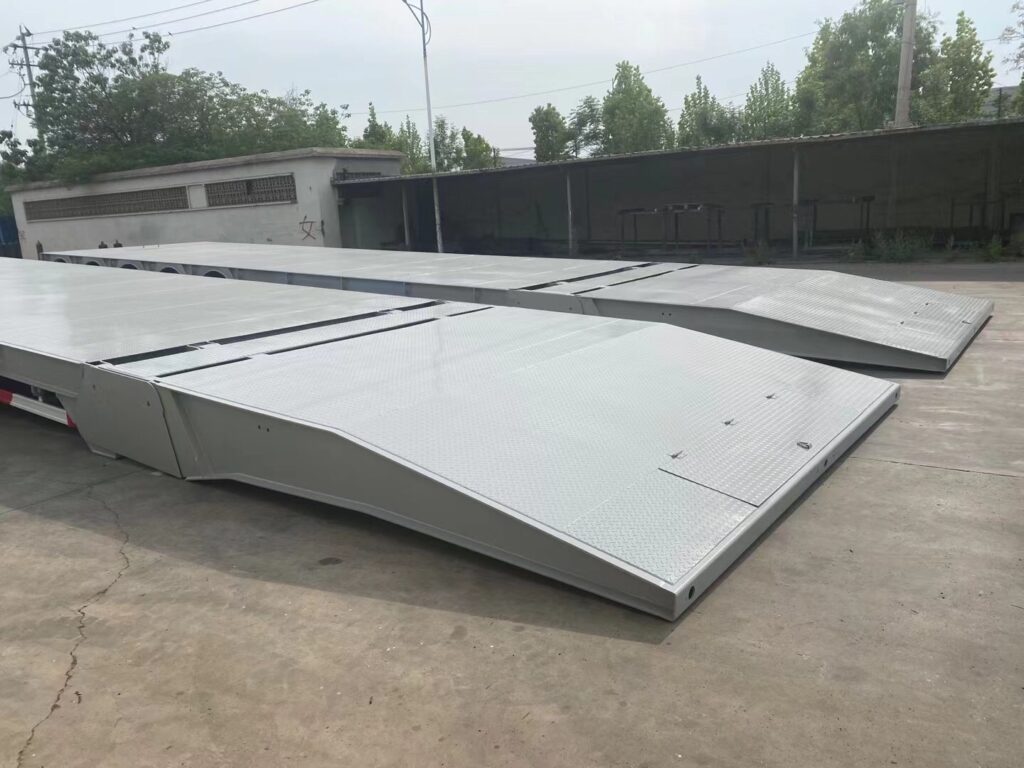
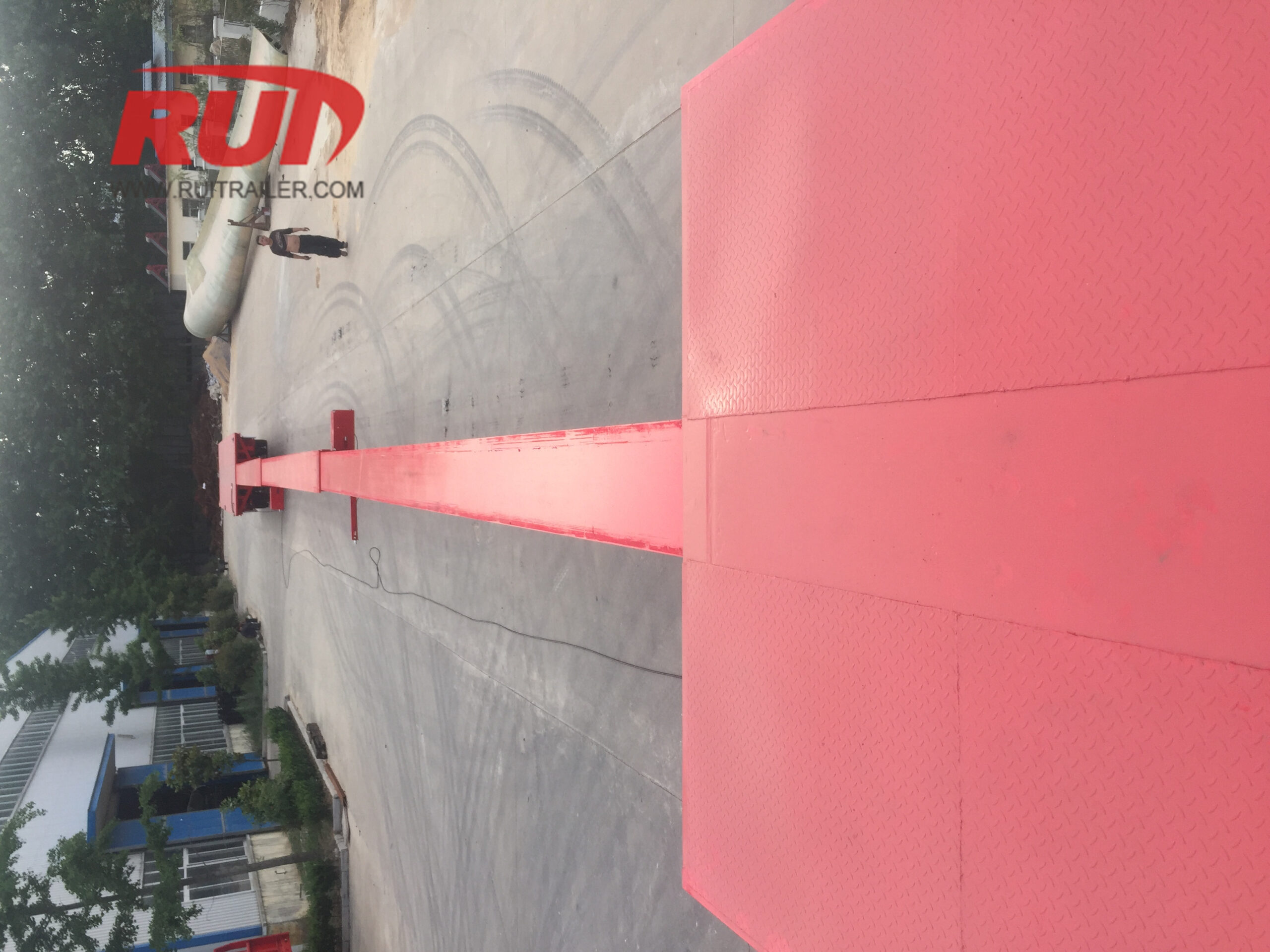
Deck Floor Covered with high-density hardwood Covered with heavy-duty anti-slip checker plate or high-density hardwood planking designed to handle extreme point loads from steel tracks and wheel loaders.
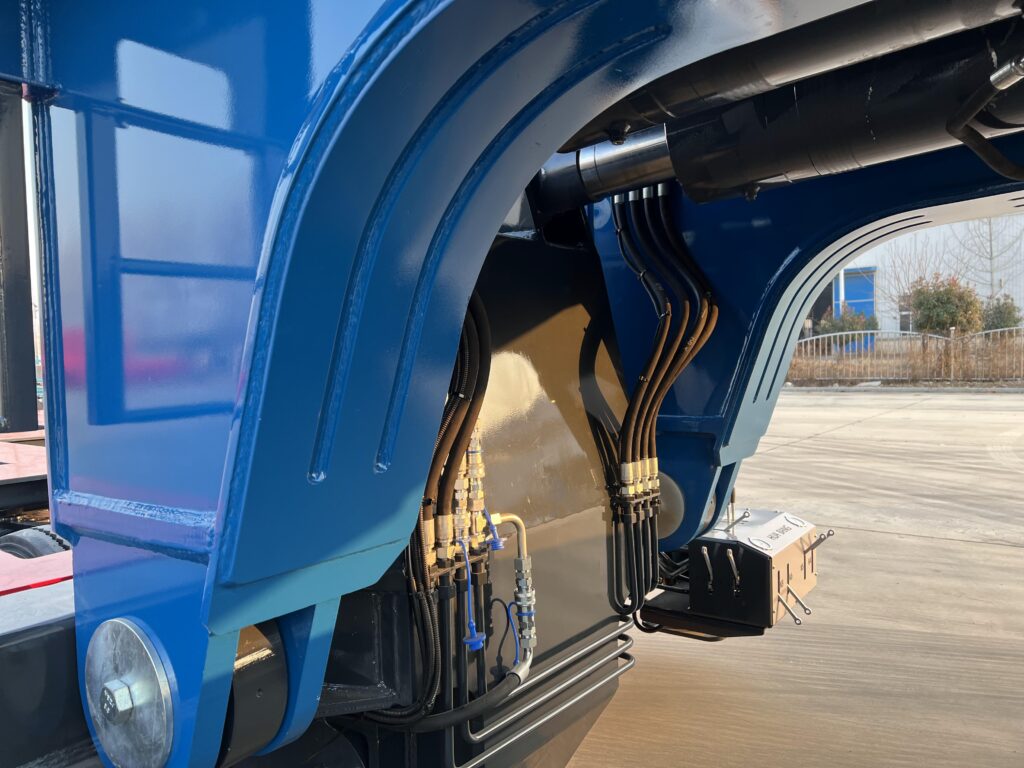
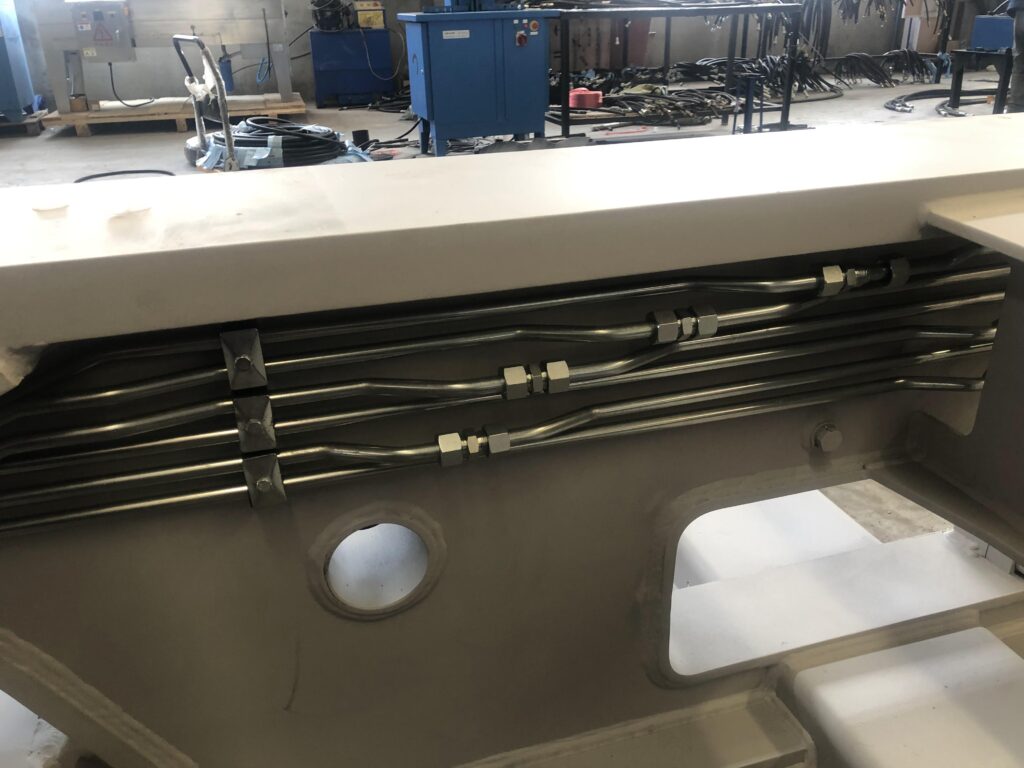
- Axle Group & Integrated Hydraulics:
Axle Group Integrated multi-axle hydraulic steering systems Houses the suspension, braking, and optional multi-axle hydraulic steering systems. Hydraulic lines, manifold valve banks, and proportional valves run protected inside the main beam web to shield them from road debris and weather.
- Hydraulic Gooseneck: Connects to the tractor's fifth wheel. Embedded double-acting hydraulic cylinders handle neck detachment, folding, or height adjustments to allow seamless front-loading for tracked machinery.
Deck Structure Options & Applications
Choosing the right deck geometry directly determines your low loader deck clearance, overall stability, and loading efficiency.
| Deck Type | Target Applications | Primary Technical Advantage |
|---|---|---|
| Flat Deck / Standard Low Bed | Wheel loaders, excavators, general heavy gear | Maximizes total usable floor area for versatile construction equipment haulage. |
| Drop Deck / Stepped Deck | High-profile machinery, tall oversized loads | Lowers the cargo center of gravity to pass under restrictive overpasses and bridge limits. |
| Concave / Vessel Deck | Transformers, industrial boilers, cylindrical tanks | Delivers ultra-low ground clearance by cradling large cylindrical or tall freight between main beams. |
Axle Configurations & Payload Capabilities
Matching trailer axle layouts to your payload capacity and axle load limits is critical for structural safety and legal highway compliance.
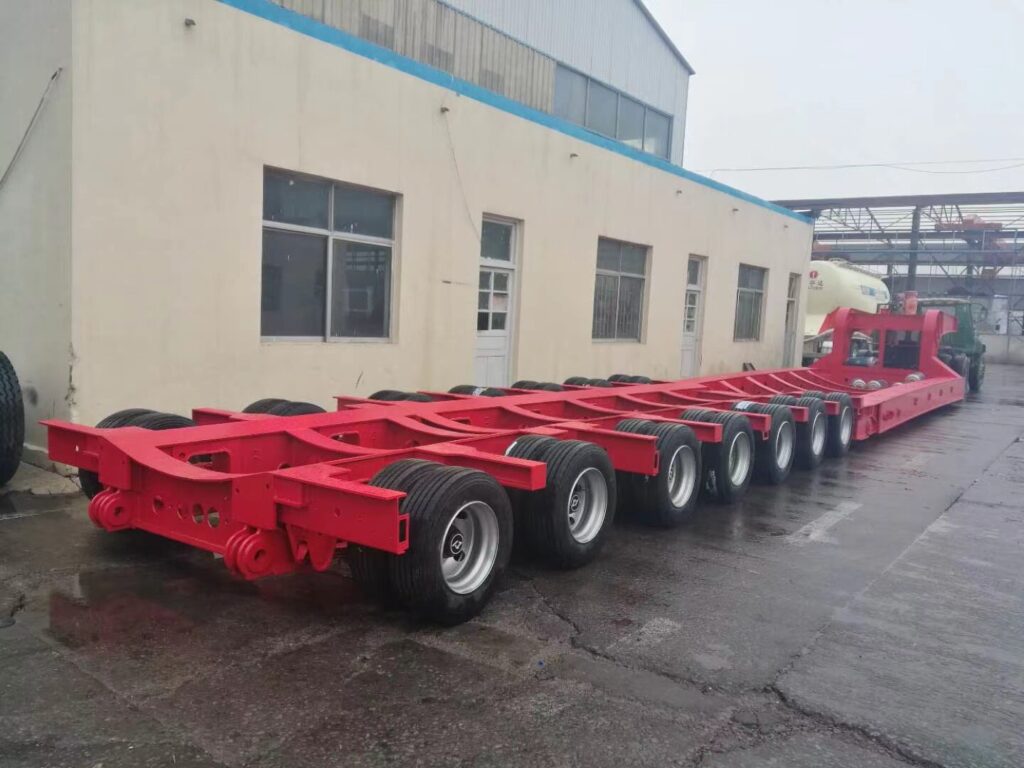
- 2 to 3-Axle Setup (30-Ton to 60-Ton Payload): Ideal for regional construction equipment transport, offering an optimal balance between payload capacity, quick maneuvering, and low tare weight.
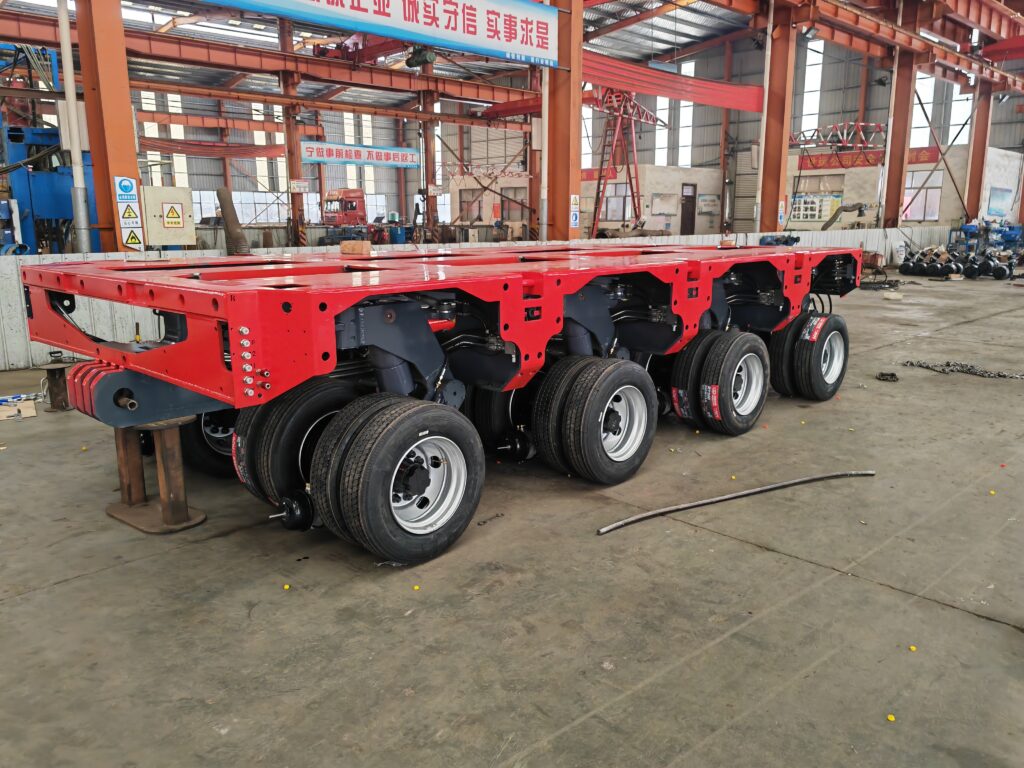
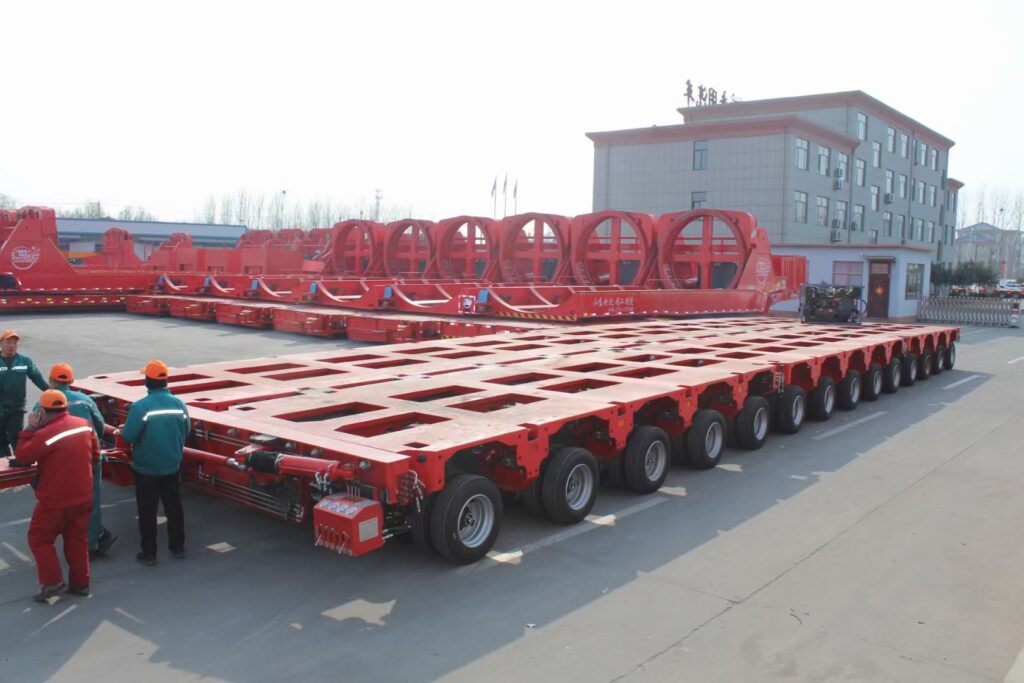
- 4 to 6-Axle Setup (60-Ton to 120-Ton+ Payload): Engineeered for abnormal load transport and heavy industrial components, using reinforced crossmembers and spread axle spacing to meet strict highway bridge formulas.
- Line-Axle & Extension Beam Integration: For long, non-divisible freight, extendable central main beams telescope to custom lengths, while modular line-axle assemblies balance dynamic axle loads across multiple tires on uneven terrain.
The 4 Essential Subsystems of a Hydraulic Low Bed Trailer
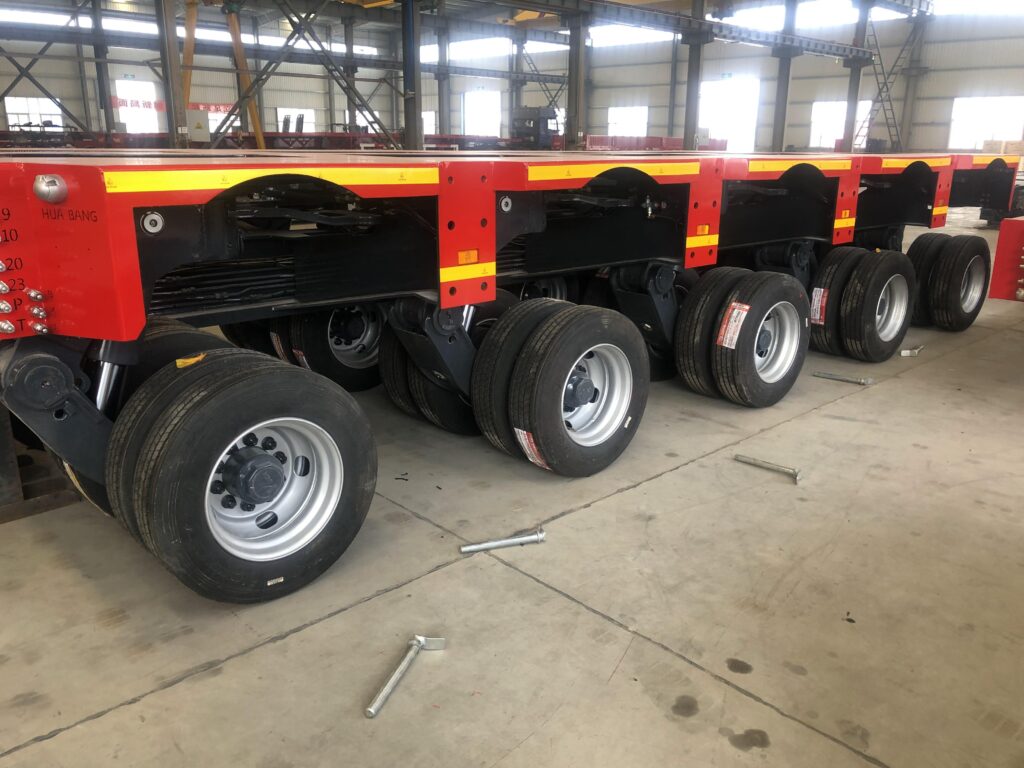
A high-performance hydraulic low bed trailer relies on four distinct hydraulic circuits operating in harmony. Understanding how these systems perform under load helps fleet operators maximize equipment life and safely transport heavy machinery across challenging terrain.
Hydraulic Gooseneck Circuit: Detachment & Folding Mechanisms
The gooseneck hydraulic circuit manages neck movement during loading and road coupling operations. We engineer two primary gooseneck designs depending on your equipment profile:
- Hydraulic Removable Gooseneck (RGN): Uses twin high-pressure lift cylinders to lower the front of the deck directly to the ground, paired with locking shoring cylinders. This creates a front-loading ramp ideal for tracked equipment like excavators and dozers.
- Hydraulic Folding Gooseneck: Mechanically folds down flat to the ground without detaching from the prime mover. This setup speeds up loading cycles for self-propelled machines. For full technical details and pressure limits, review our hydraulic folding gooseneck trailer specifications.
- Cylinder Stroke Precision: Matching hydraulic cylinder stroke to ground clearance is critical. Proper stroke depth ensures the trailer deck lowers fully flat on uneven terrain while providing enough stroke lift to clear elevated obstacles during transport.
- Hydraulic Removable Gooseneck (RGN): Uses twin high-pressure lift cylinders to lower the front of the deck directly to the ground, paired with locking shoring cylinders. This creates a front-loading ramp ideal for tracked equipment like excavators and dozers.
Deck Height Adjustment & Hydraulic Leveling Circuits
Navigating low-clearance overpasses and uneven terrain requires precise low loader deck clearance control.
- Active Platform Height Adjustment: Allows operators to raise or lower the chassis height on the go, avoiding overhead bridge collisions and preventing low-slung machinery from high-centering over track crossings.

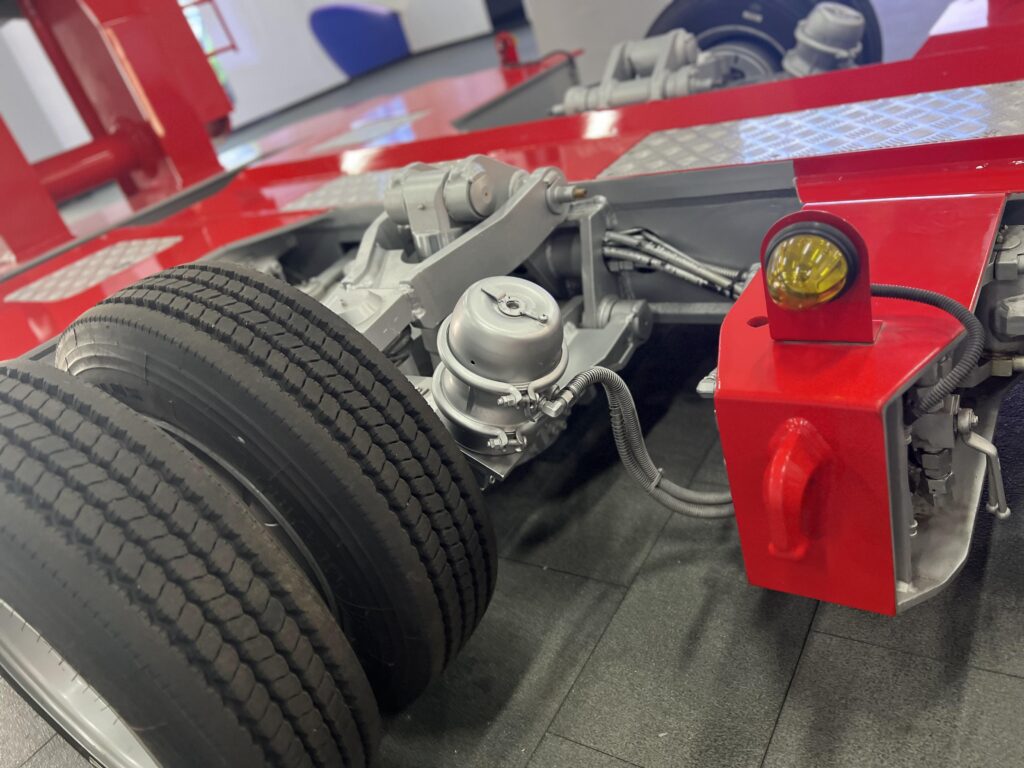
- Multi-Axle Hydraulic Leveling Valve Banks: Fluid is distributed across axle groups using proportional leveling valve banks. Equalizing hydraulic pressure across all axle sets prevents chassis twisting and distributes the payload evenly across all tires. For heavy-duty transport needs, integrating a specialized hydraulic suspension trailer for low bed heavy hauling delivers superior cross-axle load balancing on severe off-road routes.

- Active Platform Height Adjustment: Allows operators to raise or lower the chassis height on the go, avoiding overhead bridge collisions and preventing low-slung machinery from high-centering over track crossings.
Heavy-Duty Hydraulic Ramp Deployment Systems
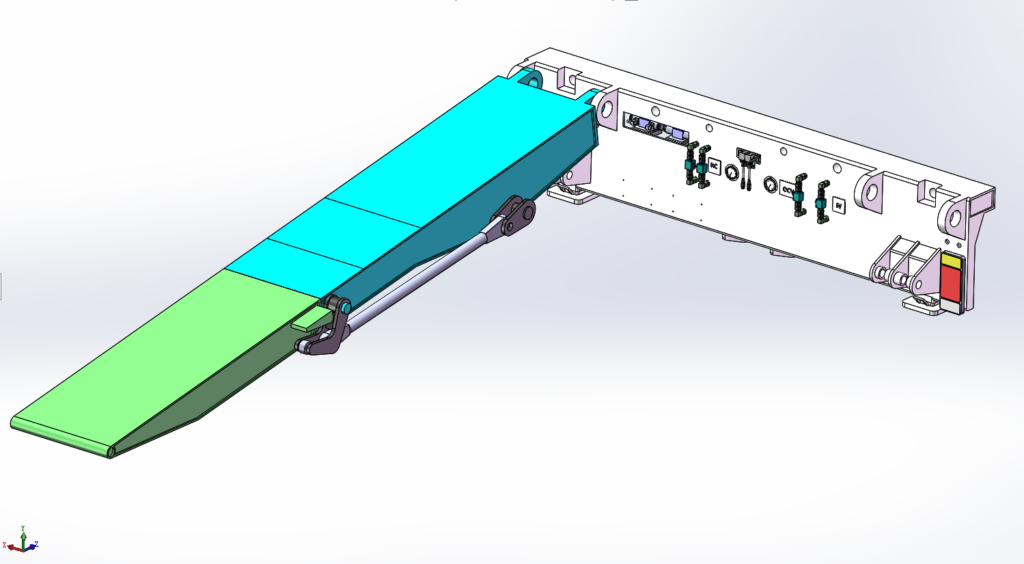
Hydraulic ramp systems must handle high point loads while maintaining controlled movement during deployment.
| Ramp Configuration | Primary Application | Key Operational Benefit |
|---|---|---|
| Single-Fold Hydraulic Ramps | Tracked excavators, bulldozers, heavy loaders | Rigid structure, lower tare weight, fast setup |
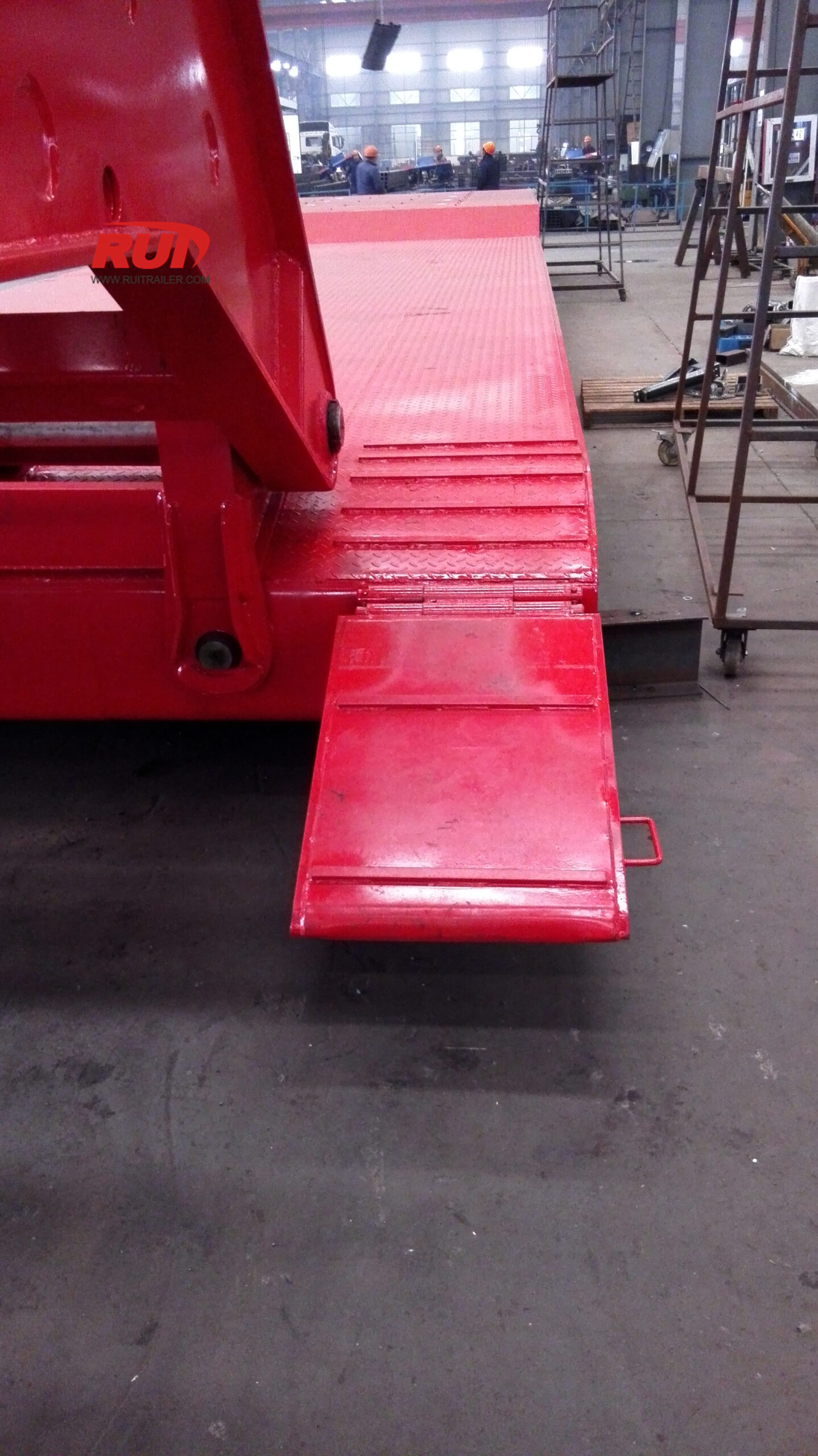
| Double-Fold Hydraulic Ramps | Asphalt pavers, compactors, low-clearance equipment | Extended length creates a shallow climb angle (< 10°) |
Integrated counterbalance and velocity control valves regulate ramp lowering speeds, holding the ramp firmly against the ground under full payload without hydraulic shock.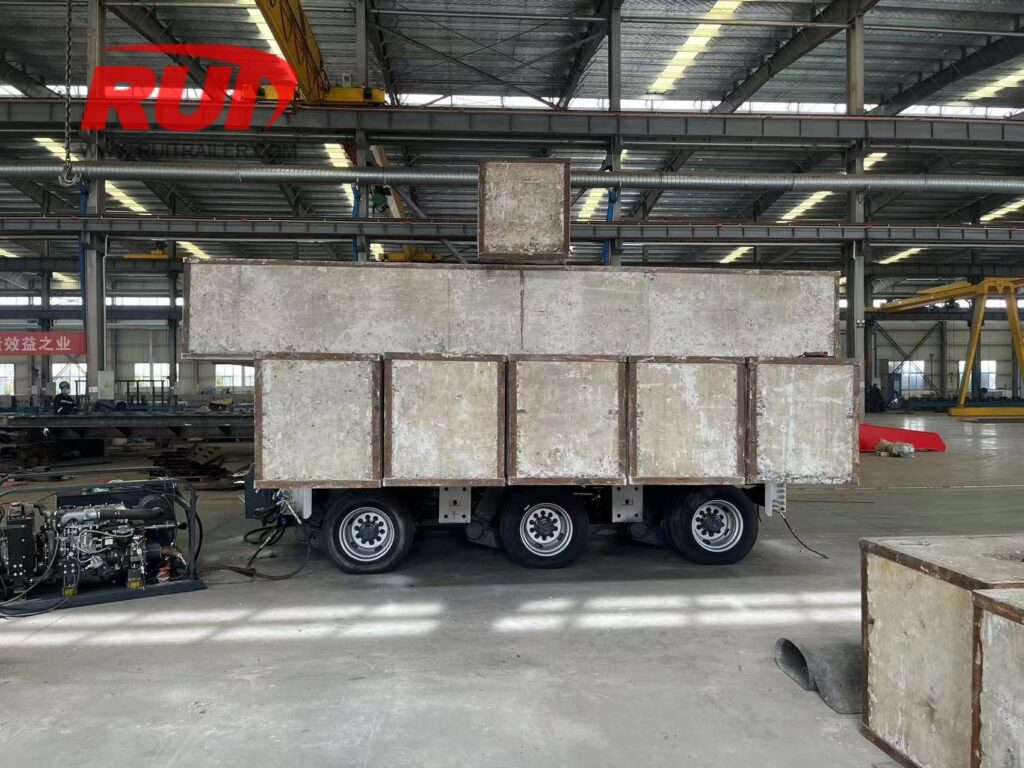
Multi-Axle Hydraulic Steering Systems
Maneuvering long, heavy-haul setups through narrow industrial sites requires advanced multi-axle hydraulic steering.
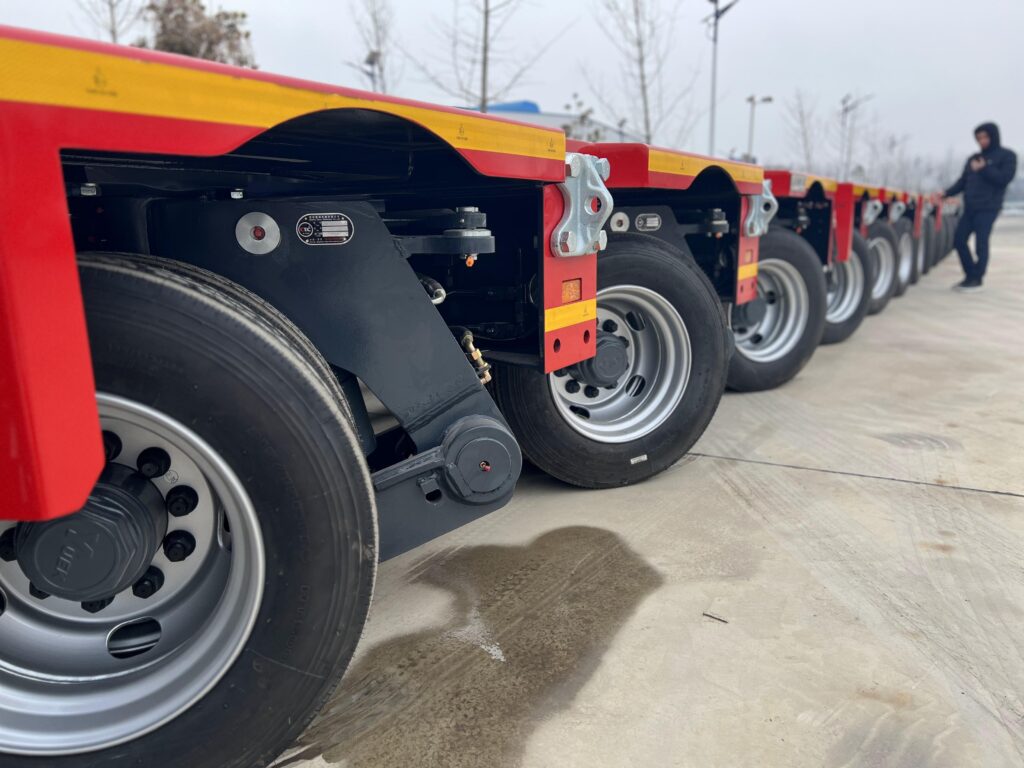
- Forced Steering vs. Self-Steering: Self-steering axles rely on ground friction to track behind the tractor. Forced steering uses hydraulic steering cylinders connected to a kingpin turn-table sensor, forcing the axles to turn in direct proportion to the tractor’s articulation angle.
- Tight Turning Radiuses: Forced hydraulic steering delivers axle steering angles ranging from 25° up to 60°+, allowing massive trailers to navigate tight urban intersections and job sites without tire scrubbing.
Hydraulic Power Pack Engineering & Technical Specs
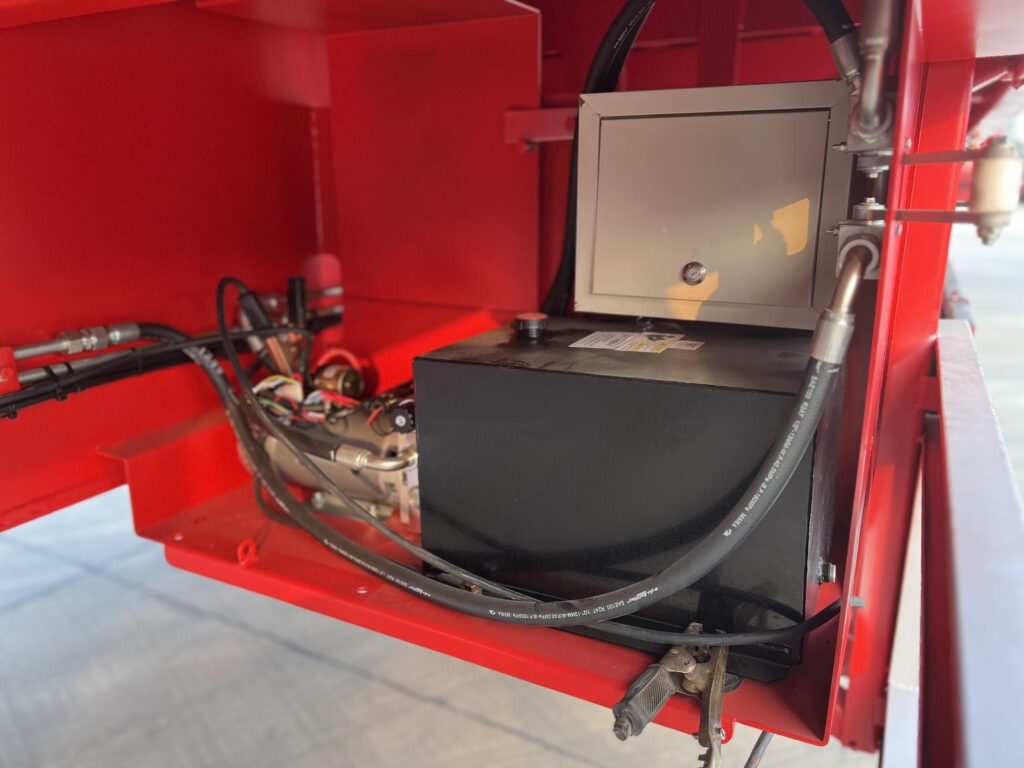
A reliable hydraulic power pack is the heart of every high-performance hydraulic low bed trailer. Choosing the right engine, pump, and valve arrangement determines how fast you can detach goosenecks, adjust deck height, and deploy ramps under maximum payload.
Power Source Selection for Heavy Haul Operations
We offer three main power unit configurations to match your specific fleet logistics and site restrictions:
| Power Option | Best Use Case | Operational Highlights |
|---|---|---|
| Auxiliary Diesel Power Unit (DPU) | Remote job sites & off-grid haulage | Complete standalone operation; no tractor hydraulic dependence; excellent fuel efficiency. |
| Electric Power Pack | Urban centers, indoor docks & night shifts | Zero exhaust emissions, whisper-quiet operation, easy grid or battery connection. |
| Tractor PTO (Power Take-Off) | Dedicated tractor-trailer combinations | Direct drive from prime mover; lowers trailer tare weight; eliminates secondary engine maintenance. |
Hydraulic Pump Architecture
Selecting the correct hydraulic pump ensures immediate responsiveness and long component life when lifting heavy machinery:
- Gear Pumps: Reliable and cost-effective. Ideal for standard duty cycles where hydraulic power is used intermittently for ramps or gooseneck detachment.
- Variable Displacement Piston Pumps: Built for severe duty cycles and extreme loads. They deliver precise flow control, exceptional thermal resistance, and smooth cylinder response. You can explore how these components integrate into broader fleet setups in our guide to advanced hydraulic systems for heavy haulage.
System Operating Pressure & Thermal Controls
Precise pressure calibration and thermal management stop system drift and guard structural members from hydraulic shock.
- Target Operating Pressure: Engineered to run at 2,500 PSI to 3,500 PSI (170 to 240 Bar) for maximum lifting force with minimal hydraulic line expansion.
- Overload Safety: Factory-preset pressure relief valves instantly bypass excess fluid to prevent load spikes from damaging cylinder mounts or chassis welds.
- Thermal Regulation: Properly sized fluid reservoirs paired with integrated forced-air oil coolers maintain optimal oil viscosity during continuous cycling in high ambient temperatures.
Suspension Mechanics: Mechanical vs. Air vs. Hydraulic Pendle Axles
Choosing the right suspension system for a hydraulic low bed trailer directly dictates payload capacity, tire life, frame stability, and performance across challenging terrain. Each suspension setup serves distinct operating environments:
Standard Leaf-Spring Mechanical Suspension
- Cost Efficiency & Durability: The most economical choice, utilizing heavy-duty multi-leaf spring packs and mechanical rocker arm equalizers.
- Low Maintenance: Simple mechanical linkage means zero hydraulic fluid management or air line leaks to worry about on remote routes.
- Best Application: Standard highway hauling and regional transport where road surfaces are mostly paved and deck height adjustments are not required.
Air Suspension
- Tare Weight Reduction & Smooth Ride: Significantly lighter than mechanical setups, providing exceptional shock absorption to safeguard sensitive machinery and lower trailer tare weight.
- Moderate Deck Adjustment: Provides 100 mm to 150 mm of pneumatic lift, helping drivers fine-tune deck clearance for low overpasses or loading docks.
- Best Application: Highway transport where weight optimization and smooth transit are paramount. For deeper technical layouts, check out our low-bed multi-axle trailer guide.
Hydraulic Pendle Axle Suspension
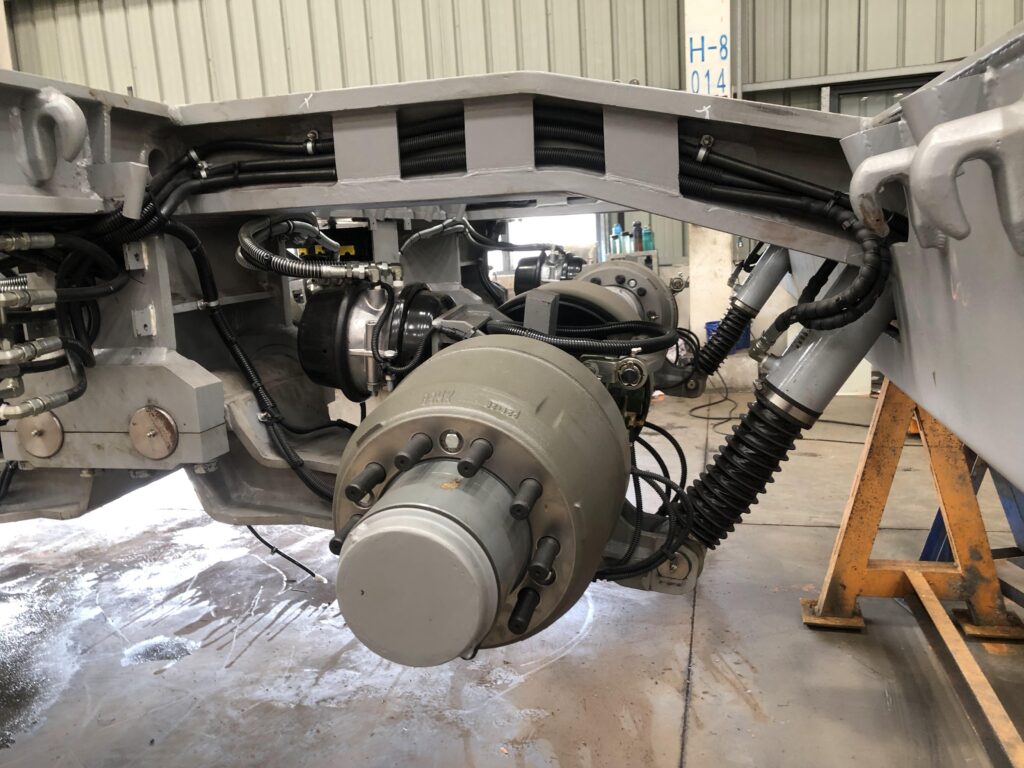
- Superior Axle Stroke: Delivers up to 600 mm of vertical compensation, allowing individual wheel sets to adjust dynamically over severe bumps, deep ruts, and steep inclines without losing ground contact.
- Maximum Per-Axle Weight Allowance: Interconnected hydraulic cylinders continuously equalize hydraulic pressure across every line axle, achieving maximum load capacity without overloading a single tire.
- Severe Off-Road Stability: Essential for mining sites, bridge crossings, and extreme off-grid jobs where chassis twisting could lead to structural failure or rollover hazards. You can explore complete deck and suspension configurations in our detailed low bed trailer specifications and axle options.
Suspension Type Comparison
| Suspension Type | Axle Stroke Range | Load Distribution | Height Control | Primary Application |
|---|---|---|---|---|
| Mechanical Leaf-Spring | Minimal (Fixed) | Mechanical Equalizer | None | Standard Highway Hauling |
| Air Suspension | Moderate (100–150 mm) | Pneumatic Leveling | Moderate (Air Valve) | Weight-Sensitive Highway Transport |
| Hydraulic Pendle Axle | Extreme (up to 600 mm) | Active Hydraulic Balancing | Full Active Control | Mining, Severe Off-Road, & Abnormal Loads |
Common Hydraulic Low Bed Trailer Procurement Mistakes
 Common Hydraulic Low Bed Trailer Procurement Mistakes
Buying a hydraulic low bed trailer is a major capital investment. In my experience working with heavy-haul fleets, simple spec errors during procurement can severely limit your payload efficiency or lead to costly highway compliance fines. Here are three critical mistakes to avoid when specifying your trailer.
Mismatching Cylinder Stroke and Equipment Ground Clearance
- The Pitfall: Buyers often focus solely on total payload capacity while ignoring how low-slung machinery sits during front-loading.
- The Impact: If your hydraulic cylinder stroke is too short, the front edge of the deck won't lower flat to the ground. Your tracked excavators, drills, or pavers will bottom out, catch on the ramp transition, or cause frame stress.
- The Fix: Calculate equipment ground clearance under dynamic track deflection before locking in specs. Ensure the hydraulic removable gooseneck (RGN) provides enough vertical travel for steep ground transitions. Reviewing a detailed removable gooseneck trailer guide for heavy equipment helps match cylinder geometry to your specific machinery fleet.
Ignoring Regional Axle Weight Distribution Regulations
- The Pitfall: Ordering a trailer with an unnecessarily heavy tare weight without verifying local highway bridge formulas and per-axle load limits.
- The Impact: A chassis built over-capacity increases unladen weight. While the steel frame might handle 80 tons, local regulations may cap your axle group at 45 tons, leaving valuable transport capacity unused.
- The Fix: Balance high-tensile steel fabrication with legal axle spacing:
- Axle Spacing: Optimize distance between axle lines to maximize legal weight allowances across bridge structures.
- Kingpin Load Balance: Match tractor fifth-wheel capacity with trailer weight distribution to avoid overloading the drive axles.
- Factory Selection: Partnering with an experienced manufacturer to select a properly spec'd RGN lowboy trailer for heavy equipment ensures full regulatory compliance right off the line.
Underestimating Hydraulic Fluid Filtration Requirements
- The Pitfall: Treating complex hydraulic suspension and leveling systems like basic dump hoists by ignoring fluid cleanliness standards.
- The Impact: Microscopic particles (10 to 15 microns) cause proportional control valves to stick, score cylinder seals, and trigger dynamic deck sagging during transit.
- The Fix: Protect your hydraulic system with proactive design standards:
- High-Efficiency Filters: Specify pressure and return line filtration rated to target cleanliness levels like ISO 4406 18/16/13.
- Sealed Couplers: Utilize flat-face quick disconnects with protective caps to stop dirt ingress during gooseneck detachment.
- Sampling Ports: Require factory-installed fluid sampling ports to catch contamination early before cylinder seal failure occurs.
Precision Manufacturing Benchmarks at RUITRAILER
At RUITRAILER, building an exceptional hydraulic low bed trailer demands uncompromising engineering standards. We manufacture heavy-duty chassis capable of handling extreme dynamic stress, high payloads, and tough off-road conditions across global job sites.
High-Tensile Structural Fabrication
Frame integrity determines total trailer lifespan and dynamic payload tolerance. We optimize structural strength without adding unnecessary tare weight:
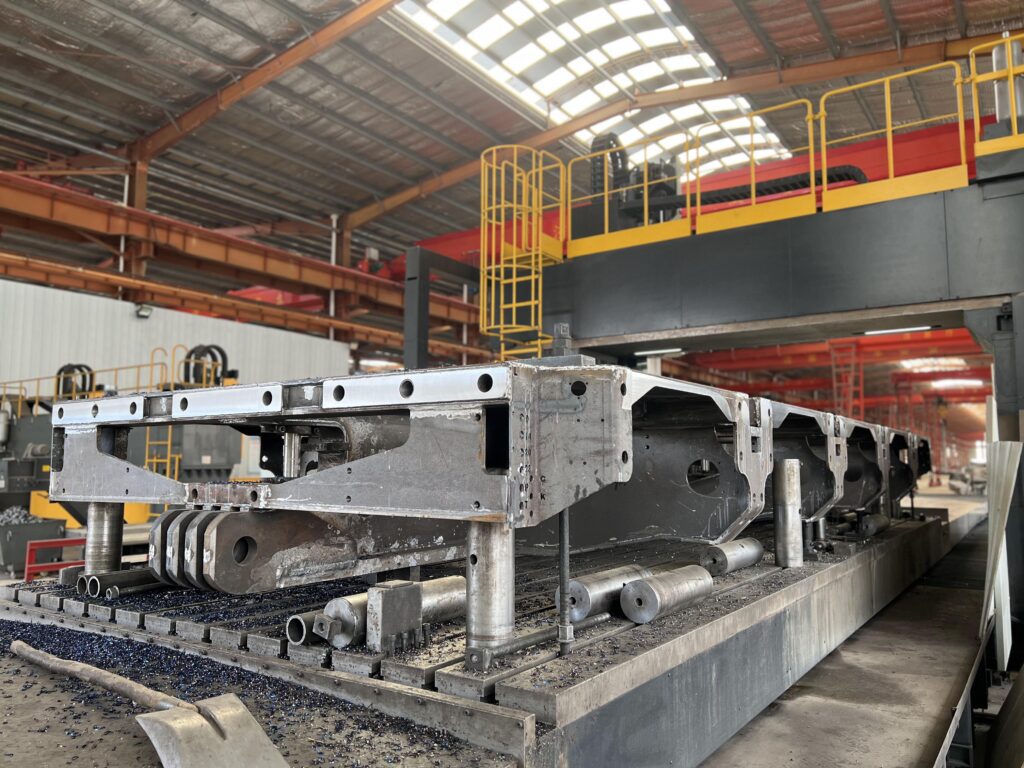
- High-Strength Steel Grade: We exclusively use high-tensile Q690D and HG60 structural steel for main beams and crossmembers, ensuring high resistance to yield stress.
- Laser-Cut Precision: Main longitudinal beams are cut using high-precision CNC lasers to prevent micro-fractures along frame edges.
- Automated Submerged Arc Welding (SAW): Continuous automated SAW welding creates seamless, high-penetration joints across all primary load-bearing chassis sections.
Surface Protection Protocols
Heavy equipment hauling exposes equipment to gravel, road salts, and harsh industrial environments. Our surface protection extends service life:
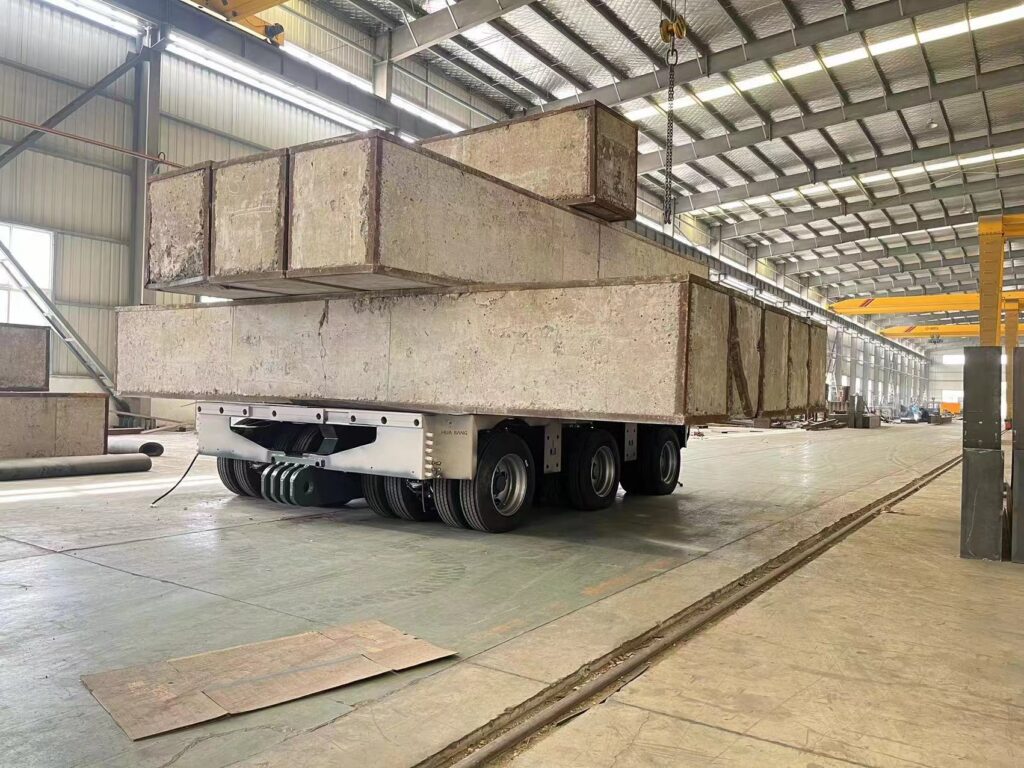
- SA 2.5 Shot Blasting: Every chassis undergoes comprehensive shot blasting to strip mill scale, surface rust, and contaminants down to bare metal.
- Electrostatic Powder Coating: We apply a multi-coat primer and electrostatic powder topcoat. This creates a thick, chip-resistant shield against chemical corrosion and severe weathering.
Factory Quality Acceptance Testing
Before any customized low loader leaves our factory floor, it must pass strict quality acceptance benchmarks:
- 3x Full-Load Gooseneck Cycle Testing: We test hydraulic removable goosenecks through a minimum of three complete detachment and elevation cycles under full static payload.
- Terrain Equalization Testing: Loaded trailers undergo active hydraulic suspension balance checks across simulated uneven terrain to verify valve bank response.
- Leak Detection & Steering Alignment: Pre-shipment protocol includes a high-pressure hydraulic leak test at maximum operating pressure and full-lock steering alignment checks against structural engineering CAD files.
Safety Standards and Hydraulic Low Bed Trailer Maintenance
Operating a high-tonnage heavy duty semi trailer demands rigorous preventative maintenance and strict adherence to safety benchmarks to protect both the operator and the cargo. We engineer every hydraulic low bed trailer to meet the highest international safety regulations, providing clear operational workflows to maximize fleet uptime.
For a broader look at baseline heavy-haul specifications, check our comprehensive lowboy trailer guide covering core structural and safety configurations.
Preventing Fluid Injection Injuries
High-pressure system leaks present severe workplace safety risks. A pinhole leak in a 3,000 PSI circuit can easily pierce heavy work gloves and skin, causing deep tissue fluid injection injuries.
Strict Non-Contact Inspection: Operators must never use their hands to feel for suspected hydraulic leaks while the system is pressurized.
Visual Card Test: Always use a piece of heavy cardboard, wood, or a dedicated sheet held at a safe distance to identify escaping fluid streams.
Frequently Asked Questions About Hydraulic Low Bed Trailers
We get a lot of practical questions from fleet managers and heavy-haul operators choosing the right equipment. Here are direct answers to the most common questions regarding hydraulic low bed trailer selection, operation, and maintenance.
Q1: How do I choose between an RGN and a folding gooseneck lowbed trailer?
Your choice depends on equipment drive ability, ground clearance limits, and how fast you need to load on job sites:
| Feature | Hydraulic Removable Gooseneck (RGN) | Hydraulic Folding Gooseneck |
|---|---|---|
| Loading Approach | Detaches completely for ground-level front loading | Folds down flat to form a front ramp |
| Machinery Type | Low-clearance tracked excavators, heavy dozers | Self-propelled wheeled loaders, asphalt pavers |
| Ground Clearance | Lowest possible deck height | Moderate clearance height |
| Setup Speed | Takes slightly longer to disconnect and align | Faster continuous deployment without detachment |
If you frequently transport heavy machinery with low ground clearance, a dedicated https://heavydutymodule.com/what-is-a-detachable-gohttps://heavydutymodule.com/what-is-a-detachable-gooseneck-trailer-rgn/">hydraulic removable gooseneck (RGN) provides the safest loading angle.
Q2: What causes slow response or dynamic sagging in trailer hydraulic cylinders?
Hydraulic cylinder drift or sluggish movement usually points to four common causes:
- Internal Seal Wear: Fluid leaks past piston seals inside the cylinder, causing the deck or gooseneck to gradually sag under heavy payload.
- Trapped Air in Lines: Air pockets compress under pressure, leading to spongy cylinder movement and delayed response times.
- Control Valve Contamination: Fine particulate matter jams internal valve spools, restricting fluid flow rate.
- Worn Hydraulic Pump: Insufficient pressure output from an aging pump prevents cylinders from achieving full lift capacity.
Q3: Can a hydraulic low bed trailer operate without an auxiliary diesel engine?
Yes. While an auxiliary diesel power unit (DPU) gives you complete independence on remote sites, you can power your hydraulic low bed trailer using alternative power sources:
- Tractor PTO (Power Take-Off): Uses your truck engine’s power via direct hydraulic lines connected to the trailer.
- Electric Power Pack: An eco-friendly alternative powered by the tractor battery or an external power plug, ideal for quiet urban jobs or indoor loading docks.
Q4: How often should hydraulic fluid and filters be replaced on heavy-haul trailers?
Preventative fluid maintenance prevents sudden cylinder failure and costly pump wear:
- Return Line Filters: Replace every 500 operating hours or every 6 months.
- Hydraulic Fluid Replacement: Perform a full fluid flush every 1,500 to 2,000 operating hours (or annually).
- Contamination Testing: Monitor fluid cleanliness against ISO 4406 standards. Always flush the system immediately if oil appears milky (water contamination) or dark and burnt (thermal breakdown).
Q5: What key inspections should be conducted before accepting delivery of a new hydraulic trailer?
Before taking delivery of your new trailer, verify these critical benchmarks:
- High-Pressure Leak Test: Hold system operating pressure at 2,500 to 3,500 PSI for 15 minutes while checking all fittings and cylinder rod seals.
- Gooseneck & Ramp Cycle Testing: Run the gooseneck detachment and hydraulic ramp deployment through at least 3 complete full-load cycles.
- Multi-Axle Steering & Suspension Alignment: Confirm dynamic level adjustments across all line axles and verify force-steering alignment against manufacturer engineering drawings.
- Structural Fabrication Quality: Check high-tensile steel welds (Q690D/HG60) on main beams and inspect anti-corrosion powder coating thickness. For multi-axle load distribution best practices, refer to our comprehensive hydraulic transport guide.
 English
  German
  Turkish
  French
  Portuguese
  Russian
  Arabic
  Hindi
Hindi  Vietnamese
  Chinese
  Spanish
  Indonesian
  Swahili