

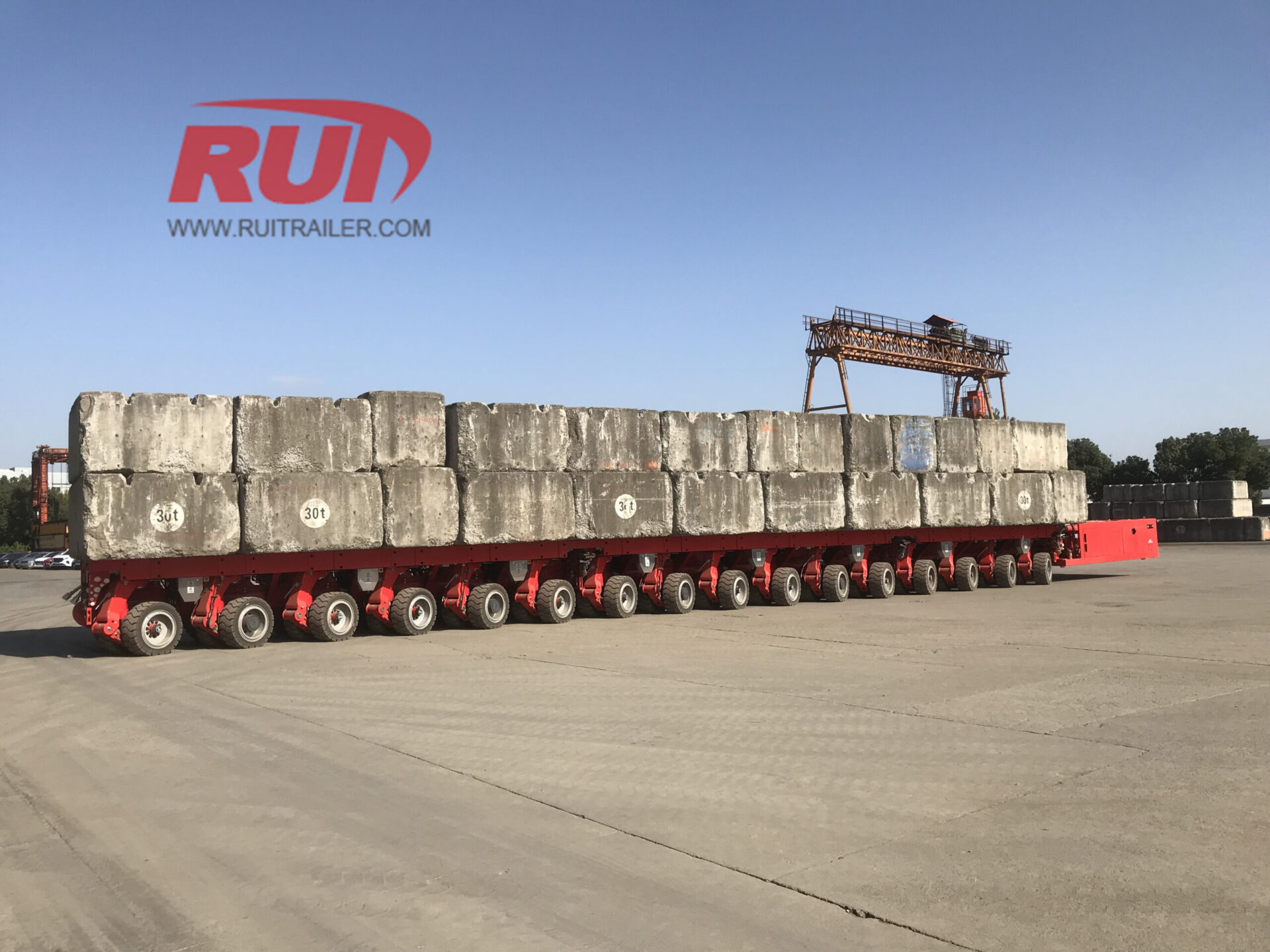
Modular Trailer vs SPMT: What They Are
A modular trailer vs SPMT comparison comes down to one core question: do I need a towed multi-axle system or a self-propelled transporter? I use modular trailers when the project needs a prime mover, flexible axle-line setup, and dependable heavy haulage over planned routes. I use SPMTs when I need self-propelled, highly precise movement with electronic steering system control in tight or complex spaces.
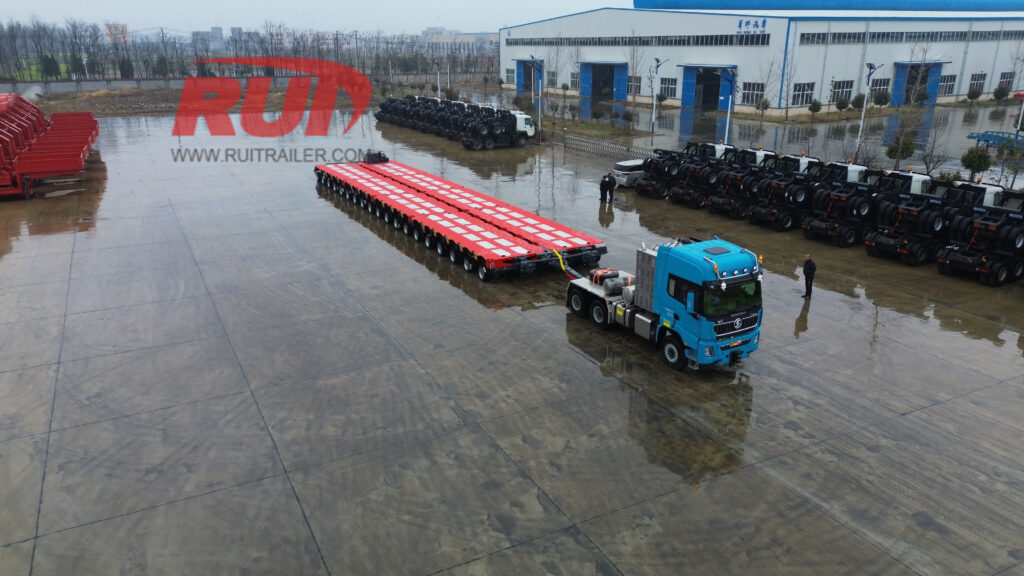
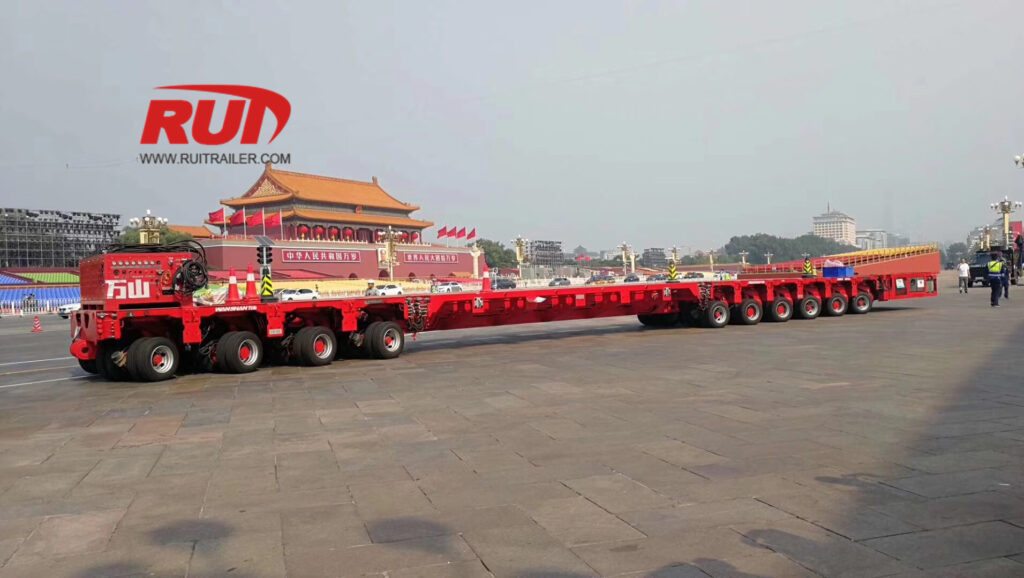
How Each System Works
- Modular trailer: pulled by a tractor unit / prime mover, with load carried across linked axle lines and hydraulic suspension.
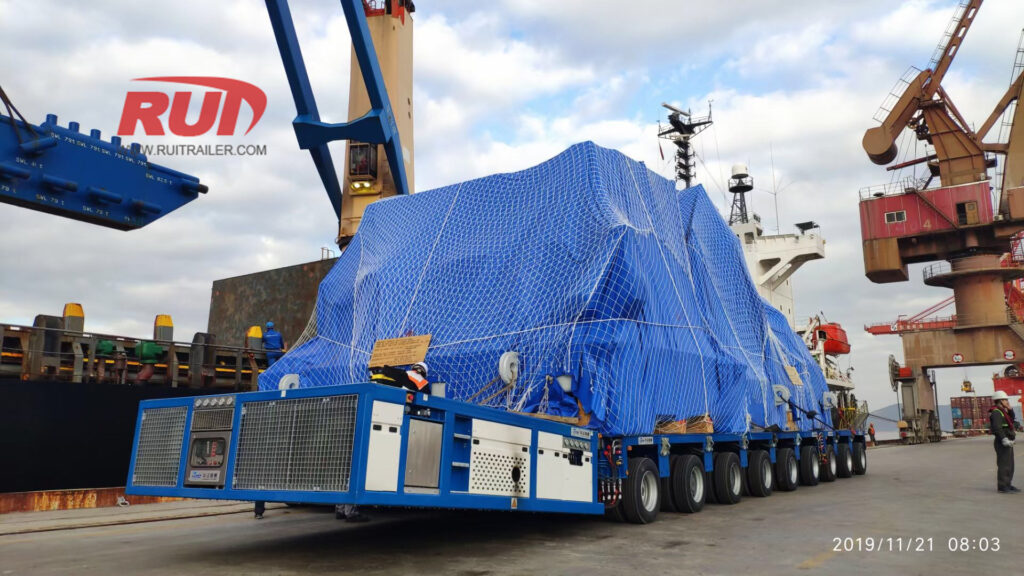
- SPMT: powered by a Power Pack Unit (PPU) and driven by integrated wheel bogies, with synchronized steering and load control.
Why This Comparison Matters
For heavy lift logistics, the right choice affects:
- load capacity and axle load distribution
- turning radius and maneuverability
- route planning and site access
- safety during loading, unloading, and transport
- total cost, crew demand, and downtime

rui self propelled modular transporter spmt suspension support
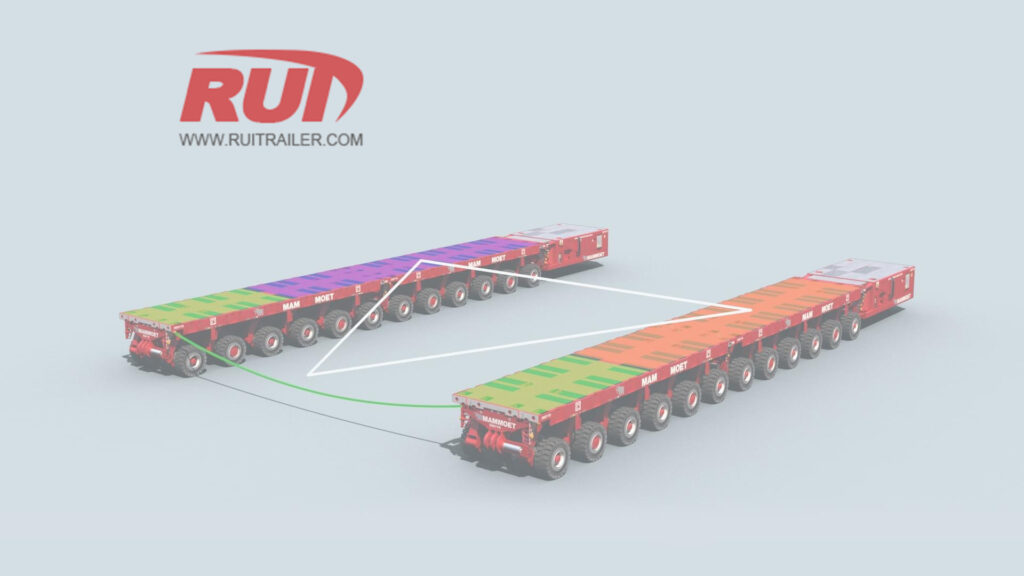
Main Use Cases
- Modular trailer: bridge beams, transformers, industrial plant move, offshore modules, and oversized cargo on planned haul routes
- SPMT: refinery modules, shipyard moves, confined-space transport, ro-ro loading, and ultra-heavy project cargo requiring multi-directional steering
Hydraulic Modular Trailer Basics
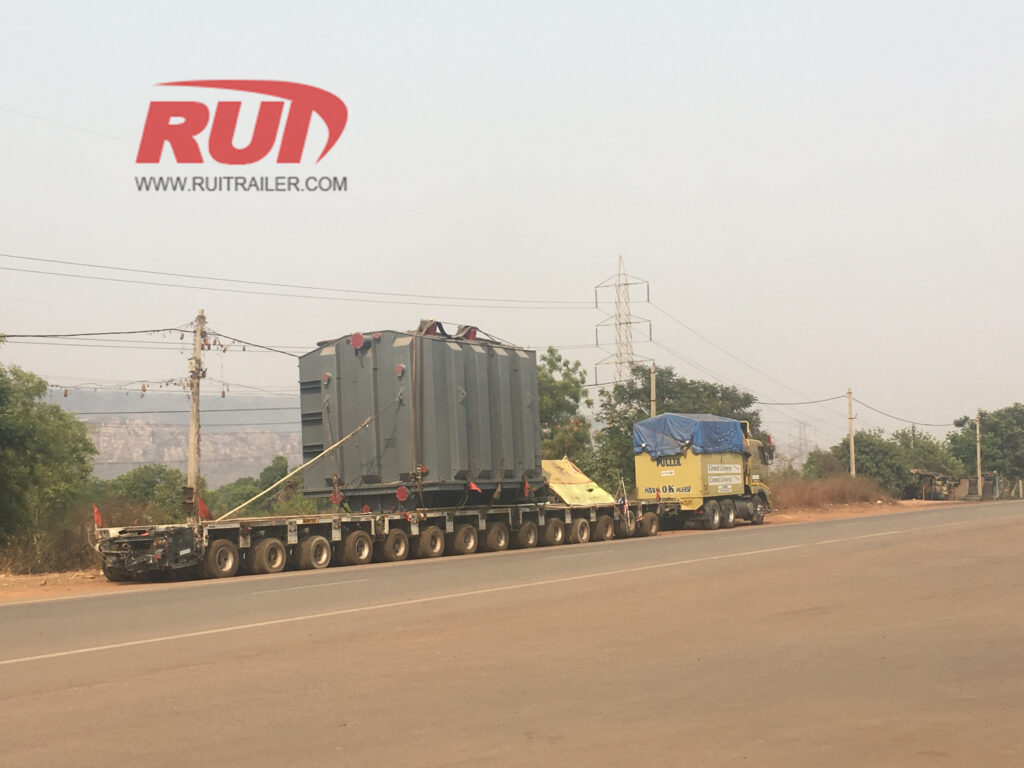
A hydraulic modular trailer is a towed heavy hauler built for project cargo and oversized cargo. I use it when I need a flexible platform trailer that can handle serious weight with controlled axle load distribution. The basic setup depends on a prime mover or tractor unit, so the trailer itself stays simple, strong, and easy to configure for heavy haulage.
Towed Setup and Axle Lines
- Prime mover dependence: the towing vehicle drive provides movement
- Modular unit configuration: add or remove sections to match the load
- Axle lines: build capacity by linking multiple axle lines in one transport train
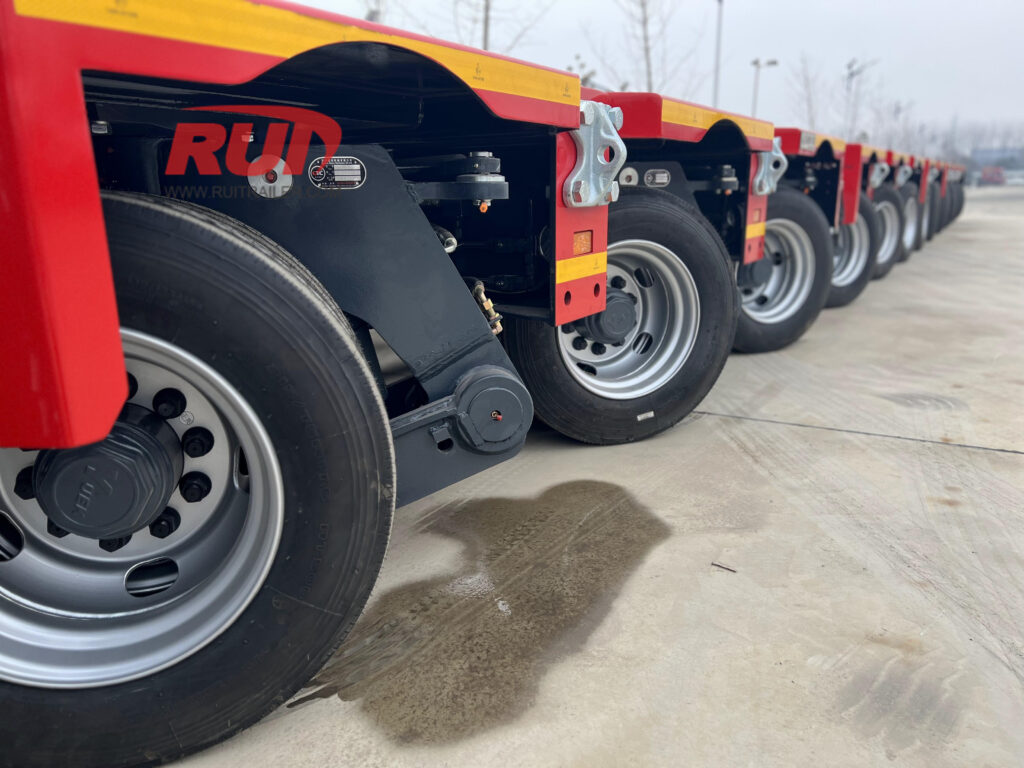
- Hydraulic suspension: keeps the deck stable and spreads the load evenly
- Steering options: mechanical steering or hydraulic steering for route control
For hydraulic modular trailer systems, I rely on the way the wheel bogie and suspension work together to manage load distribution and deck height. That makes them a solid fit for confined spaces, industrial moving, and route planning where a self-propelled transporter is not necessary.
Best Jobs for Modular Trailers
- Heavy plant moves
- Industrial equipment transport
- Bridge sections
- Offshore modules on controlled routes
- Oversized cargo with tractor-assisted haulage
For details on configuration and system types, I also use this hydraulic modular trailer guide on systems, types, and applications.
SPMT Basics
Self-Propelled Transporter Design
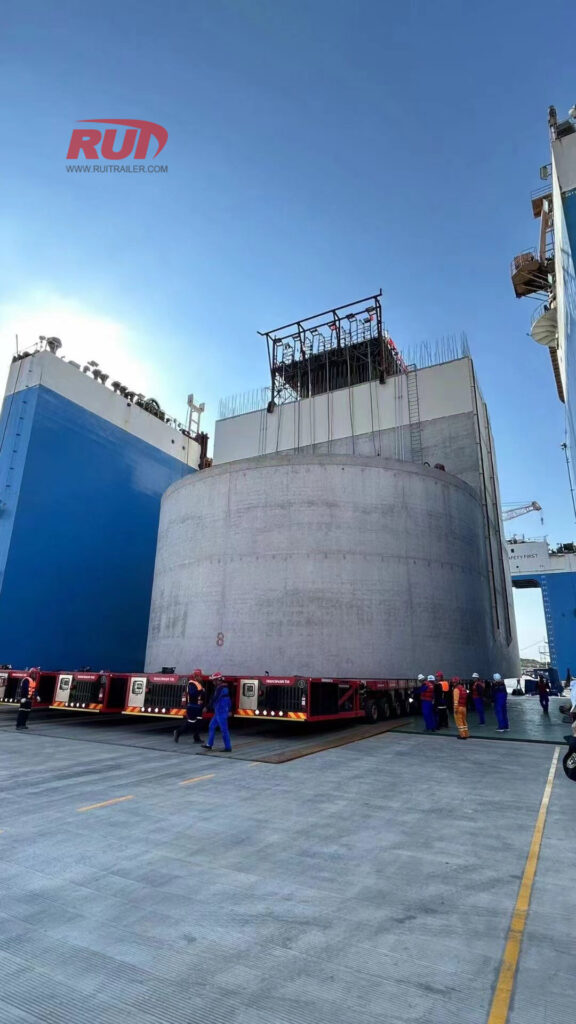
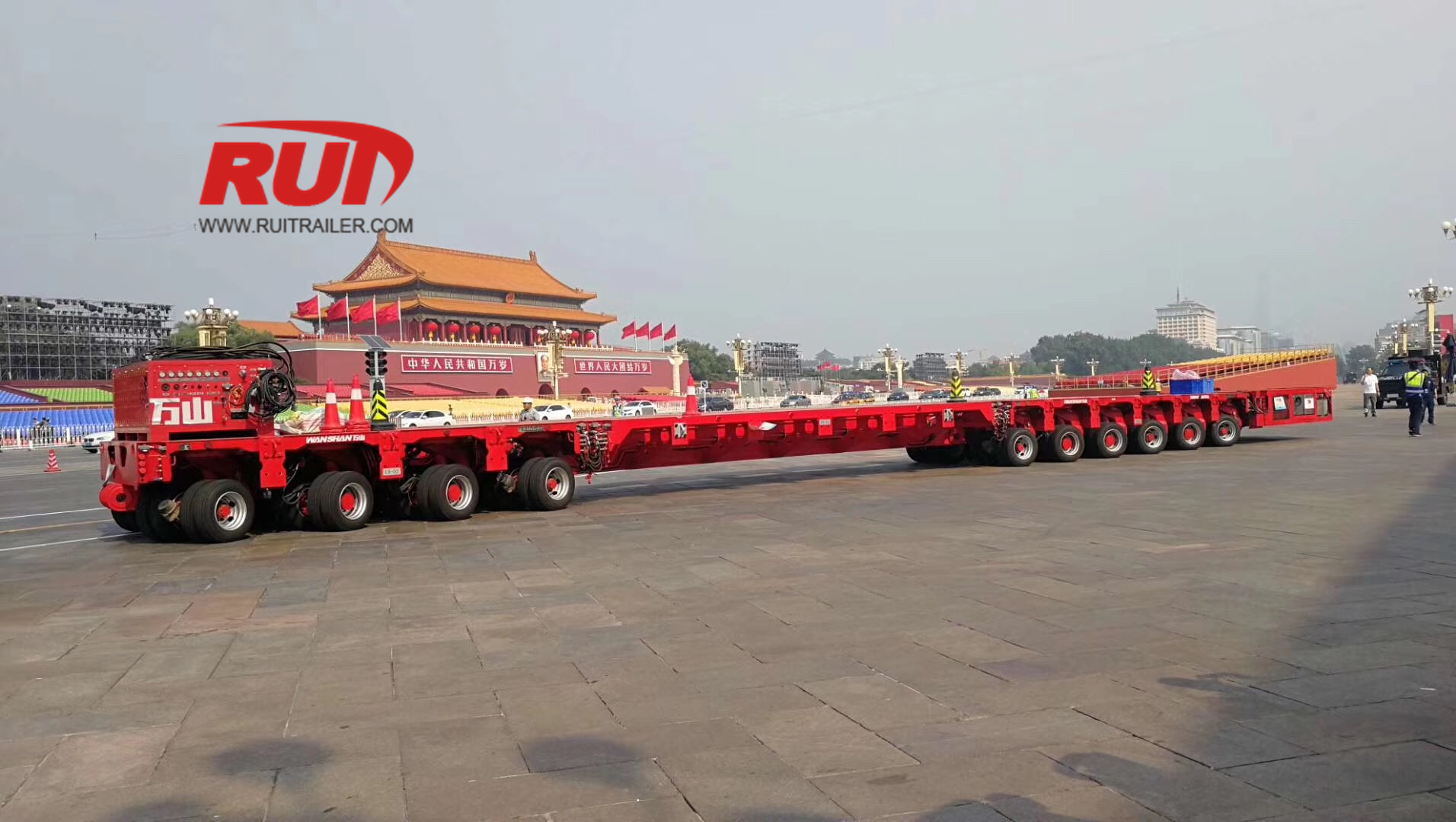
An SPMT, or self-propelled modular transporter, runs on its own Power Pack Unit (PPU) instead of a prime mover. I use it when I need tight control, heavy lift accuracy, and smooth movement for project cargo in demanding sites.
Electronic Steering and Control
Its electronic steering system gives me multi-directional steering, including straight, transverse, and crab movement. That makes the turning radius very small and the handling precise in confined spaces.
Multi-Unit Synchronization
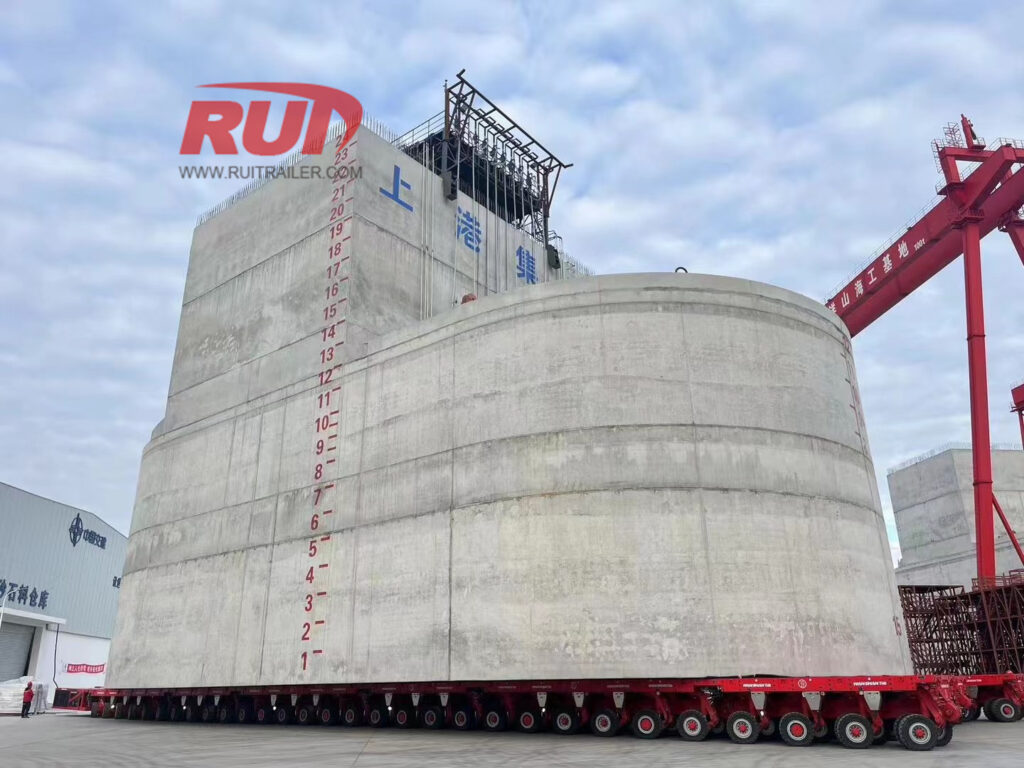
For large oversized cargo, I can link multiple units together with load synchronization. This keeps load distribution stable across every axle line and helps protect the cargo, the deck, and the ground surface.
Best Jobs for SPMTs
I rely on SPMTs for:
- Offshore modules
- Oil and gas modules
- Industrial plant moves
- Heavy equipment relocation
- Ro-ro loading and unloading
- Sites with complex access and strict route planning
For large-scale heavy haulage, an SPMT gives me the control and flexibility that standard transport gear cannot match.
Modular Trailer vs SPMT: Key Differences
I see the modular trailer vs SPMT choice as a trade off between route simplicity and maneuverability. A modular trailer is better for long, straight moves with a prime mover, while an SPMT gives me tighter control in cramped areas and complex project cargo handling.
| Item | Modular Trailer | SPMT |
|---|---|---|
| Maneuverability | Good, depends on steering setup | Excellent, multi-directional steering |
| Turning radius | Larger | Very tight |
| Steering precision | Mechanical or hydraulic steering | Electronic steering system |
| Load capacity | High, based on axle lines | Very high, easy load synchronization |
| Deck height | Adjustable through hydraulic suspension | Low and stable platform |
| Transport speed | Faster on open roads | Slower, site-focused |
| Route flexibility | Better for road transport | Best for confined spaces and plant moves |
Turning and Steering
- Modular trailer: uses mechanical steering or hydraulic steering, so turning is stable but less precise.
- SPMT: uses crab steering, carousel steering, and straight-line modes for exact positioning.

Modular trailer hydraulic steering
Load and Height
- Modular trailer: load capacity depends on axle lines and bogie setup.
- SPMT: spreads weight across more axle groups with stronger load distribution and smooth synchronization.
- Both can use hydraulic suspension, but the SPMT usually gives finer deck height adjustment for loading and unloading.
Speed and Route Use
- Modular trailer: better for longer haulage where road access is workable.
- SPMT: better for site moves, offshore modules, and oversized cargo that needs millimeter-level control.
For more on trailer setups and axle options, I often point people to this modular trailer guide for axle lines and capacity.
Bottom Line
- Choose a modular trailer for simpler routes, lower system complexity, and flexible heavy haulage.
- Choose an SPMT when the cargo is massive, the site is tight, and steering precision matters most.
Which One Fits Your Project? Modular Trailer vs SPMT
I choose between a modular trailer vs SPMT by matching the transport to the job, not the other way around. For project cargo and oversized cargo, I check five things fast: cargo weight, site space, route conditions, budget, and crew skill.
Project Fit Factors
- Cargo type and weight: A modular trailer works well for heavy, long, or simple loads. An SPMT is stronger when the load is ultra-heavy, sensitive, or needs tight control.
- Site space and access: Tight yards, narrow entrances, and busy plants often favor SPMTs because of their multi-directional steering and small turning radius.
- Distance and road conditions: For longer moves and rough access routes, I look at prime mover support, route planning, and ground limits. Modular trailers usually fit broader transport plans.
- Budget and ROI: A modular trailer is often cheaper to rent and run. An SPMT can cost more, but it may save time on complex heavy lift logistics.
- Training and operation: Modular trailer crews usually need less system control. SPMT work needs stronger operator training because of its electronic steering system and load synchronization.
self propelled modular transporter spmt in ultra-heavy load
Simple Rule
- Choose a modular trailer for cost-efficient heavy haulage, standard route moves, and projects with a reliable tractor unit.
- Choose an SPMT for confined spaces, plant moves, offshore modules, and precision positioning where load distribution and control matter most.
For the right setup, I also review the trailer build, axle lines, and hydraulic suspension options in a guide to choosing a hydraulic modular trailer, since the wrong platform can raise both risk and operating cost.
Safety and Stability in Modular Trailer vs SPMT
Safety starts with hydraulic suspension performance and solid load distribution. In my experience, both a hydraulic modular trailer and an SPMT need steady axle line control to keep the cargo level and reduce shock on the frame. Good suspension helps spread the weight, protects the cargo, and keeps the move stable on uneven ground.
Load Balance and Ground Pressure
- Axle lines must share the load evenly to avoid overload on one side.
- Lower ground pressure helps protect yards, ports, and plant floors.
- Better load spread also reduces sink risk on soft or weak surfaces.
Risk Control During Handling
I always treat loading and unloading as the highest-risk stage in heavy lift logistics. Clear route checks, slow movement, and accurate steering reduce tilt, slip, and impact damage. For site preparation and safe loading access, a multi-axle trailer solution can support stable movement under demanding project cargo conditions.
Practical Stability Points
- Keep the deck level during transfer
- Match suspension settings to cargo weight
- Watch surface strength before movement
- Use controlled speed in confined spaces
- Confirm alignment before each lift or roll-on operation
Modular Trailer vs SPMT: Maintenance and Operating Costs
I always treat maintenance as a core cost driver in heavy haulage, not an afterthought. A modular trailer usually needs routine checks on axle lines, hydraulic suspension, wheel bogies, tires, couplings, and steering parts. An SPMT adds more complexity because the Power Pack Unit (PPU), electronic steering system, sensors, and load synchronization all need regular attention.
Routine checks and downtime
- Modular trailer: simpler service, lower system complexity, easier parts replacement
- SPMT: higher precision, but more electronics and more planned maintenance
- Shared risk: worn parts, hydraulic leaks, and steering faults can stop a move fast
Ownership vs rental
For long-term, high-frequency project cargo work, owning can pay off if the fleet stays busy. For one-off oversized cargo jobs, rental often gives better ROI because it cuts storage, service, and downtime risk. I usually weigh service life, spare parts access, and crew readiness before choosing between a platform trailer setup and a self-propelled transporter.
How to Choose the Right Modular Trailer vs SPMT Heavy-Lift Solution
I choose a modular trailer when the job needs a strong, cost-aware setup for long hauls, simpler routes, and standard heavy haulage work. I choose an SPMT when the cargo is very heavy, the site is tight, and I need multi-directional steering and exact positioning.
For a deeper spec view, I also rely on a modular trailer guide for heavy-duty hydraulic transport when planning project cargo moves.
Use Case Guide
| Project need | Better fit |
|---|---|
| Long road transport | Modular trailer |
| Confined spaces | SPMT |
| Lower budget | Modular trailer |
| High precision moves | SPMT |
| Simple tow setup | Modular trailer |
| Complex plant move | SPMT |
Key Decision Factors
- Cargo type and weight: oversized cargo, plant parts, offshore modules, or general project cargo
- Site access: yard space, turning radius, and loading area
- Route conditions: road limits, bridge limits, and route planning needs
- Budget: rental cost, PPU use, and total logistics spend
- Crew skill: steering system control, load synchronization, and safety checks
Questions I Check First
- Is the load better handled by a prime mover or a Power Pack Unit (PPU)?
- Do I need hydraulic suspension and exact load distribution?
- Is deck height adjustment important for loading or transfer?
- Will the move stay on public roads or stay inside a plant?
- Is the project built for speed, precision, or lowest cost?
For my own heavy haulage planning, a self-propelled transporter buying and use guide is also useful when comparing specialized transport options.
Simple Rule
- Modular trailer: best for practical, flexible, lower-cost heavy lift logistics
- SPMT: best for complex moves, tight spaces, and high-control industrial moving
Power Pack Unit (PPU) self propelled modular transporters (spmt) G model
Manager Checklist
| Factor | Check |
|---|---|
| Budget | Rental vs ownership |
| Site size | Confined spaces or open yard |
| Cargo shape | Flat, tall, or irregular |
| Travel distance | Short transfer or long haul |
| Safety plan | Ground pressure and load balancing |
| Operation | Mechanical steering or electronic steering system |
Modular Trailer vs SPMT FAQ
Can a modular trailer be converted into an SPMT?
No. A modular trailer and an SPMT are built on different systems. A modular trailer depends on a prime mover and manual or hydraulic steering, while an SPMT uses a Power Pack Unit (PPU), electronic steering, and self-propelled control.
What is the maximum steering angle for a standard modular trailer?
A standard modular trailer usually has a limited steering angle compared with an SPMT. In real heavy haulage work, the exact angle depends on the trailer model, axle lines, and steering system, but it is not designed for the same multi-directional steering as a self-propelled transporter.
How many axle lines can be synchronized in an SPMT configuration?
An SPMT can synchronize many axle lines in one load movement, depending on the setup and control system. This is why it is widely used for very large project cargo, offshore modules, and industrial plant move jobs that need load synchronization and precise load distribution.
Which is better for offshore modules and plant moves?
I normally see SPMTs perform better for offshore modules, oil and gas modules, and tight plant move work. Their crab steering, carousel steering, and precise positioning make them stronger in confined spaces. A modular trailer still works well for simpler routes and lower-complexity moves.
Is a modular trailer cheaper than an SPMT?
Yes, in most cases a modular trailer is cheaper to rent, run, and maintain. It has lower system complexity and usually less costly service needs than an SPMT with a PPU and electronic steering system.
Can both systems handle oversized cargo on public roads?
Yes, but only with proper route planning, permits, escort support, and axle load control. Both systems are used for oversized cargo and heavy lift logistics, but public road moves must stay within local transport rules, ground pressure limits, and safety requirements.
 English
  German
  Turkish
  French
  Portuguese
  Russian
  Arabic
  Hindi
Hindi  Vietnamese
  Chinese
  Spanish
  Indonesian
  Swahili