
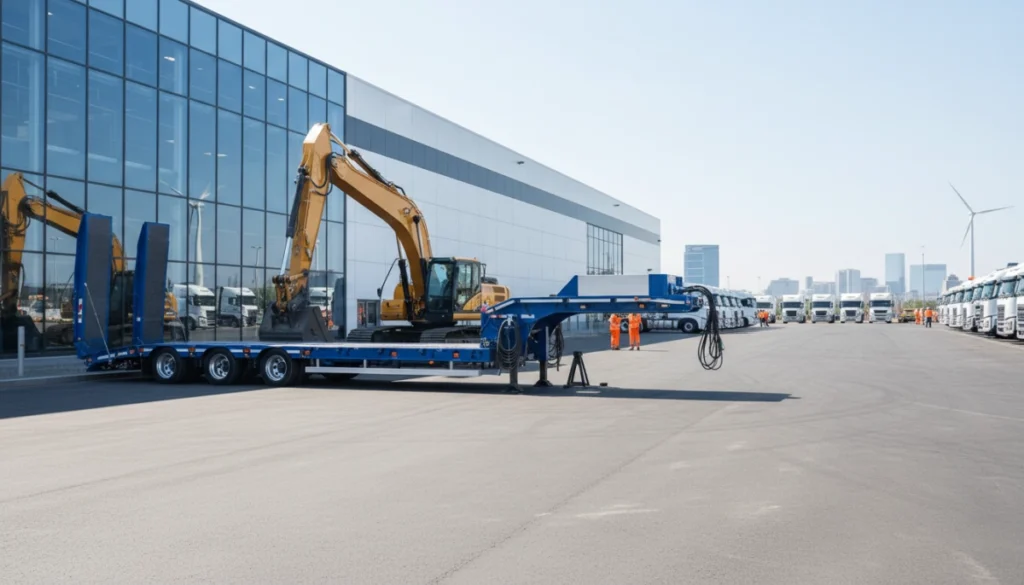
What Is an RGN Removable Gooseneck Trailer?
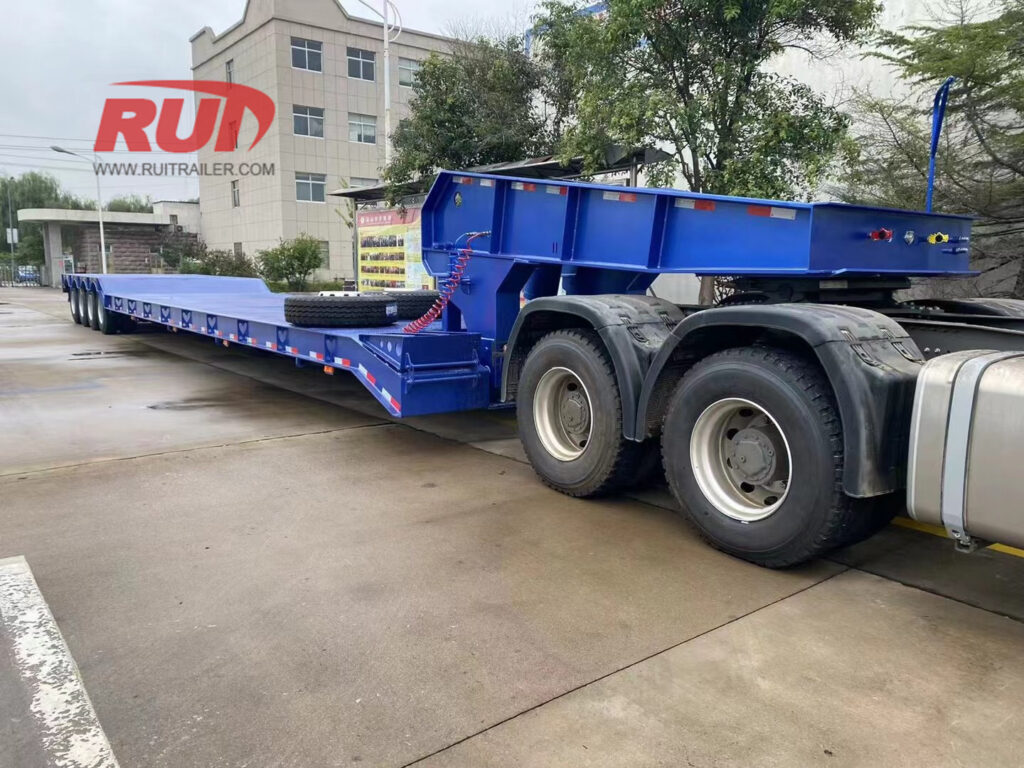
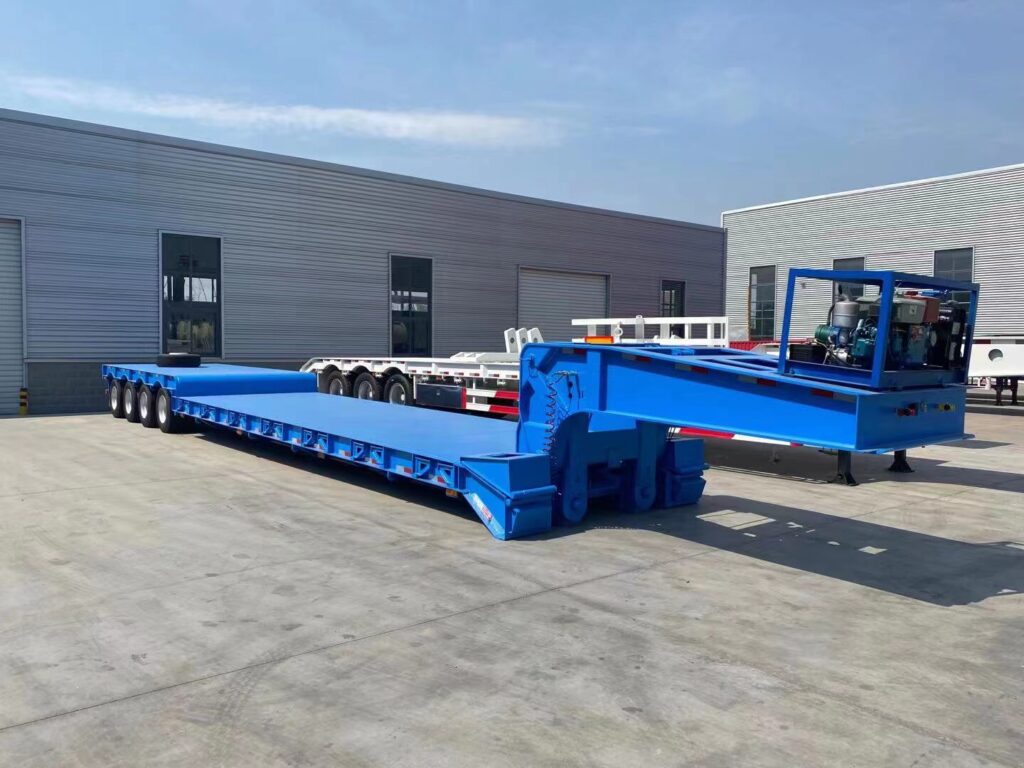
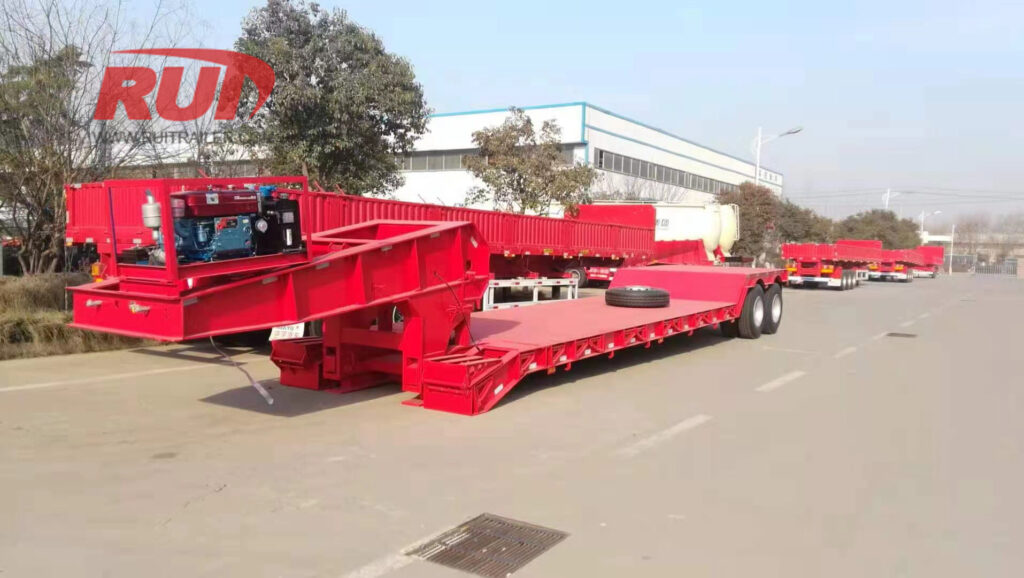
An RGN removable gooseneck trailer (also called a removable gooseneck lowboy or detachable gooseneck lowboy trailer) is a low deck height trailer designed so I can drop the front gooseneck to the ground, create a ramp, and drive heavy equipment straight onto the trailer from the front. It’s one of the most efficient tools I use for hauling over sized equipment and tall machinery transport under strict height restrictions.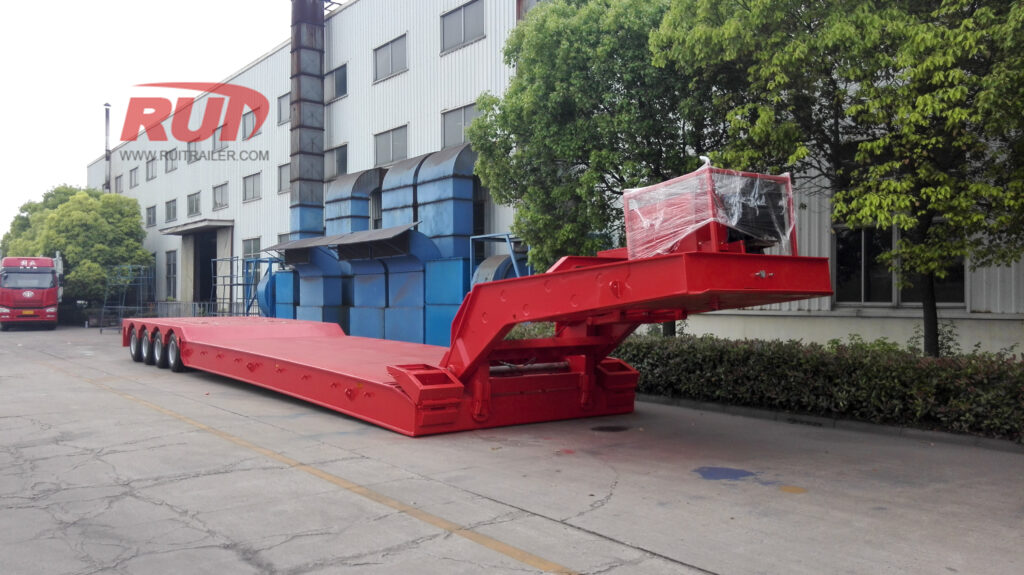
Core Components of an RGN Lowboy
An RGN lowboy trailer is built around a few key parts:
- Removable gooseneck – Connects to the truck, then detaches to create a front loading ramp.
- Drop deck well – The low “well” between the front and rear where the heavy equipment sits.
- Rear axle group – Tandem or multi-axle RGN setup that carries most of the weight.
- Ramp interface – The front of the deck that mates with the gooseneck and acts as the drive-on ramp.
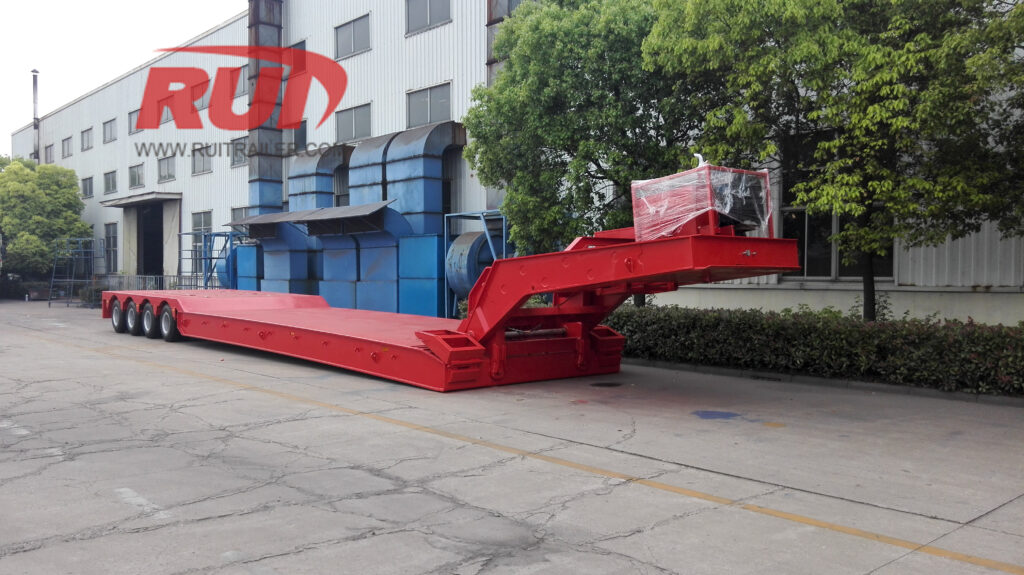
Here’s the layout in simple form:
| Component | What It Does |
|---|---|
| Removable gooseneck | Attaches to tractor, detaches for front loading |
| Drop deck well | Carries the load at a low deck height |
| Rear axle group | Distributes heavy haul weight across axles |
| Ramp / deck interface | Forms front loading ramp when gooseneck is detached |
How an RGN Trailer Loads From the Front
With an RGN lowboy trailer, I don’t need a loading dock. I:
- Detach the gooseneck and lower it to the ground.
- Let the drop deck well rest as a low ramp.
- Drive self-propelled equipment (excavators, bulldozers, tractors) onto the deck.
- Reconnect the gooseneck detachment system and lock it in place.
This front loading lowboy trailer design gives me a shallow loading angle and easy access for tracked and wheeled machines.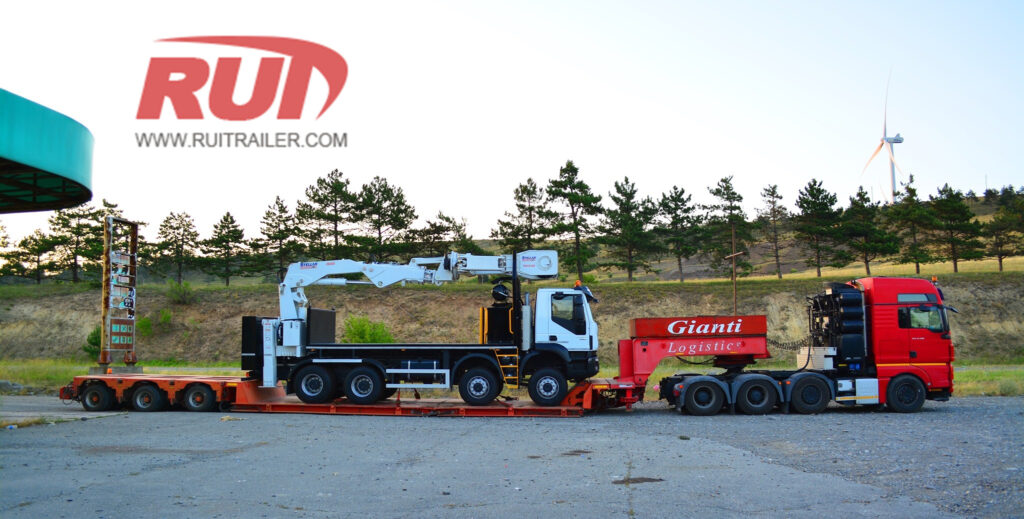
RGN vs Standard Lowboy Trailer
Both are low bed trailers, but they don’t work the same way:
| Trailer Type | Loading Method | Front Detach? | Typical Use |
|---|---|---|---|
| RGN removable gooseneck | Drive-on from front | Yes | Self-propelled heavy equipment |
| Standard lowboy trailer | Loaded by ramps, crane, dock | No | Static loads, crane lifts, pallets |
I choose an RGN lowboy when I need front loading and fast drive-on access. A standard lowboy works when I have ramps, docks, or lifting gear.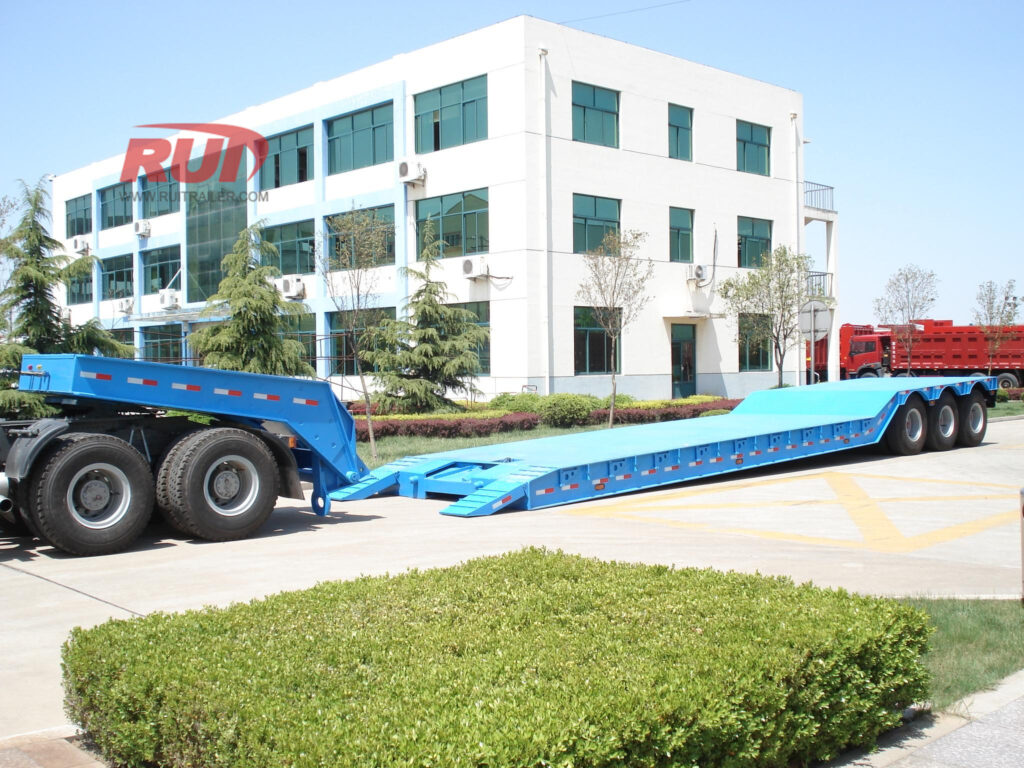
Mechanical vs Hydraulic Removable Gooseneck
Detachable gooseneck trailers come with two main systems:
| System Type | How It Detaches | Best For |
|---|---|---|
| Hydraulic removable gooseneck | Uses hydraulic cylinders to lift/lower | Frequent loading, faster operations |
| Mechanical removable gooseneck | Uses pins, shims, and manual adjustment | Lower cost, simpler spec, less cycling |
I go hydraulic when uptime and speed matter. I go mechanical when cost and simplicity are the priority and loading cycles are fewer.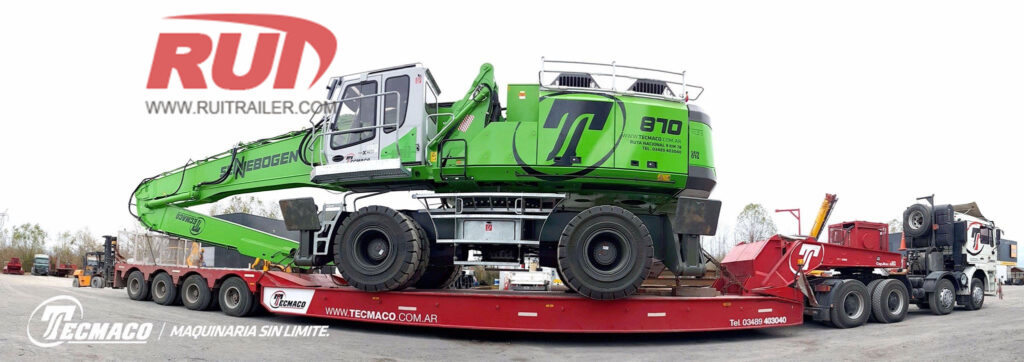
Why RGNs Are Classified as Lowboy Trailers
RGNs sit in the lowboy family because of their:
- Low loaded deck height for tall machinery hauling under bridges and power lines.
- Low center of gravity for better stability and safer heavy equipment lowboy trailer operation.
- Ability to handle 40T, 50T and higher capacities with multi axle RGN trailer setups for global heavy haul logistics.
In my fleet, the rgn removable gooseneck trailer is the go-to specialized transport trailer when I need low height, front loading, and serious heavy-duty performance in one package.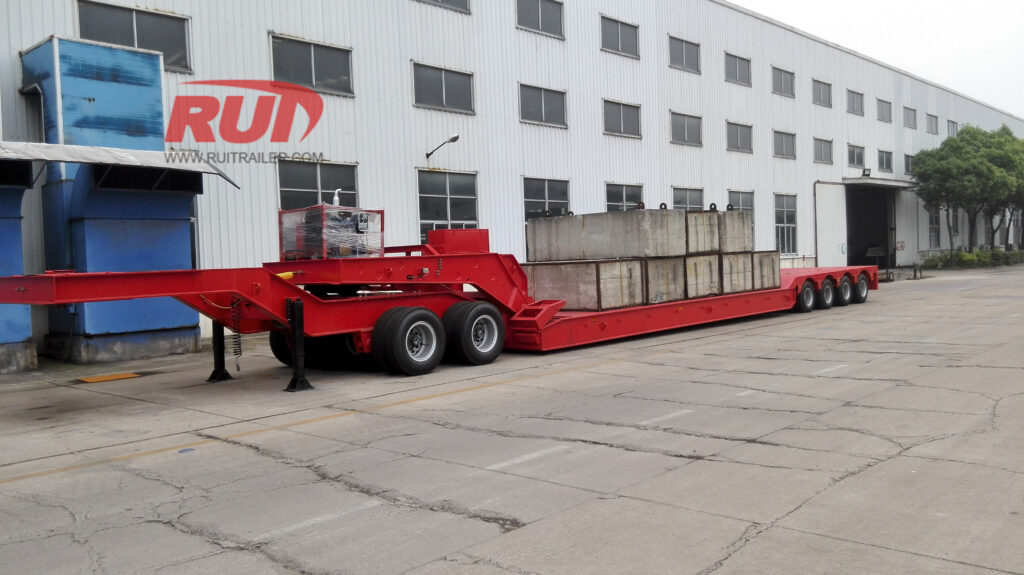
Key Advantages of an RGN Removable Gooseneck Trailer
An RGN removable gooseneck trailer is built for real-world jobs where you need fast loading, safe transport, and flexibility on difficult routes.
Easy Front Loading, No Dock Needed
With the detachable gooseneck, the trailer drops to the ground and becomes a front loading lowboy trailer. That means:
- Drive self-propelled heavy equipment straight on (excavators, bulldozers, wheel loaders, pavers).
- Load tracked machinery without steep ramps or risky angles.
- Skip loading docks and cranes on most sites, cutting outside service costs.
For fleets that also run multi-axle systems, a lot of these benefits line up with what we achieve on our low bed multi-axle trailer solutions.
Low Deck Height And Cargo Clearance
A low deck height trailer gives you more room under bridges and power lines when hauling tall machinery:
- Better overhead clearance for over-sized loads and tall equipment.
- Reduced need to remove attachments or modify machines before transport.
- Easier route planning on height-restricted roads and urban areas.
This low bed design turns the RGN into a very efficient tall machinery hauling trailer and over sized load transport trailer.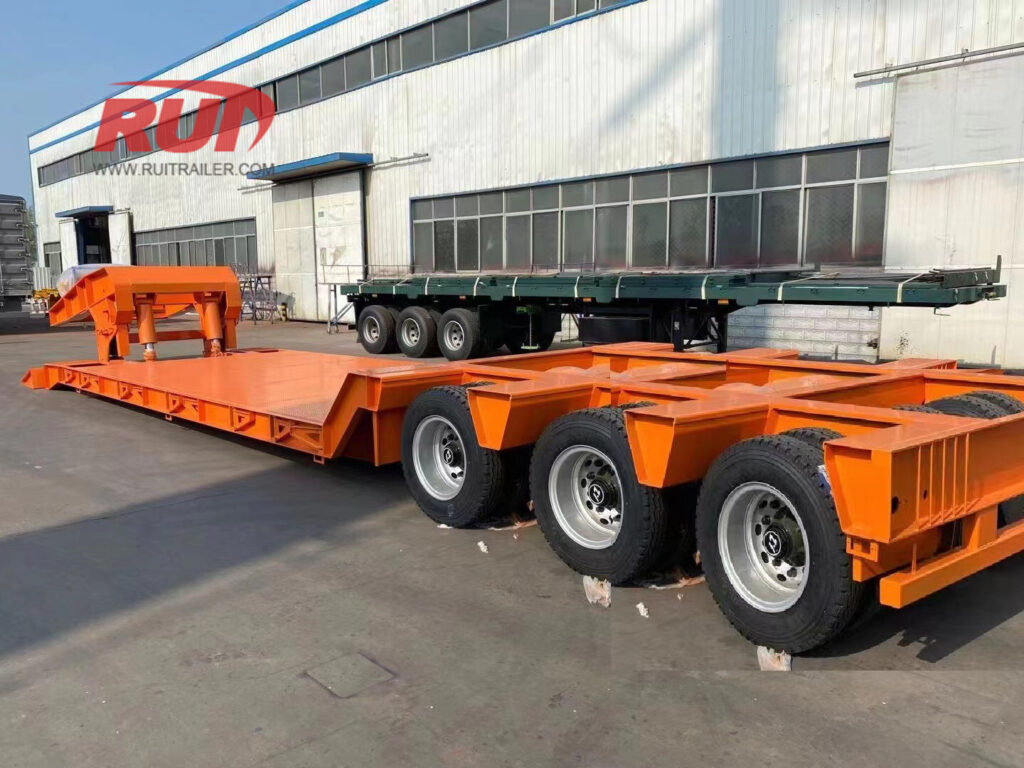
Low Center Of Gravity And Stability
Because an rgn lowboy trailer rides lower:
- The low center of gravity trailer setup improves stability at highway speeds.
- There is less tipping risk on ramps, curves, and uneven job sites.
- Weight spreads more evenly across the axle group, improving control under braking.
For higher capacities like a 40 ton RGN trailer or 50 ton detachable gooseneck, this stability is critical when you are hauling over-sized equipment in mixed traffic and tight work zones.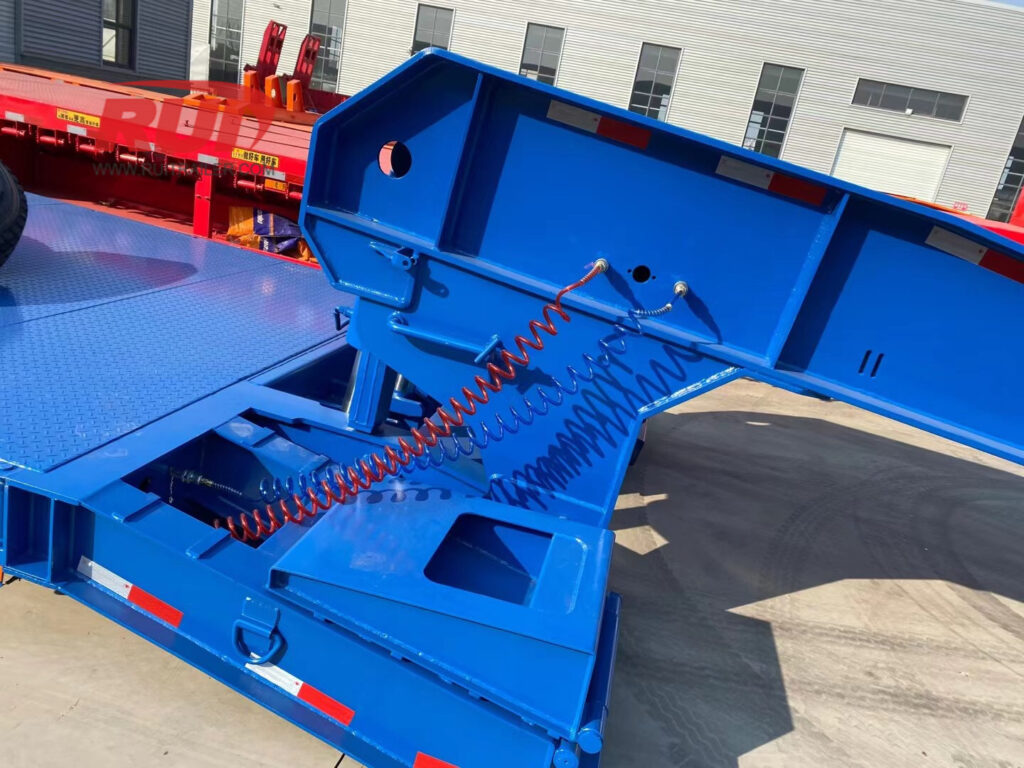
Faster Turnarounds And Tight-Site Access
An rgn removable gooseneck trailer cuts downtime:
- Faster loading/unloading means more trips per day and lower job costs.
- Front-drive access simplifies loading order and positioning of multiple machines.
- Better maneuverability than many specialized trailer options in tight construction, mining, and industrial sites.
For operators working globally on mixed infrastructure, this blend of low deck height, front loading, and strong stability makes the RGN removable gooseneck lowboy one of the most efficient heavy equipment lowboy trailer options you can add to a fleet.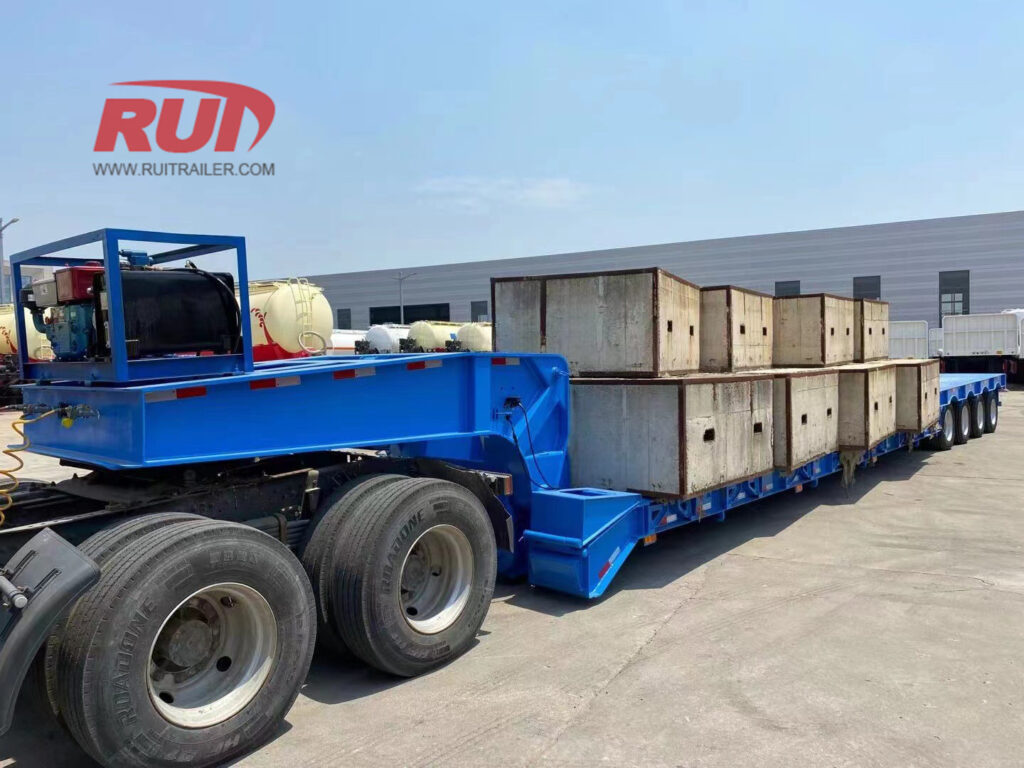
Common Applications for RGN Removable Gooseneck Trailers
An RGN removable gooseneck trailer is built for real‑world heavy work, not just brochure specs. We use this style of detachable gooseneck lowboy trailer wherever front loading, low deck height and stability matter more than anything else.
Typical jobs where an RGN lowboy trailer makes sense:
- Construction equipment hauling – Ideal for excavators, bulldozers, wheel loaders, graders, rollers and other self‑propelled heavy equipment. The front loading lowboy design lets operators drive straight on without steep ramps or a dock.
- Agriculture and farm machinery transport – Perfect for tractors, combines, seeders, sprayers and support implements. The low deck height trailer keeps tall farm machines under height limits while moving between fields, regions or countries.
- Mining and quarry machinery hauling – Works well for haul trucks, drills, crushers, screens and support equipment that sit high and weigh heavy. A multi axle RGN trailer handles this kind of abuse better than a basic low bed trailer.
- Oil and gas equipment moves – Used for rigs, skids, pump units, coiled tubing, power packs and other energy sector loads where site access is tight and ground conditions are rough.
- Forestry and logging equipment – Great for skidders, feller bunchers, harvesters and tracked forestry gear that needs a low loading angle and strong deck.
- Specialized industrial freight – Common for transformers, generators, presses, tanks and other industrial machinery transport where you need a stable, low center of gravity trailer and good cargo clearance space.
You choose an RGN removable gooseneck trailer over a flatbed, step deck or standard lowboy when:
- The equipment is self‑propelled and easier to drive on from the front.
- The load is tall and needs very low loaded deck height to meet height restrictions.
- Site conditions make docks, cranes or steep ramps impractical.
- Stability, low loading angles and safety matter more than squeezing every dollar out of a cheaper trailer.
If you’re planning frequent hauling of heavy equipment and tall machinery, it usually pays to step up to a purpose‑built removable gooseneck lowboy trailer instead of pushing a standard trailer past its comfort zone.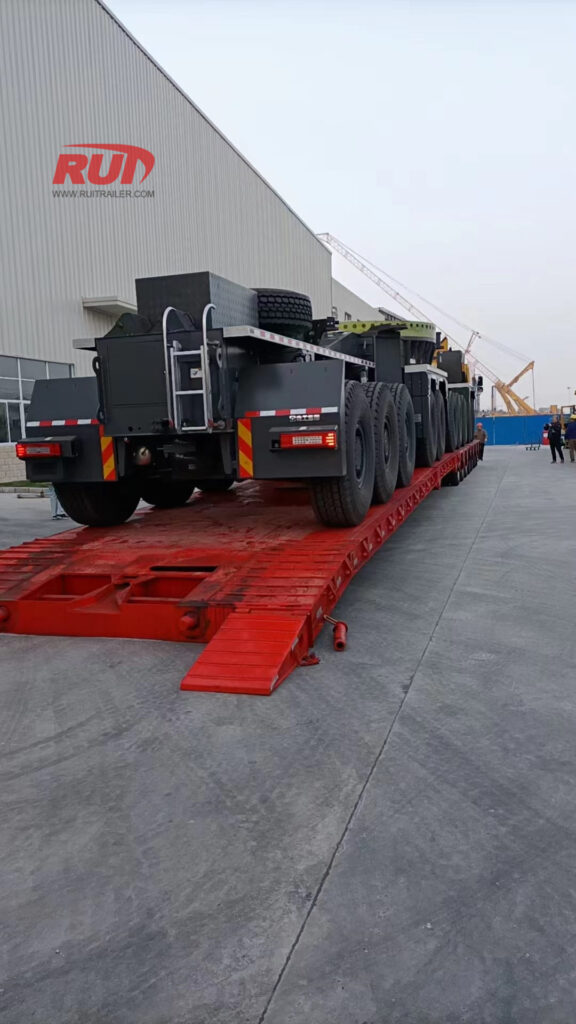
RGN Trailer Specifications and Configurations
When I spec an RGN removable gooseneck trailer, I focus on capacity, deck size, height, and axle layout. Getting these right keeps you legal, stable, and efficient.
Capacity and Length (40T–50T+)
Most RGN lowboy trailers fall in the 40T–50T class, with custom heavy duty modules going higher.
| Spec point | Common options |
|---|---|
| Capacity | 40 ton RGN trailer, 50 ton detachable gooseneck, heavier custom |
| Trailer length | 48 foot RGN trailer, 53 foot lowboy trailer |
| Main deck / well length | ~20–30 ft usable, extendable options |
If you haul mixed fleets or future heavier units, I recommend stepping up from a basic 40T to at least a 50T detachable gooseneck or even a multi axle RGN trailer similar in concept to a heavy duty multi-axle trailer system.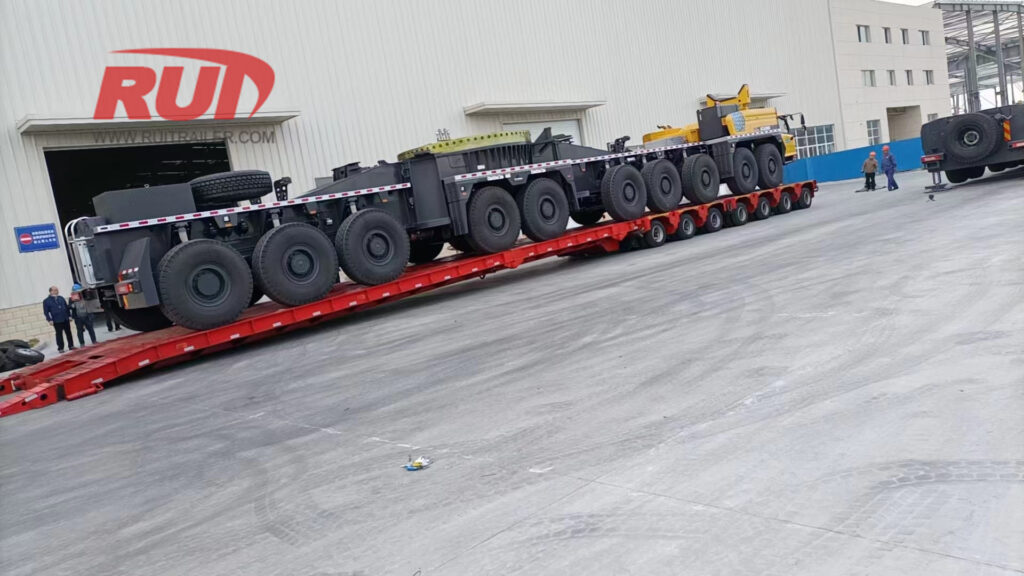
Deck Width, Height, and Outriggers
The drop deck well is what makes this low deck height trailer work for tall machinery hauling.
| Feature | Typical spec |
|---|---|
| Standard deck width | 8 ft 6 in (2590 mm) |
| With outriggers | 10–12 ft+ for over-width heavy equipment |
| Loaded deck height | ~18–24 in, depending on model and tires |
- Lower loaded deck height = more overhead clearance and easier tall machinery transport under height restrictions.
- Outriggers help when hauling over-sized equipment like bulldozers with wide blades or forestry equipment.
Axles and Suspension
Axle and suspension specs decide how stable and smooth your RGN removable gooseneck trailer will run.
- Axle layouts: tandem, tri-axle, and multi axle RGN trailer setups with flip axles or boosters for heavy haul.
- Suspension options:
- Air ride suspension lowboy: smoother ride, better for sensitive industrial machinery transport.
- Spring suspension lowboy trailer: tougher, simpler, good for rough job sites and off-road access.
For very heavy or modular combinations, I often pair RGN units with concepts and components similar to a steerable or modular multi-axle heavy haul trailer.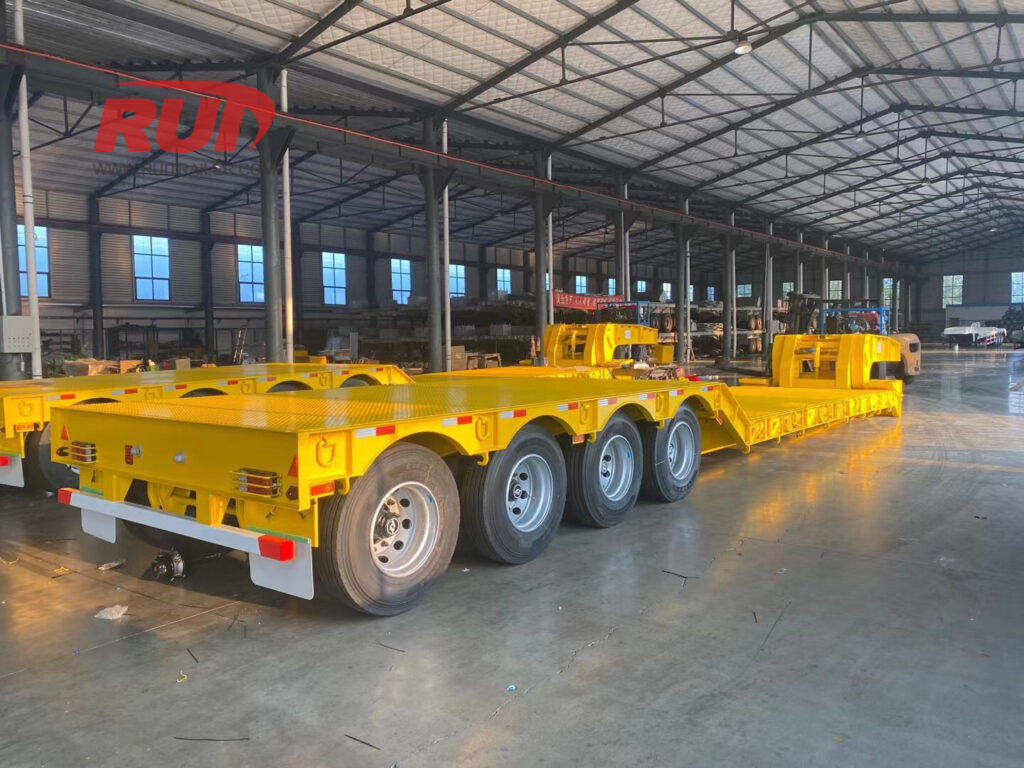
Hydraulic vs Mechanical Removable Gooseneck
The gooseneck detachment system defines how fast and easy you can front load.
- Hydraulic removable gooseneck:
- Faster hook/unhook
- Better control of loading angles and ride height
- Higher upfront cost, more hydraulic maintenance
- Mechanical removable gooseneck trailer:
- Simpler, fewer hydraulic parts
- Lower cost but slower to operate
- Needs more manual work and careful ground setup
Frame Materials and Structure
A good heavy equipment lowboy trailer lives or dies on its frame.
- High tensile steel trailer frame for strength with controlled weight
- Deep main beams and strong cross members under the drop deck well
- Reinforced kingpin and gooseneck areas to handle repeated detaching and heavy point loads
If you’re running long miles with heavy haul logistics, investing in a high-spec frame and quality welds pays off in longer life, better stability, and fewer structural surprises.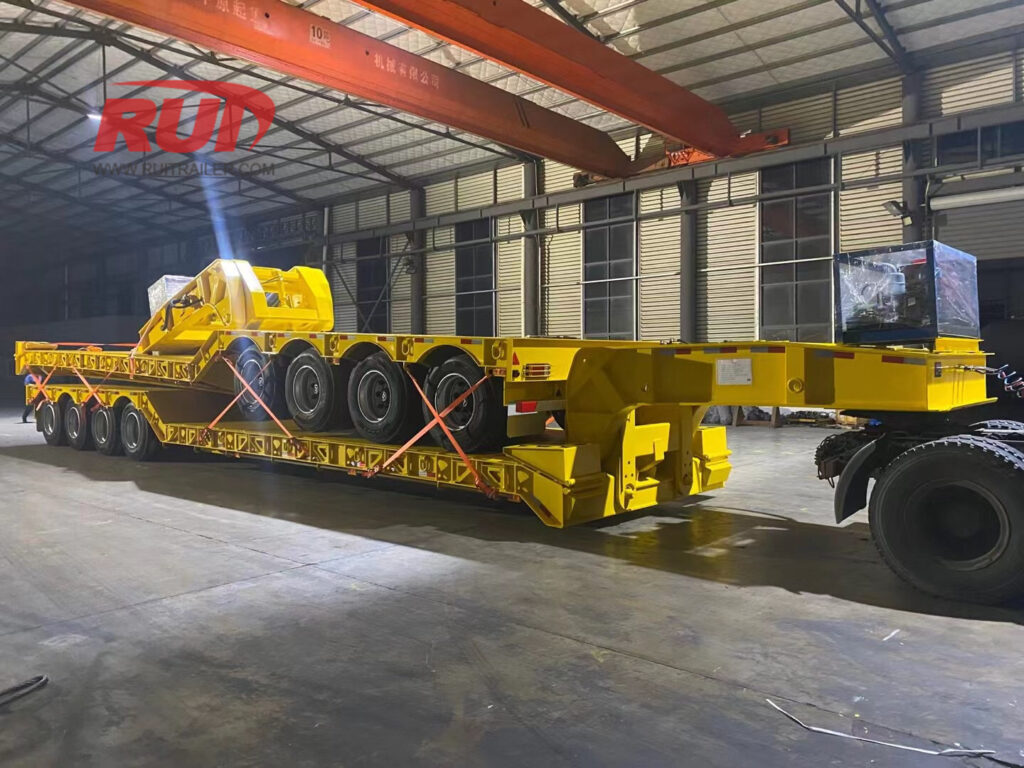
How to Choose the Right RGN Removable Gooseneck Trailer
Choosing the right RGN removable gooseneck trailer is all about matching real‑world work conditions, not just reading a spec sheet. I always look at these points in order:
Match Capacity and Dimensions
- Start with actual machine weight, not catalog weight. Add fuel, buckets, rippers, attachments, tools, and a safety margin of 10–20%.
- For most fleets:
- 40 ton RGN trailer works for mid‑size excavators, bulldozers, graders.
- 50 ton detachable gooseneck fits heavier mining, oil & gas, and industrial loads.
- Measure overall length, width, height, and center of gravity. Tall machinery hauling needs a low deck height trailer to stay under bridge and power-line limits.
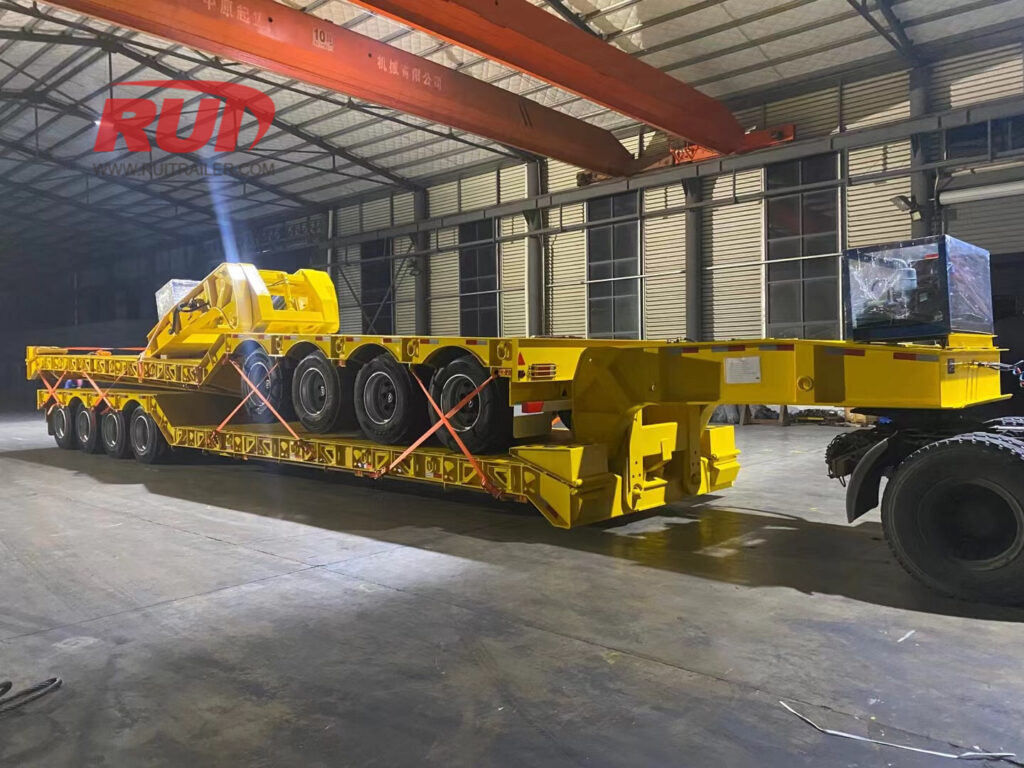
Length, Deck Height, and Axles
Use this quick comparison:
| Option | Best For |
|---|---|
| 48 foot RGN trailer | Tighter city access, shorter wheelbase loads |
| 53 foot lowboy trailer | Longer machines, more cargo clearance space |
| Tandem / tri‑axle RGN lowboy | Standard heavy equipment and regional routes |
| Multi axle RGN trailer | Over-sized load transport with high COG |
- Check loaded deck height and approach angle to keep loading angles safe for low‑clearance and tracked machines.
- Add outriggers for over‑width machines and flip axles if you regularly pull oversize/overweight permits.
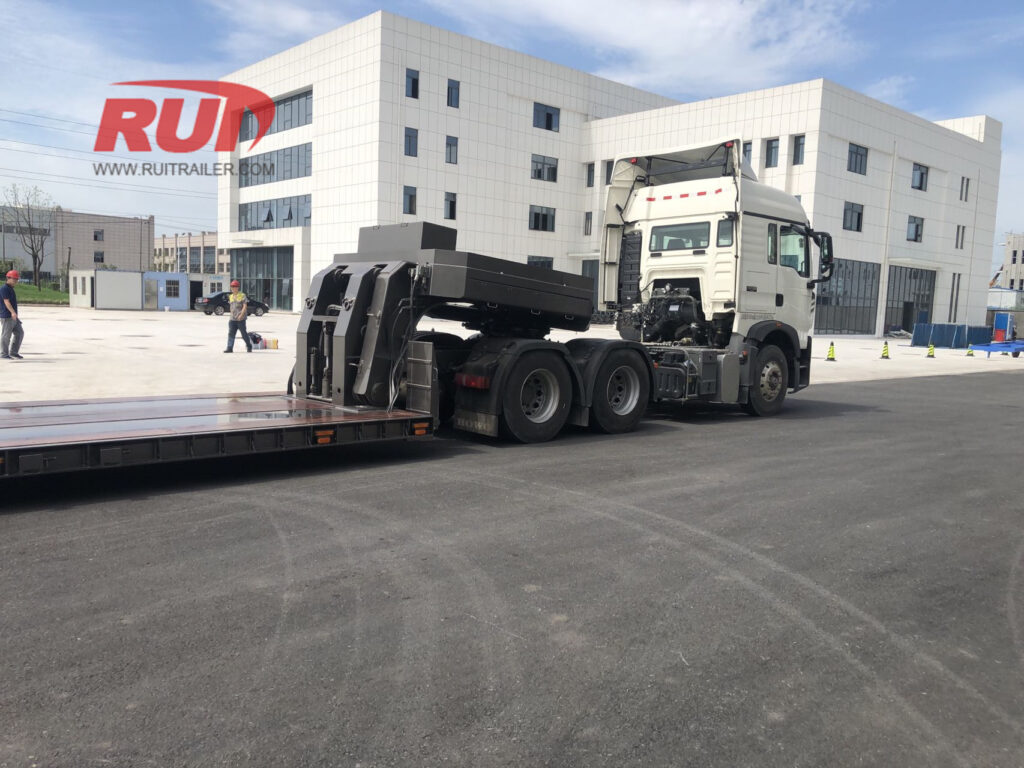
Hydraulic vs Mechanical Removable Gooseneck
- Hydraulic removable gooseneck
- Faster detach/attach
- Better for busy construction and rental fleets
- Higher upfront cost, more hydraulic maintenance
- Works well with systems similar to a hydraulic modular trailer, especially if you already run hydraulic modular trailer equipment in your fleet.
- Mechanical removable gooseneck
- Simpler, fewer failure points
- Lower cost, good where labor is cheap and time is less critical
- Requires more manual work and level ground
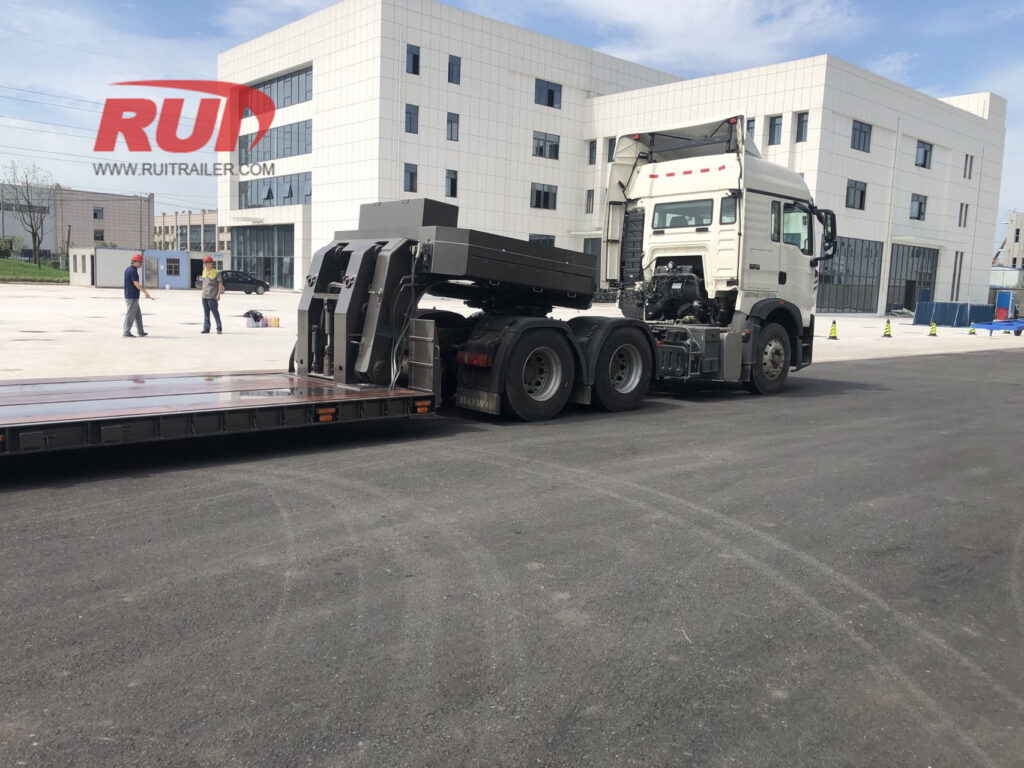
Route, Site Access, and Regulations
- Check road conditions: sharp turns, narrow streets, steep entrances, and soft job sites.
- Confirm turning radius with your tractor and trailer combination.
- Plan for oversize/overweight permits, local axle load limits, escort rules, and preferred heavy haul routes.
- If you often run extreme loads or modular cargo, compare RGN specs with specialized trailer and modular options using resources like this modular trailer hydraulic systems guide: modular trailer hydraulic systems and applications.
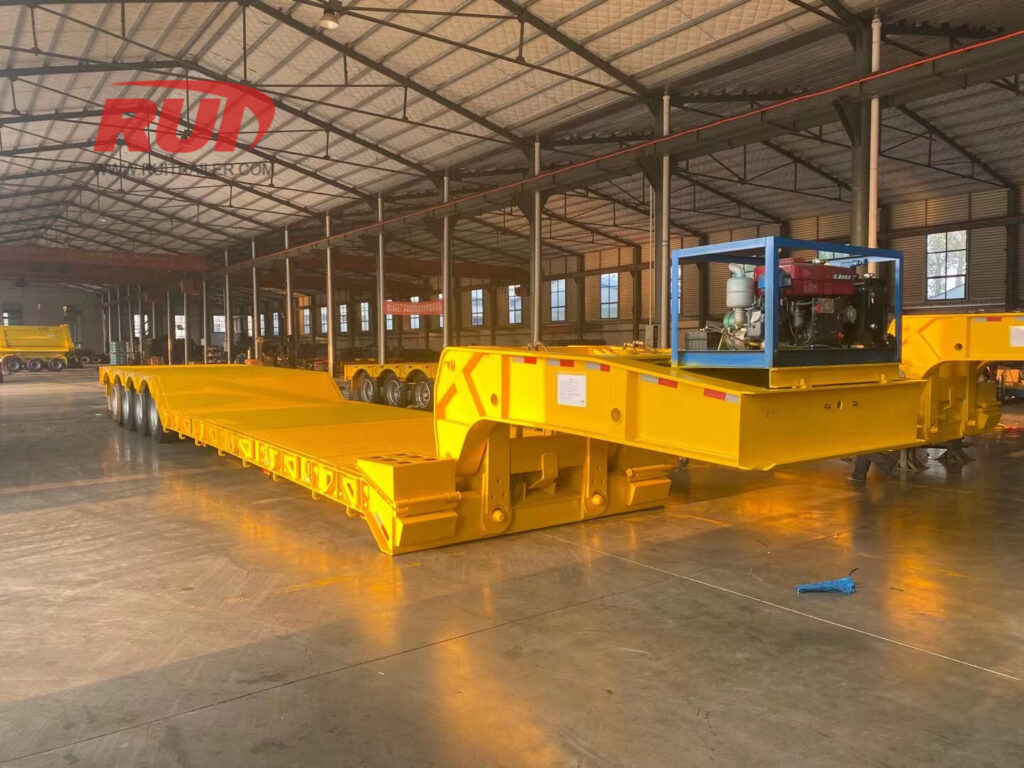
Add‑On and Smart Questions to Ask
Key add‑on for a heavy equipment lowboy trailer:
- Outriggers and wider decks for bulldozers, harvesters, forestry equipment.
- Adjustable ride height / air ride suspension lowboy for rough roads and tight docks.
- Winch points, extra lashing rings, and storage for chains and binders.
Questions I always ask manufacturers and dealers:
- What is the true working capacity, not just theoretical 40T or 50T rating?
- At what deck position and axle spacing is that capacity valid?
- What is the standard loaded deck height and approach angle?
- What is the warranty, parts availability, and lead time on critical gooseneck detachment system components?
- How is the frame built (e.g. high tensile steel trailer frame), and what corrosion protection is used?
If you work through these points systematically, you’ll end up with an RGN lowboy trailer that matches your current fleet and leaves room for the heavier, taller machines you’ll be hauling next year.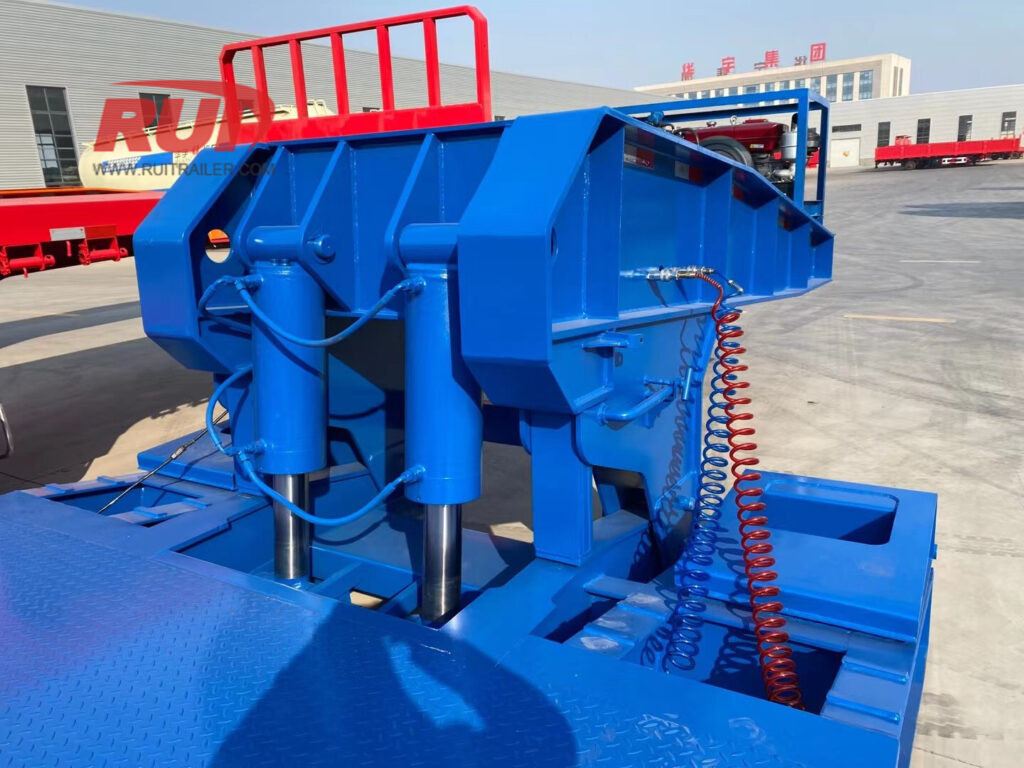
Loading and Operating an RGN Removable Gooseneck Trailer Safely
Safe Detaching Of The Removable Gooseneck
When I run an RGN removable gooseneck trailer, I follow the same sequence every time to stay safe:
- Park on solid, level ground and set tractor and trailer brakes.
- Chock wheels and drop the landing gear or front support legs.
- Release the gooseneck lock pins and safety latches.
- On a hydraulic removable gooseneck, use the controls to lift and pull the neck away.
- On a mechanical removable gooseneck, relieve tension, pull the pins/bolts, then slowly move the tractor forward.
Never stand between the gooseneck and the drop deck well while detaching.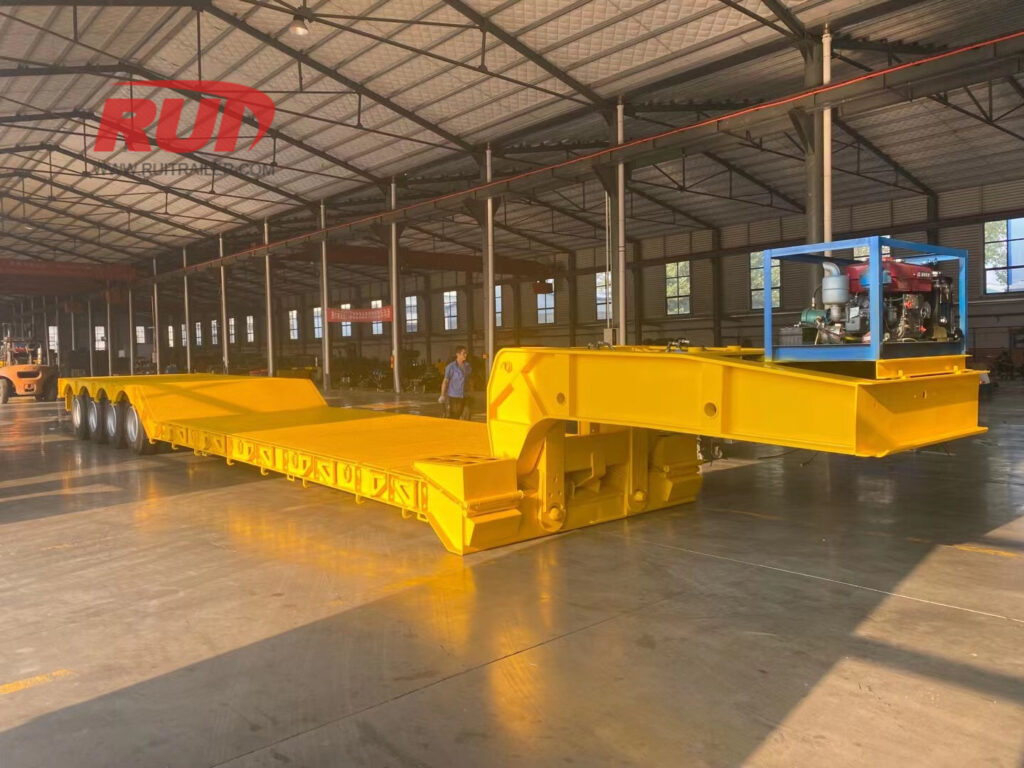
Creating A Safe Front Loading Ramp
To turn the low deck height trailer into a safe front loading ramp:
- Lower the front of the deck carefully until it rests firmly on the ground.
- Make sure the loading angle is not too steep for the machine.
- Check the surface for mud, ice, or loose gravel that can cause tracks or tires to slip.
- Confirm all supports and blocking are stable before you start loading.
A well-designed front loading lowboy trailer gives you a smooth drive-on angle and solid contact with the ground.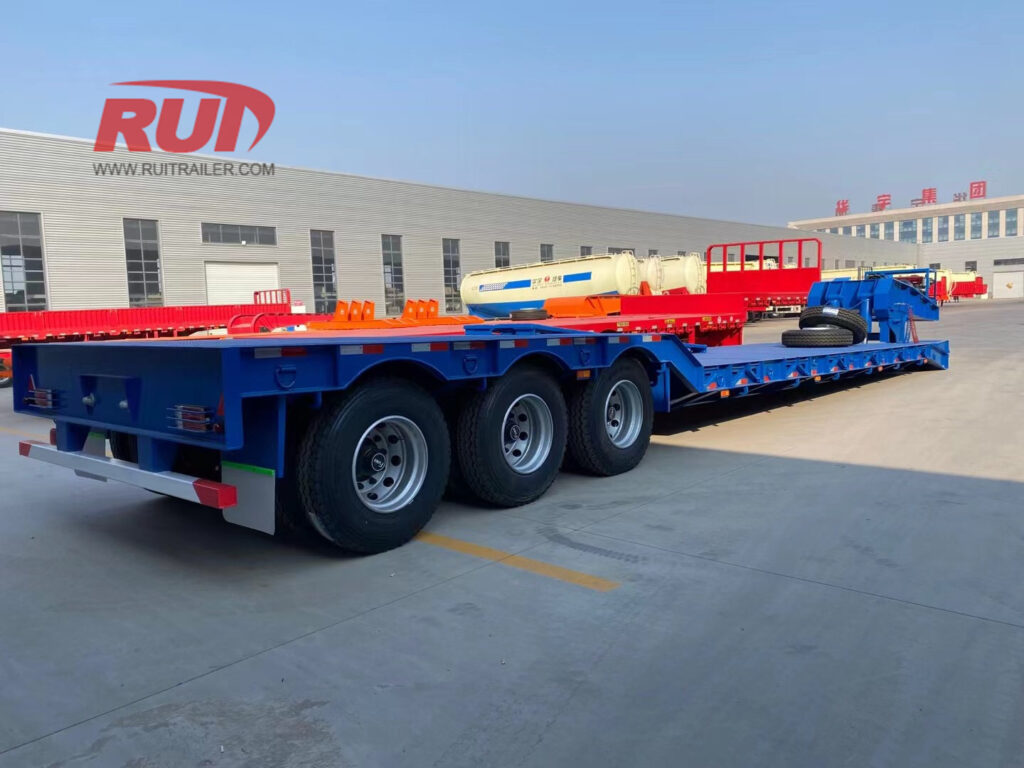
Driving Heavy Equipment Onto The RGN Lowboy
When I drive self-propelled equipment onto an RGN lowboy trailer:
- Approach slow and straight in line with the drop deck well trailer.
- Use low gear and avoid sudden throttle or braking.
- Keep the heaviest end of the machine over the front part of the well, not all the way at the rear.
- For tracked machines, keep turns gentle to protect the deck surface.
- Stop and adjust if you feel the trailer shift or lean.
For very low ground clearance machines or special loading angles, I sometimes look at folding gooseneck low loaders like this folding gooseneck low loader guide to compare options.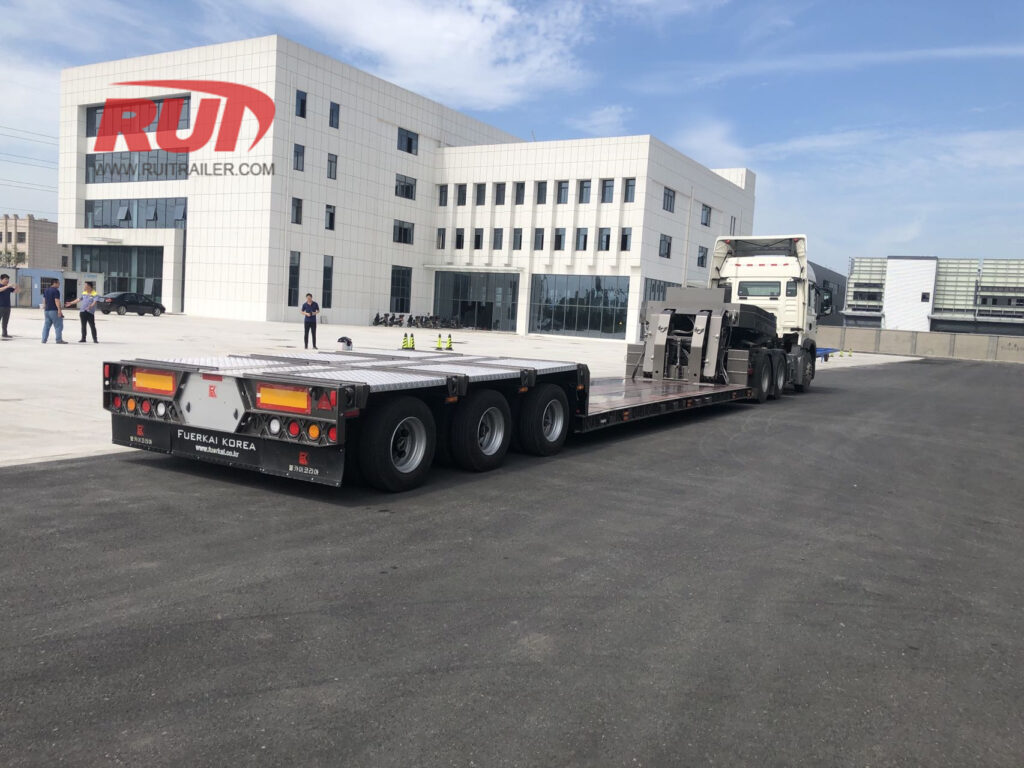
Reattaching The Gooseneck And Locking Systems
Once the load is positioned:
- Raise the deck to the correct loaded deck height with hydraulic or mechanical systems.
- Back the tractor to reconnect the gooseneck to the front of the deck.
- Lock all main pins, wedges, hooks, or dog-bones per the trailer design.
- On hydraulic systems, confirm pressure is holding, no leaks, and lock valves are set.
- On mechanical systems, double-check all pins, retaining clips, and bolts.
I never move the trailer until I’ve visually checked every gooseneck lock point.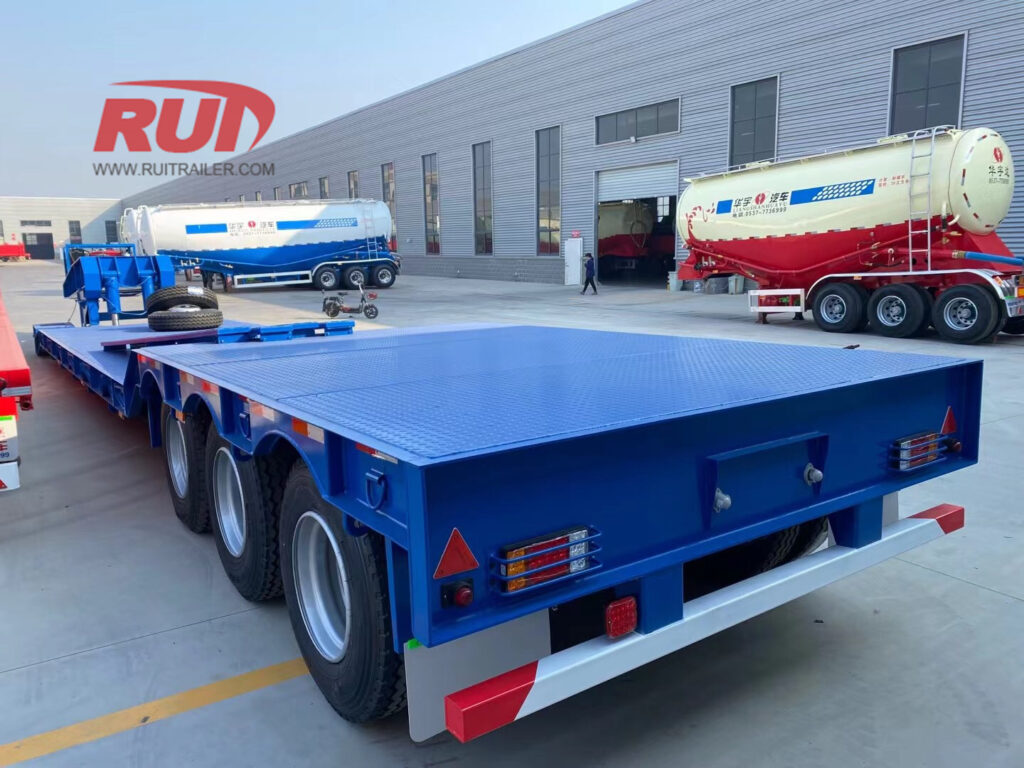
Securing The Load Correctly
For heavy equipment on an RGN lowboy trailer, I stick to these basics:
- Use the right grade-70 or grade-80 chains and quality binders.
- Tie down at manufacturer-recommended points on the machine.
- Cross chains front and rear to control side movement.
- Add extra tie-downs for attachments, booms, and buckets.
- Recheck chain tension after the first few kilometers/miles.
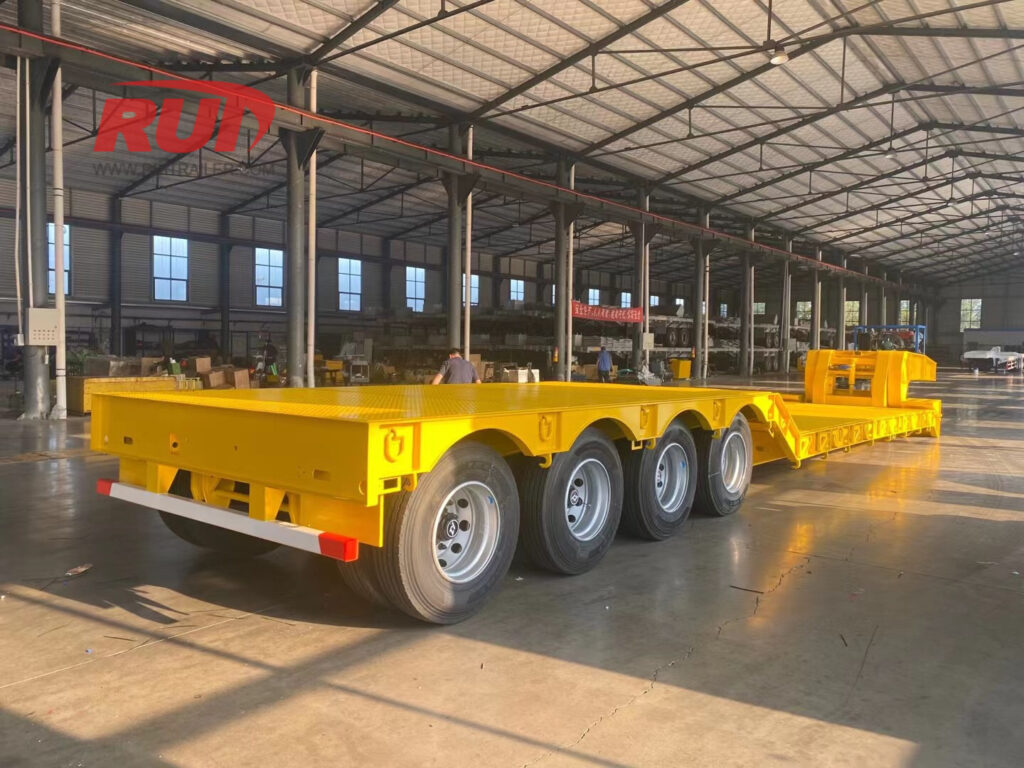
Weight Distribution Best Practices
Good weight distribution keeps a low center of gravity and stable handling:
- Keep most of the weight forward in the well to get proper kingpin/5th wheel load.
- Avoid overloading the rear axle group on a multi axle RGN trailer.
- Center the machine left-to-right to reduce rollover risk.
- For 40T and 50T loads, confirm the axle weights match permit and trailer rating.
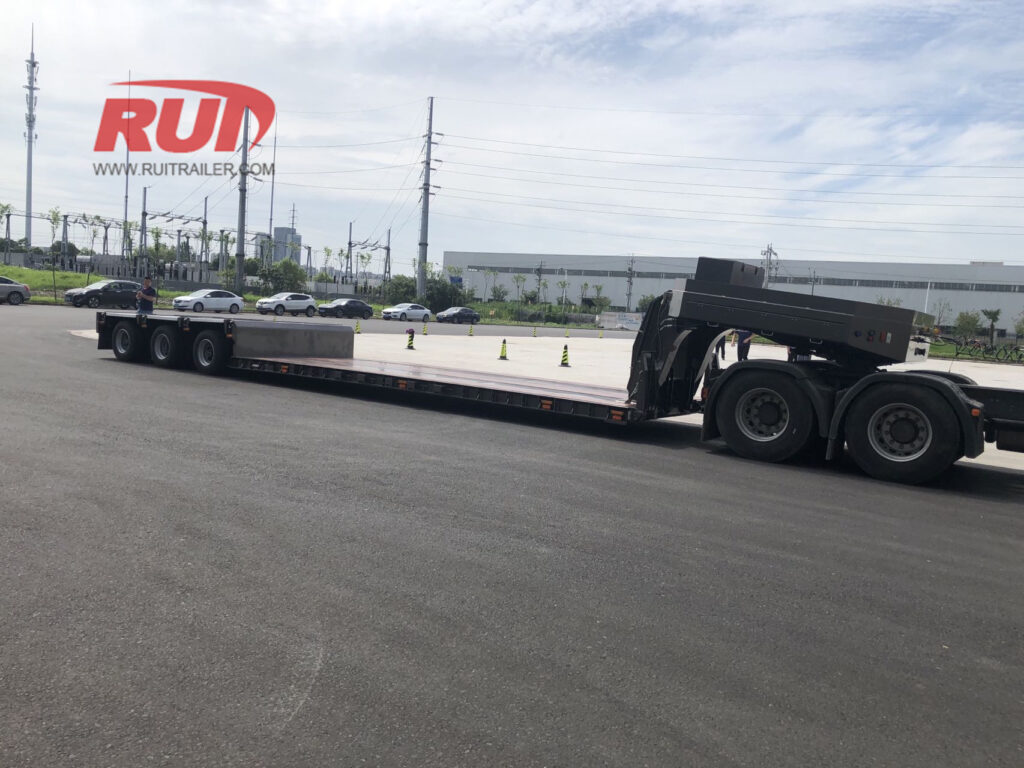
Pre-Trip and Safety Checks
Before every trip with an RGN removable gooseneck trailer, I run a quick checklist:
- Brakes: trailer and tractor brake function, air leaks, ABS lights.
- Lights: markers, indicators, brake lights, and license lights.
- Tires: correct pressure, no cuts, no exposed cords.
- Gooseneck locks: all pins inserted, latches closed, safety retainers in place.
- Hydraulic system: check hoses, cylinders, and fluid level; no fresh oil on lines.
- Frame and deck: look for cracks, bent beams, or loose cross-members.
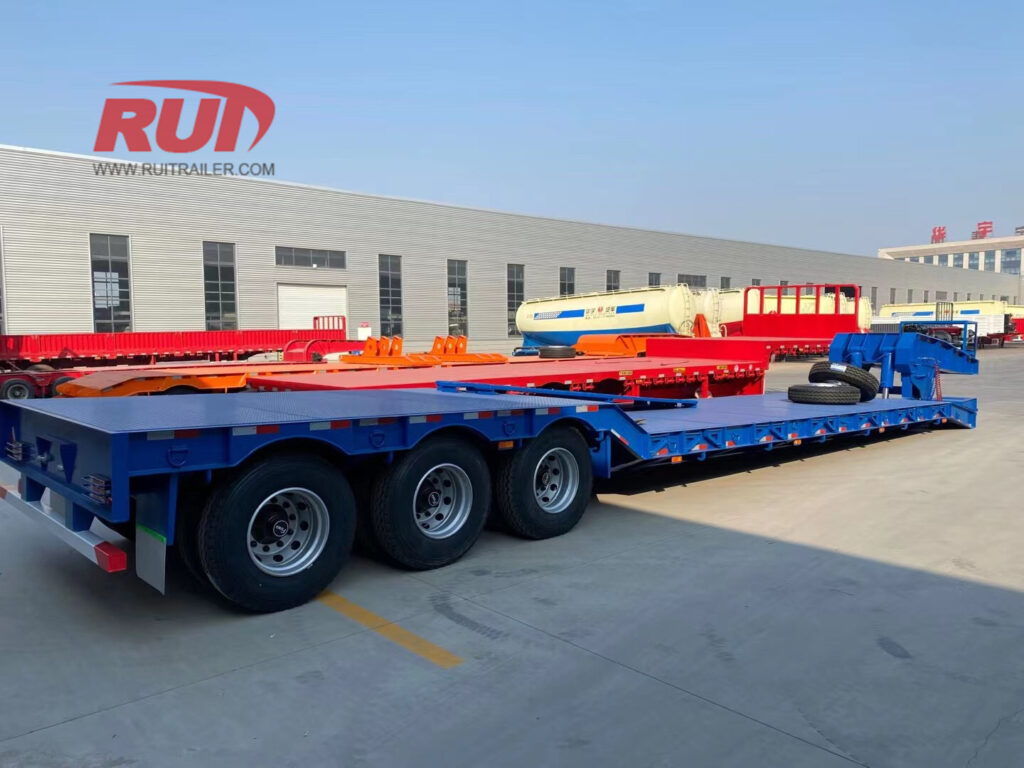
Common Mistakes To Avoid
I see the same dangerous mistakes with RGN lowboy trailers:
- Loading or unloading on uneven or soft ground.
- Failing to chock wheels before detaching the gooseneck.
- Overloading a 40 ton RGN trailer with 50T+ machines.
- Poor chain placement or using worn-out binders.
- Forgetting to re-lock the removable gooseneck before driving off.
If I stick to a routine and respect the limits of the heavy duty lowboy trailer, I keep myself, my cargo, and everyone on the road a lot safer.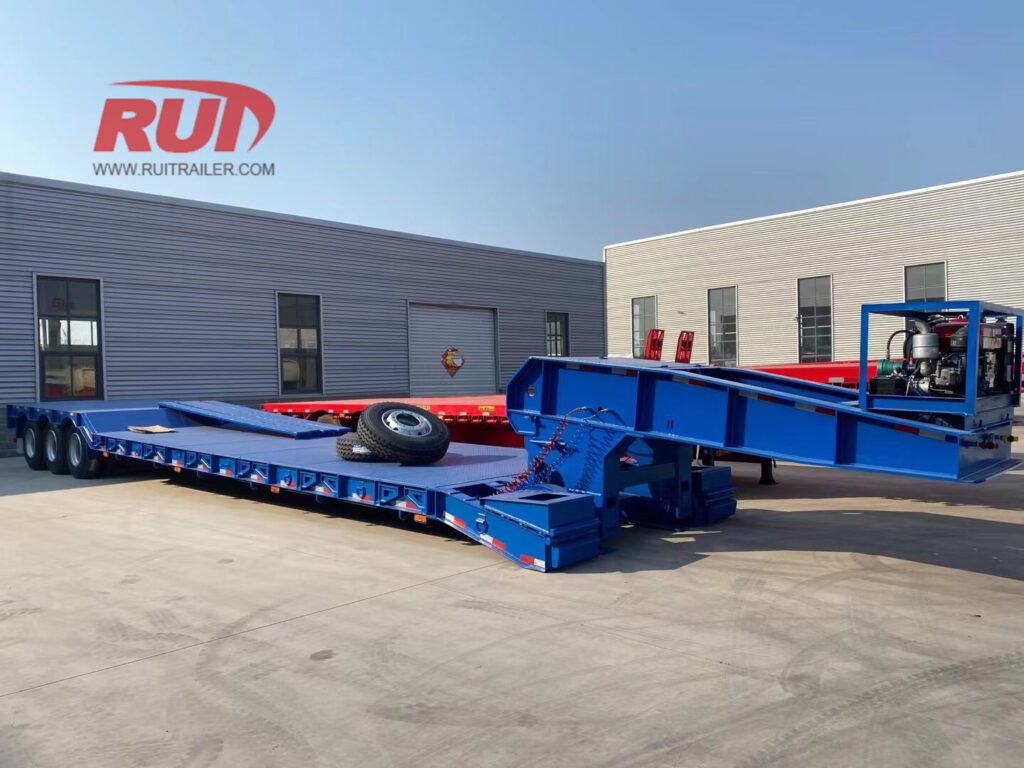
RGN Removable Gooseneck Trailers vs Other Trailer Types
RGN Lowboy vs Standard Lowboy Trailer
An RGN removable gooseneck trailer gives you front loading, while a standard lowboy only loads from the rear. For heavy equipment like excavators, bulldozers, and cranes, the RGN lowboy trailer lets machines drive straight on from the ground, with a low loading angle and safer approach. A standard lowboy can work if you always have ramps or a dock, but for real job site flexibility and frequent loading, the detachable gooseneck lowboy trailer wins on safety, speed, and ease of use.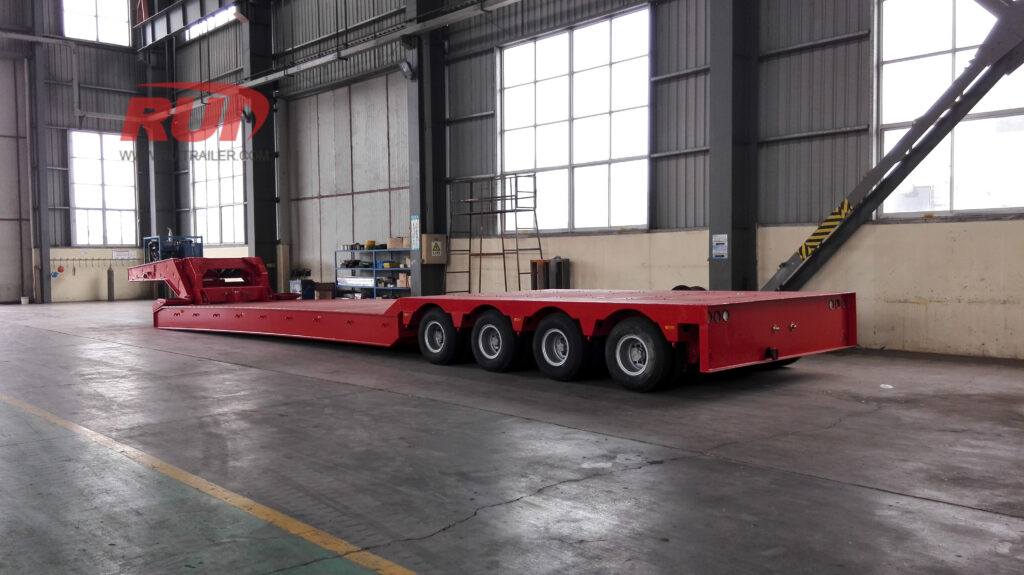
RGN Removable Gooseneck vs Double Drop Deck Trailer
A double drop deck trailer offers a low middle section too, but it doesn’t have a removable gooseneck for drive-on access. You still need docks, ramps, or cranes. If you move tall machinery and need true self-propelled equipment loading, an RGN removable gooseneck lowboy is far more practical. Double drops are better for parallelized or crated oversize freight, while an RGN lowboy trailer is built around heavy equipment that needs to roll or track on and off the deck.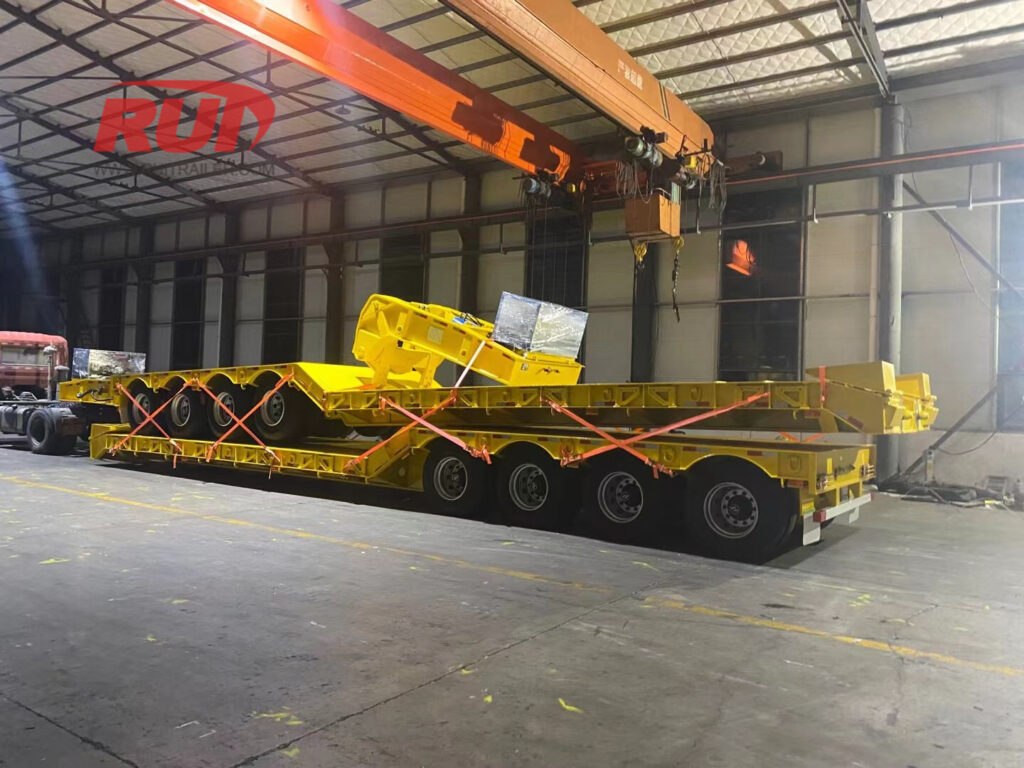
RGN Lowboy vs Flatbed Trailer
Flatbeds are cheaper and easier to find but they sit much higher, which kills your overhead clearance and raises the center of gravity. For tall machinery hauling, heavy equipment with high booms, or loads close to legal height limits, a low deck height trailer like an RGN lowboy keeps you under bridges and power lines with more margin. Use a flatbed when the load is relatively light, low-profile, and easy to load with forklifts or cranes. For hauling over sized equipment and managing height restrictions, the RGN lowboy trailer is the safer and more reliable option.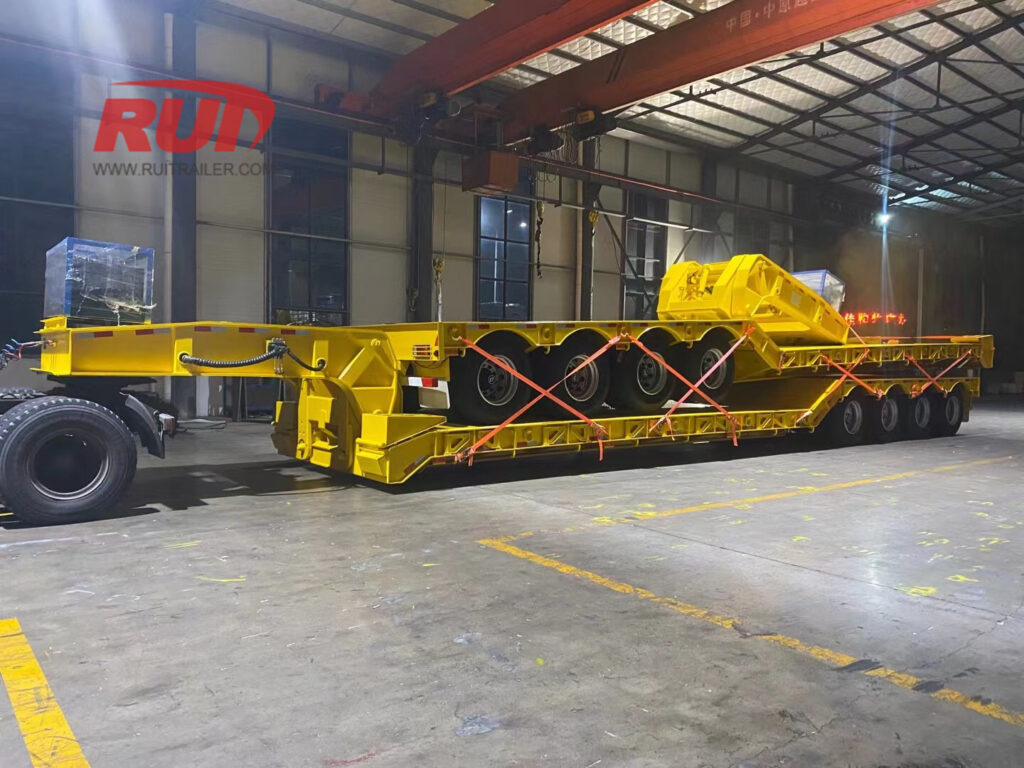
Low Deck Height vs Step Deck and Flatbed
A step deck helps lower height a bit, but it still doesn’t match the loaded deck height of an RGN detachable gooseneck. When you’re fighting for every inch of cargo clearance space, or dealing with tight bridges and tunnels, that extra drop from an RGN low bed trailer makes the difference between a simple route and complex detours. Any time height restrictions, stability, and loading angles are critical, a low deck height trailer with a front loading gooseneck detachment system is the smart choice.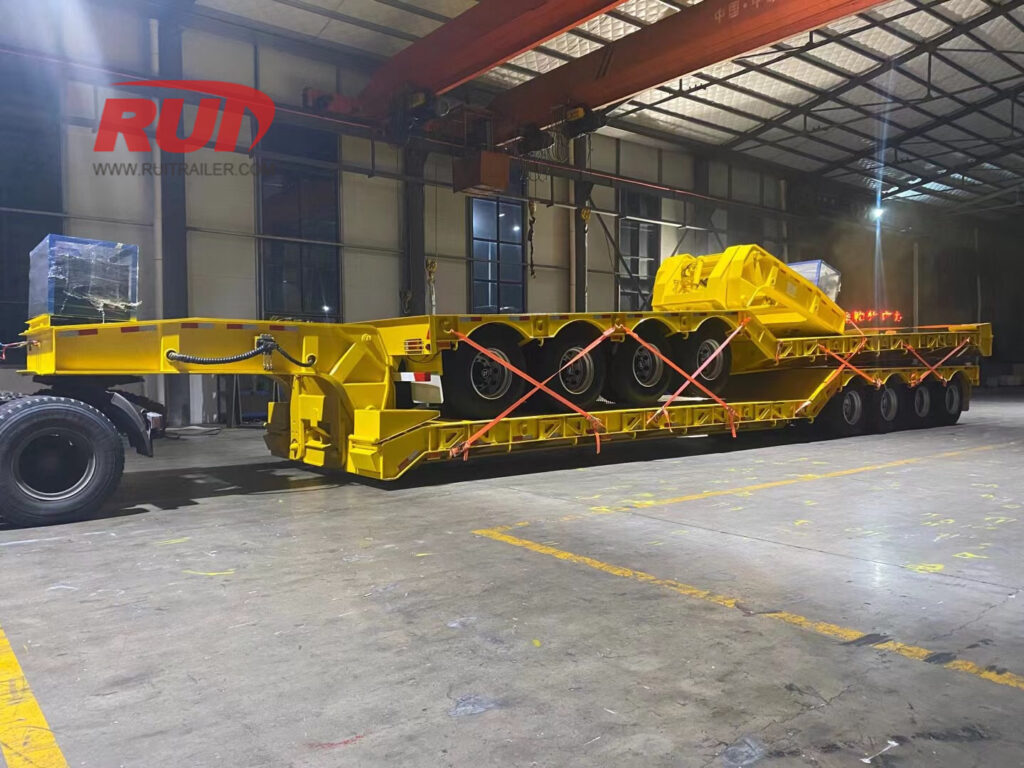
RGN vs Schnabel and Specialized Trailers
Schnabel and other highly specialized trailers are built for extreme loads like wind tower sections or big transformers. They can carry more and lift the cargo between support arms, but they’re very specific, expensive, and not flexible for everyday heavy equipment. An RGN lowboy is a more versatile specialized trailer: it handles tall machinery transport, heavy equipment, and most over-sized load transport without the cost and complexity of ultra-specialized gear. For unique, ultra-heavy industrial projects, Schnabel have their place, but for general heavy haul work, a heavy duty lowboy trailer with a removable gooseneck is usually the better long-term asset. If you need additional reach for long components, pairing an RGN with an extendable specialized trailer setup can cover many of those niche jobs.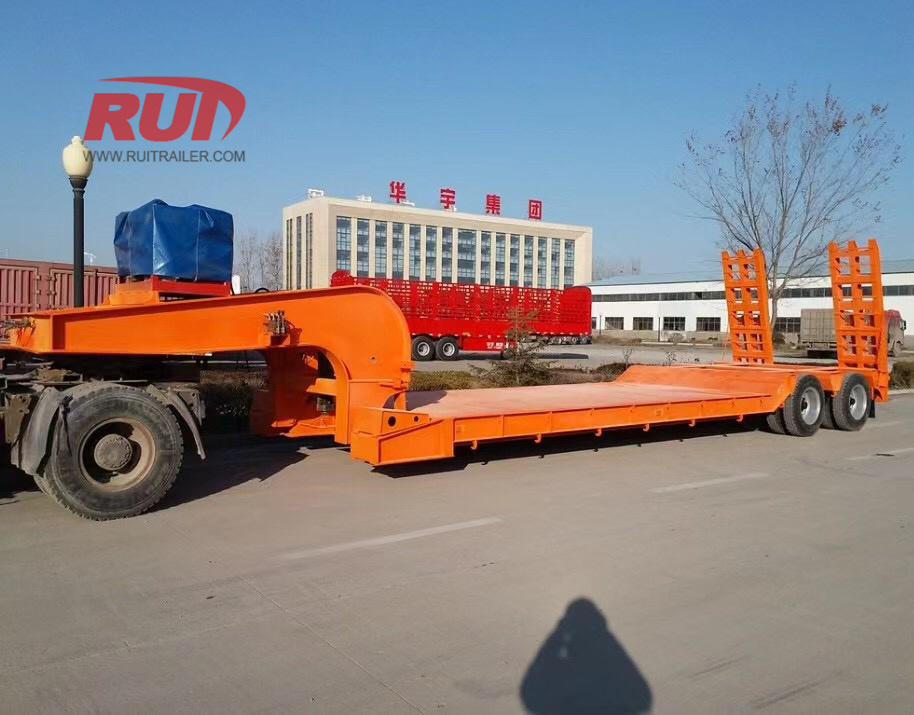
When You Don’t Need an RGN
You don’t always need an RGN removable gooseneck trailer. If your loads are:
- Under height limits with room to spare
- Light to medium weight and easy to lift
- Loaded at docks or with cranes or forklifts
- Short-distance and not time-critical
then a flatbed, step deck, or standard low bed semi trailer may be enough. For simple freight, choosing a simpler trailer keeps costs down and operations lean. I design my RGN and low bed trailers to cover the demanding, tall, and heavy moves, while standard low bed semi trailers and flatbeds handle the everyday cargo.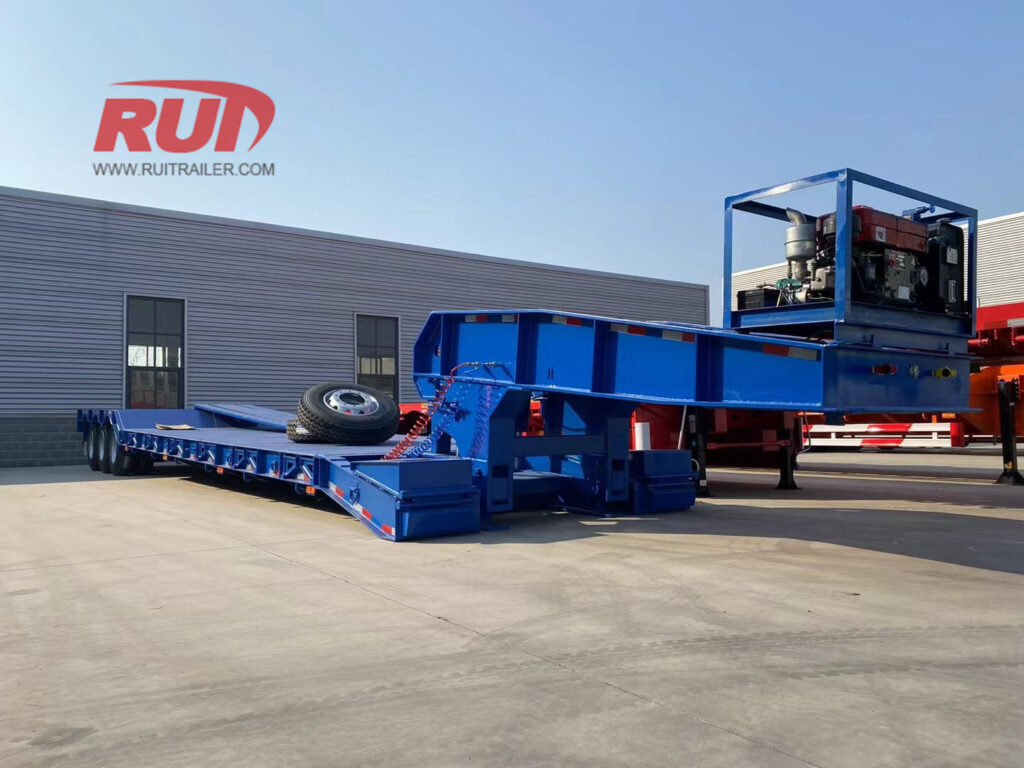
Maintenance and Longevity Tips for RGN Removable Gooseneck Trailers
Keeping an RGN removable gooseneck trailer in top shape comes down to a few simple habits done regularly. That’s how you protect your investment and keep your detachable gooseneck lowboy working safely under heavy haul pressure.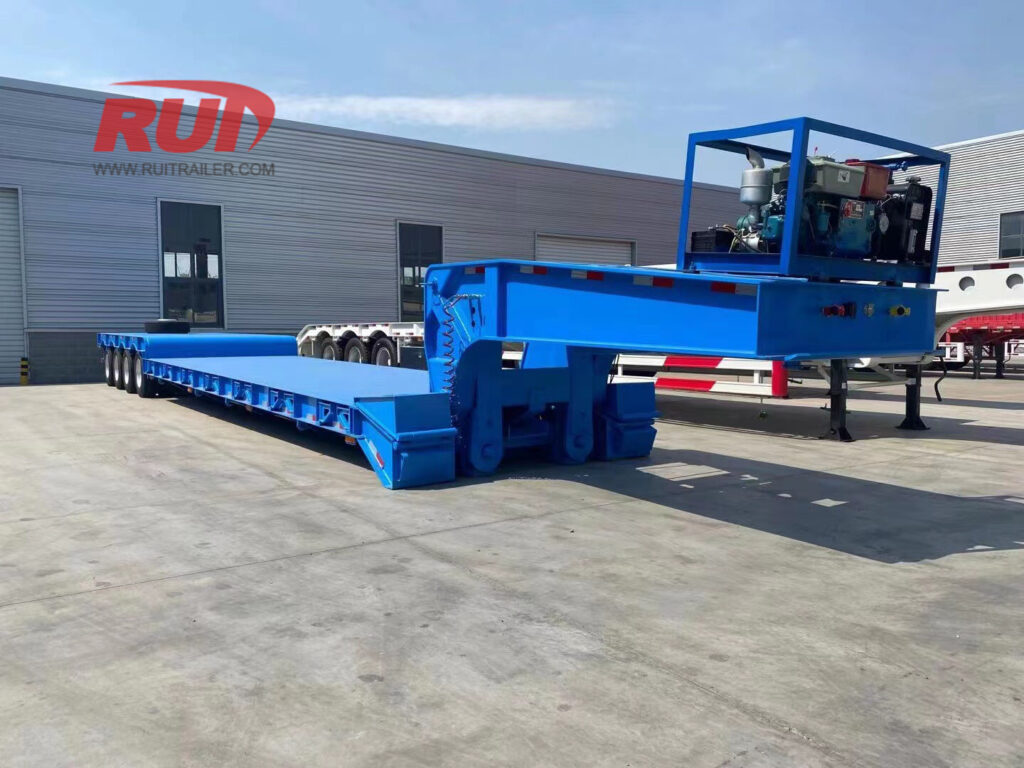
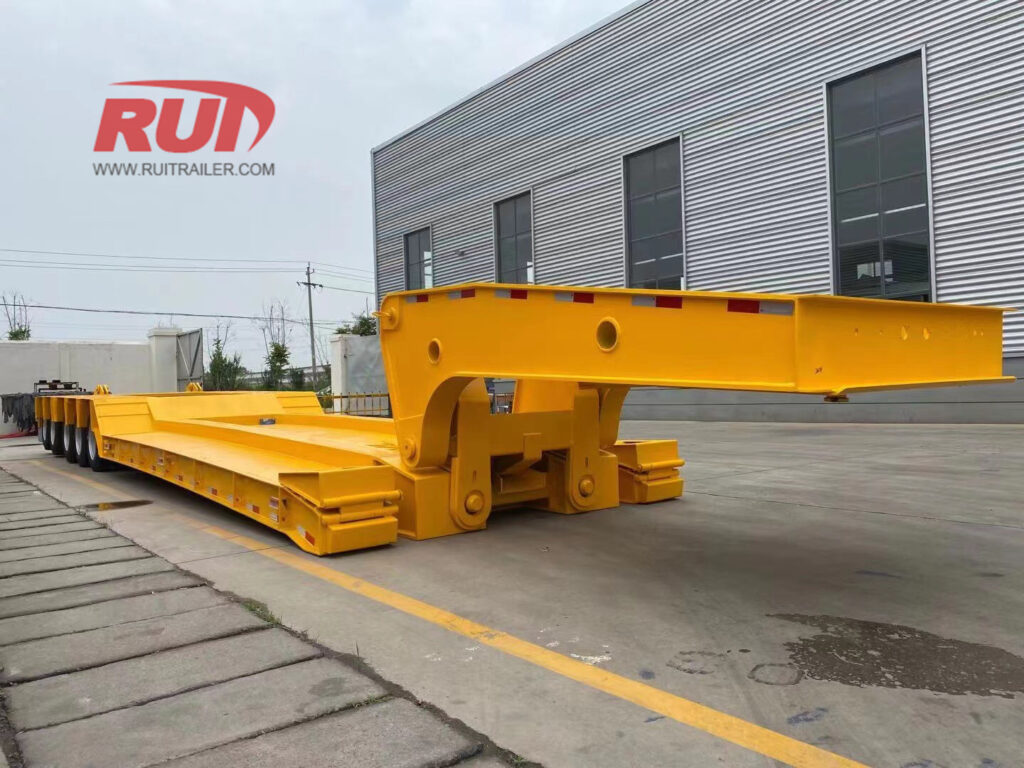
Routine Checks on the Removable Gooseneck
For any RGN lowboy trailer, the gooseneck is the critical joint:
- Inspect the detachable gooseneck locks, wedges, and pins before every trip. Look for wear, cracks, or sloppy fit.
- Check the gooseneck detachment system plates and hooks for deformation.
- Make sure all locking indicators fully engage when you reconnect the hydraulic removable gooseneck or mechanical removable gooseneck.
Hydraulic System and Controls
On a hydraulic removable gooseneck trailer:
- Inspect hoses for rubbing, bulges, leaks, and dry cracking.
- Check cylinders for pitting, bent rods, or oil around seals.
- Keep hydraulic fluid clean and at the right level; change filters on schedule.
- Test controls and relief valves so the front loading and ride height functions work smoothly.
Axles, Brakes, and Suspension
A heavy equipment lowboy trailer lives on its running gear:
- Follow a fixed schedule for hub oil changes, bearing adjustment, and brake inspections.
- Check air ride suspension lowboy bags for leaks and cuts; inspect leveling valves and linkages.
- On spring suspension lowboy trailers, look for broken leaves, shifted packs, and worn bushings.
- Watch for uneven tire wear, which often points to alignment or load balance issues.
Cleaning, Rust Protection, and Storage
Harsh job sites punish a low deck height trailer:
- Wash off mud, salt, and chemicals often, especially around the drop deck well and rear frame.
- Touch up paint on chips and exposed high tensile steel trailer frame sections.
- Grease all pivot points and moving parts on the detachable gooseneck trailer.
- Store the RGN trailer on firm, level ground; avoid sinking supports or twisted frames when parked long term.
Spotting Fatigue and Extending Service Life
High-mileage RGN removable gooseneck trailers show early signs if you look:
- Check welds around the gooseneck, kingpin area, and drop deck transitions for hairline cracks.
- Look for ripples, buckling, or permanent bends in flange edges and cross-members.
- Listen for unusual noises when loading self-propelled equipment or when the trailer flexes.
- Keep a simple log of repairs and recurring issues so you can act before a failure.
If you often move extreme loads or need even more specialized solutions for tall machinery transport, it can be worth pairing your RGN with a purpose-built extendable heavy-duty trailer system to reduce stress on the main lowboy and stretch its working life.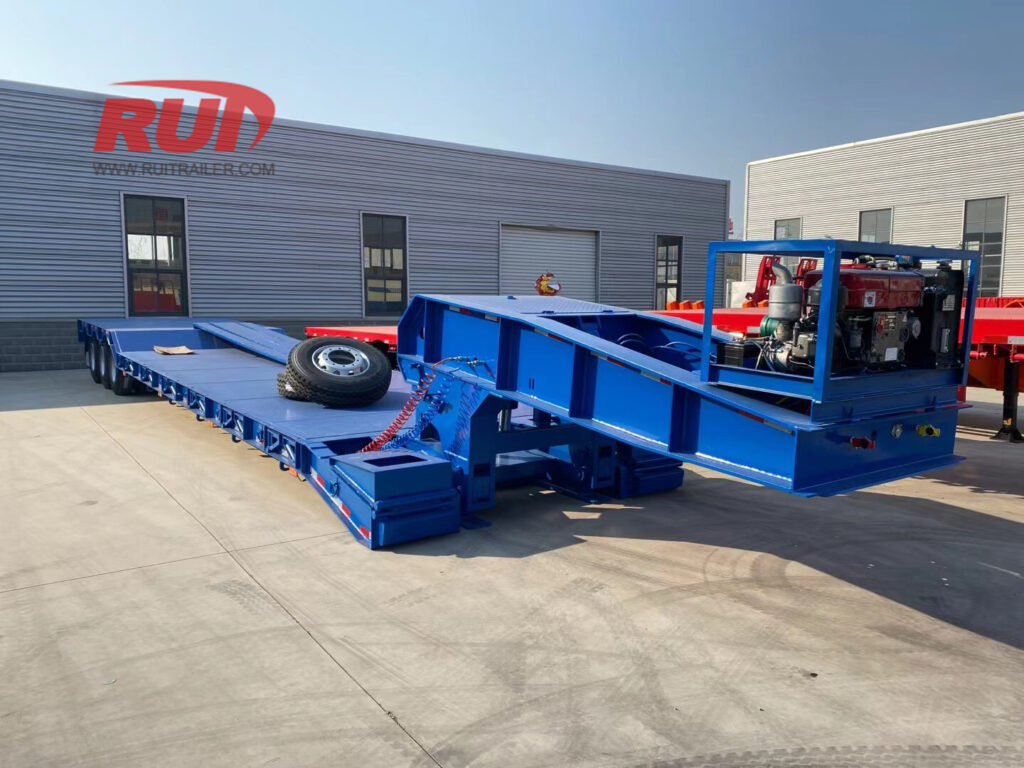
Working With RGN Trailer Manufacturers and Suppliers
When I choose an RGN removable gooseneck trailer manufacturer, I focus on three things: real heavy-haul experience, proven weld quality, and support after the sale. For a detachable gooseneck lowboy trailer, I want a builder that understands permits, axle spreads, loaded deck height, and how their design behaves under daily abuse on tough global routes.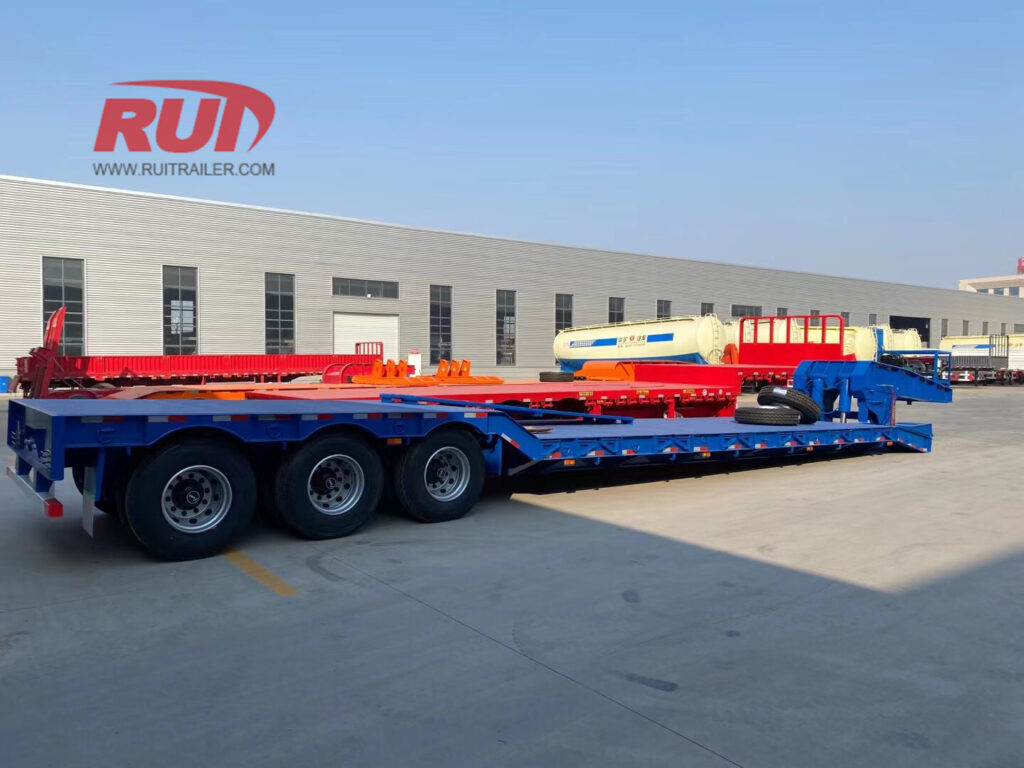
What to look for in a manufacturer
- Solid track record in heavy equipment and oversized load transport trailer design
- High‑tensile steel trailer frame, robotic or certified manual welding, and NDT testing
- Flexible specs: hydraulic removable gooseneck or mechanical removable gooseneck, multi‑axle RGN trailer options, air ride or spring suspension
- Real engineering support: drawings, load calculations, and custom solutions for height restrictions and tight loading angles
If you need more specialized solutions beyond standard RGN lowboy trailers, I often pair them with systems like our heavy duty specialized modular trailers for extreme industrial projects.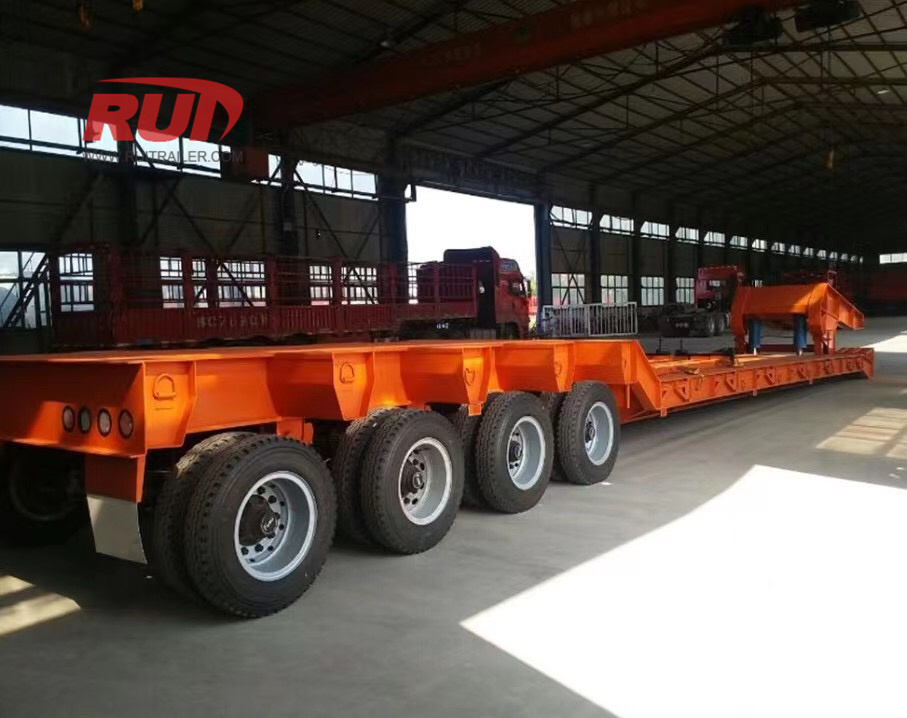
Custom RGN trailer options
For global customers hauling mixed fleets, custom options on a removable gooseneck lowboy are critical:
- Extra‑long well or extendable RGN trailer for cranes, wind components, or long machinery
- Outriggers for over‑width bulldozers and mining equipment lowboy loads
- Flip axles and steerable axles for higher payload and tight urban or plant access
- Custom lashing points and winch options for self propelled equipment loading
For very tall machinery transport or wind and energy projects, I sometimes integrate RGNs with dedicated solutions like a special trailer platform to keep overall height and loading angles under control.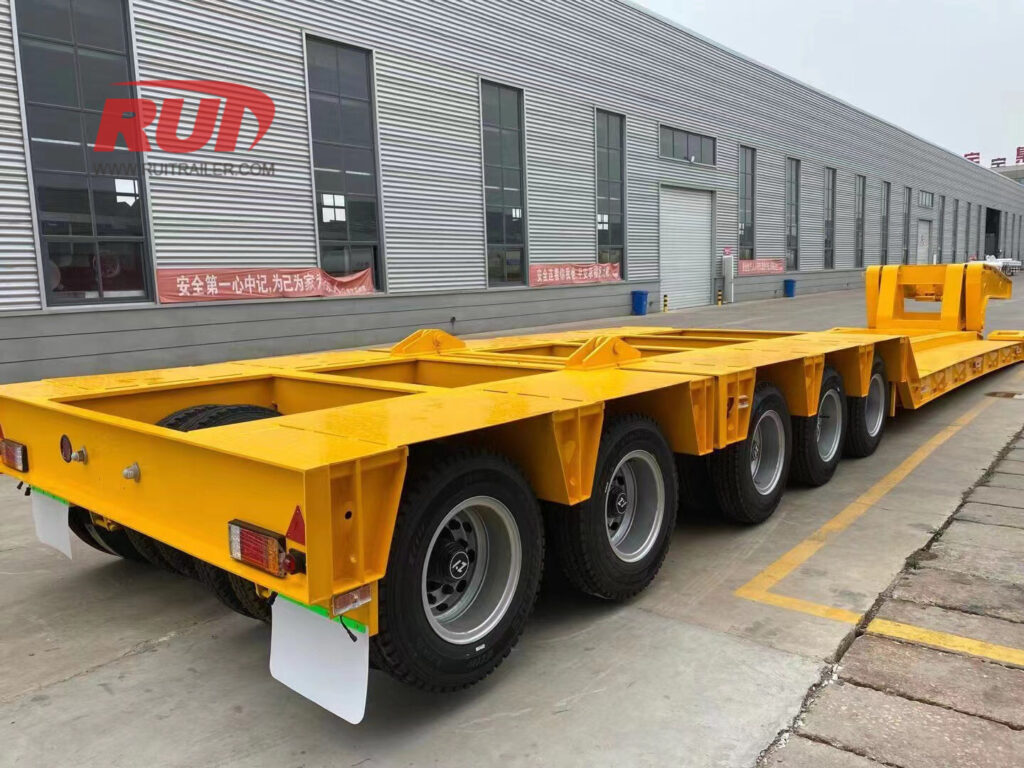
Lead times, pricing, and warranty basics
Lead time on a 40 ton RGN trailer or 50 ton detachable gooseneck depends on:
- Steel and component prices (axles, hydraulics, tires)
- Level of customization (48 foot RGN trailer vs 53 foot lowboy trailer, extra axles, special suspension)
- Current factory load and destination country requirements
I always check:
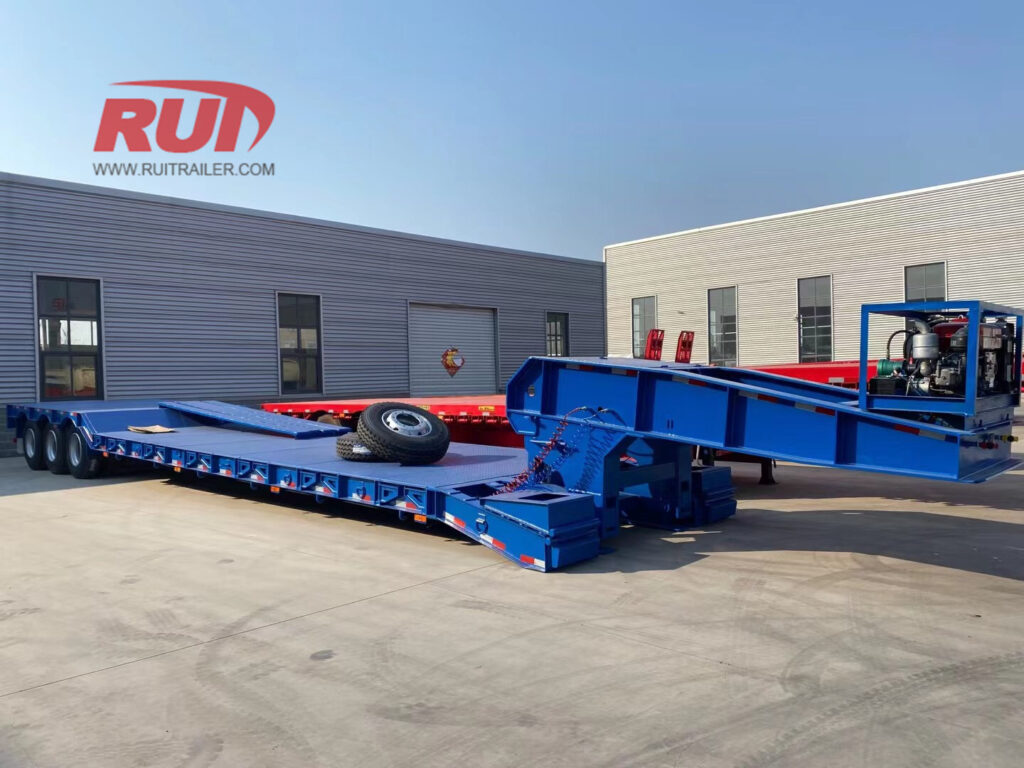
- Clear base price plus options (axles, outriggers, spares, export packing)
- Standard warranty on frame, gooseneck detachment system, and hydraulic components
- Global parts and service support, including remote troubleshooting and fast shipment of critical parts
How to compare quotes and spec sheets
When I compare suppliers, I put the spec sheets side by side and verify:
- Rated capacity (40T vs 50T), axle group ratings, and load concentration points
- Loaded deck height, deck length, and width with/without outriggers
- Type of removable gooseneck (hydraulic vs mechanical), control layout, and safety locks
- Suspension type (air ride suspension lowboy vs mechanical spring suspension lowboy trailer)
- Paint system, rust protection, and included accessories (toolboxes, lights, spare tire carriers)
Only after that do I look at price. The right RGN removable gooseneck trailer is a long‑term asset, so I choose the manufacturer who backs their heavy duty lowboy trailer with real engineering, honest specs, and dependable global support.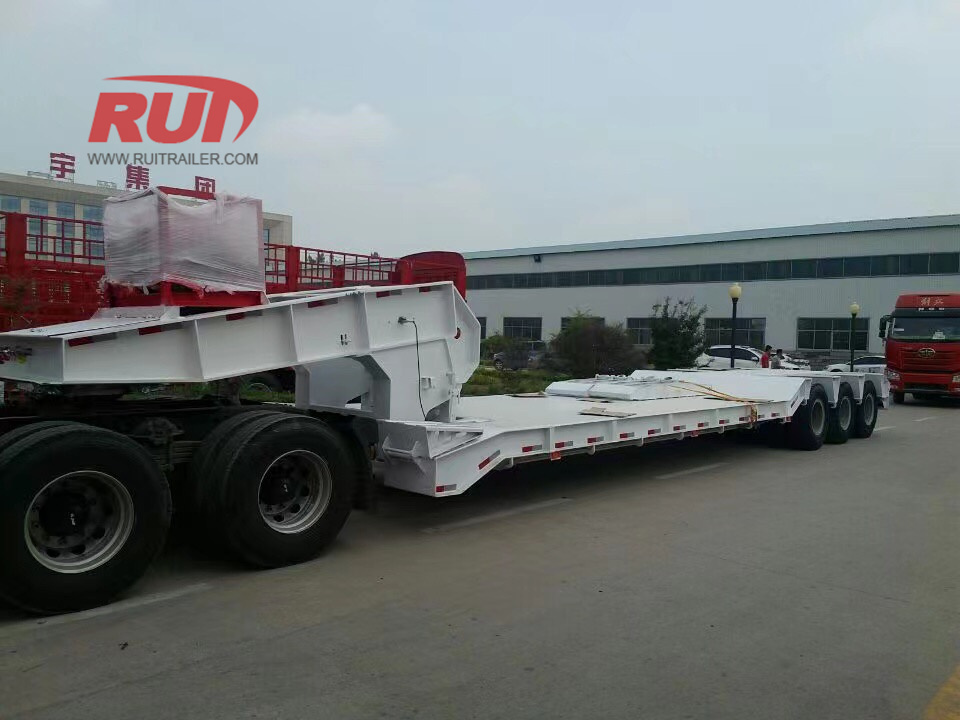
 English
  German
  Turkish
  French
  Portuguese
  Russian
  Arabic
  Hindi
Hindi